
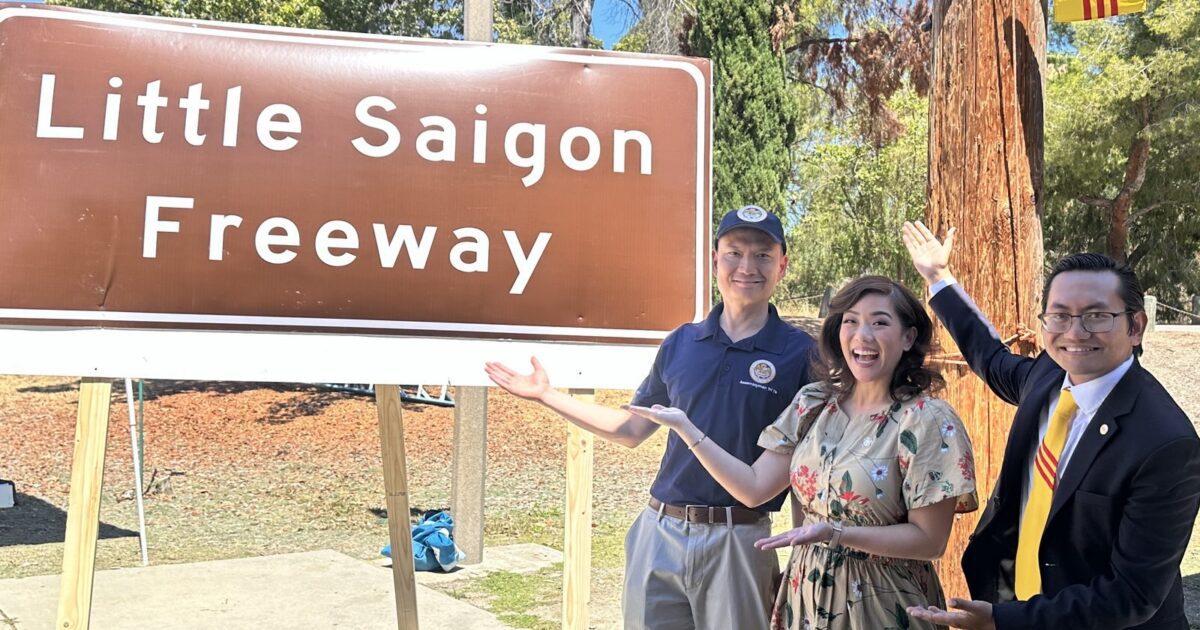
San Jose’s Vietnamese community sees no shortage of milestones, activism and political drama every year — 2025 was no exception.
Little Saigon’s iconic community gathering space – a commercial plaza known as Vietnam Town – is facing a reckoning. The death of a beloved immigrant pioneer has prompted new urgency, from leaders he mentored, to hold onto Little Saigon’s vanishing elders and their stories. The fate of the city’s Viet Museum, which honors Vietnam War refugees, hangs in the balance. And San Jose lawmakers pushed to honor the largest Vietnamese population for a city outside Vietnam in new ways – from freeway signs to iPhone emojis.
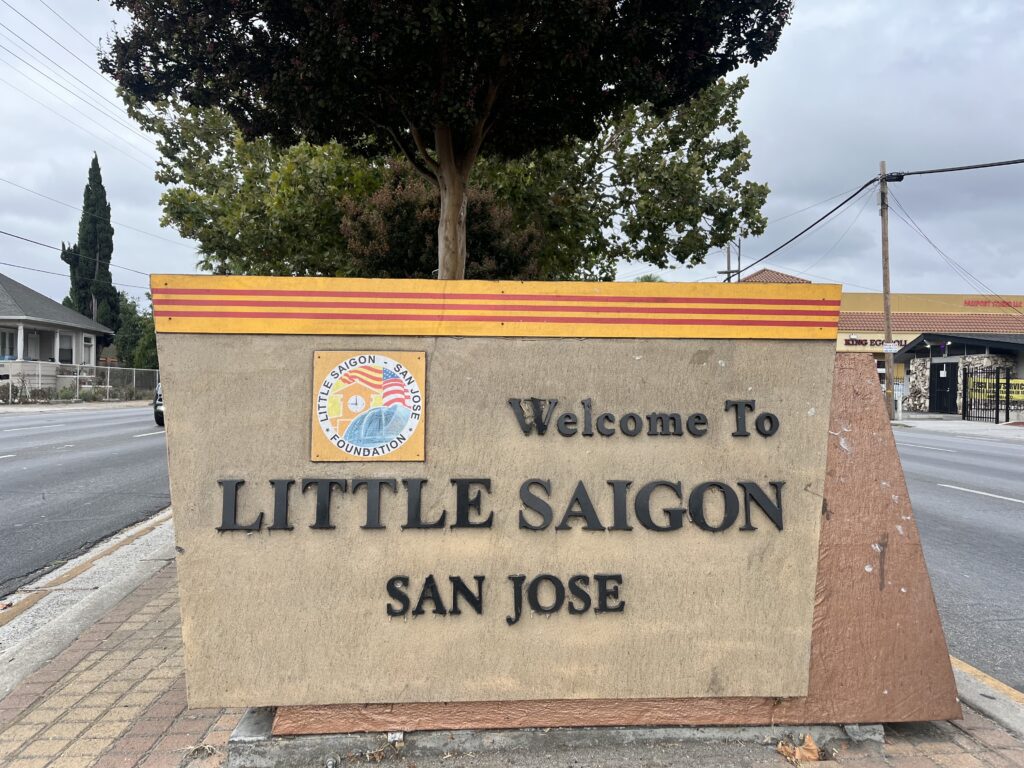 Entrance to Little Saigon in San Jose.. Photo by Brandon Pho.
Vietnam Town reckoning
Businesses at Little Saigon’s signature commercial center have long complained that their Vietnam Town plaza has been neglected and mismanaged. For months, San Jose officials sat idle on those complaints. But now those merchants have banded together with a lawsuit that’s highlighted the extent of the plaza’s issues — forging a path to reshape the plaza and fulfill its community gathering space potential.
Their efforts — and San José Spotlight’s reporting – now appear to be waking the city up.
The city’s Planning, Building and Code Enforcement Department ordered Vietnam Town management to remove barricades and garbage dumpsters blocking access to the plaza’s main parking garage by Dec. 18. The garage’s closure had mystified business owners who said it needlessly choked out customer traffic, turning the plaza into a ghost town at certain parts of the day. Merchants have banded together and filed a lawsuit accusing the management organization — known as the Vietnam Town Condominium Owners Association — of ignoring grievances and wasting business improvement funds.
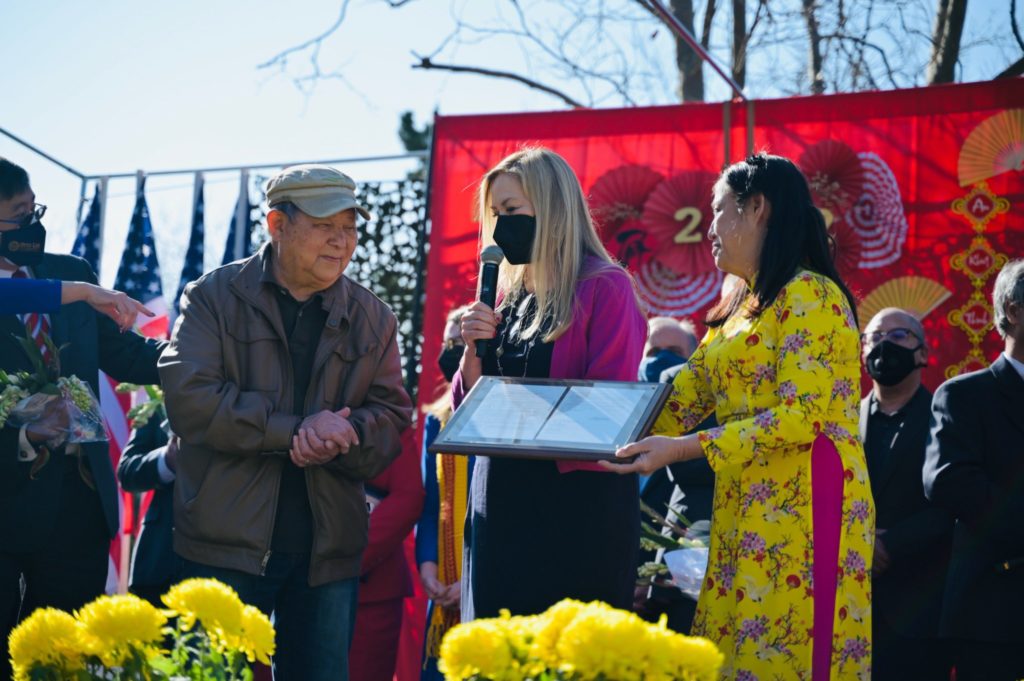 Santa Clara County Supervisor Cindy Chavez presented Loc Vu with a resolution reaffirming the human rights of Vietnamese citizens at the 2022 Tet celebration. Photo courtesy of Supervisor Cindy Chavez’s office.
Farewell to Loc Vu
Viet Museum founder Loc Vu died in November after months in hospice care. He spent his final moments surrounded by family and community members whose histories were indelibly marked by the former South Vietnamese military leader-turned-refugee. The husband, father and grandfather founded the nonprofit Immigrant Resettlement and Cultural Center in 1980, which is credited with helping resettle more than 20,000 South Asian immigrants in Northern California after the Vietnam War.
Vu’s most visible lasting legacy is the Viet Museum, which he developed over the course of three decades and opened in 2007. The old farmhouse in History Park now stores hundreds of precious artifacts, photographs and art about the experiences of the Boat People. This invaluable collection is sustained through a mix of community support and Vu’s own savings. He even mortgaged his family home to ensure its survival.
But his death leaves the fate of the museum unclear.
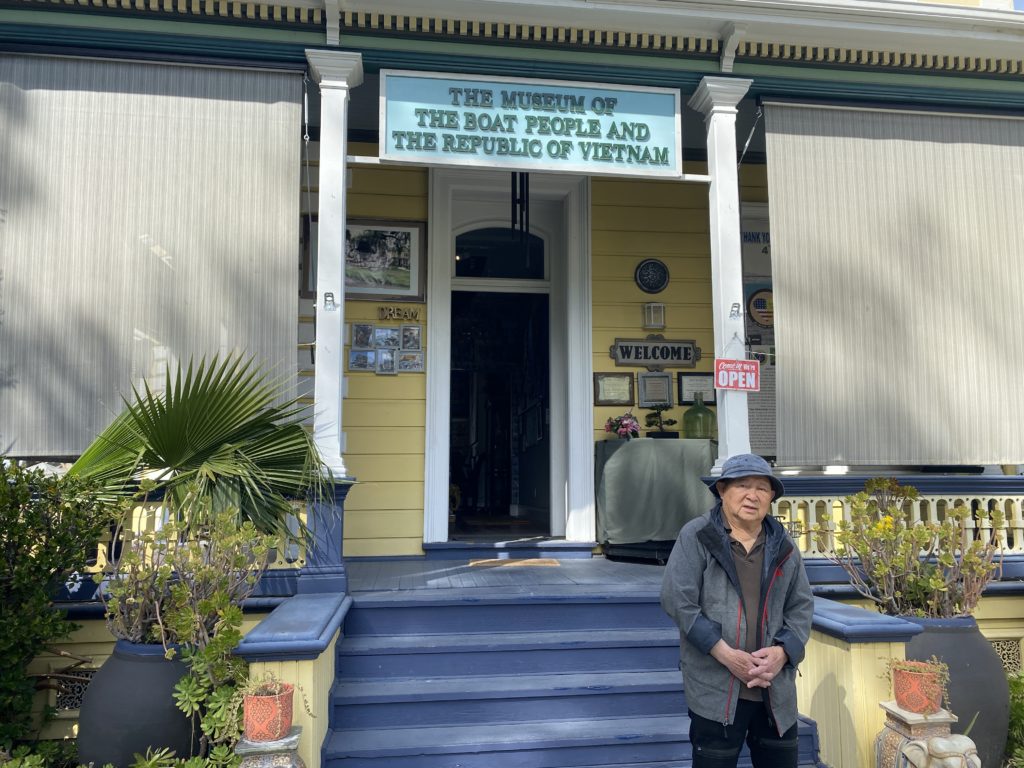 Loc Vu in front of the Viet Museum in San Jose. Photo by Tran Nguyen.
Viet Museum in limbo
History San Jose, a nonprofit which cares for History Park and its historic buildings and resources on Phelan Avenue, has kept the Viet Museum closed since last December. Vu’s retirement before his death opened a schism between two factions of community members for control of the Immigrant Resettlement and Cultural Center, the nonprofit that operates the museum.
History San Jose most recently threatened to ice both sides out of the museum — and find another organization to oversee it — if they don’t come to a resolution before the new year. Yet there may now be signs of unity under the threat of the Dec. 30 deadline.
Freeway signs and emojis
As emojis become a widespread form of global messaging, San Jose leaders this year called on the world’s leading text encoders to add a symbol for the Flag of South Vietnam.
The City Council voted unanimously in May to urge the Unicode Consortium — the Mountain View-based organization overseeing the digitized use of text in all of the world’s writing systems — to adopt the flag of a fallen government with historical and political significance to refugees from the Vietnam War who live in San Jose.
Standard smartphones only provide the use of Vietnam’s official flag representing the Socialist Republic of Vietnam, which draped the nation in 1976 under communist party rule. Yet the hundreds of thousands of refugees who fled to the U.S. have rejected the banner over the following decades — instead clinging defiantly to the yellow flag with three stripes representing South Vietnam.
Meanwhile, a sign telling motorists they’re entering Little Saigon in San Jose is close to being installed — with a fresh stamp of approval from local leaders.
The Santa Clara County Board of Supervisors in August unanimously approved a resolution in support of a state initiative to designate part of of Highway 101 — from Story Road in San Jose to the junction with Interstates 280 and 680 — as the “Little Saigon Freeway.” It comes after the state Assembly passed a resolution July 14 for the renaming authored by San Jose Assemblymember Ash Kalra.
Contact Brandon Pho at [email protected] or @brandonphooo on X.