
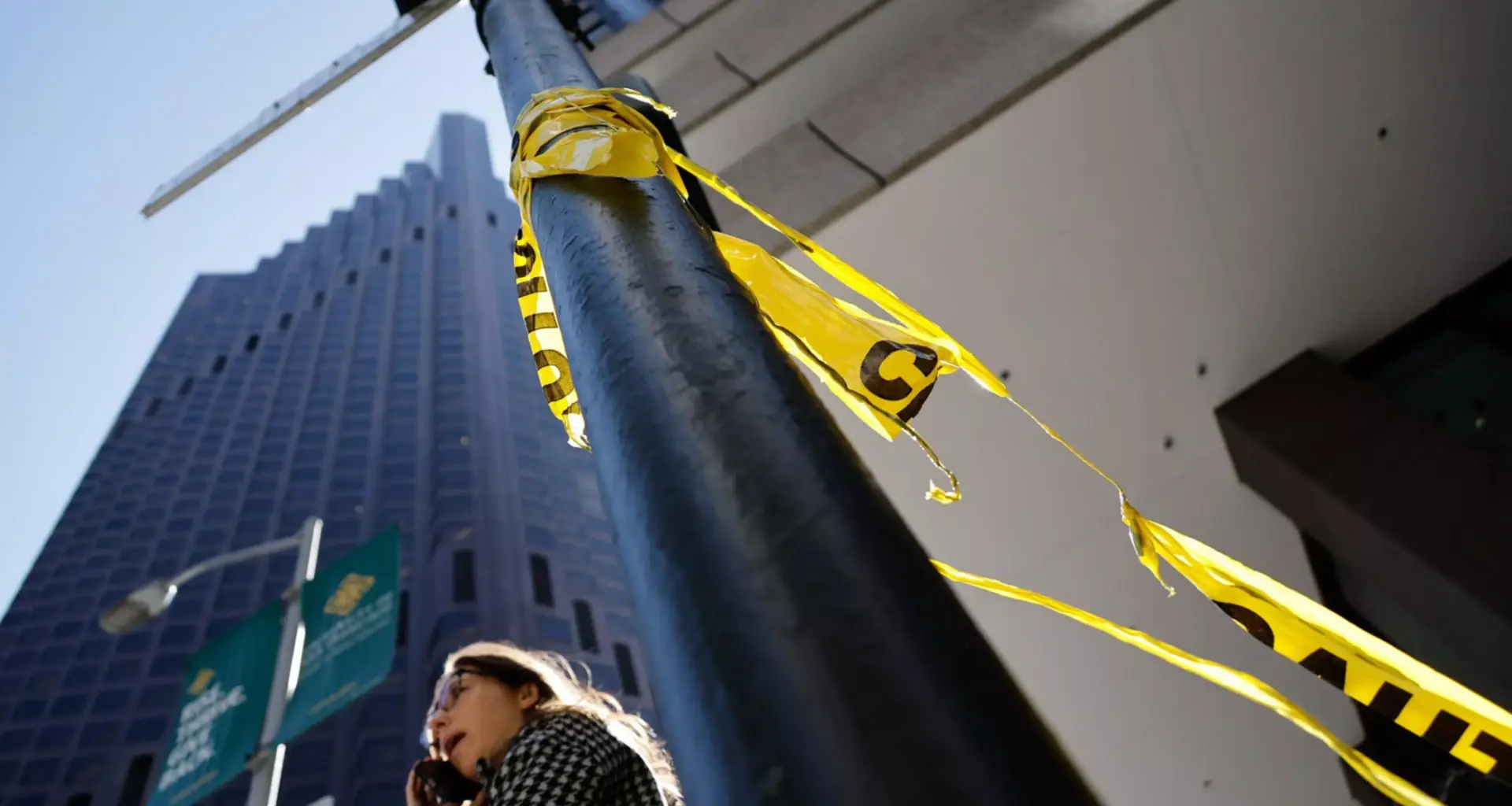
For nearly five years, things were looking bleak for San Francisco real estate.
The pandemic emptied downtown of office workers and tourists, cratering property values, shaking the local economy, and exacerbating street issues.
Today, the city looks very different than it did in 2019. More than a third of office buildings remain vacant. Entire corridors or micro-neighborhoods, once teeming with people and commerce, are trying to forge new identities. And the for-sale San Francisco Centre Mall sits forlorn and vacant on Market Street, a black hole to everything around it.
But 2025 showed signs of renewal, as office vacancies began to decline for the first time since before the pandemic. Buoyed by optimism around an AI boom and Mayor Daniel Lurie’s “let’s go” boosterism, national investors started bidding on local buildings again. Commercial tenants pulled back on remote work and began competing for the best offices. And, most promising for the long term, developers are gearing up to build again.
Here are three trends driving a resurgence in San Francisco commercial real estate.
Institutional capital is back
When local-turned-national real-estate magnate Gregg Flynn wanted to buy property in the city in 2023 and 2024, he either had to do it alone or convince local friends to go in with him.
But when he started sniffing around the two-skyscraper Market Center property at 555-575 Market St. at the beginning of the year, he got a call from an investment firm in New York that wanted to partner on a deal. Before Covid, such deals were common. But they dried up in recent years, Flynn said, as perceptions of San Francisco soured among outside investors. Now, that narrative is changing.
In May, Flynn finalized a deal with New York-based DRA Advisors to purchase what was left of the loan on Market Center for $177 million, taking control of the property for a 76% discount on the previous purchase price, in 2019. By taking over at a lower cost basis, his group can invest in upgrades and renovations to woo tenants in an improving office market.
 Greg Flynn and a New York-based partner purchased Market Center in May. | Source: Ulysses Ortega for The Standard
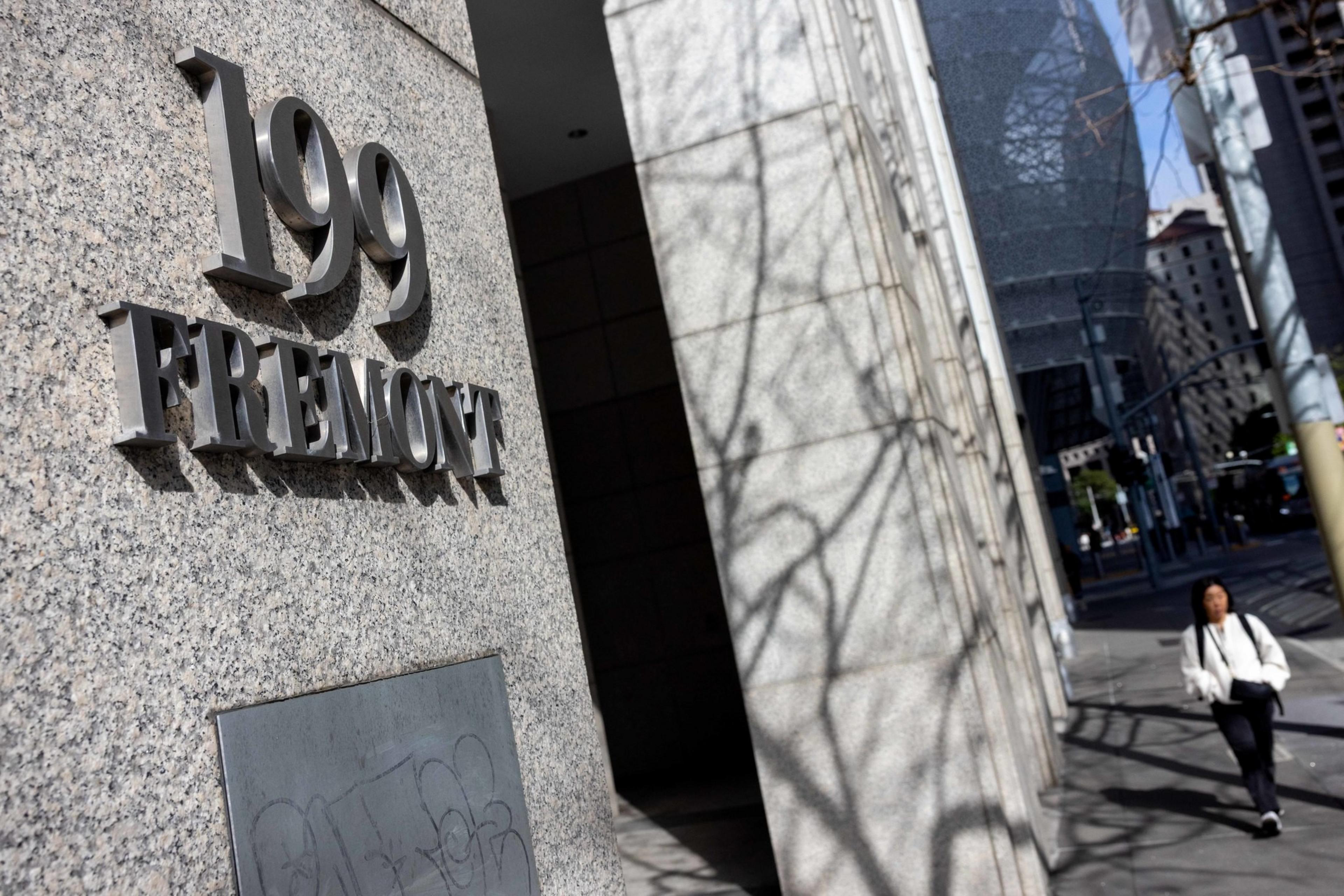 The property formerly known as 199 Fremont was bought by Blackstone amid a rebranding of the neighborhood to “AI Alley.” | Source: Amanda Andrade-Rhoades/The Standard
“The turnaround always happens much faster than people think and before they realize it,” Flynn said.
He was not alone. Around the same time, global investment giant Blackstone placed a bet on 300 Howard St. (formerly 199 Fremont St.), partnering with local firm DivcoWest to buy an empty office building for $111.3 million.
At first, the transaction was puzzling, since the neighborhood had been struggling with vacancies. But at the end of the year, the deal looks like a master stroke. Over the summer, OpenAI rival Anthropic began leasing offices nearby and is now exploring occupying the entire building bought by Blackstone, according to sources.
Since then, New York Life Real Estate and Dallas-based Lincoln Properties have spent more than $110 million on two separate office buildings. The New York State Teachers Retirement System bought out its German partners at 525 Market St. to take full control of a building it purchased for top dollar in 2020. Two New York-based investors purchased San Francisco’s largest hotel portfolio for $408 million. And Blackstone ended the year by spending $130 million last month (opens in new tab) for the Four Seasons hotel.
This month, global asset manager Rithm Capital completed its acquisition of San Francisco office landlord Paramount Group. The firm previously owned several signature properties downtown but had defaulted on several debts after the pandemic negatively hit occupancy and revenues. Rithm CEO Michael Nierenberg said the firm maintains a “strong conviction” that San Francisco’s office market will recover.
In all, 26 office sales closed in San Francisco in 2025, totalling $2.3 billion, according to CBRE.
“In my opinion, 2025 will be looked back upon as the most important year in San Francisco’s office market recovery,” said Kyle Kovac, executive vice president of CBRE’s Capital Markets Team, which sold three office properties this year and is listing the San Francisco Centre mall.
The year “marked the return of institutional investors and owner-users, tenant demand reaching pre-pandemic levels, and a very strong first year for the newly elected mayor and supervisors,” Kovac said. “Investor sentiment has done a 180 from the early years of the pandemic.”
The AI sugar high
In 2024, Sierra Technologies, the AI startup founded by Bret Taylor (who is also chairman of OpenAI) signed a lease for a 41,000-square-foot office at 235 2nd St. In February, the company agreed to double its presence there at a future date.
According to a source familiar with the company’s activities, even before a single employee sat at a desk, Sierra leased an office more than three times larger in South Beach, at 185 Berry St. The 2nd Street offices are now on the sublease market.
 The crowd at Figma’s 7th floor lunch area in August. The company went public this year. | Source: Thomas Sawano/The Standard
Sierra’s supersizing of office space in such a short amount of time epitomizes how the AI boom is jolting the real estate market in San Francisco.
More office space in the city was leased than vacated this year, for the first time since 2019, according to Cushman & Wakefield. Experts expect the city’s office vacancy rate of approximately 34% to represent the bottom of the market, with a rebound in the year ahead. (The previous vacancy peak, 23%, came in the aftermath of the dot-com bust in the early 2000s, although tens of millions of square feet of supply has been added since.)
Some neighborhoods are downright hot again. In Mission Bay, where OpenAI is headquartered, the vacancy rate is below 9%. Other neighborhoods, such as Showplace Square, the Northern Waterfront, and SoMa, are picking up steam as a result.
As the AI ecosystem grows, commercial landlords expect more companies to set up shop in town, developing sector-specific products to add to the demand.
Almost half of leases more than 50,000 square feet this year stemmed from companies growing or expanding, up from 33% last year, according to JLL. A majority of those deals involved AI companies (cryptocurrency firms, such as Coinbase, were involved as well).
Even tech companies that precede the AI boom have been re-committing to offices. This year, Databricks agreed to lease more than 600,000 square feet of space across San Francisco and Sunnyvale. Its main competitor, Snowflake, just opened its 773,000-square-foot campus in Menlo Park, formerly occupied by Meta. The company is branding its HQ as the “Silicon Valley AI Hub.”
All this enthusiasm for AI-fueled deals comes with a caveat, though. Will there actually be employees to fill all this office space? After all, in years past, some tech companies like Meta and Uber chased space they didn’t need yet, because they were hiring at an exponential rate. These days, it’s harder to predict whether AI companies will ever hire at the same levels.
Since 2023, the number of white-collar office jobs in the city has been declining, a result of cost-cutting measures and technological disruptions. Unlike last decade’s tech boom, which saw the smart phone economy birth startups that blossomed into large-scale employers, this era’s major players, such as OpenAI, are bankrolled by existing Big Tech institutions, raising concerns that the wealth and talent is being concentrated at the top.
Preparing to build
Even with a third of offices sitting empty, the uptick in tenant demand has set off a wave of speculative development. With much of the city’s office stock either dated or functionally obsolete, many developers believe new spaces will outperform the rest of the market.
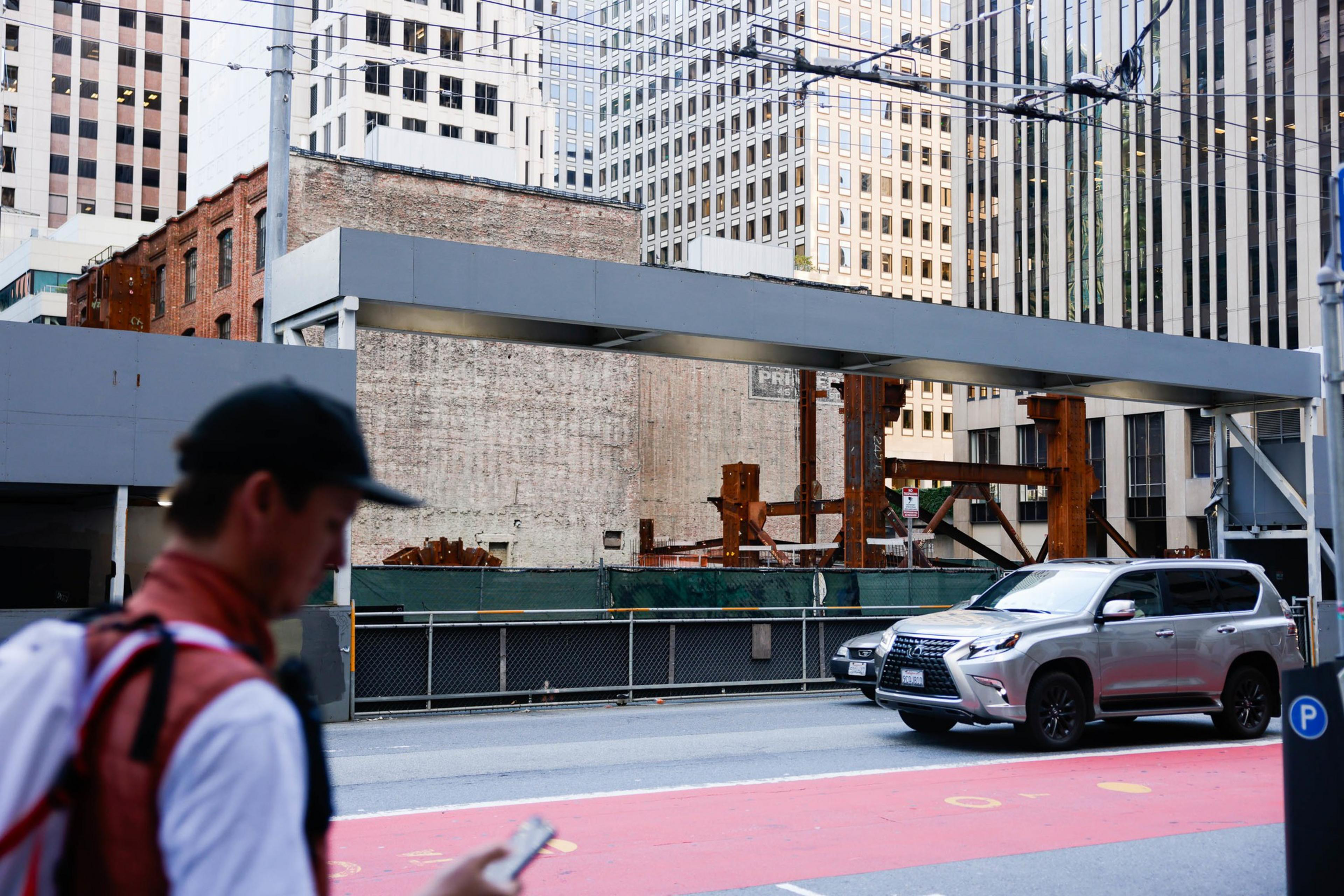 The abandoned construction site at 512 Mission St. and 50 First St. | Source: Estefany Gonzalez/The Standard
In 2025, two major global developers proposed building new skyscrapers in the city. Houston-based Hines wants to construct the city’s newest tallest building at 77 Beale St., the site of the former PG&E building. New York-based Related Companies aims to construct a 41-story building at 530 Sansome St. near Jackson Square.
Even the abandoned development at 512 Mission St. and 50 First St. known as Oceanwide Center is back from the dead after a group led by local developer Dan Kingsley agreed to purchase the debt on the site. Chinese developers had broken ground nearly a decade ago but abandoned the project in 2019.
These initiatives represent a big change from recent years, when many projects stalled or were canceled. City officials have been trying to incentivize developers since the Breed administration through the rollback of fees and affordable housing requirements. Lurie’s administration has doubled down by implementing permit reform and, according to sources, will explore reforming the city’s transfer tax policy next year.
Meanwhile, new state housing laws have cleared the path for some developers to bypass local authorities. The developers behind recently announced projects at four Safeway locations, for instance, tapped into state density bonus laws — and pushed their building plans taller than what some locals prefer.
Still, it will take years for large-scale construction to commence again in San Francisco. Developers say costs remain too high and financing options limited for anything market-rate to break ground. The only way for those economics to change are if rents continue climbing or developers can build enough density to generate adequate returns against large construction loans.
But given the tailwinds behind the city’s real estate, it’s not too much of a pipe dream to expect to see cranes across San Francisco in the years ahead.