
Alan Riquelmy
PHILLIPS STATION, Calif. (CN) — Less than two weeks ago, you could still see the bare dirt at one of California’s snow survey locations.
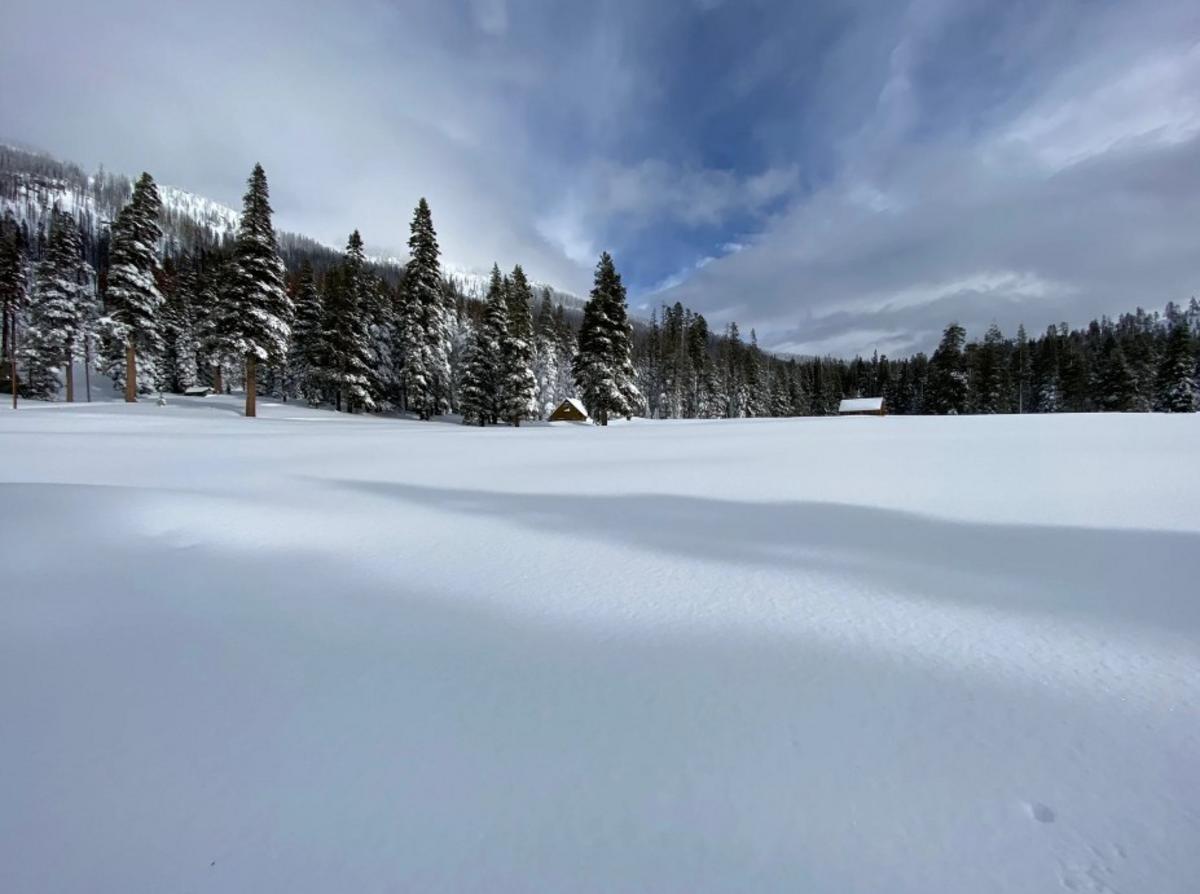
Recent storms have greatly changed the landscape at Phillips Station, which sits at 6,800 feet above sea level near Lake Tahoe. State workers on Tuesday trudged across white powder as they performed the first snow survey of the season.
The results, while not ideal, are better than that bare earth.
“It’s still pretty early for our water year and the coming season,” said Angelique Fabbiani-Leon, state hydrometeorologist with the state Department of Water Resources.
The survey, conducted with snow tubes, found 24 inches of snow with a snow-water equivalent of 5 inches, the latter of which is 50% of average for this spot.
“In other words, we’d like 10 inches of water content on the ground right now,” said David Rizzardo, the department’s hydrology section manager, in a press conference.
Across California, snowpack was 71% of average for this time. At this time last year, it was 115% of average.
On Dec. 19, snowpack across the state sat at 12% of average — a sign of the dry month at that point. Then the storms hit, bringing the statewide snowpack to its current level of 71% of average.
Phillips Station is one of some 260 locations across the Golden State where snow measurements occur. The information is used to determine how much water the state will receive when it begins to melt, filling rivers and, ultimately, reservoirs.
The snowpack itself is like a reservoir, as it provides nearly one-third of the state’s water.
“It’s great to see so much fresh snow in the Sierra following a relatively dry December,” said Karla Nemeth, the water resources department’s director, in a statement. “More than any other factor, the rain and snow that falls in these critical winter months dictates how much water can be delivered to Californians and farmland statewide.”
Snowfall during winter is critical to building the state’s frozen reservoir. About half of California’s yearly rainfall comes during December through February, and 75% comes between November and March.
While Tuesday’s data could have been better, Nemeth called the state’s reservoir levels good news. California’s largest reservoirs — Shasta and Oroville — both held around 125% of their average capacity.
That’s key for Nemeth, who noted that water years are becoming more variable. Ambient temperatures are warming, she said, and the environment is drying out. California doesn’t see the precipitation it once did.
“Our hope is always for a ‘Goldilocks season’ — not too little and not too much,” she said.
Snowpack is a concern of many Western states. California is one of the seven states that belong to the Colorado River Water Users Association. Those member states must reach a water-sharing agreement within weeks or face the potential of federal intervention.
There is some good news on the weather front, at least for Phillips Station.
Snow is set to start Wednesday night, with the chance it’ll continue into next week. Highs will hover near 40 degrees until the weekend, when they’ll drop to around freezing Saturday through Monday, according to the National Weather Service.
“The dry conditions and warmer temperatures in early December delayed our snow-building season, but the return of storm activity, especially in the last week, helped to build a solid base for this year’s snowpack,” Fabbiani-Leon said. “Thankfully, the recent storms that reached the state were cold enough to provide necessary benefits for the snowpack and our water supply.”