
As Sacramento enters 2026, its African American community will navigate a year defined by leadership transitions, political stakes, institutional strain, and the ongoing work of preserving culture and opportunity. Some of the most important stories ahead are rooted in decisions made in 2025; others are emerging quietly, demanding attention before consequences become unavoidable. Together, these are the stories OBSERVER readers should pay close attention to in the year ahead.
Two City Managers, Two Cities — And The Financial Realities They Inherit
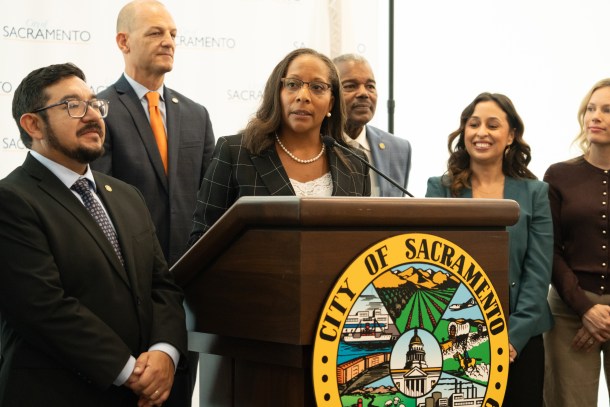 Sacramento’s new city manager, Maraskeshia Smith, speaks alongside city leadership at a press conference announcing her appointment as the first Black woman to hold this position. Roberta Alvarado, OBSERVER.
In 2026, Maraskeshia Smith begins her tenure as Sacramento’s first Black woman city manager, stepping into one of the most powerful — and complicated — roles in local government. Smith assumes leadership of a city facing real fiscal pressures, including a strained budget, rising labor and service costs, and growing demands around homelessness, public safety and infrastructure. Her appointment was historic, but the context is sobering: she inherits a city organization that must do more with less while being asked to restore public trust and deliver equitable outcomes across neighborhoods that have long experienced disinvestment. How Smith and city officials prioritize resources, manage labor relationships, and translate equity commitments into operational decisions will shape Sacramento’s civic landscape in 2026 and beyond.
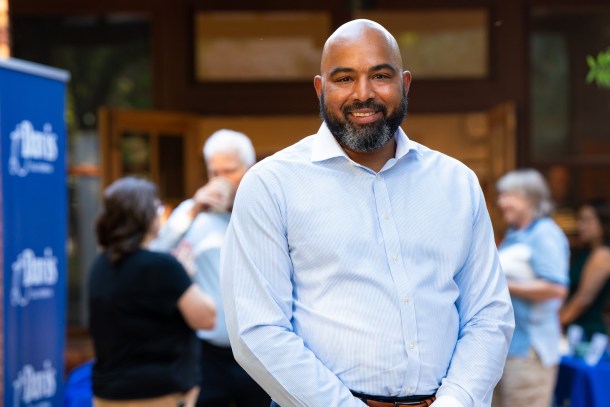 Daryel Dunston, recently appointed Davis city manager, at City of Davis City Hall, Sep. 16, 2025. Louis Bryant III, OBSERVER
West of Sacramento, Davis is undergoing a parallel transition, welcoming Daryel Dunston, its first Black city manager. While Davis operates on a smaller scale, the symbolism and responsibilities are similar: navigating fiscal constraints, housing pressures, and climate-driven infrastructure needs while leading a politically engaged community. Together, these appointments make 2026 a rare moment to examine how Black executive leadership reshapes city governance across the region.
Sac City Unified’s Budget Crisis — And What It Means For Black Students
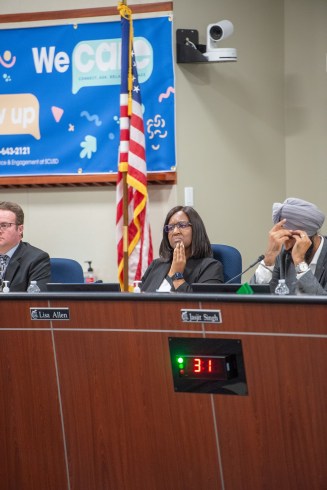 SCUSD Boardmember Lisa Allen. Russell Stiger Jr., OBSERVER
One of the most urgent education stories heading into 2026 is the Sacramento City Unified School District’s financial instability. In late 2025, district leaders acknowledged a $43 million budget deficit, driven by overspending on salaries, special education, contracts and operational costs. The deficit threatens staffing levels, student services, enrichment programs and local control of the district itself. For Black families — whose children already face disparities in discipline, achievement and access — the fiscal crisis raises critical questions about whose programs are cut, whose voices are heard, and how equity commitments hold up under financial pressure. How SCUSD resolves, or fails to resolve, its structural budget challenges will be one of the most consequential local stories of 2026.
African American Studies At SCUSD — From Promise To Practice
At the same time the district confronts financial strain, it also is laying groundwork for a districtwide African American studies program, targeted for launch in the 2027-28 school year. In 2026, much of the behind-the-scenes work will take place: curriculum development, staffing decisions, and community engagement that will determine whether the program becomes transformative or symbolic. For Black students and families who have long advocated for culturally affirming education, the coming year will be critical in assessing whether this initiative survives fiscal tightening and administrative turnover — and whether it is implemented with the depth, rigor and respect it deserves.
The 2026 General Election — A Defining Political Moment
The 2026 general election will be one of the most consequential political moments for California in a generation. With the governor’s seat open, voters will decide who sets the state’s direction on health care, education funding, housing, labor, criminal justice and equity. For Black Californians, including Sacramentans, this election will shape policy outcomes that directly affect daily life. Early reporting shows a crowded and unsettled field, with no clear front-runner and major figures positioning themselves around issues that disproportionately affect communities of color. In 2026, OBSERVER readers should watch not only who runs and who wins, but how Black voters are engaged, what issues rise to the surface, and whether candidates meaningfully address racial and economic inequities or merely reference them in passing.
Rancho Cordova’s Growth — Power, Representation And Development
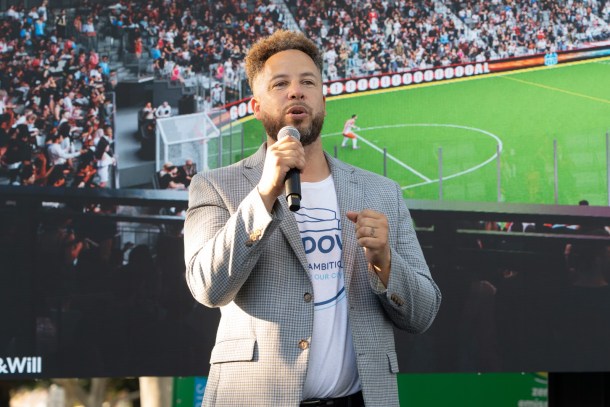 Joshua Wood, Sacramento developer and entrepreneur. Courtesy Photo
In Rancho Cordova, Mayor Garrett Gatewood’s second term represents continuity and opportunity in a city still defining its identity. As one of the region’s few African American mayors, Gatewood’s leadership will intersect with one of the most ambitious development projects in the area: Cordova City Center, a $1 billion mixed-use development spearheaded by Josh Wood, CEO of KozPure Development. Approved in 2025, the project promises a new downtown, jobs and cultural activity — but 2026 will be the year when commitments are tested. Residents and regional observers will be watching how development proceeds, who benefits economically, and whether community access and inclusion remain central as plans move from vision to reality.
Black Leadership In Higher Education — A Regional Constellation Of Influence
Few regions in the country can point to as many African Americans leading major higher-education institutions as Sacramento can heading into 2026. Luke Wood at Sacramento State, Gary May at UC Davis, Torence Powell at Los Rios Community College District, and Parnell Lovelace at Jessup University collectively influence tens of thousands of students and billions of dollars in educational and workforce infrastructure.
At Sac State, Wood’s leadership continues to shape conversations about growth, visibility and institutional ambition, including the university’s push toward national athletic prominence and what that means for academic priorities and campus culture. At UC Davis, May’s leadership already has reshaped the region through the 2025 launch of Aggie Square, an innovation district bringing research and investment into Oak Park while raising questions about community benefit and displacement. Meanwhile, Powell’s appointment as Los Rios chancellor places a Black leader at the helm of one of the state’s most important access points to higher education and economic mobility. In 2026, higher education will be a central — and underappreciated — lever shaping Black opportunity in the region.
The Black Arts Economy — Survival, Sustainability And What Comes Next
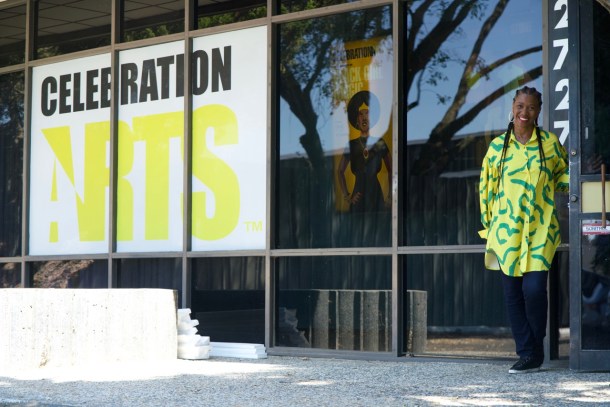 Celebration Arts, the region’s long-standing Black theater company. Louis Bryant III, OBSERVER
One of the quieter but most consequential stories heading into 2026 is the financial fragility of Sacramento’s Black arts and entertainment and nightlife ecosystem. In late 2025, The OBSERVER reported on Celebration Arts, the region’s long-standing Black theater company, launching a public campaign to survive amid mounting financial pressures. The story resonated deeply because it reflected a broader reality: many Black-led arts organizations, artists and entertainment and cultural institutions are struggling with rising costs, shrinking philanthropy and limited public investment. While Celebration Arts is the only case formally reported so far, arts leaders suggest a sector under strain. In 2026, the question will not just be whether individual institutions survive, but whether Sacramento values the Black arts and entertainment community as essential civic infrastructure — worthy of sustained support rather than emergency rescue campaigns.
Stockton’s Tragedy And The Regional Responsibility To Respond
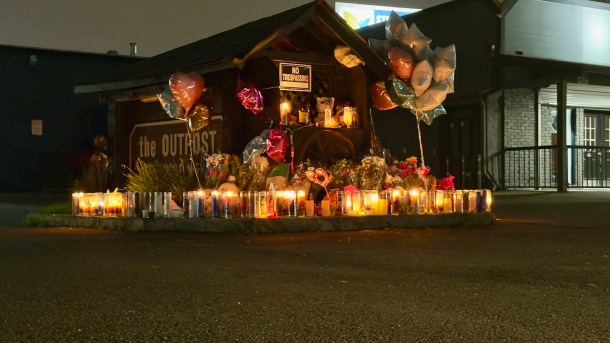 Memorial honoring the victims of the mass shooting in Stockton. OBSERVER
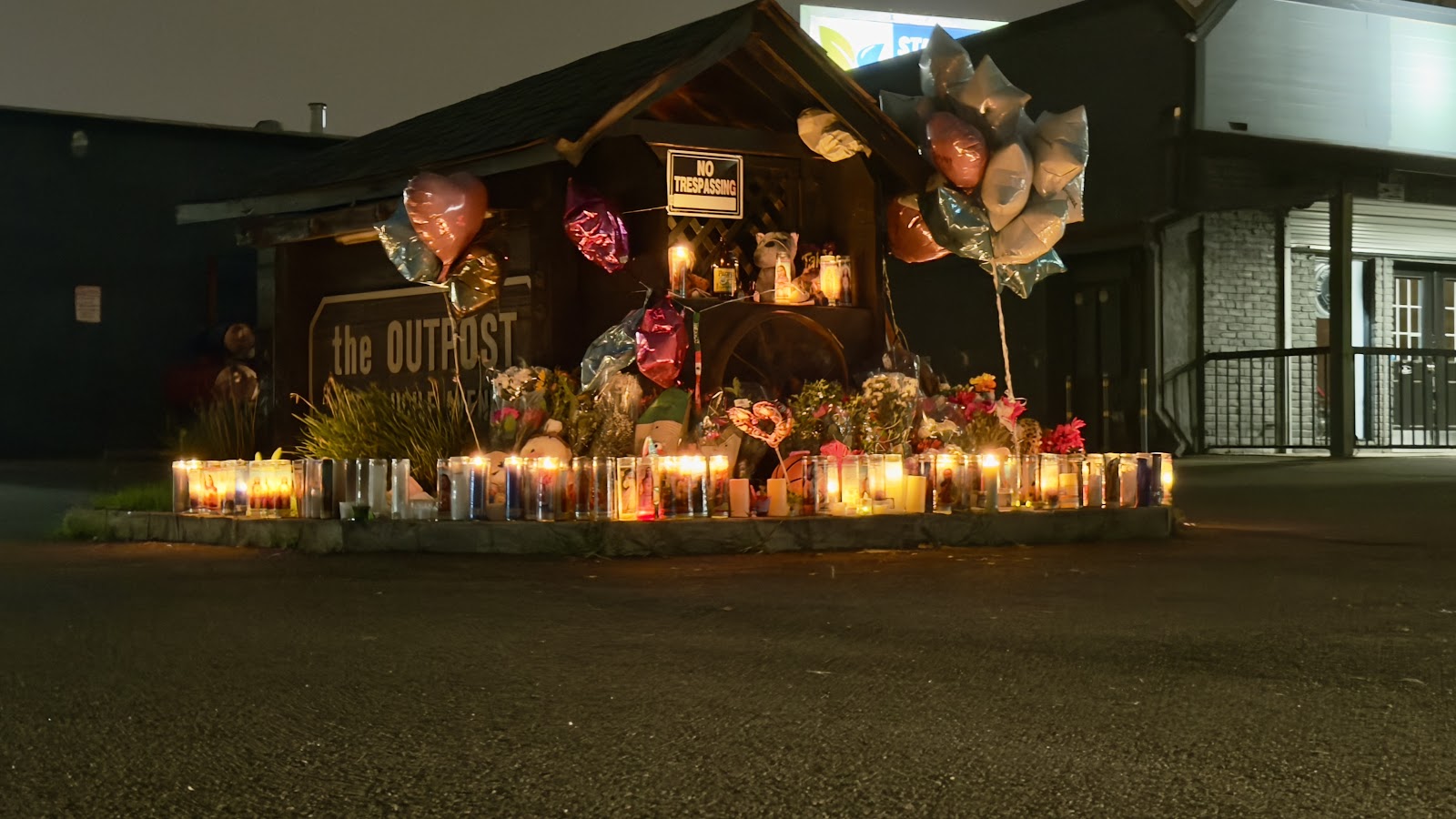
Just south of Sacramento, Stockton entered 2026 carrying the weight of one of the region’s most devastating recent tragedies. In late 2025, a mass shooting at a family birthday gathering left four people dead, including three children, and more than a dozen others injured, sending shockwaves through the Central Valley and deeply affecting Black families across the region. In the aftermath, Stockton’s faith leaders, community advocates and elected officials called not only for justice but for long-term support for the families impacted, including trauma-informed mental health services and sustained investment in violence prevention. For Sacramento residents, many of whom have family, cultural and economic ties to Stockton, the tragedy underscored how interconnected the region truly is. In 2026, how Stockton’s community heals, organizes and is supported will remain an important story to watch, and one The OBSERVER will continue covering with care and accountability.
Related