
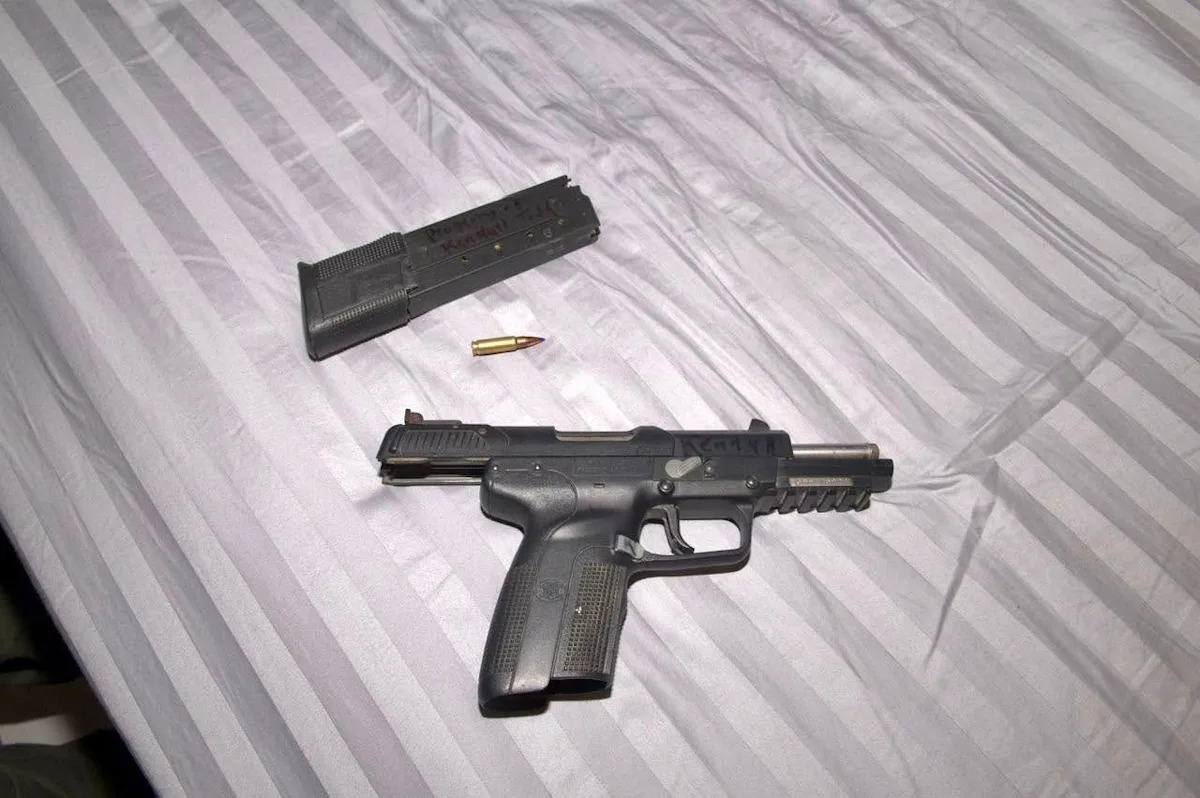
A federal appellate court has struck down California’s ban on openly carrying firearms in most parts of the state, ruling that the prohibition violates the Second Amendment. The decision, issued Friday by a divided Ninth Circuit panel, marks a significant shift in the state’s long-standing approach to gun regulation.
The 2-1 ruling sided with gun owner Mark Baird, finding that California’s restrictions on open carry in counties with more than 200,000 residents—covering about 95% of the state’s population—ran afoul of the U.S. Supreme Court’s 2022 Bruen decision. That landmark case required courts to evaluate gun laws against the nation’s “historical tradition of firearm regulation.”
Judge Lawrence VanDyke, writing for the majority, emphasized that open carry “unquestionably involves a historical practice” dating back to the founding era. “The historical record makes unmistakably plain that open carry is part of this Nation’s history and tradition,” VanDyke wrote.
Here’s what to know about the decision.
Reaction to the decision by Newsom, other California elected officials
The ruling sparked immediate and polarized reactions. Gov. Gavin Newsom blasted the decision as “reckless” and warned it could “return California to the days of the Wild West.” Attorney General Rob Bonta’s office said it is “committed to defending California’s common-sense gun laws” and is weighing next steps, including an appeal.
Gun rights advocates celebrated the ruling as a major victory. Kostas Moros of the Second Amendment Foundation praised the decision on social media, though he predicted the Ninth Circuit might overturn it in a full-panel review. Meanwhile, legal scholars like Adam Winkler called the ruling “bold” but forecast that it would likely be reversed, citing the unsettled state of gun law jurisprudence since the Supreme Court’s Bruen decision.
What this might mean for people who want to carry concealed guns
While the ruling focuses on open carry, its ripple effects could extend to concealed-carry regulations. California currently allows concealed carry with a permit, but recent laws have restricted where those firearms can be taken—banning them in “sensitive places” like parks, bars, and stadiums.
Legal experts say the decision could embolden challenges to those restrictions. Adam Winkler, a constitutional law professor at UCLA, told the New York Times that the ruling “pushes the boundaries of the Second Amendment” and may lead to more litigation over concealed-carry limits. However, Winkler cautioned that the ruling is unlikely to immediately change everyday practices in California, where openly carrying firearms remains uncommon.
A federal appellate court has struck down California’s ban on openly carrying firearms in most parts of the state, ruling that the prohibition violates the Second Amendment.
California’s history of gun control
California has long been a national leader in gun regulation, with roots stretching back decades. In the late 1960s, then-Governor Ronald Reagan signed the Mulford Act (1967), which prohibited the open carrying of loaded firearms in public. The law was a direct response to armed demonstrations by the Black Panther Party at the state Capitol, marking one of the earliest modern restrictions on public gun display.
Through the 1980s and 1990s, California continued to tighten its laws. In 1989, following the Cleveland Elementary School shooting in Stockton, the state enacted the Roberti-Roos Assault Weapons Control Act, banning certain semi-automatic rifles. This was one of the first assault weapon bans in the nation and set the stage for California’s reputation as a gun-control pioneer.
In the decades that followed, lawmakers introduced universal background checks, waiting periods, and restrictions on high-capacity magazines. The state also implemented red-flag laws, allowing courts to remove firearms from individuals temporarily deemed a threat, and expanded safe-storage requirements.
By 2011, California banned the open carry of handguns after activists began displaying unloaded firearms in public spaces, citing safety concerns for law enforcement. Today, California maintains some of the strictest gun laws in the country, including bans on assault weapons, limits on ammunition purchases, and extensive permitting requirements for concealed carry.
In 2023, California Gov. Gavin Newsom signed a sweeping package of gun control measures, including an 11% excise tax on firearms and ammunition to fund violence prevention programs and school security. The legislation also mandates microstamping technology on new guns starting in 2028 and enacts SB2, which restricts where concealed firearms can be carried, such as parks and restaurants.
Newsom has positioned California as a model for “common-sense gun laws,” but the Ninth Circuit’s recent ruling challenges that legacy and could reshape the state’s approach to firearm regulation.
Comparing gun violence in California to other states
California consistently ranks among the states with the lowest gun death rates, thanks in part to its stringent regulations. According to CDC data, California’s firearm mortality rate is roughly half the national average and significantly lower than states with permissive carry laws like Texas or Arizona.
Advocates worry that loosening open-carry restrictions could undermine those gains. Supporters of the ruling argue that constitutional rights should not hinge on geography, pointing out that more than 30 states generally allow open carry. The debate underscores a broader national divide over how far states can go in regulating firearms without infringing on the Second Amendment.
Reuters contributed to this report.
This article originally appeared on Palm Springs Desert Sun: Ninth Circuit overturns California’s open-carry firearm ban