
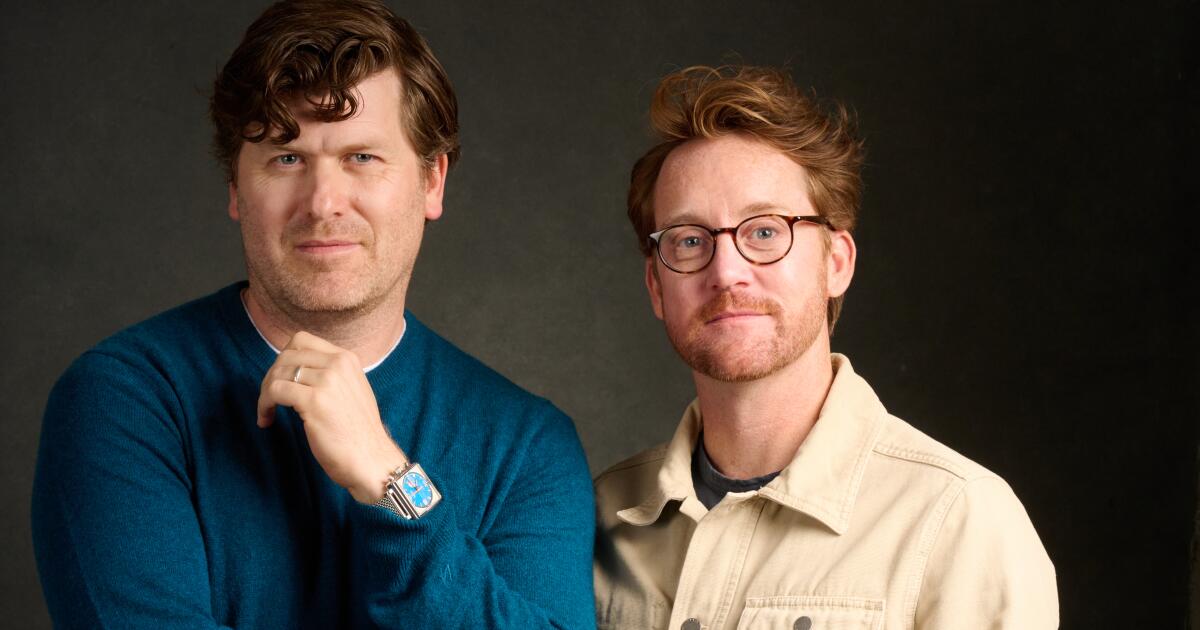
With director Clint Bentley on the road promoting “Train Dreams” and his co-writer Greg Kwedar on set shooting his next film, the pair decided to pass reflections on writing the script back and forth. Here’s their conversation:
Bentley: Greg, I’m curious what you remember of your earliest impressions of the novella. I remember that the things that excited me most about adapting it into a film also made me the most nervous: the way the book makes us feel an entire life in just over a hundred pages, the way dreams and visions interact with our waking world, this beautiful, quiet character of Robert Grainier. I couldn’t wait to portray that old world of logging, even though I had no idea how to pull it off. I remember coming to the moment where a dying man asks for a drink of water from his own boot because there’s nothing else around and I just thought, “I want to put that in a movie.”
Kwedar: The first time I read the novella, or any of Denis Johnson’s work, was when you handed it to me and asked me if I thought this was a movie. I read it in one sitting. It washed over me like a wave. I felt the grandness of the world. The towering forests. The towering ambition of the men remaking the landscape with saws and axes, and the men, like Grainier, who were somehow pulled through that current. I was also struck by its startling intimacy. The peace at the cabin along the Moyie River. The care of relative strangers lifting up Grainier from the pit of despair. And yes, I was quite taken by that drink of water the dying boomer takes from the boot. Really, all of the peculiarities of the book serve to balance the scope and the tenderness and somehow suspend it all into mystery. It also felt like something only you could make, and that is rare to come by in our line of work. And I had this feeling that by working on this, I could know you better through it. So, Clint, what was your greatest memory of the writing process?
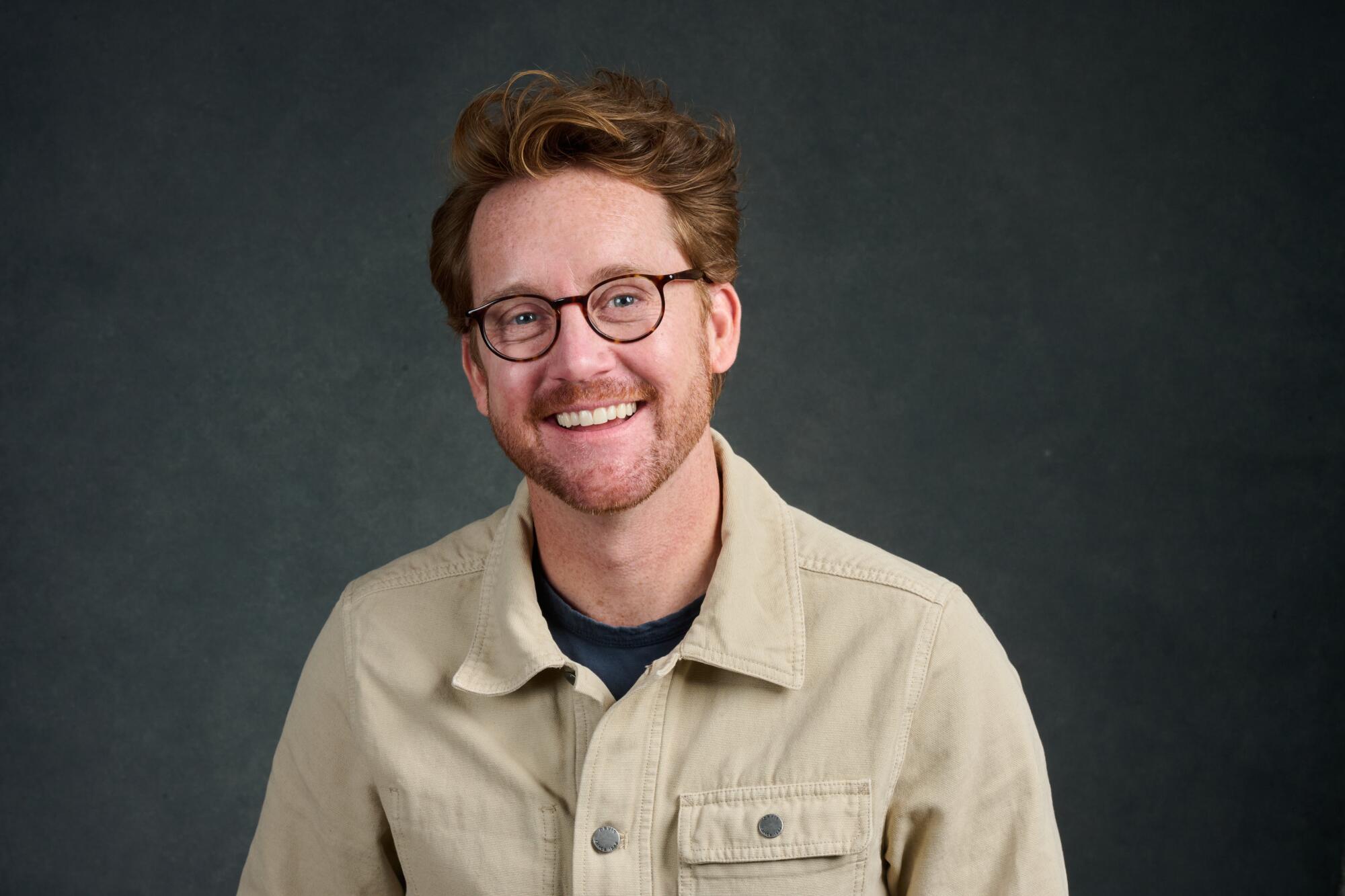
Clint Bentley.
(Bryan Dockett / For The Times)
Bentley: The first thing that comes to mind is the writing trip we took up to the Idaho panhandle — where the story was set and where the book was written. Walking around with that naturalist, meeting the Kootenai people who were reintroducing the sturgeon into the river systems, and of course, listening to Will Patton narrate the book and feeling like I was hearing the book for the first time even though I had read it at least five times by then. But I think my greatest memory of the writing itself was working at that Kansas joke that Arn delivers. That one took at least 10 different iterations of trying to figure out, where in the world would it make sense that Arn — who can fit in anywhere — wouldn’t have a good time? And what state sounds funny? And all those things that go into something like that. I don’t remember how so many things get written, but I remember that one. What about you? What memories come to mind?
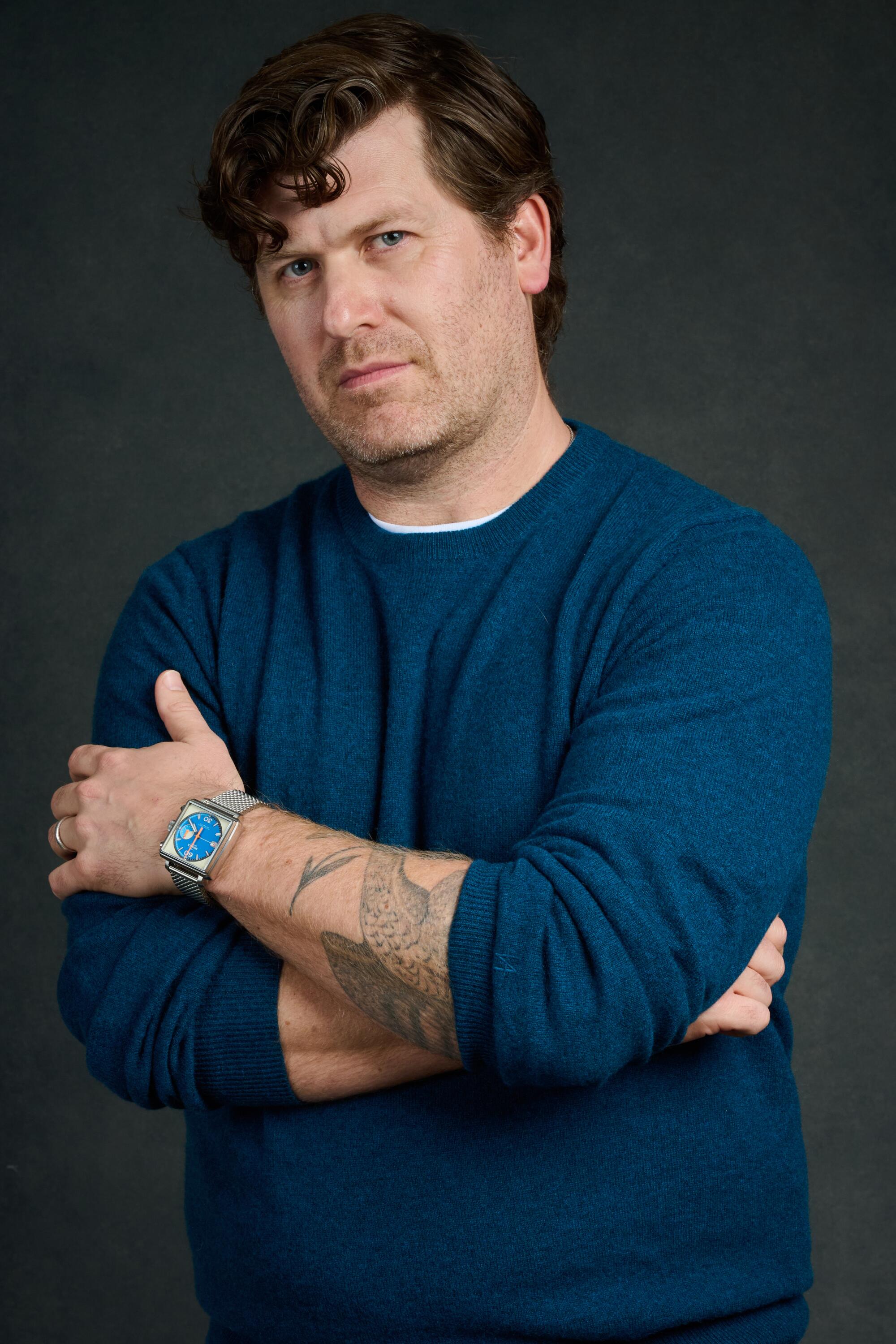
Greg Kwedar.
(Bryan Dockett / For The Times)
Kwedar: I’ll never forget that trip to Idaho. Watching the Moyie River we had read about, cutting through the snow from our cabin window, steps from where Denis and Cindy Lee Johnson once lived. Or buying an armful of first editions of Denis’ work from Bonners Books. Or that night we stumbled onto a giant controlled burn and saw the flames reach up and tickle the moon and recognized the gnawing feeling that fire is something we can only feign to control. But as to the writing itself, I remember us both being very drawn to the character of Claire Thompson and what she represents as an unlikely friendship but also a conduit for Grainier to reckon with his grief. She was not, however, a member of the newly created U.S. Forest Service in the book. That invention in the scriptwriting was such a thrill. And as soon as we opened up that door in the pages, it connected some puzzle piece I didn’t know was missing. Suddenly the lines about needing a hermit in the woods as much as a preacher in the pulpit came so much more alive from the endless horizon atop a watchtower. Any last words?
Bentley: Only that the writing process on this one continued through every stage of production. The script evolved as more artists joined the project and reflected back how the story was speaking to them. Then throughout postproduction, as the scenes were continually retooled and rearranged, the story continued to evolve and grow and new realizations kept springing from the work for everyone involved. Even now, as it’s being given to audiences, their responses continue to deepen my understanding of Grainier’s story. It’s a story that buried into my bones the first time I read the novella and now, all these years later, it’s still revealing new layers of meaning to me.