
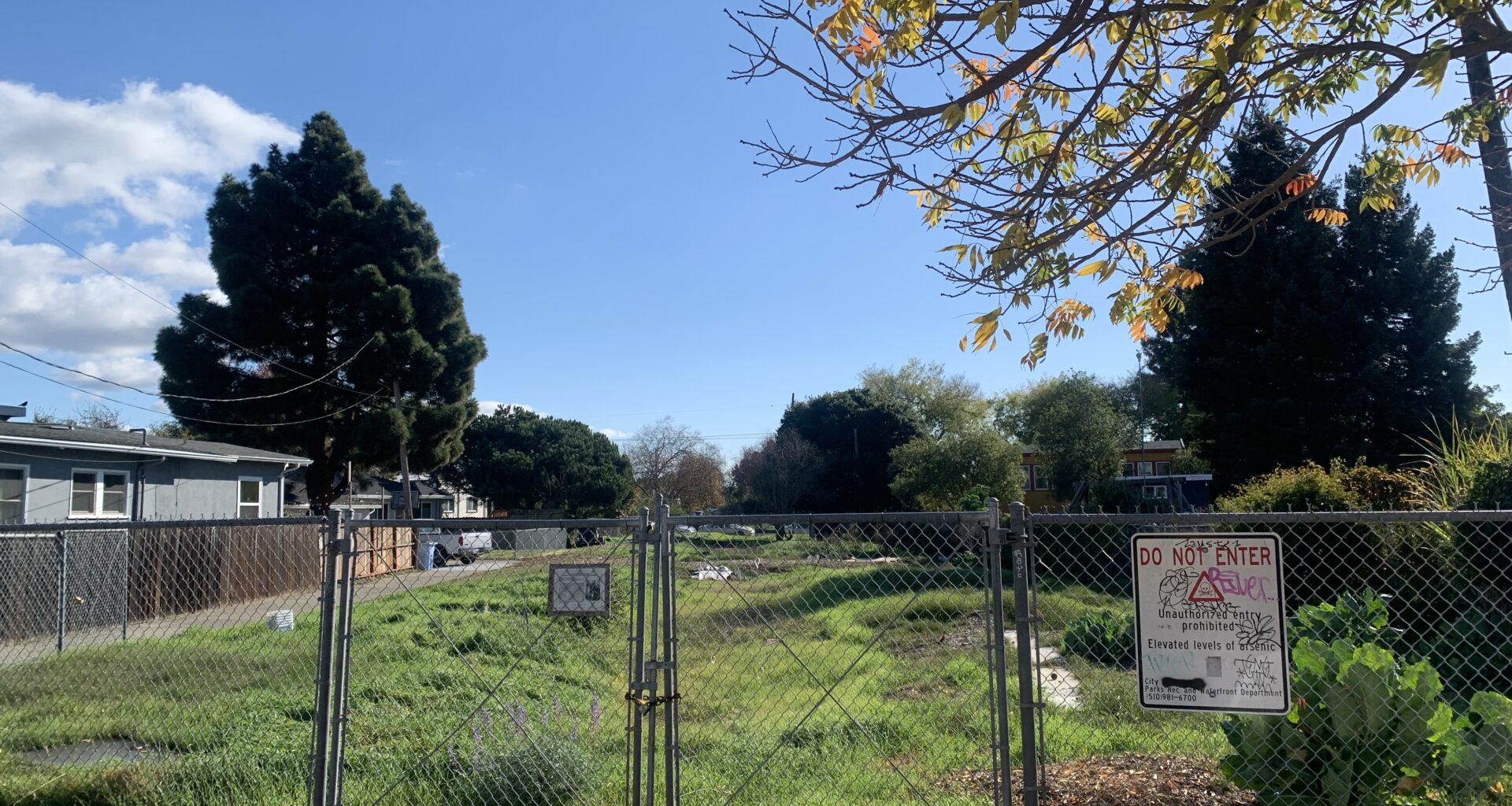
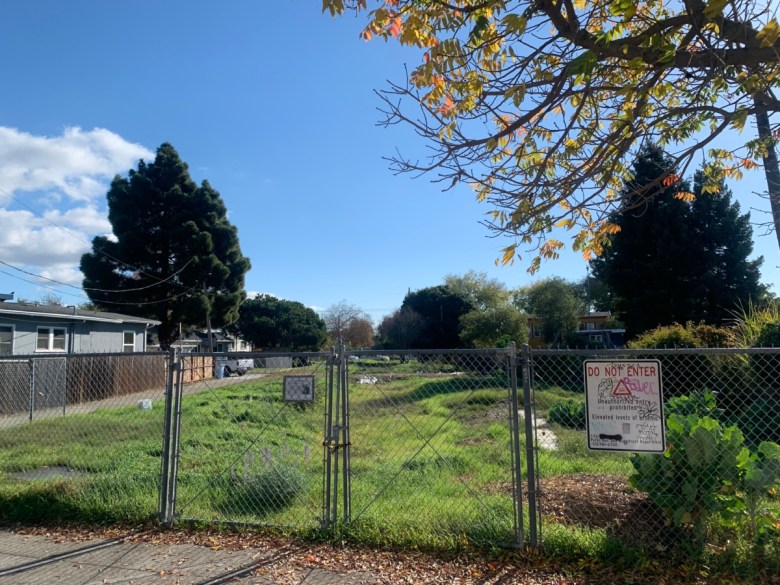
 This vacant portion of the former Santa Fe rail corridor, seen from the 1400 block of Carleton Street, will be transformed into a city park. Credit: Nico Savidge/Berkeleyside
A strip of a former rail line through Southwest Berkeley will be transformed this year into the city’s newest park, boasting community gardens, children’s play areas and a dog park across four long-neglected blocks.
An extensive environmental clean-up for the quarter-mile stretch of the old Santa Fe rail corridor between Blake and Ward streets is set to get underway this spring, Parks Director Scott Ferris told Berkeleyside. That will set the stage for construction of the new park in the summer, which Ferris hopes will wrap up by the end of the year.
Those blocks are the largest remaining undeveloped segments of the line, which once carried freight and passenger trains down the middle of Sacramento Street before veering west, running between houses through West Berkeley and beyond. The city acquired the right-of-way in 1977 and over the decades has cleaned up other pieces of the line, turning them into cherished open spaces such as Strawberry Creek Park, Cedar Rose Park and the West Street bike path.
Residents have long wanted to do the same with the portion between Blake and Ward, which today is a series of fenced-off and overgrown lots, with signs warning people not to enter because of arsenic contamination in the soil.
Plans for the space really got going in 2021, when Berkeley received a $5 million state grant, funded by the 2018 parks and water bond Proposition 68, which will cover most of the cost of remediating the soil and building the park. The project’s total price tag is $8 million, with the rest of the funding coming from Berkeley’s parks tax and general fund, Ferris said. The City Council is expected to award a contract for the remediation later this month, he said.
The park’s northernmost block, along Blake and Acton streets, will be dedicated to community gardens, with a mix of raised and in-ground beds. Ferris said the plots will be managed by a volunteer coordinator from the Ecology Center, like at the city’s other community gardens.
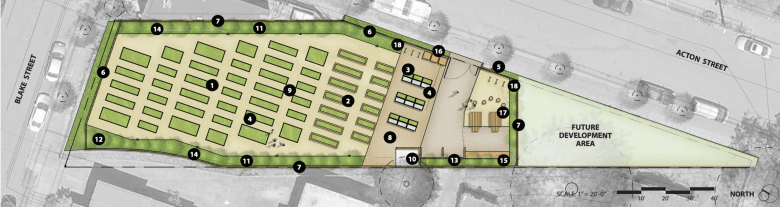 The northernmost block of the new park, between Blake and Parker streets, will hold community garden beds. See more details. Credit: PGAdesign
The next block, across Acton and Parker streets, is made up of the new dog park with separate spaces for what the city terms “active” and “passive” dogs. The rail line today hosts an unofficial dog run, which will go legit with this project.
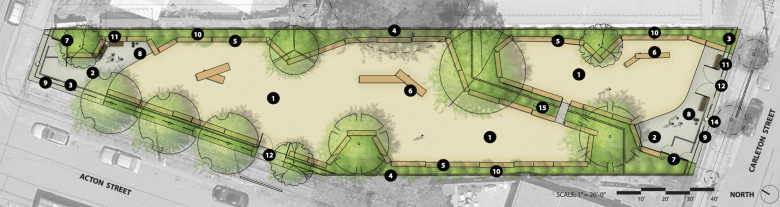 Two new dog play areas will replace what is now an unofficial dog run. See more details. Credit: PGAdesign
Just across Carleton Street is a block where kids can get their energy out, with wooden play structures and a track for children to ride scooters and bikes.
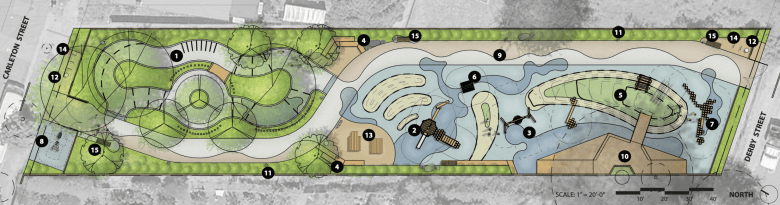 The park includes new play areas for children. See more details. Credit: PGAdesign
Finally, across Derby Street, another farming-centric block will have more community garden space and an “outdoor classroom” the city envisions being used for “listening and hands-on learning.” Berkeley plans to partner with “youth-centered” nonprofit organizations to manage that garden, Ferris said.
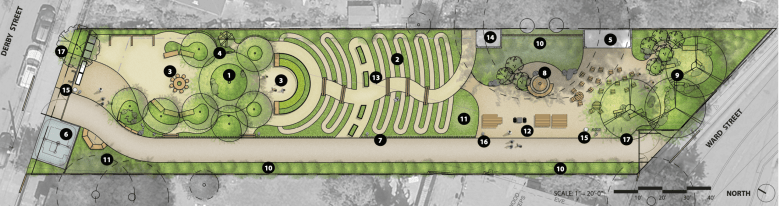 The southernmost block will include more gardens and an “outdoor classroom.” See more details. Credit: PGAdesign
Several picnic tables and other seating areas will be scattered through the park as well, according to design plans.
The open space has not yet been named, Ferris said, though the city’s Parks, Recreation and Waterfront Commission is working on a recommendation.
West Berkeley Councilmember Terry Taplin said he is most excited for the opening of the new dog park, since residents have been asking for one in the neighborhood for a long time. And after the city lost a $1 million federal grant that funded a program to plant trees in South and West Berkeley amid cutbacks by the Trump administration last year, Taplin said it’s all the more critical to “deepen our investment” in the historically disadvantaged area.
“I think it’s really important, as we continue building housing, to also increase access to urban green space — especially in neighborhoods like South Berkeley,” he said.
“*” indicates required fields