

San Franciscans were hit with their sixth power outage in less than a month, just two days into the new year.
The prolonged blackouts left people with medical complications stranded at home while businesses lost tens of thousands of dollars in spoiled inventory and lost sales during the busy holiday season. Across the city, people had one main target for their ire: Pacific Gas & Electric Company, the city’s main power provider for more than 120 years.
State Sen. Scott Wiener took the opportunity to renew his efforts to break up with the utility giant through legislation. Meanwhile, one of his opponents in the race to fill Nancy Pelosi’s congressional seat, Saikat Chakrabarti, took to social media (opens in new tab) to declare that, rather than wait, San Francisco could just use its legal authority to “seize PG&E’s infrastructure now and switch to public power.”
Eminent domain — the government’s mechanism to force the sale of private property for public use — has emerged as a rallying cry for critics of PG&E’s monopoly and residents fed up with repeated blackouts. Supporters argue that if San Francisco took control of the utility’s local infrastructure, the city could prioritize reliability over profits sent to outside investors.
The power has been used to commandeer land for the high-speed rail project and is commonly employed for the construction of new power lines or sidewalks. But Brad Kuhn, a partner at Nossaman LLP who leads the firm’s Eminent Domain practice, (opens in new tab) said it’s rarely been used successfully to take over an existing private utility.
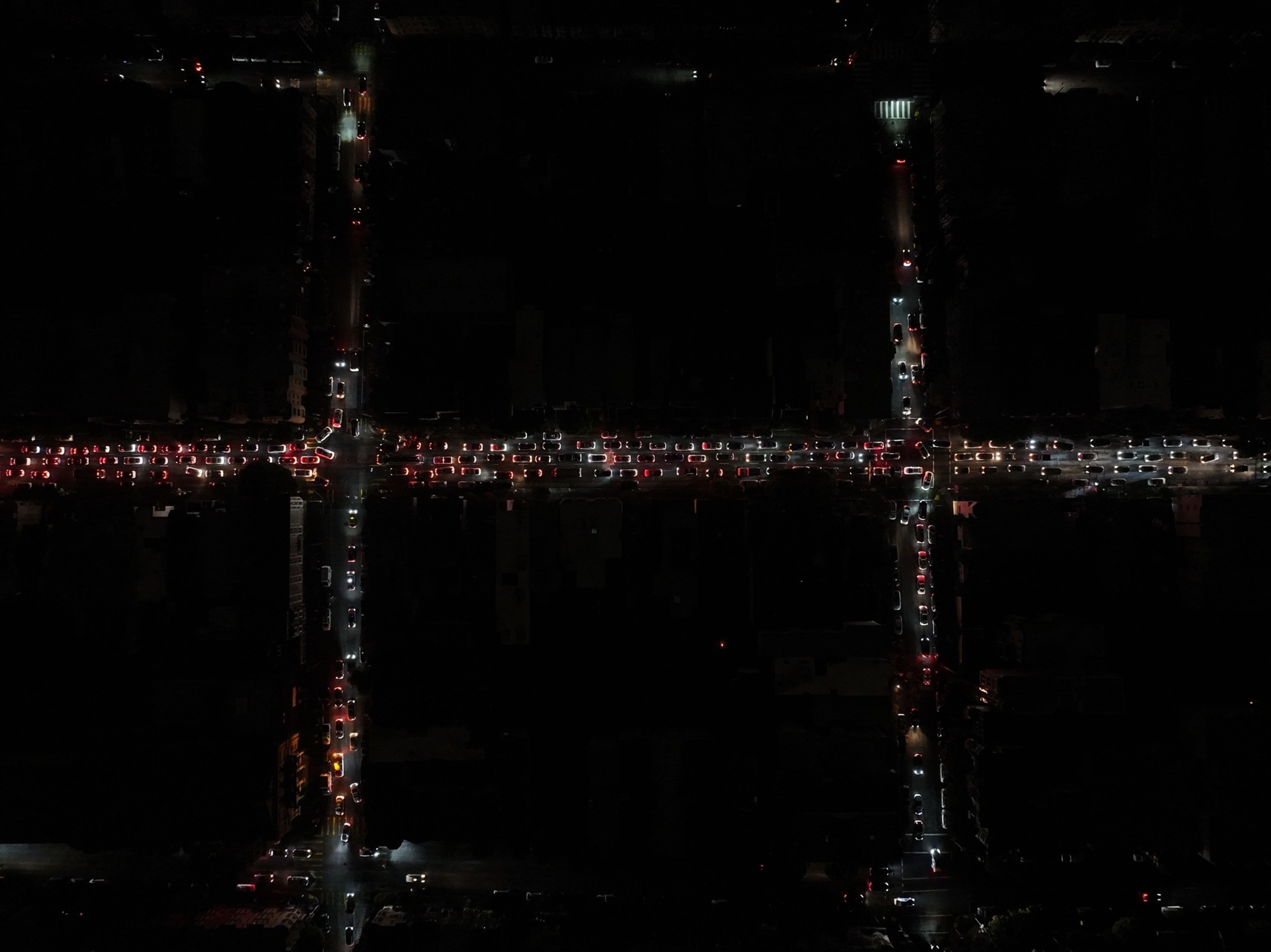 A view of traffic from above when more than 130,000 PG&E customers were without power on Dec. 20, 2025. | Source: Tayfun Coskun/Anadolu/Getty Images
“The utilities are always going to put up a massive fight since this pertains to their lifeblood,” Kuhn said. “The biggest challenge the public agencies face is proving that there is a more necessary public use — essentially that they would operate things better or more efficiently than the investor-owned company.”
Regardless of the outcome, a San Francisco effort would be hugely expensive and take years, likely outlasting current political terms and residents’ immediate frustrations.
Kuhn could not comment specifically on the potential takeover involving San Francisco and PG&E since his firm represents the city on separate matters, but provided insight from his two decades guiding public agencies and property owners through the process.
“These takeovers last multiple years,” he said, adding that even if successful, public agencies are not entitled to have their attorney fees recovered afterwards. “It’s all coming out of pocket.”
That could add millions of additional dollars to the billions it would already take to purchase PG&E’s infrastructure.
A price tag far beyond power lines
Should San Francisco decide to go down this path with PG&E, at least two-thirds of the Board of Supervisors would have to vote in favor of authorizing eminent domain actions. If a purchase agreement cannot be reached with the property owner — more than likely in the case of PG&E — then the city would have to file a lawsuit in court to establish its justification.
In order to force a sale, the city would have to successfully prove the necessity of such an action in court and pay PG&E fair market value for its assets and loss of business. The property owner can contest or dispute any findings made by the city in the subsequent trial.
“Investor-owned utilities can argue that they’ve been providing services for decades, and thus, have the expertise and resources to be more efficient than a public agency that doesn’t have the know-how,” Kuhn said, adding that private providers are also regulated by the California Public Utilities Commission and already have to secure approvals for rate increases.
“PG&E has had the privilege and honor of serving the residents of San Francisco for more than 100 years, and we remain committed to serving San Franciscans for years to come,” a representative for the utility said in a previous statement, claiming the city had previously failed to “specifically identify” the assets it wanted to take and adequately explain the plan to regulators.
Appraisals wouldn’t just include the cost of buying PG&E’s substations or power lines. Other aspects that would need to be litigated include: How much of the existing system is the city taking over? How do portions of the system severed from the rest get addressed? Do existing employees who support those portions lose their jobs? Who is responsible for managing the back-end infrastructure, such as billing and IT?
 Pacific Gas & Electric crews at the substation building at 8th and Mission. | Source: Jessica Christian/SF Chronicle/AP
All of those questions have a dollar value attached to them, Kuhn said. Oftentimes, private utilities will value their assets 10 to 20 times more than what public agencies will bid.
Right now, the California Supreme Court is in the midst of considering a significant case — Town of Apple Valley v. Liberty Utilities (opens in new tab) — that would determine how the courts handle future eminent domain cases and what barriers each side would have to overcome in litigation.
If the town of Apple Valley prevails later this year, then public agencies will get more deference from the courts when citing their findings and appraisals, Kuhn explained. However, if Liberty wins, then each new eminent domain case would be subject to heightened judicial review and scrutiny.
If those valuations ever get agreed upon, how the city of San Francisco, which is facing a worsening budget deficit, would finance a multibillion-dollar transaction is an entirely different matter. Most cities would have to put forth another bond measure, Kuhn said, in essence raising taxes on residents to pursue the effort.
Officials at City Hall and the San Francisco Public Utilities Commission have led exploratory efforts to take over the city’s share of the PG&E grid in years past. When the company filed for bankruptcy in 2019, former Mayor London Breed and former City Attorney Dennis Herrera offered to buy the grid in the city for $2.5 billion (opens in new tab), following up with another proposal in 2020.
The utility declined both offers.