
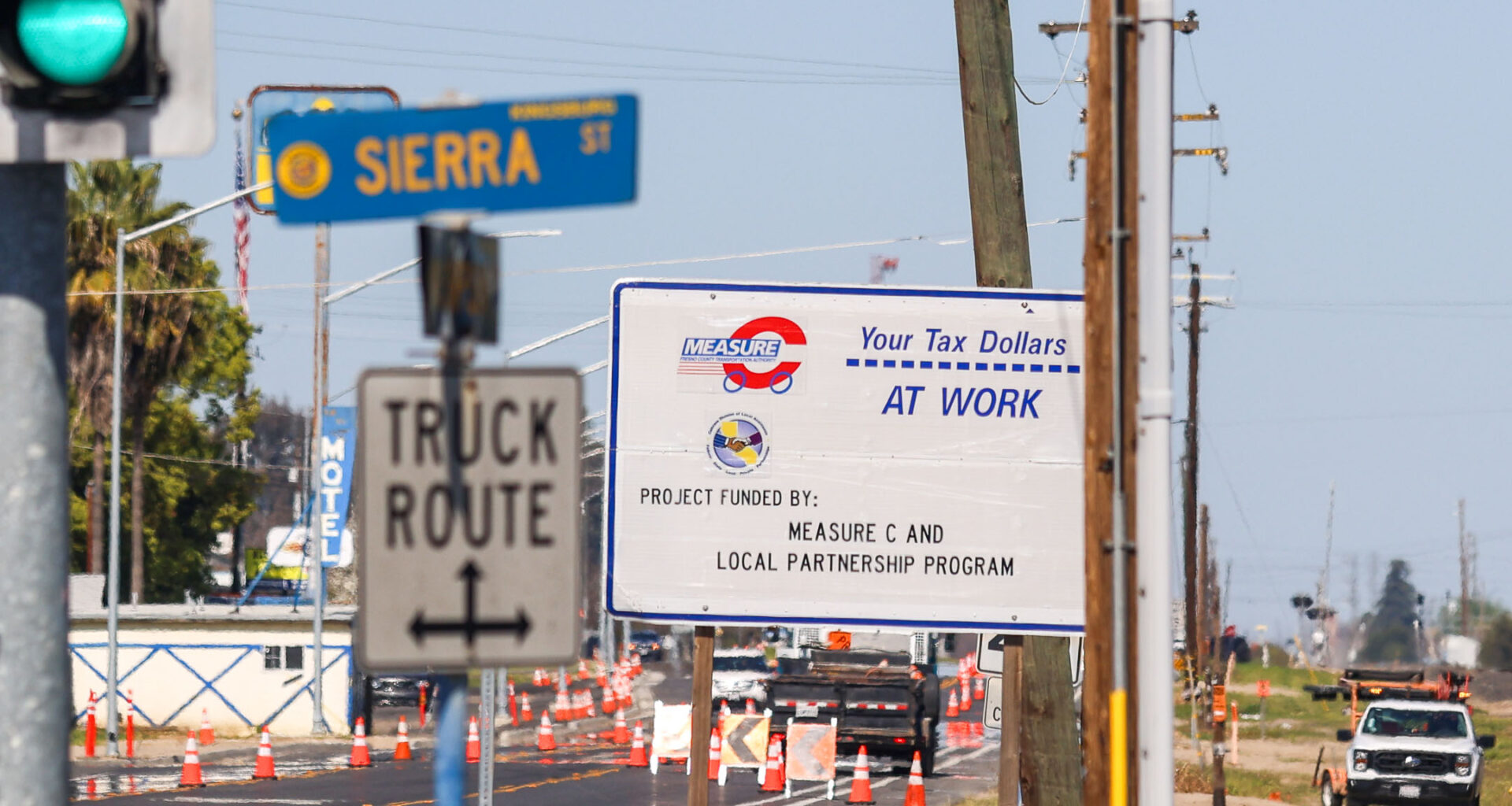
FRESNO COUNTY – After months of meetings and nearly a million dollars spent on the Measure C renewal effort, the Fresno Council of Governments is walking away from the county-wide transportation sales tax.
The Fresno COG Policy Board called a special meeting on Jan. 7 where members debated how — or if — they wanted to continue pushing forward with the contentious renewal process. Two hours of discussion led to Clovis Mayor Vong Mouanoutoua proposing to abandon the process, meaning Fresno COG would stop its work to get the Measure C renewal package onto the November ballot.
“It’s time to just say we’re done with it,” Mouanoutoua said. “The process has been stopped. There’s no way for us to move forward like how we would want to move forward; let’s abandon it.”
Mouanoutoua’s motion initially failed with a 7-5 vote, as it did not secure approval from a majority of the policy board members present. Upon reconsideration of the motion, however, it passed 9-3, with elected officials from Reedley, Sanger and Fresno County voting against it.
Policy Board Chair and Parlier Mayor Alma Beltran told the Mid Valley Times that with this vote, COG will not do anything to move forward with the Measure C renewal process and it will be up to the citizens to do so.
“We did everything in our power with what the law allows us to do to work through the process so it could have been on the ballot, but we kept getting a roadblock from the county,” Beltran said.
Representatives from Selma, Kingsburg, Firebaugh and San Joaquin were absent from the meeting. This left the decision up to 12 members of the 16-member policy board that consists of the mayors from all 15 cities in the county and one county supervisor.
Conflict with county stalls renewal
The entire matter was brought back to the policy board when the Fresno County Board of Supervisors declined to put the consideration of the ballot measure on the agenda for either of its meetings in January, Fresno COG Executive Director Robert Phipps said.
Although state law does not require a specific order for who considers the measure, it has traditionally gone to each city council before it is heard by the board of supervisors; however, the policy board wanted it to go to the board of supervisors first.
When motioning to approve the final Measure C renewal package at the COG Policy Board meeting on Dec. 18, Fresno Mayor Jerry Dyer specifically directed COG staff to work with the board of supervisors to put the measure on their Jan. 6 meeting agenda. The Fresno County Board of Supervisors did not do so.
At the Jan. 7 policy board meeting, Dyer said he requested this because he wanted the cities to be able to hear from the county first, “simply because there had been a lot of comments that have been made about the fact that this was ‘dead on arrival’” to the board of supervisors.
Fresno County Board of Supervisors Chair Garry Bredefeld addressed this, saying the board doesn’t direct other people to put items on their agendas and doesn’t take direction from COG on when to put things on its agenda.
“So for me, personally, I was frankly offended that we were directed to put something on the agenda,” Bredefeld said.
He added that although he has been vocal about his opposition to the Measure C plan and the renewal process, “I don’t know that I would vote to keep it off the ballot.”
Bredefeld said he wanted the measure to go before all of the cities first. Other supervisors shared this perspective at their Jan. 6 meeting when they addressed the absence of the Measure C plan from their agenda.
“I also want to be respectful of the process,” Board of Supervisors Vice Chair Luis Chavez said. “I went back and checked. Historically, the 15 cities have placed it on their agenda first and had their conversation debated and dialogued and then subsequently came to the county.”
However, given the strong opposition to the Measure C renewal process expressed by Bredefeld and Supervisor Buddy Mendes, Mouanoutoua, Dyer and other policy board members said they felt that this was a tactic by the board of supervisors to delay the process.
“We already know what cities support the measure,” Beltran said at the policy board meeting. “They’ve been very consistent in supporting and actually voting through it, so it’s a waste of our time, and that’s what I think is happening.”
Renewal process
To understand the policy board’s reasoning, it’s helpful to review the steps that need to happen in order for Measure C to go before all Fresno County voters in November.
First, Fresno COG had to prepare the plans for the sales tax revenue. This included determining how much money each city and the county would receive from the revenue, what kind of projects the money would be used for and how the money could be used.
This process wrapped up in December 2025, when the COG policy board approved the implementation plan.
Next, all city councils in the county, as well as the board of supervisors, needed to consider a resolution to put the measure renewal on the ballot. For a county-wide tax, both the board of supervisors and a majority of the cities representing a majority of the county’s population would need to approve the resolution.
This essentially means that if a few small cities, like Orange Cove and Kingsburg, did not approve the resolution, but the rest did, the measure would still go on the ballot for all county voters. If the city of Fresno, with just over half the county’s total population, did not approve the resolution, however, it would not go on the ballot.
The same goes for the county board of supervisors. Even if all 15 city councils in Fresno County approve the resolution to put the measure on the ballot, but the county does not approve it, the measure does not make it onto the ballot.
Moving forward
Dyer said he felt the policy board had two options: it could discontinue the Measure C process or it could keep going and take the measure to the cities for consideration. Bredefeld said there was a third option, however — renegotiating aspects of the measure with the county to make it more favorable.
Throughout the entire process, the county and a majority of the city mayors have been at odds over how everything should have played out, whether or not outside groups should have been allowed onto the steering committee and what projects should have received more funding.
Policy board members who voted to abandon the efforts pointed out that many had already compromised on what they wanted and were likely at the end of what they were willing to negotiate.
“If you think that the county is going to vote for this if there’s not a drastic shift, I would be super surprised, since a lot of the different members have publicly stated that they’re not supporting this, they don’t support the process,” Coalinga Mayor Nathan Vosburg said. “So why would we vote in favor of delaying this, understanding that information? Do you think something’s magically going to change? I don’t.”
The possibility of a citizen-led transportation tax initiative to replace Measure C still exists but is short on time to meet circulation and signature requirements to make it onto the ballot.
Without Measure C, the county and its cities will lose out on nearly $7.4 billion in estimated tax revenue between 2027 and 2057, including millions of dollars in funding for small rural cities that otherwise have few resources to fix their roads.