
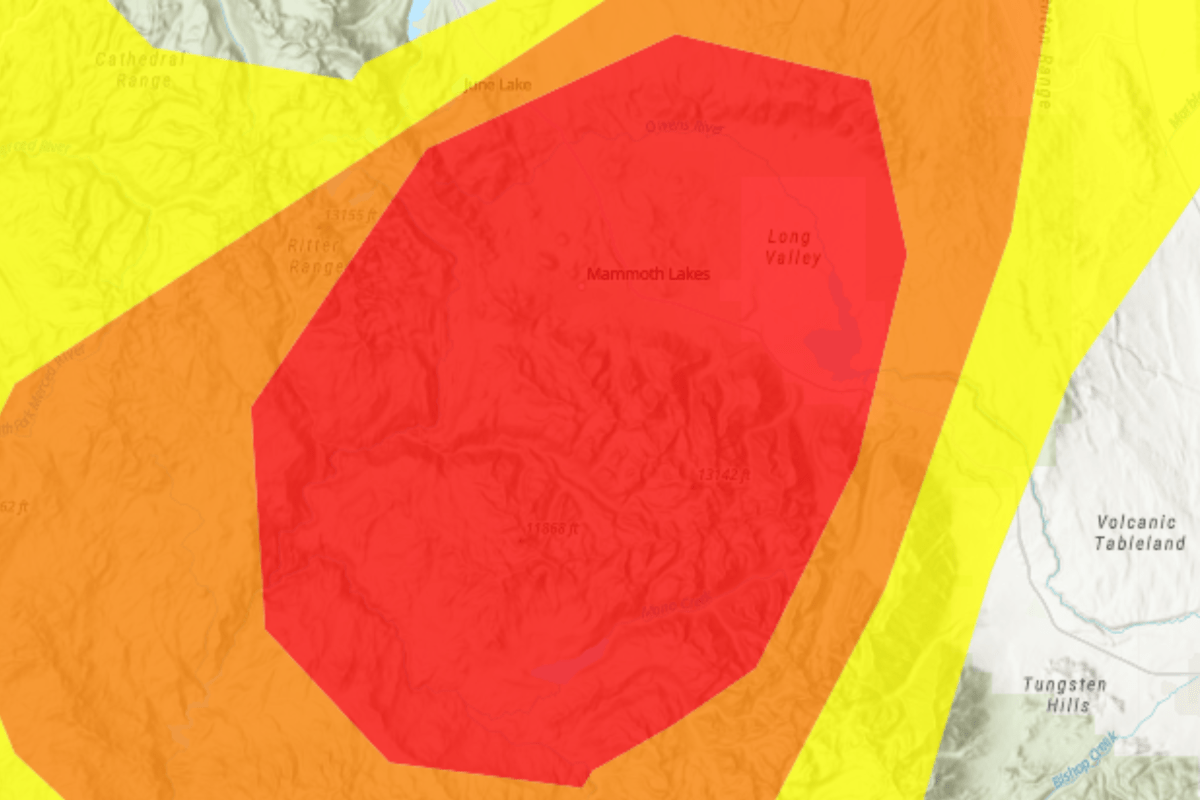
Thousands of residents across a section of California have been advised to stay indoors over concerns from the Environmental Protection Agency (EPA) about high levels of air pollution as of January 11, at 7 a.m. ET, according to a map from AirNow.
The map shows fine particle pollution (PM2.5) in an area of the Golden State—including Mammoth Lakes, Whitmore Hot Springs, and Mono Hot Springs—has reached an “unhealthy” level, according to the Air Quality Index (AQI).
The EPA warns that when “unhealthy” levels of PM2.5 are recorded, people in sensitive groups—which include older adults, children, and those with existing health conditions—are especially at risk of triggering or worsening health conditions, such as asthma or lung or heart problems. They should, therefore, take steps to avoid exposure to outdoor air by “avoiding all long or intense outdoor activities.”
Everyone else should “reduce long or intense activities” and take more breaks.
The AQI is a standardized scale of between 0 and 500 that measures and categorizes the quality of air across the U.S. into six groups:
Good: Scores between 0 and 50—air quality is considered satisfactory, and there are no concerns about pollution.Moderate: Scores between 51 and 100—air quality is acceptable; however, individuals unusually sensitive to particle pollution may experience minor effects.Unhealthy for Sensitive Groups: Scores between 101 and 150—members of sensitive groups may be affected and should limit exposure.Unhealthy: Scores between 151 and 200—everyone may begin to experience health effects, with sensitive groups at greater risk.Very Unhealthy: Scores between 201 and 300—health warnings apply to everyone. Sensitive groups should avoid all outdoor activity, and others should limit prolonged or strenuous outdoor activities.Hazardous: Scores between 301 and 500—serious health warnings for the entire population. Everyone should avoid all outdoor activities.What Is PM2.5 and Where Does It Come From?
PM2.5 refers to tiny, inhalable particles of pollution measuring 2.5 micrometers or less in diameter—smaller than a strand of hair. These particles can be unknowingly inhaled, penetrating deep into the lungs and even entering the bloodstream. Exposure can trigger symptoms ranging from mild eye, nose, and throat irritation to chest tightness or shortness of breath. In severe cases, it may lead to serious health conditions and hospitalization.
PM2.5 can come from a variety of sources, including dust from unpaved roads, smoke from wildfires or smokestacks, or emissions from vehicles and power or industrial plants.