
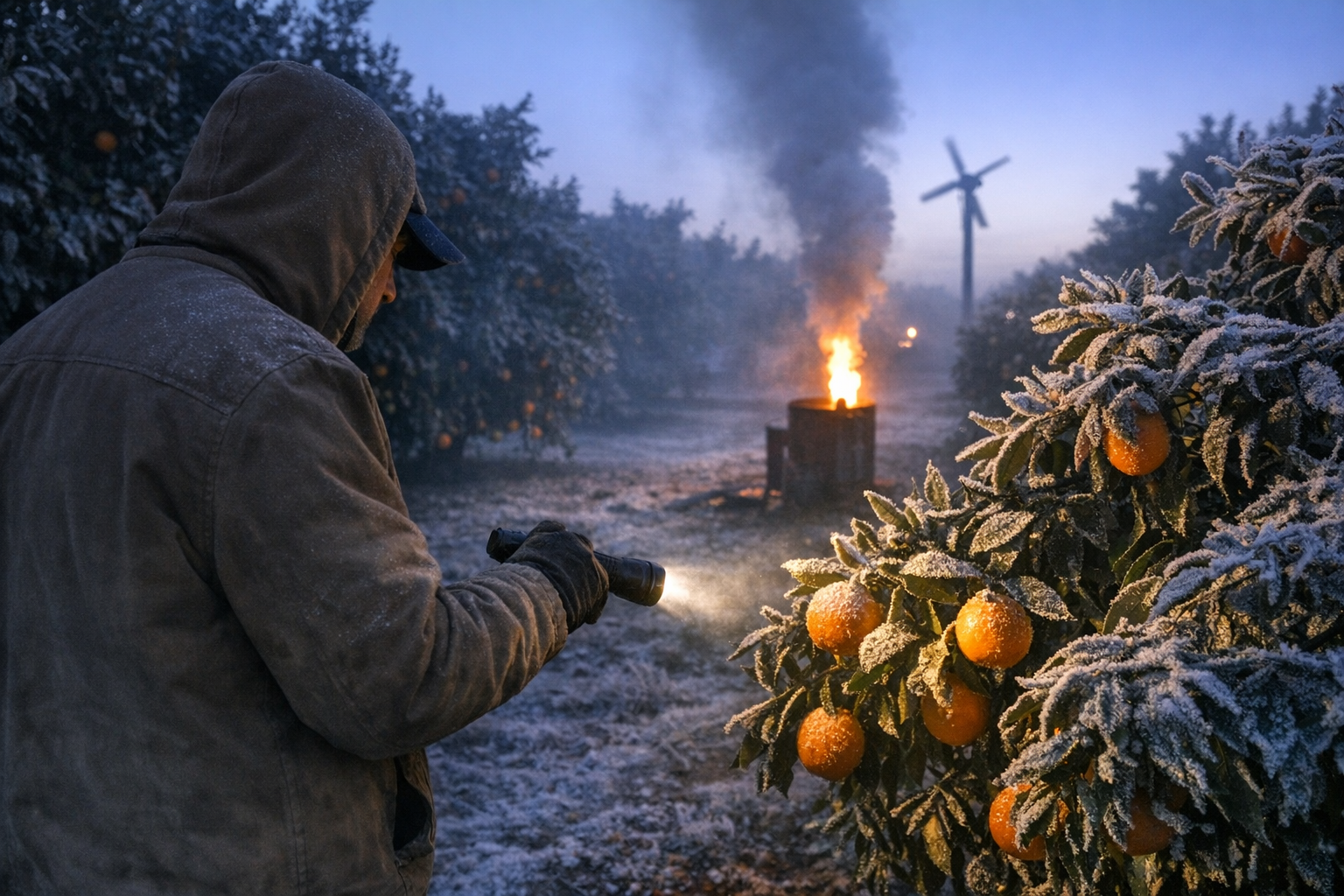
Valley citrus growers and agricultural leaders monitored forecasts as temperatures dipped into the upper 30s on January 10, prompting preparations for potential localized frost across Fresno County. Growers said they were watching overnight lows closely because a brief dip can be tolerable for citrus, but sustained temperatures below 28°F would bring real damage to fruit and trees.
Common frost-mitigation tactics were put into action in orchard blocks considered most vulnerable. Running water through irrigation systems was used to release latent heat around fruit, and wind machines were employed to mix warmer air aloft with colder air near the canopy. Those methods are standard in the Valley when thermometers fall toward the high 30s and growers hope a light, brief freeze will not harm this season’s crop.
The immediate concern extended beyond fields. County and community leaders noted warming centers and other cold-weather services were available to support unhoused residents during the cold snap. Local providers and outreach teams intensified checks in encampments and transit hubs as temperatures dropped overnight, reflecting the human side of agricultural weather risks in Fresno County.
Economically, the stakes are straightforward. Citrus is a high-value crop for the region, and cold-weather stress can affect both yield and fruit quality. While a short, not-too-severe freeze can sometimes be neutral or even beneficial for certain horticultural cycles, prolonged sub-28°F conditions can cause blossom and fruit loss that ripples through harvest schedules, packing operations, and local seasonal labor demand. If sustained freezes were to reduce supply, market responses could include tighter pack-outs and upward pressure on prices for Fresno County fruit during the season.
Longer-term, growers say they are increasingly planning for variable winter patterns. Frost protection is a recurring operating cost that adds to production budgets, and repeated cold snaps can erode margins over time. That dynamic places more emphasis on forecasting, timely irrigation and fan deployment, and coordination with labor and packinghouse partners to limit disruption when weather turns.
For Fresno County residents, the nearest impacts will be on local farm employment rhythms, the appearance and supply of citrus at farmers markets and grocery stores, and welfare services for those exposed to the cold. The takeaway? Keep an eye on local forecasts, check county cold-weather resources if you or someone you know needs assistance, and understand that one short freeze is rarely catastrophic for Valley citrus—but prolonged sub-28°F conditions are the real threat growers and communities aim to avoid.