
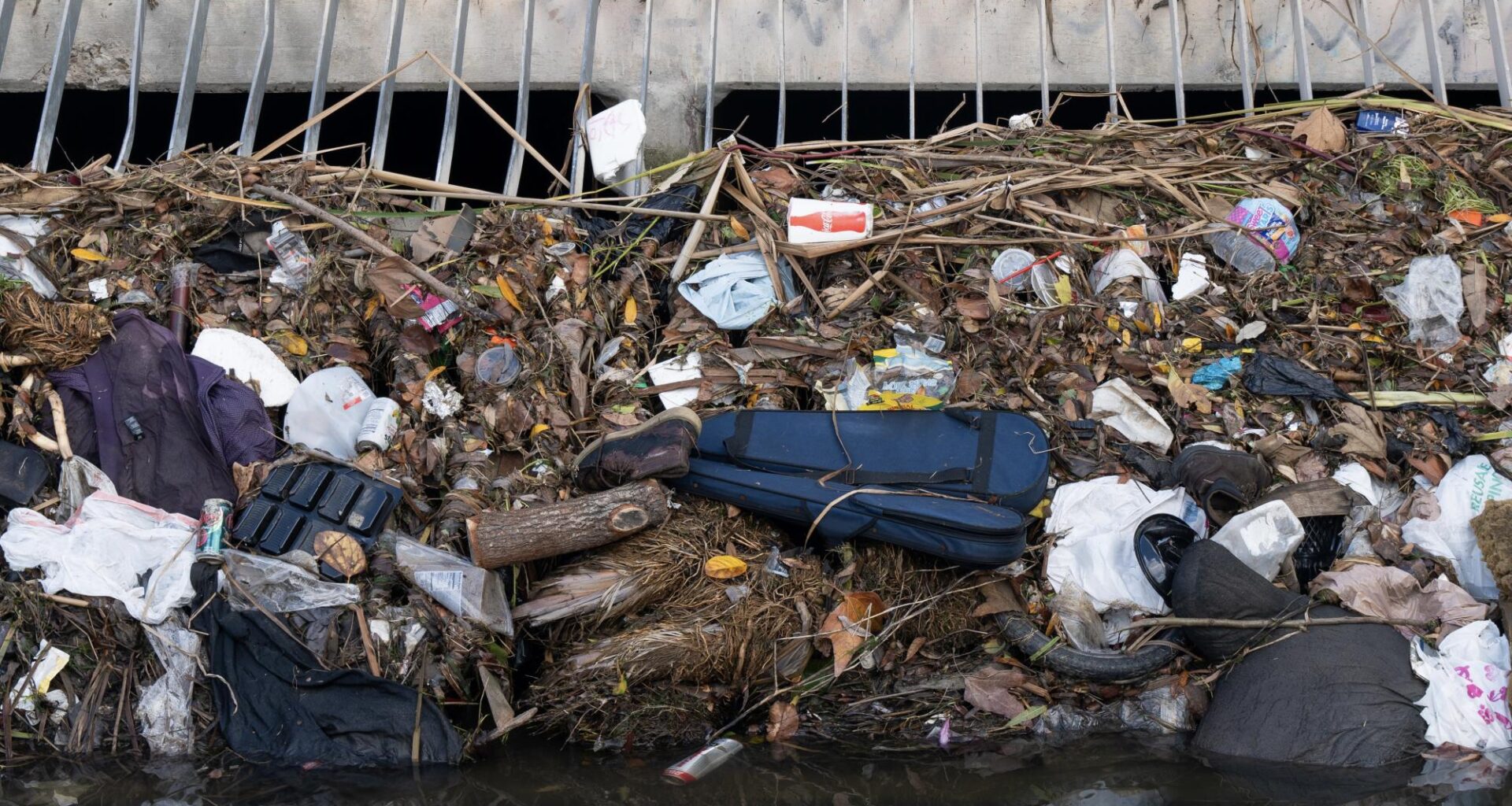
Time and time again, San Diego proves itself woefully underprepared for rainstorms. The issues with the city’s stormwater system have been endlessly prodded, but nothing seems to change. Just this month, rainstorms prompted a flood watch alert for the city and several flash floods across the county. In January 2024, floods resulting from the “thousand-year storm” displaced residents and devastated homes. It’s up to San Diego leadership to take a more proactive stance on funding the stormwater infrastructure and educate voters on its importance, especially as the scale of storms increases year after year.
Roads around San Diego are prone to flooding due to the city’s poor stormwater infrastructure, which consists of pump stations, storm drain pipes, and open flood control channels — all maintained by the city’s Stormwater Department.
Not all flooding is due to the stormwater system’s shortcomings — heavy storms will cause some level of damage regardless of human effort — but the San Diego Stormwater Department is not adequately equipped to maintain its infrastructure at even the bare minimum level.
For the system to be effective, regular inspections and maintenance are necessary, but the department is severely underfunded and infrastructure maintenance is years behind where it should be. In a report released in October 2024 after floods earlier in the year, the Stormwater Department cited a “lack of dedicated funding source for stormwater” as its primary challenge.
City leaders are well aware of the inadequacies of the current system; worse, they seem to be resigned to the idea that flooding is an unavoidable problem. San Diego residents are rightfully frustrated by recurring flooding, especially when much of it is a direct result of outdated pipes or inadequately resourced pump stations.
The city secured a $733 million federal loan in 2022 for stormwater system upgrades and obtained an additional $37 million in June 2024. Somehow, there have been no noticeable improvements in the management of stormwater, and the infrastructure budget remains in deficit.
This deficit is not for a lack of effort from the city, which campaigned for an increased sales tax through Measure E to fund stormwater infrastructure movements, among other projects. Rather, it’s partly the distrust of San Diego residents in their own leadership. The San Diego Union-Tribune opposed Measure E, citing its lack of faith in City Council to allocate the tax revenue appropriately. The measure failed to receive the two-thirds majority it needed to pass.
It is possible that a measure similar to Measure E will appear on the 2026 ballot. But another general sales tax is not what the city needs, and it’s not what taxpayers want.
What we really need is a tax that will directly fund San Diego’s Stormwater Department so taxpayers know exactly what their money is going toward. City Council members abandoned a measure that would accomplish exactly this because it was unlikely to pass in the 2024 election. By focusing on informing voters and proposing a tax with a transparent goal in mind — not just a general fund with shifting priorities — city officials might just be able to win the trust of the public and pass a tax hike.
Unfortunately, Mayor Todd Gloria’s 2026 fiscal budget just slashed the stormwater budget by a third from last year. He also vetoed an extra $800,000 in spending, which will likely derail public education campaigns on stormwater management — exactly the opposite direction in which we should be heading.
Until city leadership gets its heads back on its shoulders, ordinary San Diegans will continue to pay the price of poorly maintained infrastructure with their homes and businesses. Funding our stormwater management will mitigate the impacts of worsening weather, saving the lives and properties of San Diego residents.