
In three weeks, dozens of volunteers and city workers will fan out across San Francisco before sunrise to conduct the biennial count of people living on the streets, in vehicles, and in shelters.
The so-called point-in-time count is just a snapshot. To get a clearer picture of SF’s homeless population, the city’s Department of Homelessness and Supportive Housing (HSH) also collects data from health facilities, jails, shelters, and the school district. It also surveys a sample of people about age, race, gender, sexual orientation, and other personal information. The answers help the agency make estimates and adjust policies.
The count is also a requirement to receive federal homelessness funding from the Department of Housing and Urban Development, which accounts for nearly 10 percent of HSH’s budget. This federal connection, and changes the Trump administration is trying to push through, underscore the need for more detailed work around the point-in-time count, say homelessness advocates, and one local nonprofit is doing something about it.
Community Forward SF is conducting its own survey of the part of the homeless population it provides with emergency shelters, drug and alcohol treatment centers, and other services: women.
“We’re not trying to count how many women are experiencing homelessness. We’re trying to say, ‘What’s the experience?’” said co-executive director Sammie Rayner. “It’s not about getting everybody, as much as getting an accurate picture.”
HSH would not confirm on the record that it will continue to ask questions that the Trump administration considers related to DEI (diversity, equity, and inclusion). The White House’s anti-DEI crusade has led to funding cuts in other areas. In April, HUD said it no longer required or collected data on gender and sexual orientation to comply with Trump’s executive orders. HUD’s 2026 guidelines only require data about a person’s sex: male, female or “unknown.” It’s unclear if HUD would penalize or withhold funding from locales that continue collecting this data.
“San Francisco has always used the PIT count date as an opportunity to ask survey questions that extend beyond what is required for HUD reporting,” an HSH spokesperson told The Frisc via email. “Some information is used in order to generate our HUD reported data, but some information collected is just for San Francisco planning purposes.”
Community Forward began its own survey late last year, saying the city needs deeper information. Community Forward mainly runs programs for homeless people who identify as women. It especially wants to research the connection between domestic violence and homelessness.
This connection is also on City Hall’s radar. In September, Mayor Daniel Lurie designated nearly $30 million in voter-approved funding to homeless services for domestic violence survivors.
Anita Hargrave, a researcher at the UCSF’s Benioff Homelessness and Housing Initiative, said it’s a “realistic concern” that shelters and other homelessness programs devoted explicitly to women and LGBTQ+ folks could face cuts. She pointed to cuts to National Institute of Health funding for studies of LGBTQ+ populations as a recent example. (Those cuts are being challenged in court.)
The 2024 PIT count was about one-third women. Community Forward says the PIT data undercounts women, and by extension domestic violence survivors, because homeless women and LGBTQ+ people often avoid exposure on the streets for safety.
What’s more, the 2024 data are fragmented. HSH asked two similar questions about domestic violence, one of them designed to meet HUD’s requirements at the time, and got two different answers. Community Forward is careful not to criticize HSH’s methodology, but the organization and its backers say they want a clearer picture.
“We know that the point-in-time isn’t sufficient in showing the needs of women, especially single women experiencing homelessness and survivors of gender-based violence,” said Karen Ben-Moshe, policy program officer at Blue Shield of California Foundation. The foundation is funding the survey and other work with a $200,000 grant to the San Francisco Women’s Housing Coalition, which Community Forward helps lead.
“Qualitative research can be really valuable in highlighting what’s missing,” said Ben-Moshe.
‘The right data’
Community Forward runs A Woman’s Place shelter, where the only requirement for services is to self-identify as a woman. Many of their clients are LGBTQ+.
Only about 10 percent of Community Forward’s revenue comes from federal money, according to co-executive director Rayner. If HSH can’t guarantee long-term data about gender, she’s worried about a broader impact, such as less funding for homeless shelters that prioritize women and LGBTQ+ populations.
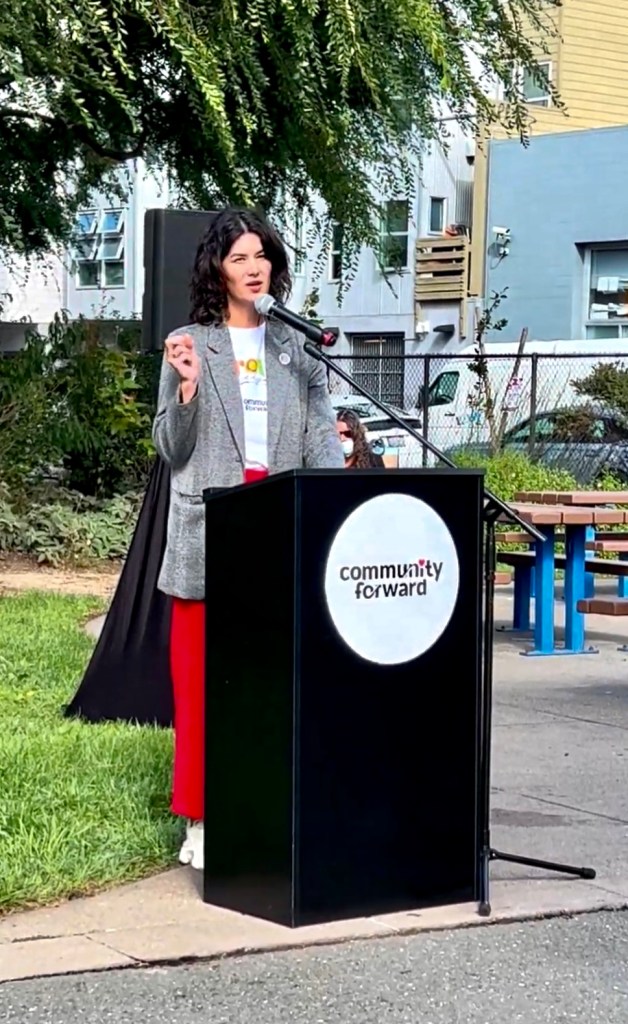 Co-executive director Sammie Rayner speaks at Community Forward’s 30-year anniversary celebration in October. (Photo: Taylor Barton)
A UCLA study published in February says “LGBT people are five times more likely than non-LGBT people to be the victims of violent crime.” Culturally, advocates also worry that federal changes will create an atmosphere where broader attacks on women and LGBTQ+ people are accepted as normal.
“If we’re not collecting the right data, then we won’t know how to solve the problem,” said Hargrave.
A deeper dive
In the 2024 PIT count, more people cited job loss than any other cause, which follows a body of research about people becoming homeless from economic pressures.
But when research focuses on women, the reasons shift. Eighty percent of unsheltered women — that is, on the streets, rather than in shelters, jails, hospitals, or other emergency safe havens — reported abuse or trauma as the reason for their homelessness in a 2019 study. (Trauma here includes emotional, physical, psychological, or sexual harm.) This self-reported rate was more than double that of unsheltered men (38 percent) or sheltered homeless women (34 percent).
If they don’t ask what our experiences are and the trauma that sometimes causes our homelessness, then the response isn’t built the right way.
Rebecca Jackson, community forward vice president of public affairs and reentry
In 2024, HSH asked only two questions about domestic violence. The first — “Are you experiencing homelessness because you are currently fleeing domestic violence, dating violence, sexual assault or stalking?” — was required by HUD. Only 20 percent of respondents said yes.
Separately, the city asked people what they believed led to their homelessness and provided a long list of options. Only 5 percent of respondents marked “family/domestic violence.”
The survey was “asking slightly different things about domestic violence and with very different numbers of respondents,” an HSH spokesperson said via email. “The responses do not need to align.”
Community Forward and Code Tenderloin, a nonprofit helping with the survey, are asking more questions, and they say they’ll also reach more people by sending women and LGBTQ+ folks to do the surveys and spend more time on the streets.

They’re asking 38 questions, mostly focused on the overlap between homelessness and domestic violence. Like the HSH survey, they’re asking whether respondents have experienced violence or view it as the cause for their homelessness. They’re also asking if respondents feel safe in shelters or transitional housing; if they feel their gender identity affects how they’ve been treated while homeless; and what resources or support might help them find and stay in housing.
“If they don’t ask what our experiences are and the trauma that sometimes causes our homelessness, then the response isn’t built the right way,” said Rebecca Jackson, Community Forward vice president of public affairs and reentry.
Gender recommendations
The city’s Local Homeless Coordination Board (LHCB) oversees federally funded homeless programs, including the PIT count and survey. Last week, the board recommended HSH keep asking for information about transgender people when collecting data from shelters, hospitals, and jails about their homeless populations.
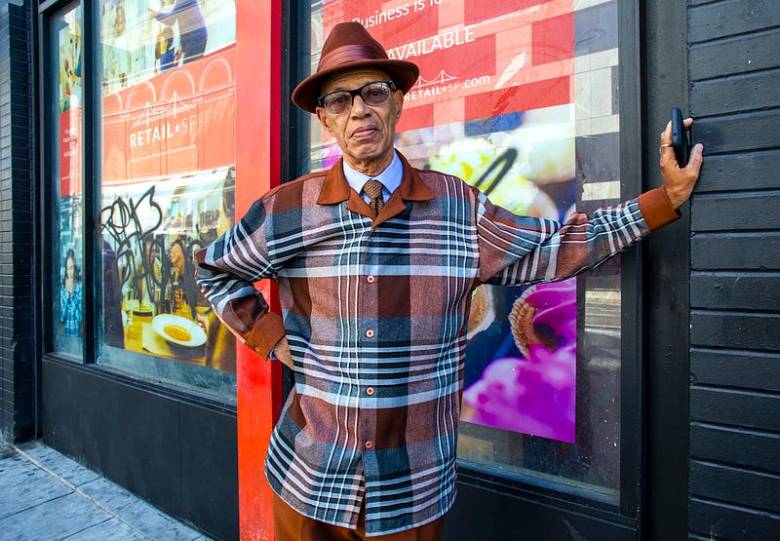 Local Homeless Coordination Board co-chair Del Seymour expects the count to follow the board’s recommendations to account for transgender people, regardless of federal changes. (Photo: Pamela Gentile)
They also want to include visitor logs from hotels and single room occupancy (SRO) homes to get a better count of homeless people. This is important to account for women and LGBTQ+ people who are more likely to avoid the streets.
The recommendations aren’t binding, but LHCB co-chair Del Seymour, who founded Code Tenderloin, says it’s unusual for the PIT count not to follow the board’s guidance. “I expect it to be taken,” said Seymour. “If not, they’ll have to give us a reason why.”
This year’s PIT count will also take place at 5 a.m. instead of late at night in an effort to find more people.
Since October, Community Forward and Code Tenderloin have collected more than 500 survey responses in the Bayview, Mission, South of Market, Tenderloin, Western Addition, and Haight. They hope to raise enough funding to cover the entire city in years to come.
They plan to release a preview of results in early 2026 and present a deeper analysis to city officials this summer “to really make some policy decisions,” Rayner said.
More from The Frisc…