
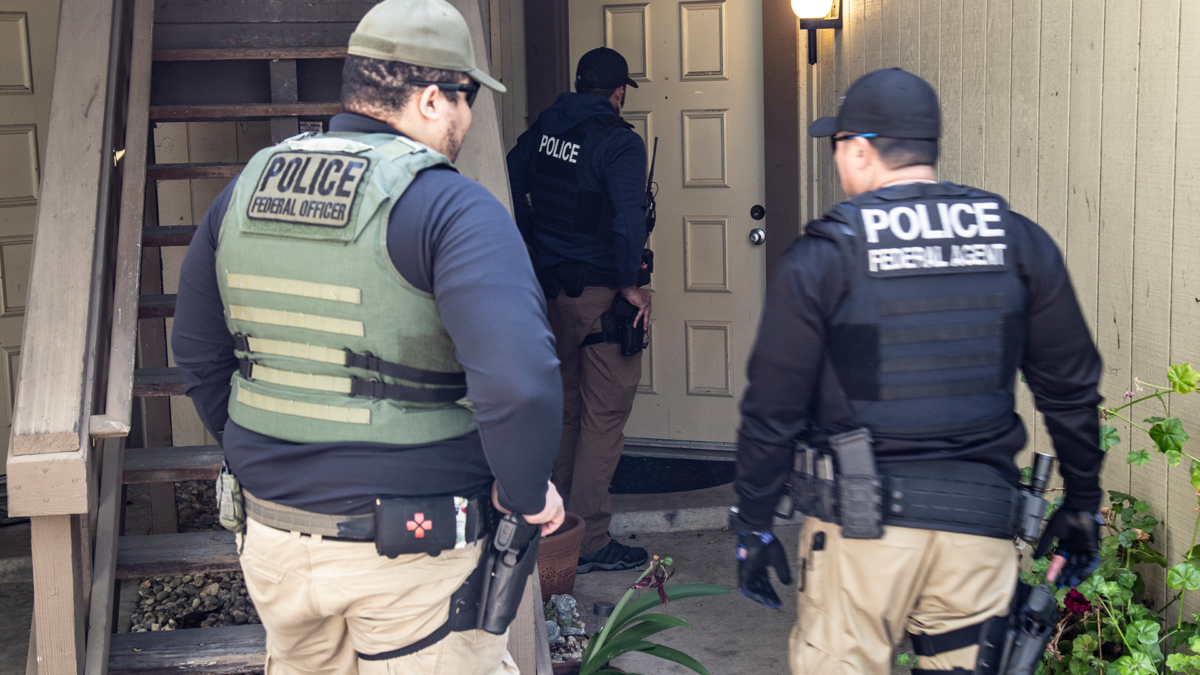
Each morning, I wake up to messages on encrypted chats alerting members of potential ICE sightings in Long Beach, where cars are going, where they came from, the make, the model. Throughout the day, I am alerted of abductions, vendor buyouts, and requests to assist with efforts. This is a part of a large effort for community resistance in Long Beach.
Since June, ICE has been raining down on Southern California. What started in downtown Los Angeles has soon spread throughout the rest of the region like cancer. Residents of Long Beach have been banding together to alert neighbors and rally community members to keep each other safe from ICE.
Rapid response and patrol teams have become an effective strategy in both deterring ICE activity and creating relationships with business owners, day laborers, and other vulnerable populations affected by ICE.
“Rapid response groups are geography based, and the more concentrated and focused and at scale that geography is, the more effective the rapid response group is,” states James Suazo, the Executive Director of Long Beach Forward, a nonprofit tackling institutional issues of racial and income inequality based in Long Beach.
“It usually entails people who are trained or familiar with what to do, how to document, [and] how to potentially intervene if that’s what the group has agreed upon. And really trying to quickly respond in an emergency.”
Organizations such as Oralé and Community Self Defense Coalition provide trainings on how to conduct basic patrolling to protect neighborhoods from ICE raids. A rapid response team member’s day begins early, often before the crack of dawn. Groups will roll out to concentrated spots that have been known to have high levels of ICE activity, such as Home Depots and car washes. Patrollers will survey the area, either on foot or by car, to become more acquainted with day laborers and workers.
According to patrollers, ICE activity is usually highest in the morning and dwindles down in the afternoon.
Rapid response teams and patrollers will alert group chats on messaging apps if there is a sighting of ICE at their respective posts. Additionally, patrollers will gather information for people who have been abducted by ICE to contact their families. This also helps to disrupt ICE activity throughout the day by slowing down their operations and deterring agents from reaching potential abductees.
As ICE and other federal agents become more secretive about their operations during a time where the rule of law is weak and therefore become more comfortable committing crimes to reach quota, patrolling has helped to reveal patterns of ICE activity.
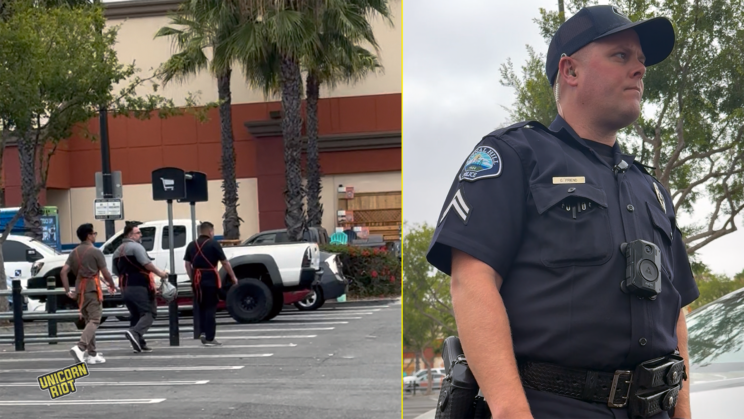 On June 27th 2025, a rapid response group patrolled a Home Depot on the Signal Hill/Long Beach city border, where ICE agents have been known to take day laborers. The Home Depot manager accosted the group and called Signal Hill police, on the accusation that the group was not allowed to loiter on Home Depot premises. (Photos courtesy rapid response group.)
“We may not know exactly when kidnappings will happen, but we can look at patterns, and we can look at what we’re seeing and hearing from different parts of the community. We may generally know that a lot of kidnappings have happened early in the morning. We know that they’re happening at specific hot spots like car washes and Home Depot locations. Those are instances where we have individuals who are stationed there. They’re prepared, they’re alert, they’re ready to be able to notify people or document if needed,” continues Suazo.
“…The more that we can keep each other aware, then it helps us have a better understanding of how these kidnappings are happening and what’s happening on the ground.”
Initiatives such as patrolling come directly from community members. Revealing patterns in ICE activity can assist in facilitated disruption of their operations, allowing targeted individuals to be alerted and potentially escape abduction.
Growing up, I often observed Neighborhood Watch signs in more affluent parts of town. These signs warned that criminal activity will be reported to authorities. Tactically, both patrolling for ICE and neighborhood watch seem similar in theory.
However, after my conversation with Suazo, the two ideas clearly have completely different end goals. Neighborhood Watch looks to protect property and capital using carceral forces. Patrolling exists outside of the system. It embodies the idea that “we protect each other.”
Rapid response teams patrol to protect some of the most vulnerable populations, especially during a time when the emergency response services that are funded by our tax dollars, at best, turn a blind eye and, at worst, aid and abet in abductions.
Patrolling was born out of a necessity to keep an ear close to the ground on what is happening in our communities, but it has evolved into something more: an effort to reduce our reliance on state-run law enforcement.
Even before the Long Beach Values Act passed, which limits police and any city employee collaboration with ICE, local police have often turned a blind eye to the violence that is incited by federal immigration enforcement. While there have not been any reports on local law enforcement aiding ICE agents in their abductions, local law enforcement had not done much to hinder the violence incited by ICE in Long Beach, according to on the ground sources.
There is a certain brotherhood that local police extend to federal immigration enforcement and other enforcement officials due to their line of work. This brotherhood further intensifies the mistrust between public safety and community members, especially as we witness rogue envoys picking up individuals with no rhyme or reason or even asking or understanding who these individuals are, resulting in many U.S. citizens being picked up.
Pooling together financial resources, legal resources, and other fundamental reserves are a part of a larger endeavor at creating our own networks of care. From rapid response emerged a preventative strategy: vendor buyouts. Community members will pool together the financial resources needed to ensure vendors can make their sales to stay at home with their loved ones.
People involved in these efforts recognize that the systems that have been built are not necessarily working for undocumented immigrants and are also not being provided by our local or state governments. This acknowledgement touches on a fundamental value in this movement of knowing your neighbor and being an active member in the village that surrounds you. Rapid response groups have been pushing forward the question of what we are going to do about the larger societal problems.
While there is so much disparity in housing, healthcare, and food security, it appears as though the government’s only answer has been to increase policing.
History tells us that the impacts of foreign entities devastating communities have long-term impacts. It’s on us to not only hold elected officials accountable but to create our own networks of care and accountability. We begin this by having connections within our local neighborhoods and geographies. We start by taking care and looking out for one another.
Cover image: 2019 public domain photo of ICE ERO officers via DvidsHub.net.
This piece is a commentary based on lived experiences of a Long Beach resident. The views and opinions expressed don’t necessarily represent those of Unicorn Riot.
Gabriella A.M. Guerrieri (she/her) is a Chinese-Italian-Slovak writer and communications professional based out of Long Beach. Her writing niche includes public health, intersectional feminism, and abolition. She also has a book review Substack Through Gabriella’s Graveyard and a podcast discussing comic book lore titled TheeComicsseur. Follow her wildfire photography on BlueSky @planetgabby.bsky.social.