
Want more ways to catch up on the latest in Bay Area sports? Sign up for the Section 415 email newsletter here and subscribe to the Section 415 podcast wherever you listen.
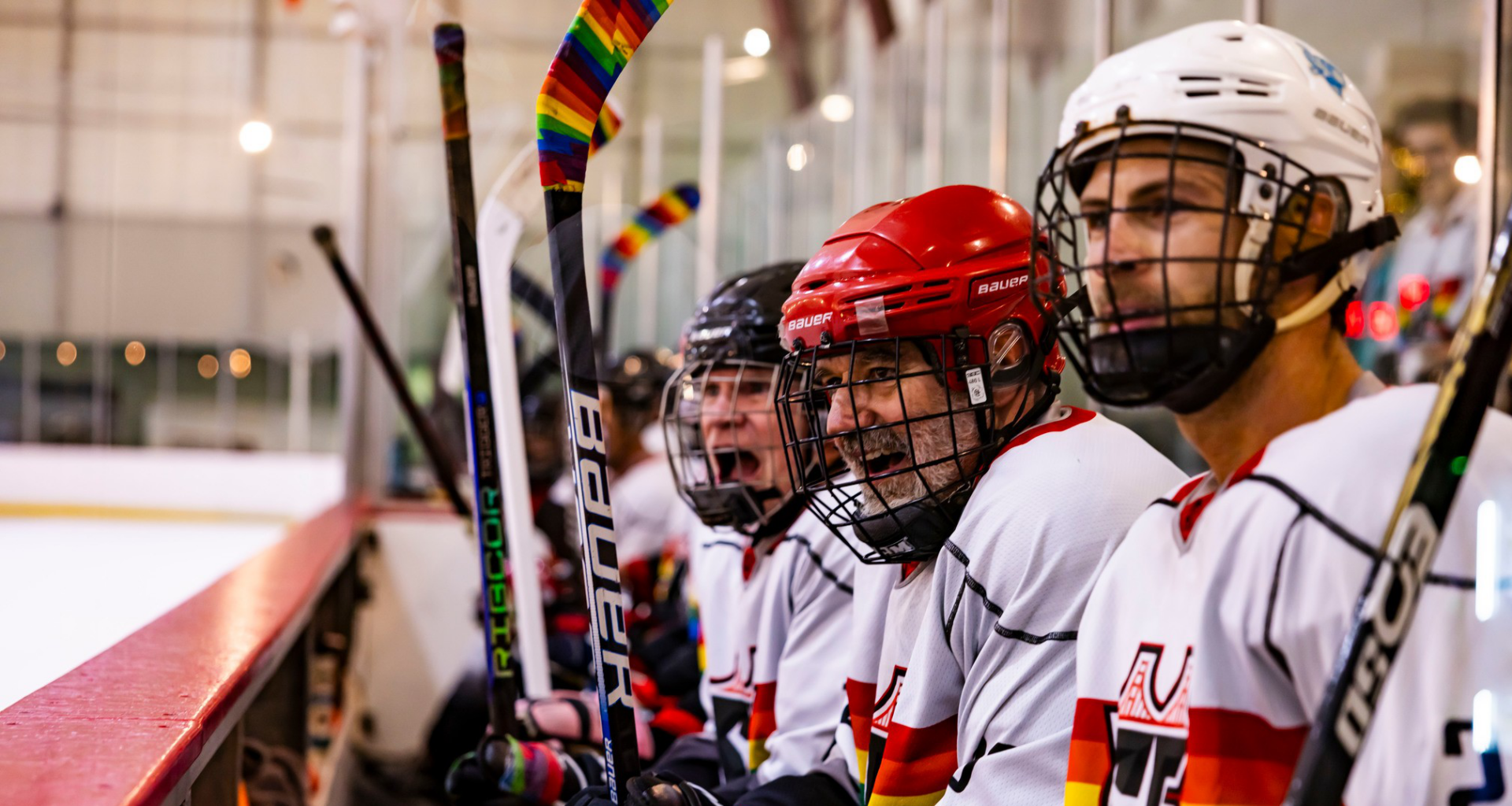
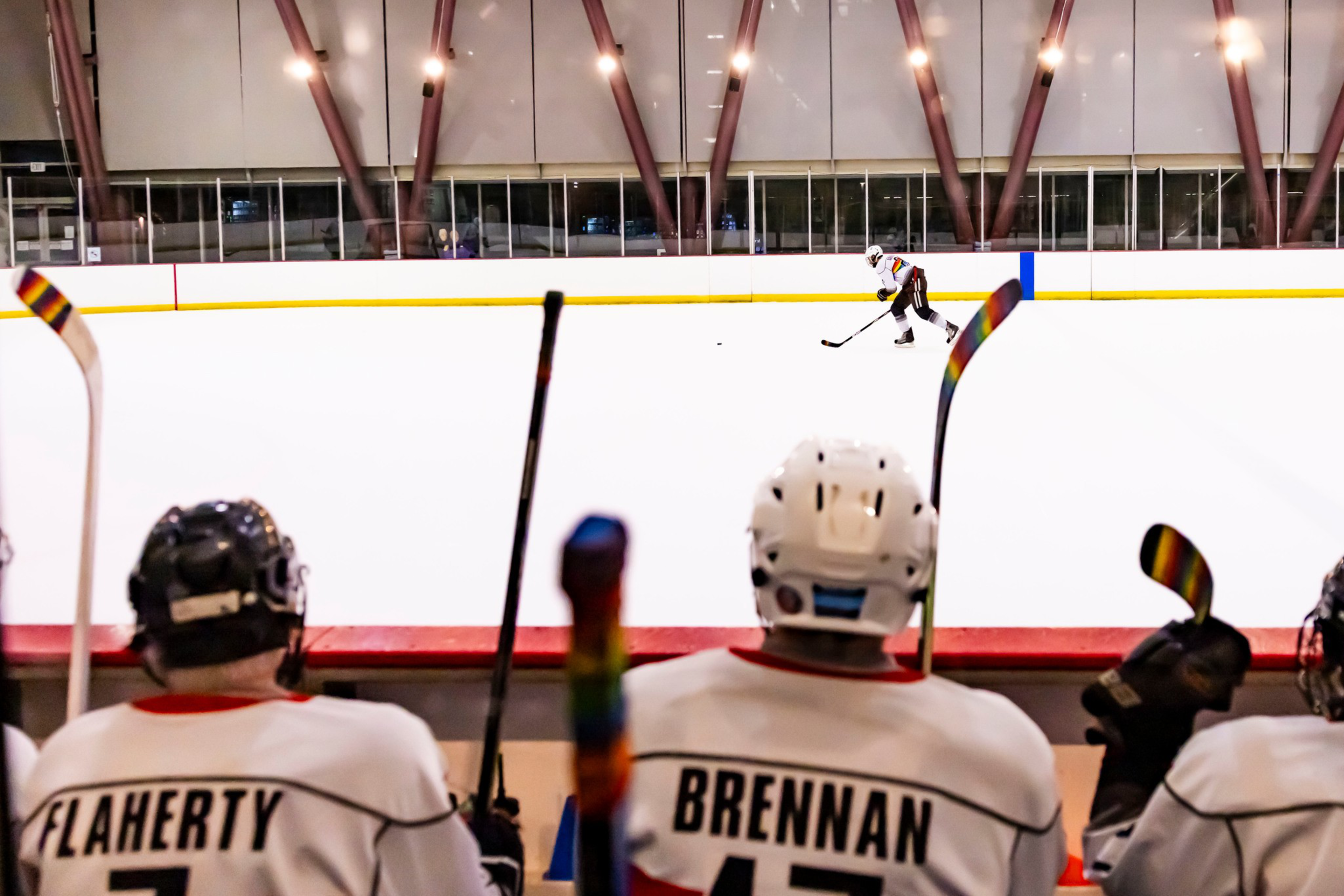
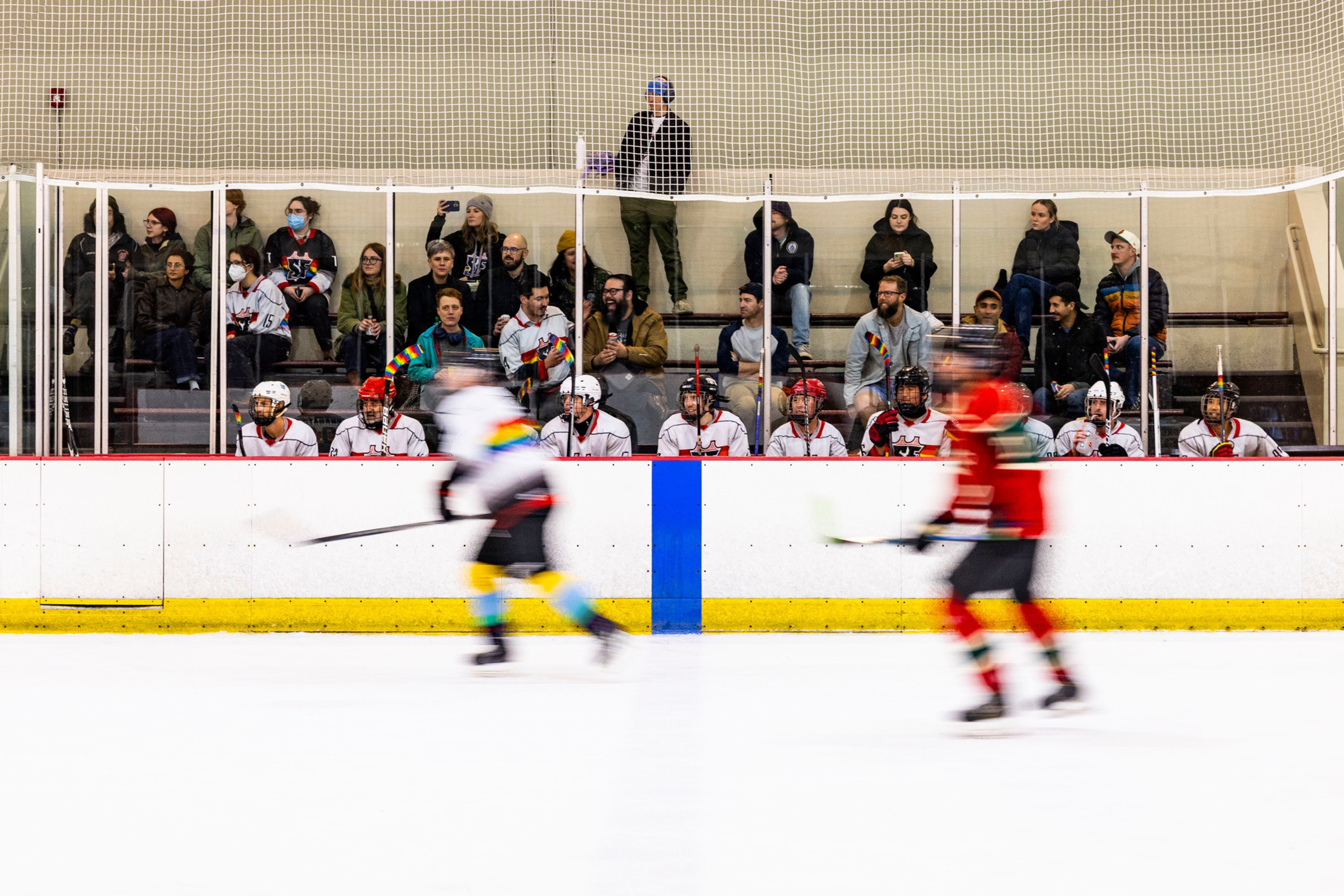
When the San Francisco Earthquakes took the ice last week at Yerba Buena Ice Center, the LGBTQ+ hockey club played in front of its biggest audience in years. New fans even jockeyed for a view with some of the players, who were forced into the stands after the team’s bench filled up.
“Was it everyone’s new year’s resolution to play more?” asked Tim Beach, who joined the Quakes six months ago. “Or was it ‘Heated Rivalry’?”
Call it the Heated Rivalry Effect, an unexpected explosion in interest for the sport of hockey — and the typically shredded athletes who play it — sparked by the hit HBO series. The show centers around a sexually charged, long-running relationship between two hockey pros whose on-ice competition masks a private, budding love story.
“That one was for Shane and Ilya, and Scott and Kip,” joked Dom Granato, 34, who has played with the Quakes since 2018, referring to two of the show’s romantic pairings. Granato and his teammates had just hoisted their recreational league’s championship trophy after a 6-5 victory over the Chieftains.
If you haven’t seen “Heated Rivalry” (spoilers ahead), you’ve definitely heard about it. Stimulated by its unfiltered sex scenes, fans are chattering about the show everywhere — in the media, in social feeds (opens in new tab), and now on the ice. For the Quakes, a local organization that has made an inclusive space for LGBTQ+ hockey since 1998, the show’s overnight success hits differently.
“Being out as a gay person and being maligned or rejected or feared in sports — that’s the experience most of us had,” said Quakes president and player Kieran “Kiki” Flaherty, 60.
The club, a nonprofit corporation, was formed ahead of the 1998 Gay Games in Amsterdam as the first-of-its-kind LGBTQ+ program in the Bay Area. One of the founders, John Heinie — who was inspired to form the club despite zero experience playing hockey — is still playing goalie for the Quakes in his 60s.
After the club’s inaugural trip to Amsterdam, Flaherty heard the buzz and wanted in. He grew up playing hockey on frozen lakes in northern Minnesota and remembers the sport as unwelcoming, hostile, and even dangerous. He walked away after eighth grade.
When he first heard of “Heated Rivalry,” which debuted in late December, he was surprised. The series is revolutionary in how it frames hockey as a backdrop for queer joy, yearning, and complexity — not as conflict.
“This could be a generational thing for me, but I laughed it off initially as being soft porn,” Flaherty said. “It’s very much in the realm of fantasy, but there’s certain things that really resonate with a lot of us who, back in the day, couldn’t have unprotected sex or did so at a big risk. And with meeting and falling in love with somebody at our job, we would’ve lost our jobs, for sure, had that become known. Those parallels are in some ways even more meaningful than the hockey aspect.”
1 day ago

3 days ago

5 days ago

Granato, who came out to some teammates ahead of his senior hockey season at Tufts University, read all six of “Heated Rivalry” author Rachel Reid’s books years ago — long before the HBO adaptation aired. The stories gave him a glimpse at a world he hadn’t thought to imagine: a queer romance thriving in the complex, masculine hockey world.
“A lot of people have been asking me, ‘Oh, is this like your dream? Is this what you’ve wanted, your fantasy?’” Granato said. “And I’m like, I didn’t let myself have that fantasy when I was playing, because it didn’t seem possible. It wasn’t in the realm of possibility.”
Hockey has been central to Granato’s life for as long as he can remember. His father, Tony Granato, is a former NHL player and coach who led the U.S. men’s national team at the 2018 Winter Olympics; his uncle, Don Granato, also played and coached in the NHL; and his aunt, Cammi Granato, associate general manager of the Vancouver Canucks, is an Olympic gold medalist and one of the first women to be inducted into the Hockey Hall of Fame.
Even with that family legacy, he found it difficult to navigate the sport as a queer player.
“There are some habits and behaviors that are typical of the culture. There’s a lot of language and a mentality that is misogynistic and homophobic, because it’s just been in the hockey game for a long time,” Granato said. “It was discouraging in the way that I didn’t think that I could be gay and play hockey. It didn’t seem like those two worlds could exist together.”
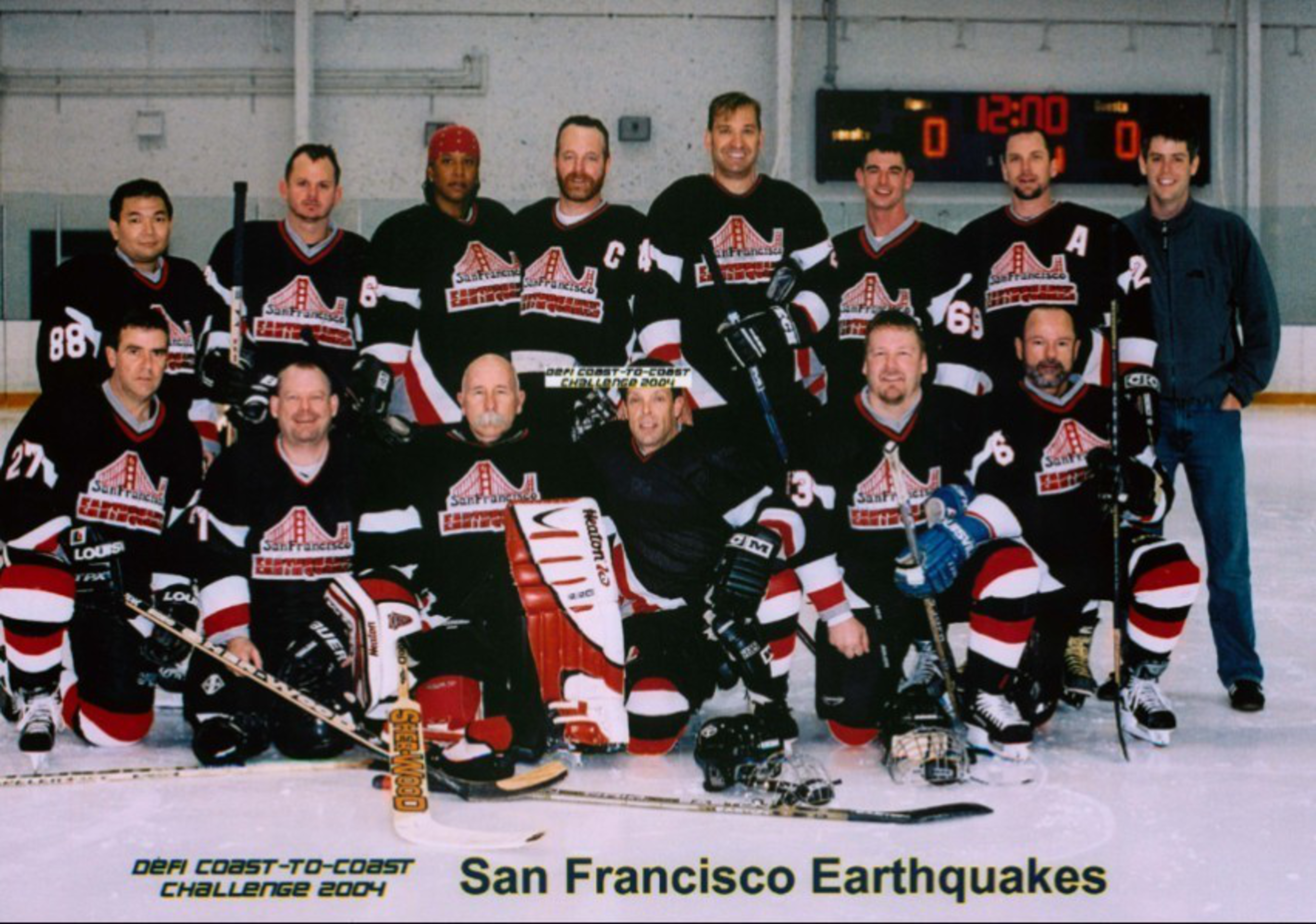 A 2004 team photo of the Earthquakes from a tournament in Vancouver. | Source: Courtesy of Kieran Flaherty
He searched for proof that he was wrong. As a young adult, he googled “gay hockey players” just to see if there was anyone out there like him living openly in the sport. No NHL player has publicly come out as gay while active in the league. Still, he found figures of inspiration — in Dre Barone, an American Hockey League referee, and Brock McGillis, a former pro player who came out publicly in 2016.
When Granato moved to San Francisco, his top priority was to find a queer hockey team. He got in touch with the Quakes, and the team has been his home ever since.
With the success of “Heated Rivalry,” that community is growing in real time.
“It’s putting a lot of positivity into the hockey world,” Granato said. “It’s showing a lot of queer hockey players, fans, coaches, and staff that there is a place, and even if it might feel hard, there are clearly a lot of people that will support you.”
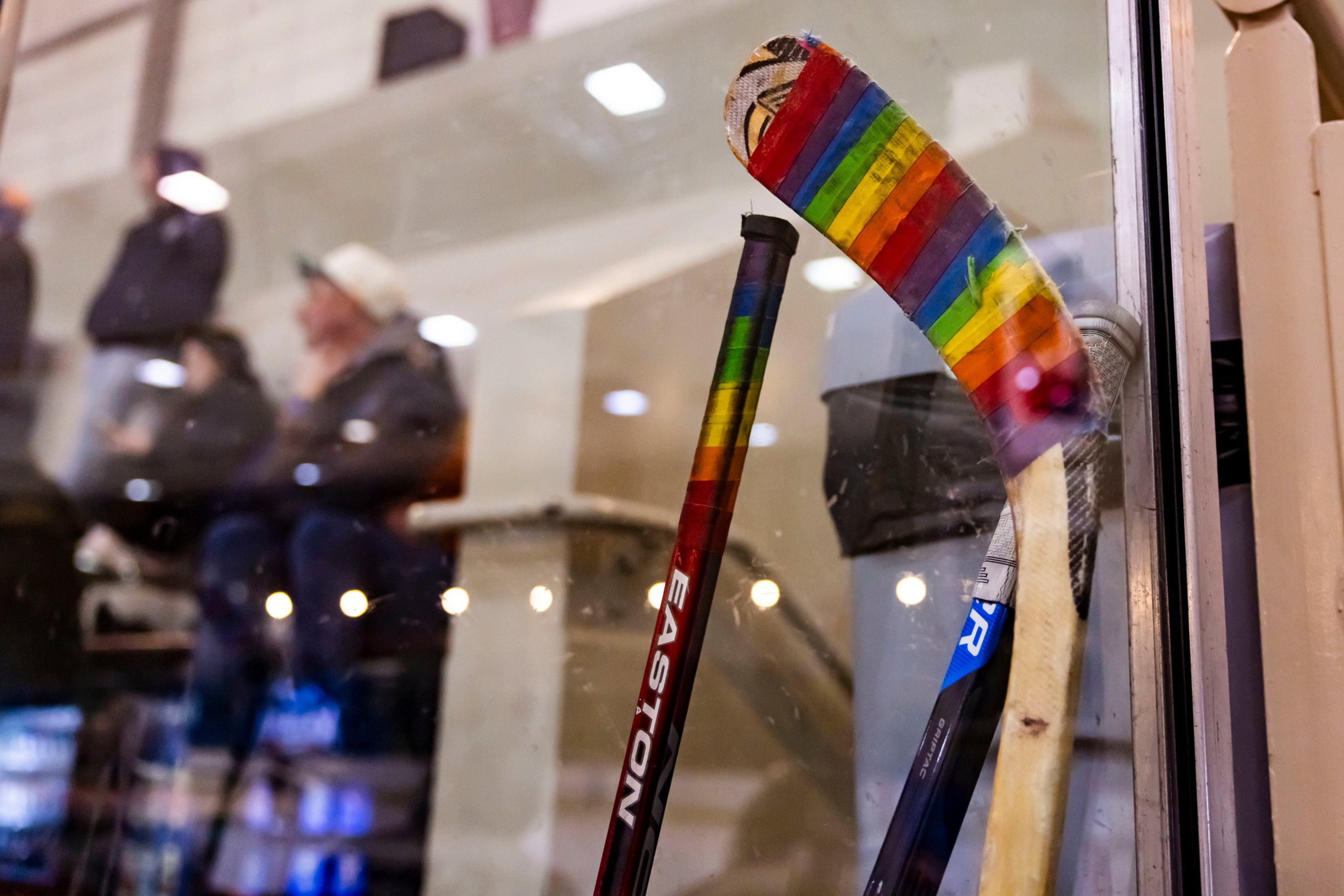
The Quakes, one of the oldest U.S. LGBTQ+ hockey organizations, have received steadfast support and partnership from the San Jose Sharks that remained strong even after the NHL’s 2023 decision to ban Pride tape and specialty jerseys among players. Despite controversy around the ban — and its subsequent reversal (opens in new tab) — hockey participation has been steadily growing in the LGBTQ+ community, with teams and tournaments popping up all over the nation. Now, “Heated Rivalry” is an accelerator.
Flaherty said that in the last three weeks, he has received more than a dozen inquiries from people interested in joining the team, the majority referencing the show. He expects the organization to start up a second team in the near future.
 The San Francisco Earthquakes celebrate their recreational league championship at Yerba Buena Ice Skating on Thursday, Jan. 8, 2026.
“For any gay man, it’s everything that you ever wanted to see growing up. It’s the type of romance, the type of story, that all of a sudden, even as an adult, you’re watching, and that 13-year-old in you is like, ‘I feel seen,’” said Hitesh Tolani, who came for the first time to see the Quakes play Thursday.
Tolani had no previous interest in hockey. But for him, “Heated Rivalry” was an obsession for many other reasons.
“The last scene, where the family is so supportive, is super important for the gay community,” he said. “To have that featured in a show that has gone viral all around the world — art imitates life, and life imitates art. It’s an example of what it is to be there for your child. A lot of gay men watch that and feel a sense of relief.”
At a moment when the LGBTQ+ community is feeling threatened and demeaned by the right, there is hope that the show’s popularity can shift the culture back to a more tolerant track. “Heated Rivalry” challenges the toxic masculinity in hockey, yes. But it also captures the human side of queer relationships: the uncertainty, longing, and simple, private moments that narrate an unfolding journey, reminding straight audiences, once again, that the need for love and connection is universal.
“Culturally and socially, to see the acknowledgement of this is how it’s done,” Flaherty said. “When people see those sorts of things, it creates this empathy that allows space for understanding. Understanding leads to respect. Respect leads to equality.”
And, in the case of the Quakes, to some great hockey.