
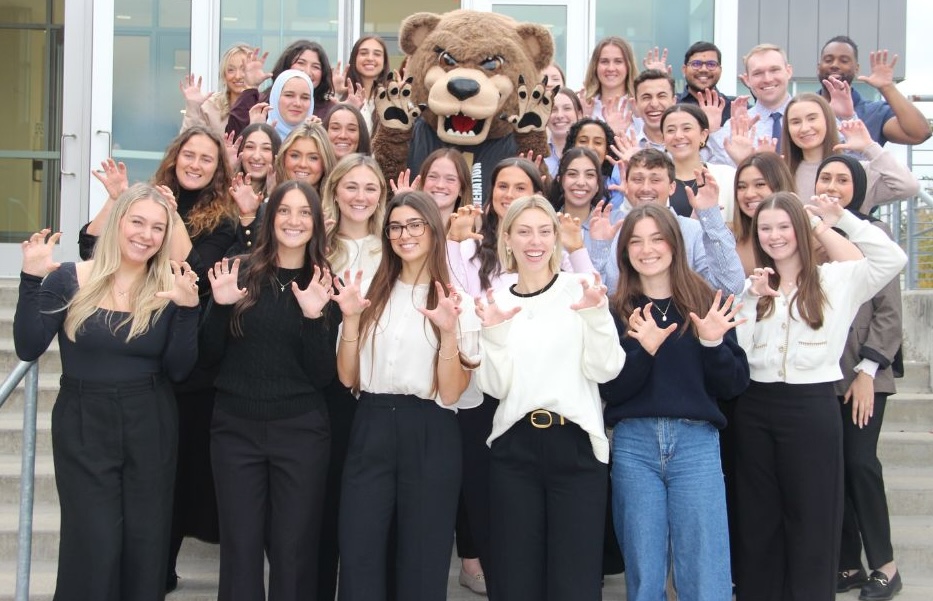
The first group of students in Oakland University’s physician assistant master’s degree program recently started classes.
OU held an open house on Tuesday at the Health Sciences school to celebrate the start of the new program.
The program prepares students to become physician assistants (PA), where they diagnose, treat and manage patients under the supervision of doctors.
Constance Burke, an associate professor, led the team that developed the program over the past several years.
“The Master of Physician reflects OU’s commitment to providing quality education to the next generation of health professionals,” said Burke. “The program provides exceptional academic and clinical education to our students through hands-on learning, mentorship from faculty members who are licensed PAs with extensive experience, and collaboration from interdisciplinary professors in the School of Health Sciences and our valuable community partners.”
The PA master’s degree is a 28-month graduate program that includes didactic and clinical coursework located at the Oakland West Center, a former Baker college building purchased by OU in 2022.
OU’s MPAS degree is supported in part by a $200,000 gift from Humana, which, over the next four years, will provide eight students, a quarter of the program’s 32 students, a scholarship each year.
“Access to quality health care is dependent on a strong, sustainable workforce. By lifting financial barriers to education, we can prepare future providers for careers that will help close gaps in care and improve the health of their communities,” said Eric Doeh, Michigan CEO for Humana. “Humana is thrilled to support Oakland University’s Physician Assistant program, which will improve health care access in our region and beyond.”
“The need for health care professionals continues to grow,” said Kevin Ball, dean of the School of Health Sciences. “The beginning of the MPAS program reflects Oakland University and the School of Health Sciences’ commitment to preparing a highly skilled, compassionate workforce of clinicians who will meet the changing health care needs of communities in our region and beyond through excellence in academic and clinical education, service and interprofessional collaboration.”