

Long Beach residents may be able to decide on whether to implement a new way of voting as soon as the November general election, after two city commissions recently heard a proposal about ranked-choice voting.
A local advocacy group, dubbed RCV in the LBC, has spearheaded the effort to bring ranked-choice voting to Long Beach’s local elections — making the argument before the Commission for Women & Girls in December, and more recently, to the Equity and Human Relations Commission on Jan. 7.
As it stands, Long Beach’s municipal elections operate on the traditional voting method — wherein any candidate can run for an open office during a primary election. If a candidate receives 50% + 1 of the vote in that first election, they win outright. But if there’s no outright majority, the top two candidates move to a runoff in a secondary election.
Ranked-choice voting, on the other hand, aims to streamline the voting process for both voters and candidates alike. Instead of voting for one person, residents rank each candidate by preference.
If a candidate receives a majority of first-choice votes, they will win that election outright. If no candidate has a majority of the first-choice votes after the first ballot tally, an instant run-off process is triggered. The ballots are again tallied and the process continues until one candidate wins a majority — meaning there’s no need for a secondary run-off to determine the true winner of a given race.
Renee Holliday and Erin Hoops, members of the steering committee for RCV in the LBC, argued in their presentation to the EHRC that ranked-choice voting has many benefits for voters, including higher voter turnout, cheaper elections, lower barriers-to-entry for political candidates, shorter campaign timelines, policy-driven campaigning and more.
“Looking at the finances for our councilmembers, most of them fundraise over $100,000 to run for office in Long Beach. This is out of reach for a lot of people, young people — not everyone has rich friends, and that shouldn’t be a prerequisite to run for office,” Hoops said during the presentation, “and so cutting the election time down gives more people the opportunity to run.”
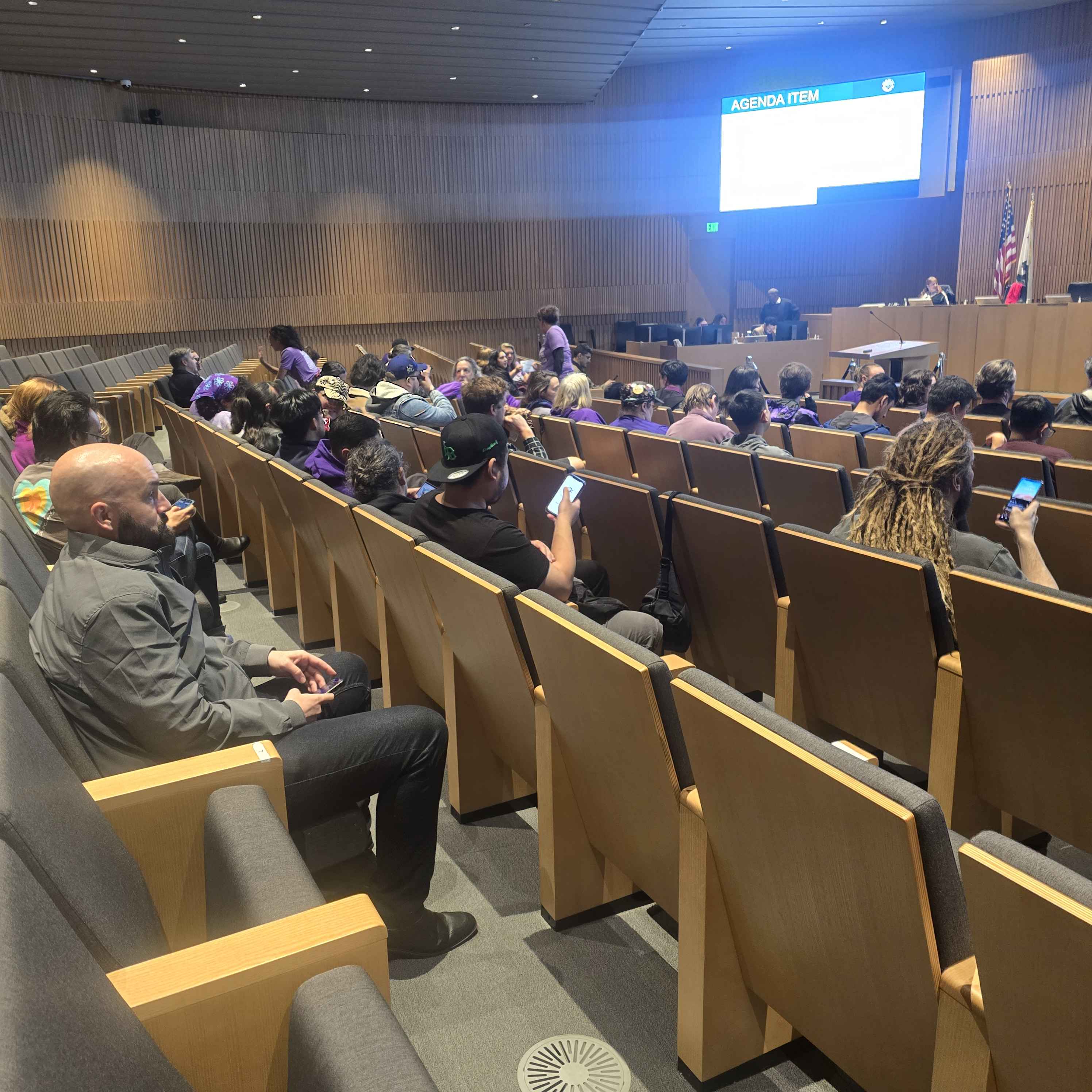
Members of RCV in the LBC outside watch the group’s Jan. 7, presentation to the city’s Equity & Human Relations Commission. (Photo courtesy RCV in the LBC/Sean Mykael McMullen).
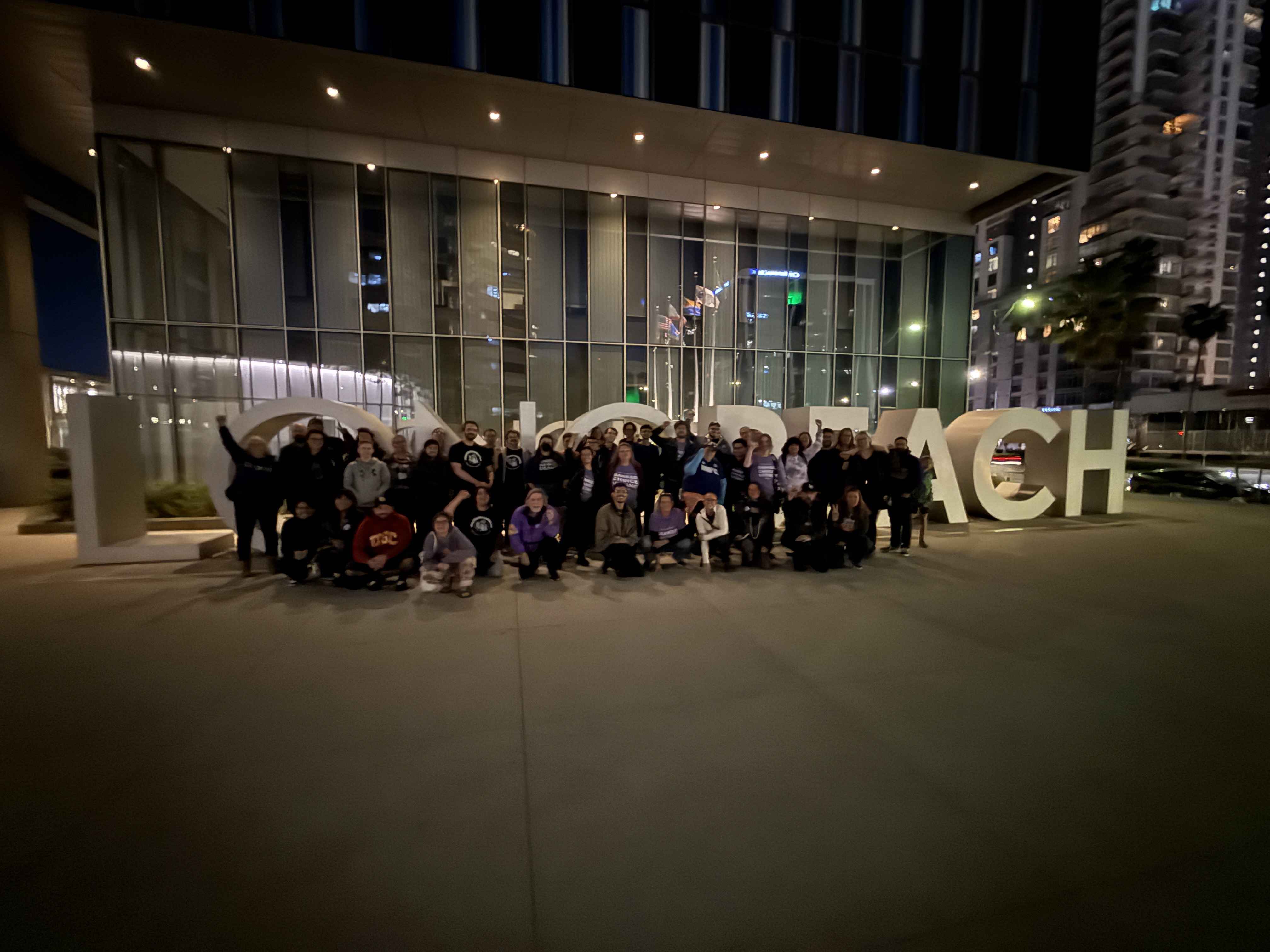
Members of RCV in the LBC outside City Hall on Jan. 7, following the group’s presentation to the city’s Equity & Human Relations Commission. (Photo courtesy RCV in the LBC/Sean Mykael McMullen).
Show Caption
1 of 2
Members of RCV in the LBC outside watch the group’s Jan. 7, presentation to the city’s Equity & Human Relations Commission. (Photo courtesy RCV in the LBC/Sean Mykael McMullen).
Ranked-choice voting, which has been implemented elsewhere in California and across the nation, also improves voter turnout, the RCV members said. Data in Long Beach, according to Holliday, consistently shows that far more people turn out to vote in general elections — when the top two candidates from the primary — have already been selected, or the majority winner was already outright elected during the primary.
“We’ll take 2024, for example. In 2024, 98,000 extra people voted in the general election than they did in the primary election. But by then, three of the four City Council seats that were up for grabs were already decided on in the primary,” Holliday said. “That means, of those 98,000 people, whoever was in those four districts did not get to decide who their city council member was. I think that’s particularly egregious.”
Ranked-choice voting, though, would effectively eliminate that problem — since residents would only need to make their decisions once, rather than voting in multiple elections. And since ranked-choice voting eliminates the need for secondary run-off elections, it will also save the city money.
Redondo Beach was the first city in Los Angeles County to approve ranked-choice voting for its municipal offices in 2023, with proponents of the change arguing similar points as RCV in the LBC at the time. The city held its first ranked-choice voting election in March.
Palm Desert, Albany, Berkeley, Oakland, San Leandro and, more recently, San Francisco also use ranked-choice voting to elect most of their local officials — but in LA County, Redondo Beach still stands alone.
There has also been a push to enact ranked-choice voting for all statewide elections in California, including the Assembly, state Senate, executive offices and federal offices, by nonprofit CalRCV.
For RCV in the LBC’s Holliday, the most important aspect of ranked-choice voting is that, she said she believes, it allows more significant voter participation.
“When I talk to people out on the street, how many people don’t believe that they have a voice in politics at all, or in voting, and the combination there of the word of mouth and the cultural feeling, plus the actual election data that we’re seeing,” Holliday said in an interview, “there is something there — people do not have as much voice as they could have with ranked choice voting. RCV is a must for us as a city.”
Before their presentation to the Equity and Human Relations Commission, Holliday and Hoops gave a similar presentation to the city’s Commission for Women and Girls — who opted to form an ad hoc committee to research the proposal further.
“We also presented to the Commission of Women and Girls, and they decided on their own, to create an ad hoc committee to further research RCV,” Holliday told the EHRC, “with hopefully the expectation that they would be able to recommend it to City Council.”
Ultimately, a change to Long Beach’s election processes would require a change to the City Charter — which would require voter approval. RCV in the LBC is hoping to get a ballot measure for implementing ranked-choice voting on the November ballot, though it’s unclear how feasible that timeline is.
Atoy Wilson, deputy city attorney, said at the Jan. 7 EHRC meeting that there could be several challenges to getting a charter amendment on the November ballot.
“I think the steps, logistically, City Council would have to vote on just putting this to the charter — it would actually have to be an election within the city,” Wilson said. “So given that this is 2026 with the General Election in November, I only see that happening through a special election. I think feasibly speaking, to have that done by this November, would probably be a big burden.”
Members of the Equity and Human Relations Commission, for example, raised some questions about how much it would cost to implement ranked-choice voting, should it make it on the ballot and win voter approval,
“It’s tight and it’s even tighter as we’re running into how slow the city can be sometimes, unfortunately,” Holliday said. “So those are some challenges to the timeline that we’re expecting, but that doesn’t discourage us at all from really going for that timeline.”
Moving forward, RCV in the LBC is going to work on getting in touch with various Long Beach councilmembers and are planning to go to additional city commissions, according to Holliday and Hoops.
“So far, we’ve had one councilmember we’ve had a meeting with, which went well, but we really need to talk to them and address any questions that they have and make sure that they understand what it is,” Hoops said. “Giving them individually a chance to ask questions that they have, and a heads up that this is coming so they can do their own research, I think will be our next step. If the mayor wants to talk to us too, that would be great.”
RCV in the LBC has also launched a petition asking elected official to enact ranked-choice voting, which has gained more than 700 signatures so far, according to its website.
The EHRC, meanwhile, also voted to create an ad-hoc committee to further research the proposal — and potentially send recommendations to the City Council for consideration at a future date.
Staff writer Christina Merino contributed to this report.