
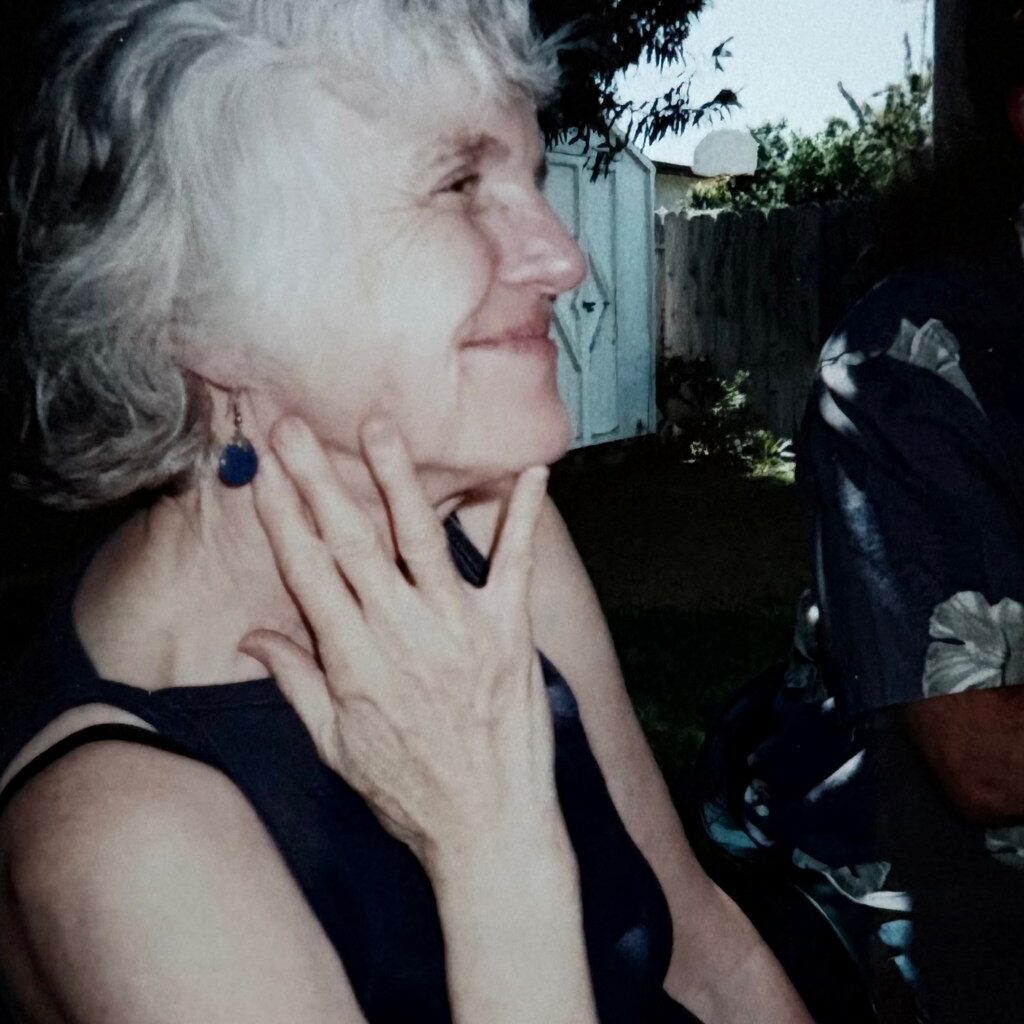
Aimee Lee Cheek
OBITUARY
Aimee Lee Cheek grew up in a pre-Revolutionary War farmhouse in Isle of Wight County, Virginia. The muddy walk down the long tree-lined lane from the farmhouse to the unknown world remained an enduring image for her until the end of her life. From her mother and grandmother, both rural high school teachers, she learned the value of clean prose and a fine table, and she inherited the courage to traverse hardship with grace. A 4-H Club leader (no one baked a better biscuit) and a public speaking champion, she won a scholarship to Westhampton College where she waited tables, edited the school newspaper, and read her way through the neat linen-covered volumes of the Modern Library. When William Cheek (her beloved Petey) successfully courted her with cartwheels and wit, she set out on a loving marriage of sixty-five years.
As a young reporter at the Charlottesville Daily Progress, she covered the awakening of the Civil Rights movement. As a young mother in Arkansas, she helped organize after school and summer programs for children in the local Black community. When she moved with Petey and her two young children, Wendy and Pam, to San Diego in 1967, her community-building skills blossomed. Her home on Estelle Street became a refuge for generations of her husband’s students and colleagues at San Diego State University and for her daughters’ friends. Everyone came for dinner and stayed for Aimee Lee’s clear-eyed counsel. Everyone profited from her deft revisions of their manuscripts and her demonstration of a practical brand of feminism. In the Rolando-Clay community, she and her dear friend Jan Hintzman were stalwarts of democracy. They organized grassroots campaigns, secured a public park for neighborhood families, and went on to found a community newspaper, which Aimee Lee continued to edit into her eighties.
Aimee Lee’s life work was two-fold. First, her watchful childhood in segregated Isle of Wight County and her years as a journalist and activist prepared her to become, with William Cheek, the eloquent biographer of John Mercer Langston, the first Black congressman from Virginia and the architect of the nineteenth-century civil rights movement. Second, her pursuit of opportunities to share beauty and elegance, fueled by consequential years living in France, allowed her to enrich and support her husband, children, and friends. She put into practice a vision of the good life, welcoming friends to warm conversations at a laden outdoor table in the shade of a lemon tree. Those who survive her treasure her vision, along with the sweetness and dignity she brought to death and life.
Her glorious smile will be missed by her daughter Pamela Cheek, son-in-law Matthew Ennis, grandchildren Eliza and Quinn Ennis, friends Betsey Colwill, Peter Arnade, Michael Russell, Gina Gutierrez, nieces Ami Anderson and Nancy Raveling, sister-in-law Grace Cofer, Rolando and Lost Valley neighbors, and the care providers who helped her persist to the age of 89.