
The Black Panther Party, founded in Oakland in 1966, is one of the most famous political organizations in American history, but what’s lesser known is the direct impact the party had on gun control laws in California. The Mulford Act made it a felony in California to openly carry firearms in public without a permit. But what led up to then-Gov. Ronald Reagan signing it into law?On May 2, 1967, several Black Panther Party members occupied the State Capitol in Sacramento, armed with guns, in protest of the proposed legislation. The historic demonstration was a watershed moment for both the party and the state, but it didn’t come out of nowhere. The organization’s momentum and willingness to bare arms already had lawmakers nervous before that day ever arrived. The KCRA 3 documentary “Liberty and Limits: Guns in California” looks at how two events, decades apart, have shaped how we talk about and regulate guns in the U.S. This is the story of the first event, the Black Panther Party’s occupation of the Capitol. The second of those events was the Cleveland Elementary School shooting in Stockton in 1989.We reached out to former Black Panther Party members, historians and political experts for their perspective on how the famed protest at the Capitol changed California’s relationship with guns. When you close your eyes and think of the Black Panthers, you probably recall leather jackets, black gloves and berets. The iconic imagery is there. The party’s influence and significance went beyond their aesthetic. Origins and intentions of the Black Panther Party The Black Panther Party was originally called the Black Panther Party for Self-Defense. Huey P. Newton and Bobby Seale formed the organization in response to the oppression Black Americans faced during the 1960s, including police brutality. While the Civil Rights movement had already been in motion for a decade, Newton and Seale also formed the Panthers to shift attention to the needs of African Americans outside of southern states. “Black and brown people were getting brutalized and killed in the community. Black people didn’t know their rights, so we would go out and patrol the police,” said Fredrika Newton, the widow of Huey. Xavier Buck, historian and Black Panther Party Museum director, said that after the Watts Uprising in 1965 there were “cop watches” in Los Angeles. “The party were the first ones that said ‘Oh, we’re going to do it armed, within our legal rights,'” Buck said.The Black Panther Party took on a protector role for the Black community amid racial violence. But Fredrika Newton says the party was more than “angry looking Black men” with black leather jackets and guns.Billy Jennings, a former Panther and Sacramento native, said that in the party’s early days political education classes were a requirement. The party’s armed patrols of police were centered around the laws, something that Jennings said has been dissected out of history over time.”We would read the law to the cops,” he said.The Black Panthers’ combination of militancy, focus on community and knowledge of policy gave California lawmakers cause to pause. Buck called the party’s rise a “red flag for legislators who didn’t want to see want to see Black people with guns exercise their constitutional rights.”An escalation in the fight for liberationAfter the Civil War there was a mass disarmament of Black people in the southern United States. “You saw a lot of rhetoric at the time saying that an individual right to protect yourself, in particular rights of African Americans to protect themselves against marauding whites such as the Ku-Klux Klan, was an important right that ought to be protected,” said Carlton Larson, a UC Davis law professor. This made the Black Panther Party’s willingness decades later to use guns for protection in California, which used to be open carry state, an unexpected threat to the status quo. “The police didn’t like that, so they got with their council person Mulford, and he drew up a law and was going to introduce it in Sacramento. Huey heard about it and sent 30 party members to Sacramento,” Jennings said, recalling the day the Black Panther Party entered the California Capitol while with firearms. “They were armed at the time because you could carry guns in the open.” Don Mulford, a California assemblyman who represented Oakland and other East Bay Area cities, had a front row seat to the Black Panther Party’s militant actions. The Mulford Act was already being proposed to the Assembly in 1967 as a solution to the Black Panther Party’s effort to police the activity of police. The protest at the Capitol just shed a global spotlight on the rising tension between law enforcement and the Black community that was already present in California and other parts of the U.S. amid race-related riots in urban communities that led to arrests and deaths. This tension extended to the party’s relationship with police.”We didn’t go down to the police department and shoot them up. They came to our offices, at 3 or 4 in the morning, shooting us up,” said Jennings. The media attention that came from the armed protest gave the Black Panther Party a platform to draw attention to what they stood for and why they were doing what they were doing. “We have a political agenda called the 10-point program, we have 65 survival programs, we’ve organized the community and are influencing political campaigns. That shock value something for actually making the Black Panther Party all over the world,” Buck said about what the party was able to do with the newfound spotlight at the time. While the Panthers exposure grew beyond California, state lawmakers’ urgency to stop something like the Capitol protest from happening again only intensified. “From my conversation with legislators today there is great concern about the incident yesterday. There is anger among some of my colleagues that the dignity of our chamber, the highest lawmaking body in the state of California would be so interrupted,” Mulford said during a meeting the the day after the protest.For the Black Panther Party, stopping the Mulford Act represented survival, an ability to hold law enforcement accountable and upholding constitutional rights. But for the California Legislature, getting the Mulford Act signed into law was an opportunity to keep power in the hands of law enforcement and slow down the momentum of the Panthers’ movement. Yet the passage of the act was the first step in gun regulation, backed by both then-Gov. Ronald Reagan and the National Rifle Association.Reagan signed the Mulford Act in the summer of 1967. As a Republican governor and a conservative, he abandoned his typical values on gun control. It’s a stance he would change again in the early 1980s, citing the second amendment to the Constitution at a meeting of the NRA when he was president.”It’s what we call a sentinel event. You can turn back in time, and say right there is where the course of events changed,” said Garen Wintenmute, a professor and UC Davis Violence Prevention Research Program Director. California has a recent reputation of being a leader among states when it comes to issues of gun control. As mass shootings, gang violence and assassination attempts keep debates about Second Amendment rights and gun laws at the forefront of American political discourse, California has positioned itself as a place that prioritizes restrictions on guns and harsh penalties for those that violate them. But there was a time when California was an open carry state, before deciding to “take guns off the table,” Wintenmute said. The Black Panther Party’s Capitol protest and the decisions by lawmakers that followed changed the way we view California in comparison to other states. While the Mulford Act was signed nearly 60 years ago, it remains relevant as ever. A dissenting panel of federal judges for the Ninth Circuit recently deemed California’s open carry ban in most counties unconstitutional after a man from Siskiyou County specifically challenged California’s restriction on open carry in counties with a population greater than 200,000.The California Attorney General’s Office has not made a decision on how it will move forward, and some legal analysts think the ruling could ultimately be upheld with the Supreme Court’s current 6-3 conservative majority. | MORE | ‘Do we have enumerated rights or don’t we’: NorCal man expands on his California open carry lawsuitPreserving The Legacy Today, the Black Panther Party Museum sits on Broadway in Oakland, serving as proof of the history that some former Party members feel has been diminished or rewritten. “We constantly have people here in the Black Panther Party Museum. We have a lot of school groups that come here, we also have professional groups that come here,” Buck said. “People want to know this information. More importantly, they want to know why they never knew anything about it, or why they had the wrong narratives in the first place.” Fredrika Newton also wants people to know the Black Panther Party’s history and impact in the community extends beyond firearms. “These same men that they would depict were actually up at five in the morning feeding hungry children, or working in the free health clinic or one of these 65 survival programs,” Newton said. “By design that was not shown in media. didn’t show women. At one point, two-thirds of the membership in the Black Panther Party were women.” Newton is proud of the support that the Black Panther Party Museum gets today and encourages people to submerge themselves in the party’s history. See more coverage of top California stories here | Download our app | Subscribe to our morning newsletter | Find us on YouTube here and subscribe to our channelPHNjcmlwdCB0eXBlPSJ0ZXh0L2phdmFzY3JpcHQiPiFmdW5jdGlvbigpeyJ1c2Ugc3RyaWN0Ijt3aW5kb3cuYWRkRXZlbnRMaXN0ZW5lcigibWVzc2FnZSIsKGZ1bmN0aW9uKGUpe2lmKHZvaWQgMCE9PWUuZGF0YVsiZGF0YXdyYXBwZXItaGVpZ2h0Il0pe3ZhciB0PWRvY3VtZW50LnF1ZXJ5U2VsZWN0b3JBbGwoImlmcmFtZSIpO2Zvcih2YXIgYSBpbiBlLmRhdGFbImRhdGF3cmFwcGVyLWhlaWdodCJdKWZvcih2YXIgcj0wO3I8dC5sZW5ndGg7cisrKXtpZih0W3JdLmNvbnRlbnRXaW5kb3c9PT1lLnNvdXJjZSl0W3JdLnN0eWxlLmhlaWdodD1lLmRhdGFbImRhdGF3cmFwcGVyLWhlaWdodCJdW2FdKyJweCJ9fX0pKX0oKTs8L3NjcmlwdD4=
The Black Panther Party, founded in Oakland in 1966, is one of the most famous political organizations in American history, but what’s lesser known is the direct impact the party had on gun control laws in California.
The Mulford Act made it a felony in California to openly carry firearms in public without a permit. But what led up to then-Gov. Ronald Reagan signing it into law?
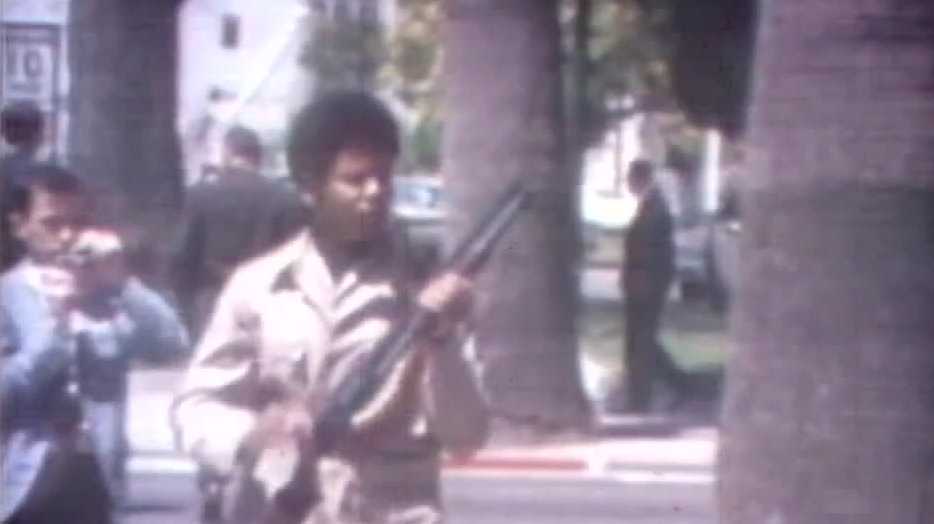
On May 2, 1967, several Black Panther Party members occupied the State Capitol in Sacramento, armed with guns, in protest of the proposed legislation. The historic demonstration was a watershed moment for both the party and the state, but it didn’t come out of nowhere. The organization’s momentum and willingness to bare arms already had lawmakers nervous before that day ever arrived.
The KCRA 3 documentary “Liberty and Limits: Guns in California” looks at how two events, decades apart, have shaped how we talk about and regulate guns in the U.S. This is the story of the first event, the Black Panther Party’s occupation of the Capitol. The second of those events was the Cleveland Elementary School shooting in Stockton in 1989.
We reached out to former Black Panther Party members, historians and political experts for their perspective on how the famed protest at the Capitol changed California’s relationship with guns.
When you close your eyes and think of the Black Panthers, you probably recall leather jackets, black gloves and berets. The iconic imagery is there. The party’s influence and significance went beyond their aesthetic.
Origins and intentions of the Black Panther Party
The Black Panther Party was originally called the Black Panther Party for Self-Defense. Huey P. Newton and Bobby Seale formed the organization in response to the oppression Black Americans faced during the 1960s, including police brutality. While the Civil Rights movement had already been in motion for a decade, Newton and Seale also formed the Panthers to shift attention to the needs of African Americans outside of southern states.
“Black and brown people were getting brutalized and killed in the community. Black people didn’t know their rights, so we would go out and patrol the police,” said Fredrika Newton, the widow of Huey.
Hearst Owned
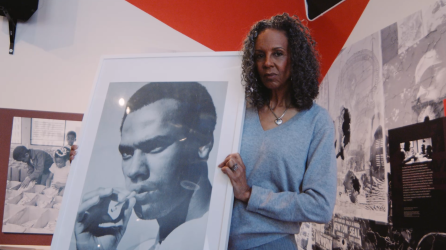
Fredrika Newtons stands in the Black Panther Party Museum in Oakland, California, holding a picture of her late husband Huey P. Newton, who co-founded the party.
Xavier Buck, historian and Black Panther Party Museum director, said that after the Watts Uprising in 1965 there were “cop watches” in Los Angeles.
“The party were the first ones that said ‘Oh, we’re going to do it armed, within our legal rights,'” Buck said.
The Black Panther Party took on a protector role for the Black community amid racial violence.
But Fredrika Newton says the party was more than “angry looking Black men” with black leather jackets and guns.
Billy Jennings, a former Panther and Sacramento native, said that in the party’s early days political education classes were a requirement.
The party’s armed patrols of police were centered around the laws, something that Jennings said has been dissected out of history over time.
“We would read the law to the cops,” he said.
The Black Panthers’ combination of militancy, focus on community and knowledge of policy gave California lawmakers cause to pause. Buck called the party’s rise a “red flag for legislators who didn’t want to see want to see Black people with guns exercise their constitutional rights.”
Hearst Owned
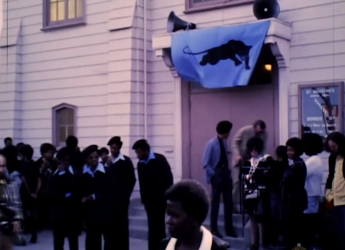
Black Panther Party Headquarters in Oakland, California.
An escalation in the fight for liberation
After the Civil War there was a mass disarmament of Black people in the southern United States.
“You saw a lot of rhetoric at the time saying that an individual right to protect yourself, in particular rights of African Americans to protect themselves against marauding whites such as the Ku-Klux Klan, was an important right that ought to be protected,” said Carlton Larson, a UC Davis law professor.
This made the Black Panther Party’s willingness decades later to use guns for protection in California, which used to be open carry state, an unexpected threat to the status quo.
“The police didn’t like that, so they got with their council person [Don] Mulford, and he drew up a law and was going to introduce it in Sacramento. Huey heard about it and sent 30 party members to Sacramento,” Jennings said, recalling the day the Black Panther Party entered the California Capitol while with firearms. “They were armed at the time because you could carry guns in the open.”
Don Mulford, a California assemblyman who represented Oakland and other East Bay Area cities, had a front row seat to the Black Panther Party’s militant actions.
The Mulford Act was already being proposed to the Assembly in 1967 as a solution to the Black Panther Party’s effort to police the activity of police.
Hearst Owned
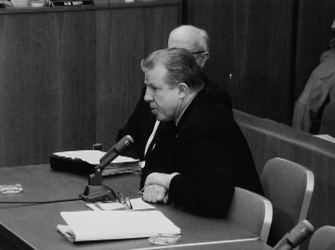
Don Mulford speaks in front of his fellow California legislators. Mulford’s 1967 Assembly Bill, known as the Mulford Act, made it a felony to carry a firearm in public in California.
The protest at the Capitol just shed a global spotlight on the rising tension between law enforcement and the Black community that was already present in California and other parts of the U.S. amid race-related riots in urban communities that led to arrests and deaths.
This tension extended to the party’s relationship with police.
“We didn’t go down to the police department and shoot them up. They came to our offices, at 3 or 4 in the morning, shooting us up,” said Jennings.
The media attention that came from the armed protest gave the Black Panther Party a platform to draw attention to what they stood for and why they were doing what they were doing.
“We have a political agenda called the 10-point program, we have 65 survival programs, we’ve organized the community and are influencing political campaigns. That shock value [did] something for actually making the Black Panther Party [known] all over the world,” Buck said about what the party was able to do with the newfound spotlight at the time.
While the Panthers exposure grew beyond California, state lawmakers’ urgency to stop something like the Capitol protest from happening again only intensified.
“From my conversation with legislators today there is great concern about the incident yesterday. There is anger among some of my colleagues that the dignity of our chamber, the highest lawmaking body in the state of California would be so interrupted,” Mulford said during a meeting the the day after the protest.
For the Black Panther Party, stopping the Mulford Act represented survival, an ability to hold law enforcement accountable and upholding constitutional rights. But for the California Legislature, getting the Mulford Act signed into law was an opportunity to keep power in the hands of law enforcement and slow down the momentum of the Panthers’ movement. Yet the passage of the act was the first step in gun regulation, backed by both then-Gov. Ronald Reagan and the National Rifle Association.
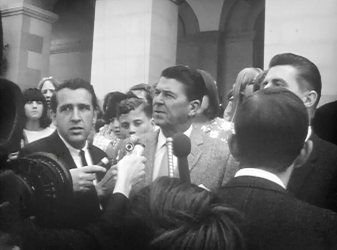
Reagan signed the Mulford Act in the summer of 1967. As a Republican governor and a conservative, he abandoned his typical values on gun control. It’s a stance he would change again in the early 1980s, citing the second amendment to the Constitution at a meeting of the NRA when he was president.
Hearst Owned
Former California Gov. Ronald Reagan addresses the media after the Black Panther Party’s protest of the State Capitol. Reagan signed the Mulford act in the summer of 1967.
“It’s what we call a sentinel event. You can turn back in time, and say right there is where the course of events changed,” said Garen Wintenmute, a professor and UC Davis Violence Prevention Research Program Director.
California has a recent reputation of being a leader among states when it comes to issues of gun control. As mass shootings, gang violence and assassination attempts keep debates about Second Amendment rights and gun laws at the forefront of American political discourse, California has positioned itself as a place that prioritizes restrictions on guns and harsh penalties for those that violate them.
But there was a time when California was an open carry state, before deciding to “take guns off the table,” Wintenmute said.
The Black Panther Party’s Capitol protest and the decisions by lawmakers that followed changed the way we view California in comparison to other states.
While the Mulford Act was signed nearly 60 years ago, it remains relevant as ever.
A dissenting panel of federal judges for the Ninth Circuit recently deemed California’s open carry ban in most counties unconstitutional after a man from Siskiyou County specifically challenged California’s restriction on open carry in counties with a population greater than 200,000.
The California Attorney General’s Office has not made a decision on how it will move forward, and some legal analysts think the ruling could ultimately be upheld with the Supreme Court’s current 6-3 conservative majority.
| MORE | ‘Do we have enumerated rights or don’t we’: NorCal man expands on his California open carry lawsuit
Preserving The Legacy
Today, the Black Panther Party Museum sits on Broadway in Oakland, serving as proof of the history that some former Party members feel has been diminished or rewritten.
“We constantly have people here in the Black Panther Party Museum. We have a lot of school groups that come here, we also have professional groups that come here,” Buck said. “People want to know this information. More importantly, they want to know why they never knew anything about it, or why they had the wrong narratives in the first place.”
Fredrika Newton also wants people to know the Black Panther Party’s history and impact in the community extends beyond firearms.
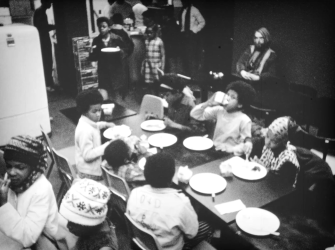
“These same men that they would depict [in a violent way] were actually up at five in the morning feeding hungry children, or working in the free health clinic or one of these 65 survival programs,” Newton said. “By design that was not shown in media. [The media] didn’t show women. At one point, two-thirds of the membership in the Black Panther Party were women.”
Hearst Owned
Children share a meal courtesy of the Black Panther Party’s breakfast program.
Newton is proud of the support that the Black Panther Party Museum gets today and encourages people to submerge themselves in the party’s history.
See more coverage of top California stories here | Download our app | Subscribe to our morning newsletter | Find us on YouTube here and subscribe to our channel