
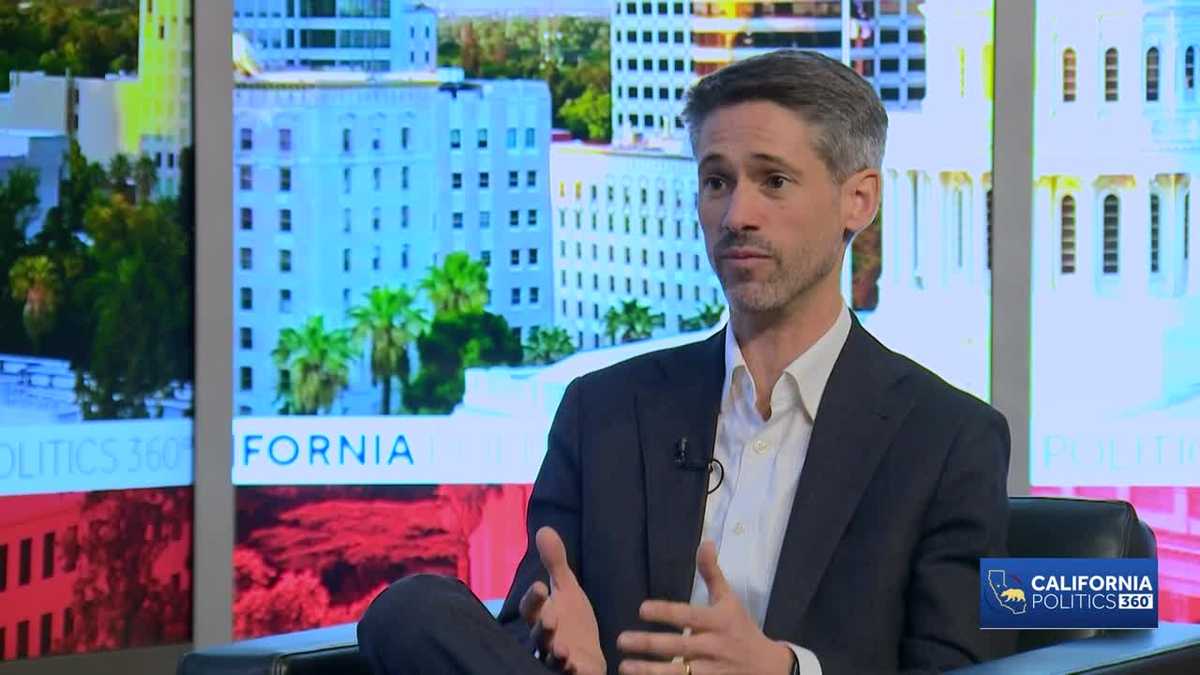
San Jose Mayor Matt Mahan on Prop 36, Gov. Newsom and the Wealth Tax | California Politics 360
Joining us now is the mayor of San Jose Matt Mayhan. Matt, thank you so much for making time for us. So, uh, I wanna start with the big news of the week, which is that you are now apparently seriously considering *** run for California governor. What was the tipping point for you to come to this, this thinking now? Well actually I’m gonna take *** hard look at it and come to *** decision over the next couple of weeks here. I’ve been. Trying my best to just focus on delivering for the residents of San Jose, but I’m increasingly worried about the direction the state’s going in, and I realized that I can’t do my job as mayor and deliver *** safer, cleaner, more affordable city if. Sacramento isn’t implementing policies that work. I’ve been in dialogue with many of the current candidates. I’ve put out my thoughts about what it would look like for California to get back to basics on issues like crime, homelessness, housing, energy, affordability, and I’m not seeing the vision. The boldness that we need as *** state if we’re going to move forward, it really requires the state, counties, cities to all be on the same page and really pursuing the kinds of policy reform we need if we’re going to fix California, and I’m just not hearing it. I’m concerned. I’m gonna really study it. My wife and I have *** big decision to make. We have two little kids. I have *** lot of concerns about what it could mean for my family on the one hand. On the other hand, I want what’s best for San Jose and for California and we need somebody who’s ready to get our state back to basics. So just to clarify, you’ve met with several candidates or at least spoken to them, and you have not found anyone who you think has the drive to help your city. I’m not seeing any of the current candidates. Speak clearly and boldly about flexible and accountable funding for getting people off the streets, intervening in cycles of addiction and mental illness, and putting out *** real plan for how we get people the help that they need. And properly implement new tools like Prop 36, CareCourt, SB 43 on affordability. There’s *** lot of talk at *** high level about affordability, but we’re making decisions in California right now that are driving up the cost of energy. Well, for, for one, we have pushed all of the refineries out of the state. We’ve had *** debate about whether or not we should even keep. Diablo Canyon open and when it comes to clean energy, which we should be expanding, we’re leaving *** lot of tools on the table because apparently they don’t benefit any of the current interests in Sacramento. For example, the governor vetoed *** bill that would have studied virtual power plants that use technology to better balance supply and demand. We could be innovating by incentivizing EV owners to charge in the middle of the day, plug their vehicles back into the grid at night, and actually charge the grid, use them. Is *** giant store of batteries to offset all that evening demand when there isn’t solar and wind availability. So I just, I think we could be bolder. I think we could be more innovative. Californians have been saying very clearly, I hear this every day in San Jose, they want *** government that works, that focuses on their needs, what they see when they step out of their front door every day is my city safe? Is it clean? Is it affordable? Do my kids have economic opportunity? And we’re driving that agenda in San Jose. We’re showing measurable results. We’ve been one of the fastest cities in the state to reduce homelessness. Uh, all of our survey data shows that we’re going in the right direction on cleanliness and city services. Uh, we’ve become the safest big city in the country once again because we’re being pragmatic. About intervening in cycles of repeat offense and holding people accountable. We’re working closely with our DA and judges. It’s working, but the next phase of progress requires *** state government that’s going to be beholden to the people, not the special interests, that’s going to drive bold policy change. So when do you plan on making *** decision? Well, I realistically need to make *** decision in the next couple of weeks. So we’re having *** lot of conversations at home, particularly with my wife and our two little kids, uh, other family members and friends, and just doing *** lot of reflection. Uh, I have really spent the last few months trying to put out ideas and engage with the field and get somebody else to really take on this mantle of. Reform and be clear eyed about the challenges we face in California fiscally, even just take this proposed wealth tax. Where, where is everybody on that? We’ve already seen $11 trillion of capital flight from the state. We’re putting our innovation economy at risk and no one’s speaking up about *** proposal that is the wrong way to address *** very real issue. Which is economic inequality. There are *** lot of loopholes. We could be closing the tax code to make sure wealthy folks are paying their fair share. We could be doing *** lot to reduce affordability and to spur the creation of good, high paying jobs, all of which would be more practical and sustainable ways of addressing economic inequality. And yet we go after the shiny object. Let’s pass *** wealth tax. Well, guess what? The wealth is now fleeing the state and going to other places that are friendlier to investment. So I just, I’m not seeing the clarity, the vision, the leadership the state needs, which is causing me to reconsider this decision, though there’s plenty about my family life and my commitments to San Jose that that really. You know, make me know that I need to think long and hard about this. I want to circle back to the wealth tax in the later part of this conversation, but is there just on this final point as you reconsider or consider *** run for governor, is there any candidacy on the Democratic side that you see having momentum but that you’re concerned about which could lead you to run? At the moment I don’t see momentum and I don’t, I don’t hear *** vision. I’m, I’m not seeing anyone really articulate clearly how they’re going to ensure that we end unsheltered homelessness, clean up our cities, address crime, particularly when it’s driven by addiction. We need to require treatment. That’s what Prop 36 was about. It was about giving people. *** choice that creates some accountability that says you’ve repeatedly harmed the community, your addiction is bad for you, it’s bad for everyone else, you have *** choice now between treatment or jail it works we know it works. San Diego’s doing it right now and it’s working. But we see no conversation about this. I, I wanna see candidates step up for the biggest jobs in our state who are bold and clear-eyed about the changes we need if we’re going to deliver *** safer, cleaner, more affordable state for everyone. I’m just, I’m not hearing it. I don’t think it’s clear enough, substantive enough, bold enough. I’ll stick with Prop 36. Governor Gavin Newsom, um, present, well, his administration presented his state budget last week and. When asked about Proposition 36 and what investments or financial infrastructure he’ll provide to again make that happen, uh, his director of the Department of Finance said that essentially they’re, they’re looking toward what used to be Proposition 47 funding, but really there’s, there’s no set. Plan, it sounds like at this point in in January. What, what’s your response to that? Well, we’re long past due for *** plan. The voters of California spoke very clearly. It passed in every single county by *** nearly 70 to 30 margin. It was the single most supported ballot measure on the ballot when it passed, and we talk *** lot about defending democracy. I think we should practice it here at home in California. I’m talking to DAs across the state. Some have really leaned in and taken ownership in the absence of leadership from Sacramento. Excuse me, you see DA Stefan down in San Diego County, DAs in Riverside, Orange County, they’re leaning in, engaging with judges, getting their county behavioral health departments to implement *** program, and it’s working in San Diego County right now, over 500 people are in treatment. And there’s *** system in place and coordination between the DA judges and the behavioral health department that was done because of the leadership of *** local DA and other individuals there who came together, but it shouldn’t require that. The state should be leaning in, should be providing technical assistance, funding for implementation, creating *** framework, uh, you know, when people pass things, especially when it’s overwhelming like that, they expect their leaders to listen and to go. Implement and follow through on the message and the message was extremely clear. It’s desperately needed. We could be saving ourselves *** lot of lives, *** lot of money, *** lot of heartache for small business owners. It’s estimated that today in California just the theft tax. Affecting our local businesses is on the order of $8 billion *** year. Thousands of people die of overdoses in our tent encampments because we don’t intervene and require that people get life saving treatment. That is *** moral failure. It’s *** fiscal failure. It’s *** huge burden on entrepreneurs and, and working families, uh, small business owners. We could do. So much better. The voters have already told us how, and we see that it works. We know that it works. We’re not doing it because of ideology, because of, uh, I don’t know what it is, *** fear of change, *** fear of admitting that we were wrong. We tried something. Prop 47 was an experiment. It did not fully work in *** lot of ways. It created unintended consequences. We need *** government that can admit failure and then iterate and get to the next level. And try something different right now, um, or at least I mean this was really discussed last year because Prop 36 passed with no funding mechanism or specific implementation guardrails, there are people who are sitting in jails waiting to get their promised treatment mandated felony. I mean, whose, whose fault is that right now in your eyes? I think it’s largely the state of California for failing to look at the data and see what’s happening in terms of repeat offenders, the high level of theft that’s funding addiction, and the tremendous number of overdose deaths, tens of thousands of overdose deaths in our state over the last decade because we have not required treatment. There is funding for Prop 36 and components of it. In San Diego County, where it’s actually being implemented, the treatment costs are largely being covered by our healthcare system. It’s Meal dollars. There is funding for treatment. What’s missing is an actual implementation program that gets DAs, judges, and county behavioral health departments to be accountable for using the tool to intervene and save lives. So you’re right, there’s *** lot of finger pointing. I see that in my own county. Where you have judges say, well, we’re just going to keep letting people plead down to *** misdemeanor because we’re told that there isn’t the treatment capacity. Well, that’s not good enough. We need to demand that our behavioral health departments actually create that capacity again in San Diego, where it’s working, *** case I’ve studied pretty closely, 70% of the people who have come under *** treatment mandated felony through Prop 36 are in treatment that is outpatient treatment. It’s covered by the state’s health insurance program, Me. It’s outpatient, so it doesn’t require us to go build *** bunch of new beds, while in many cases inpatient is needed and ideal. We could be implementing this today and saving lives. It’s working in some places, but it’s not working in most counties. It’s not working statewide because there has been no top-down state level leadership understanding what the voters are telling us and being willing to do something different. Prop 36 was linked to California’s drug, mental health, and homelessness crisis, and Governor Gavin Newsom gave his state of the state speech last week, and he said though on the topic of homelessness overall, we are seeing results. He said early data just compiled shows that the number of unsheltered homeless people in California dropped 9% in 2025. We have not seen *** drop like this in nearly two decades in California. What was your reaction when you heard that line? Well, I paused and waited for the rest of the explanation of why it’s happening. San Jose is leading the way, as are other big cities. We’ve reduced the number of people living outside by about 133 over the last 5 years, and we’ve done it because we’re using flexible. Funding much of it from the state but also *** good share locally where we’re taxing ourselves to build interim housing, safe parking sites, we’re converting motels, we’re creating safe, dignified alternatives to the streets, we’re doing it cost effectively at the fraction. Of the cost of what it took to build permanent affordable housing that would take 5 to 6 years and cost *** million dollars *** door, we’re standing these sites up in *** year or less at more like $100,000 *** door, and when it’s available, we’re requiring that people use it. And it’s working. But the truth is, what the governor didn’t say is in last year’s budget, actually our current fiscal year, those flexible state funds that we had relied on to build out that system were zeroed out. Next year’s proposed budget. They’d be at 50% of their previous level. If the state doesn’t show up on one of our biggest issues and create flexible but still accountable dollars for cities and counties to invest in things that work, you’re not gonna see another 9% reduction. It looks good this year, but I’m concerned about what happens the year after that and the year after that. The sustainable way to end unsheltered homelessness in California is to build. Interim housing, build treatment capacity, make it easier for the market to build housing at all levels of affordability. And when options like shelter and treatment are available, require that people use it in San Jose, we’ve implemented *** responsibility to shelter policy that says you can’t choose to camp, you can’t repeatedly refuse housing, there will be accountability. We will intervene. We start with outreach and compassion and giving people the option of safe, dignified private shelter, but if it’s available, you can’t repeatedly choose. To camp and say no, there has to be accountability for coming indoors. The residents and taxpayers who are funding these solutions deserve that. They also deserve state leadership that will invest consistently in what works so that that reduction in unsheltered homelessness isn’t *** talking point in *** speech one year, but it’s *** steady trend line that gets us to where we really need to be. Is no one in the state of California living outside in *** tent. We’re one of the most dynamic, innovative, wealthiest places on earth. Nobody should be living and dying outside. Voters did approve to invest in structure or what the governor pitched to them as *** way to help that through Proposition One, which was more mental health and behavioral health changes in the state. Um, and he and the governor has said that, um, in just 18 months we’ve already approved nearly 70% of new treatment beds and slots we promised under Prop One, the fastest distribution of bond money in our state’s history. Is San Jose the beneficiary of, of that, or where does, where do you stand on Prop One? Well, I supported Prop 1 and I strongly agree that we need to build out treatment capacity. We need to do it faster and we need to do it more cost effectively. Santa Clara County had 3 Prop 1 applications, did not receive any funding under Prop 1. we’ve been unable to get *** clear answer from the state as to why that is. I know there are private providers who have received funding. I’d like to see greater transparency in terms of all of the projects in the state on one map, how many beds, and specifically timelines for delivery and cost per bed, not because we’re doing anything wrong today, but because the successful implementation of Prop 1 over the coming years relies. On that level of focus and accountability, we need to deliver the maximum number of beds as fast as we can at the lowest possible price point, and the state should be playing and the governor’s office should be playing *** very active role in ensuring successful implementation by maximizing beds and bringing down costs per bed. There’s *** lot embedded in state law. In our building codes, in all of our rules and regulations and processes, all well intended, that lead to these kinds of initiatives delivering *** lot less impact than they should because they drive up costs, they drive up timelines, they make it really hard to do what people want, which is build out that treatment capacity and when it’s available, require that people use it. We have got to streamline what we’re doing. The governor in his state of the state actually didn’t say cities need to do more. He said counties need to do more. Do you agree with that? I do. Counties have the primary responsibility for providing health and human services or social safety net in California, and Prop one is an example where we do have funding available. We need counties to. Deploy those resources and do it quickly and effectively. We need *** lot more treatment capacity. Defunding our mental health hospital system was one of the biggest mistakes the state ever made. What we rebuild won’t look like what we had and probably. For good reason, but we have got to scale up treatment capacity and make it easier for people to use it when it’s available. And if their addiction or mental illness is leading to this pattern of repeat offense, repeat crime that we see in our communities, we have to intervene earlier and more forcefully to get people the help they need, but also to protect the broader community. Unafraid to call out the state, which is Governor Gavin Newsom and the Democratic-led legislature, have you had any discussions with the governor? I know last time we talked was in November. You hadn’t spoken to him. Has there been any progress in just hearing from him at all, telling him your ideas, telling him where you’re at? No, the governor and I have not chatted since we last spoke. Uh, you know, there’s places where we are aligned and, and could really partner, and I, my hope is, I understand the governor is really looking nationally, and I understand that, but my hope is that if, if and when he does run for president, that he’s able to run on *** record of having spent his last year as governor partnering closely. With cities and counties with the big city mayors to deliver results, and I have that invitation continues to be open. Our teams do talk and collaborate, uh, but I’d love to see, I’ve offered many times, I’d love to have them down to San Jose, show them some of the things we’re doing that are working to lead the way. In reducing unsheltered homelessness, the kinds of things that are making San Jose the safest big city in the country, our use of automated license plate readers and our real-time crime intelligence system and the community policing we’re doing, there’s *** lot of work we need to do here in California, and I think that would be the best record to run on. Does he, with his budget presentation from Monday as someone considering taking or trying to run for his position. Do you worry about this budget shortfall situation and right now I mean he doesn’t, he’s not putting any specific concrete ideas on the table waiting for what California’s cash picture looks like in May. Does that concern you though that we’re going to see *** few months, several months pass by before we really know where his head’s at? Absolutely. There are *** few things about the budget that concern me. One is just if you look at the allocation of funding, homelessness represents *** 50+% reduction in funding year over year. We already talked about those HAP funds that we’ve used to build interim housing. They’re at just 50% of their previous level. Government operations is up over 50% and it’s always easier to expand the bureaucracy, invest in the administrative state, but what we really need *** laser focus on is getting those funds deployed in our community in terms of policing, more treatment beds, more interim housing, the solutions that we know work at the ground level. This budget doesn’t demonstrate. That focus, so that’s my first concern. And then on the fiscal projection, I’m extremely concerned about an overly optimistic view that looks good on paper but quite well may not play out in practice. The state of California is overly reliant on *** very small number of taxpayers and the performance of the stock market, and we should be. More honest with the residents that we have to have larger rainy day funds and really be ready to hold back spending in good years so that we can smooth out our spending and not have these wild fluctuations where we’re ramping up dramatically and then cutting back dramatically. We’ve seen this cycle. Play out. We know how it works in California. The responsible thing to do is be very focused and measured in our spending and have more reserves for when, as it inevitably will, the stock market goes down. And now again with this proposed wealth tax, I think we’ve actually put ourselves at greater risk. We’ve seen real capital flights, so I’m worried about that. It’s not what the legislative analysts office says is going to happen. I think their projection is likely more accurate, and I just, I want to make sure that politics isn’t getting in the way of good governance. My last one for you, I mean on the topic of the wealth tax, it’s actually, it’s one area where you and the governor are aligned. I mean, as you noted, the state’s top 1%, they contribute nearly half of the state’s total tax revenue. So I mean just where. What is your biggest concern? I mean, not even just for the state but for your area which is home to some of these people and what does that mean for, for the locals? It’s extremely concerning. I think the governor has shown real leadership in standing up against the wealth tax. It may sound good in theory, but we’ve seen in practice that it has huge unintended consequences. There are now 12 European countries that have experimented with national level wealth taxes, not just *** province or *** state like California, but now. Wealth taxes, 9 of them have already been rolled back. The majority of countries saw an overall reduction in the amount of revenue they collected even as they were adding this new tax because it creates an incentive to move capital, move businesses and assets out of that jurisdiction. It is too aggressive. It’s taking. Wealth that in many cases has already been taxed or is not easy to liquidate people’s ownership in *** family business or in real estate and appropriate. It’s an asset seizure in many ways and we’ve seen it backfire in many places. We’re seeing it backfire already just as *** concept. It has sent about $1 trillion of wealth out of state. This is *** huge risk to our innovation economy. I think the governor was brave to stand up and say this is not good policy. I think he and I agree that there are many other ways to address economic inequality, and we need our elected leaders to pursue those more aggressively, closing loopholes on capital gains today. Very wealthy people can borrow against their unrealized gains, use that revenue from their loans, and never pay *** tax on the capital gains. That’s *** loophole we could close. Today that would increase fairness and level the playing field for people. I think the governor is mistaken though in his back and forth with Congressman Conna is to push back on the notion that there’s waste, fraud, and abuse in government. We know our government could be more efficient, maybe particularly here in California. I mean just look at fraudulent unemployment claims that are estimated. To have cost taxpayers somewhere between $20.30 billion dollars, just as one example, $32 billion.32 billion dollars. I mean that’s *** huge amount of money at the rate things are going, there’s more money there in addressing just fraud related to unemployment claims that we’re going to collect through *** wealth tax because of how much capital is fleeing the state. So I think it’s extremely counterproductive. I think it’s *** classic case of ideology over pragmatism, and it really threatens the engine of economic growth and opportunity. In fact, San Jose, the heart of the tech community, which would be most affected by this, is also the best metro in the country for upward mobility. Raj Chetty, Harvard economist, showed that San Jose and Silicon Valley. was better at creating upward mobility and economic opportunity than any other metro in the United States, and that’s because we have that investment in startups and innovation and technology. It is extremely shortsighted to incentivize those folks to leave California. If I could ask, are any of these billionaires who might be your constituents, have they asked you to run for mayor, excuse me, to run for governor? I’ve been getting *** lot of outreach from folks who are concerned, but to be honest, I get more outreach at the grocery store and the gas station than phone calls from tech leaders, they’re concerned. But people really just want to see *** government that works, that is transparent, that holds itself accountable, where there are no sacred cows because of what interest groups. Care about or what the establishment’s group think is they want real clarity. It sounds super nerdy and wonky, but one of the things we’re doing in San Jose that I’m most proud of is we’ve said, here are 5 top goals, and we have public facing dashboards on each one, and we say this is how we measure success. This is where your tax dollars are going. Here’s how these programs are performing, and we have an open conversation and acknowledge from the start. These are experiments. These are hypotheses. If these programs don’t work, if they don’t perform, we’re going to cut them and fund things that work. That is the spirit we need in government, *** government that’s focused on performance, on results, and it’s all about accountability to the people. All right, San Jose Mayor Matt Mahan, we really appreciate your time. Thank you. Thanks for having me.
San Jose Mayor Matt Mahan on Prop 36, Gov. Newsom and the Wealth Tax | California Politics 360

Updated: 8:44 PM PST Jan 16, 2026
San Jose Mayor Matt Mahan says he has a lot to think about over the next couple of weeks as he decides whether to run for California governor. The Democratic Bay Area native initially did not intend to get in the race and was hoping to identify the candidate who best aligned with his “back to basics” agenda, which involves a more affordable California with safer and cleaner streets. Mahan’s popularity has grown as he has been praised in both political parties for his stances on homelessness and crime. In an extensive interview with California Politics 360, Mahan said that he’s not seeing anyone with a clear and bold vision. “I want to see candidates step up for the biggest jobs in our state who are bold and clear-eyed about the changes we need,” Mahan said. Here’s what was discussed during the lengthy interview. Prop 36 Mahan was one of a few Democratic leaders who were outspoken about his support for Proposition 36, the crime measure voters overwhelmingly approved to crack down on repeat thieves and fentanyl dealers. The measure created a “treatment-mandated felony” that allowed those convicted of the crimes to avoid the heavier consequences if they completed treatment. California’s Democratic Legislative Leaders and Gov. Newsom opposed and fought the measure.Proposition 36 did not spell out a specific way to fund the measure statewide, leaving it as a continued debate between state and local leaders. Although voters overwhelmingly approved it, the implementation of it has been inconsistent across the state in its first year. This year, Gov. Newsom’s proposed spending plan does not include a specific strategy to ensure Proposition 36 is effective. “We’re long past due for a plan,” Mahan said, who blamed state leaders for the inconsistency of the new law’s impact across the state. “Californians spoke very clearly.” “We talk a lot about defending Democracy, we should practice it here at home,” Mahan added. Mahan said he has talked to several district attorneys across the state who he says have “taken ownership in the absence of leadership from Sacramento.” He pointed to the district attorneys in Riverside, Orange and San Diego Counties specifically. Mahan said in other counties, judges are allowing criminals to plead down to lesser crimes because there is no treatment-mandated felony. “The state should be leaning in. It should be providing technical assistance, funding for implementation, creating a framework,” Mahan said. “When people pass things, they expect their leaders to listen.” Homelessness, Affordability, and Other Clashes with Gov. Newsom Mahan has criticized not only the governor’s opposition and inaction on Prop 36, but also his approach to the cost of living and the state’s homelessness and housing situation. When asked to respond to Gov. Newsom touting a 9% reduction in the state’s unsheltered homeless population during his state of the state address, Mahan said, “Well, I paused and waited for the rest of the explanation as to why it’s happening.” San Jose, he said, is leading the way after reducing the number of people living on the streets by a third over the last five years. He acknowledged the city was able to do that with help from the state.But Mahan said the governor and state lawmakers have more work to do when it comes to helping cities and counties tackle homelessness. “Those flexible state funds have been zeroed out,” Mahan said, referring to state grants that the governor has slashed in his updated proposed spending plan. “If the state doesn’t show up on one of our biggest issues… you’re not going to see another 9% reduction.” Last year, Mahan wrote an Op-Ed in the San Francisco Standard titled, “How about less time breaking the internet and more time fixing California?” Mahan said he still hasn’t spoken to the governor in months, telling Ashley Zavala in November that he had tried to reach out to him earlier in the year but had not received a response. “There’s places where we are aligned and could really partner,” Mahan said. “My hope is if and when he runs for President, he’s able to run on a record having spent his last year as governor partnering closely with cities and counties to deliver results.” “That invitation continues to be open. Our teams do talk and collaborate,” Mahan added. “I’d love to see, I’ve offered many times, have him down in San Jose, show him some of the things we’re working to lead the way on reducing unsheltered homeless.” Wealth tax One area in which Mahan and Newsom do agree is on a proposed wealth tax that could land on the ballot this November. The SEIU-United Healthcare Workers West is pushing a 5% tax on California billionaires, many of whom reside in Mahan’s region. “It’s extremely concerning,” Mahan said, noting California already has a progressive tax system that heavily relies on the top 1% of earners. “We’re seeing it backfire already, just as a concept, it’s already sent about a trillion dollars out of state,” Mahan said, worrying that it could be a risk to the state’s innovation and tech economy. He said there could be other solutions to address the overall wealth gap in the state and country, including closing tax loopholes on capital gains. Watch the full interview with Matt Mahan in the video player. KCRA 3 Political Director Ashley Zavala reports in-depth coverage of top California politics and policy issues. She is also the host of “California Politics 360.” Get informed each Sunday at 8:30 a.m. on KCRA 3.
SACRAMENTO, Calif. —
San Jose Mayor Matt Mahan says he has a lot to think about over the next couple of weeks as he decides whether to run for California governor.
The Democratic Bay Area native initially did not intend to get in the race and was hoping to identify the candidate who best aligned with his “back to basics” agenda, which involves a more affordable California with safer and cleaner streets. Mahan’s popularity has grown as he has been praised in both political parties for his stances on homelessness and crime.
In an extensive interview with California Politics 360, Mahan said that he’s not seeing anyone with a clear and bold vision.
“I want to see candidates step up for the biggest jobs in our state who are bold and clear-eyed about the changes we need,” Mahan said.
Here’s what was discussed during the lengthy interview.
Prop 36
Mahan was one of a few Democratic leaders who were outspoken about his support for Proposition 36, the crime measure voters overwhelmingly approved to crack down on repeat thieves and fentanyl dealers.
The measure created a “treatment-mandated felony” that allowed those convicted of the crimes to avoid the heavier consequences if they completed treatment. California’s Democratic Legislative Leaders and Gov. Newsom opposed and fought the measure.
Proposition 36 did not spell out a specific way to fund the measure statewide, leaving it as a continued debate between state and local leaders. Although voters overwhelmingly approved it, the implementation of it has been inconsistent across the state in its first year.
This year, Gov. Newsom’s proposed spending plan does not include a specific strategy to ensure Proposition 36 is effective.
“We’re long past due for a plan,” Mahan said, who blamed state leaders for the inconsistency of the new law’s impact across the state. “Californians spoke very clearly.”
“We talk a lot about defending Democracy, we should practice it here at home,” Mahan added.
Mahan said he has talked to several district attorneys across the state who he says have “taken ownership in the absence of leadership from Sacramento.” He pointed to the district attorneys in Riverside, Orange and San Diego Counties specifically.
Mahan said in other counties, judges are allowing criminals to plead down to lesser crimes because there is no treatment-mandated felony.
“The state should be leaning in. It should be providing technical assistance, funding for implementation, creating a framework,” Mahan said. “When people pass things, they expect their leaders to listen.”
Homelessness, Affordability, and Other Clashes with Gov. Newsom
Mahan has criticized not only the governor’s opposition and inaction on Prop 36, but also his approach to the cost of living and the state’s homelessness and housing situation.
When asked to respond to Gov. Newsom touting a 9% reduction in the state’s unsheltered homeless population during his state of the state address, Mahan said, “Well, I paused and waited for the rest of the explanation as to why it’s happening.”
San Jose, he said, is leading the way after reducing the number of people living on the streets by a third over the last five years. He acknowledged the city was able to do that with help from the state.
But Mahan said the governor and state lawmakers have more work to do when it comes to helping cities and counties tackle homelessness.
“Those flexible state funds have been zeroed out,” Mahan said, referring to state grants that the governor has slashed in his updated proposed spending plan. “If the state doesn’t show up on one of our biggest issues… you’re not going to see another 9% reduction.”
Last year, Mahan wrote an Op-Ed in the San Francisco Standard titled, “How about less time breaking the internet and more time fixing California?”
Mahan said he still hasn’t spoken to the governor in months, telling Ashley Zavala in November that he had tried to reach out to him earlier in the year but had not received a response.
“There’s places where we are aligned and could really partner,” Mahan said. “My hope is if and when he runs for President, he’s able to run on a record having spent his last year as governor partnering closely with cities and counties to deliver results.”
“That invitation continues to be open. Our teams do talk and collaborate,” Mahan added. “I’d love to see, I’ve offered many times, have him down in San Jose, show him some of the things we’re working to lead the way on reducing unsheltered homeless.”
Wealth tax
One area in which Mahan and Newsom do agree is on a proposed wealth tax that could land on the ballot this November.
The SEIU-United Healthcare Workers West is pushing a 5% tax on California billionaires, many of whom reside in Mahan’s region.
“It’s extremely concerning,” Mahan said, noting California already has a progressive tax system that heavily relies on the top 1% of earners.
“We’re seeing it backfire already, just as a concept, it’s already sent about a trillion dollars out of state,” Mahan said, worrying that it could be a risk to the state’s innovation and tech economy.
He said there could be other solutions to address the overall wealth gap in the state and country, including closing tax loopholes on capital gains.
Watch the full interview with Matt Mahan in the video player.
KCRA 3 Political Director Ashley Zavala reports in-depth coverage of top California politics and policy issues. She is also the host of “California Politics 360.” Get informed each Sunday at 8:30 a.m. on KCRA 3.