
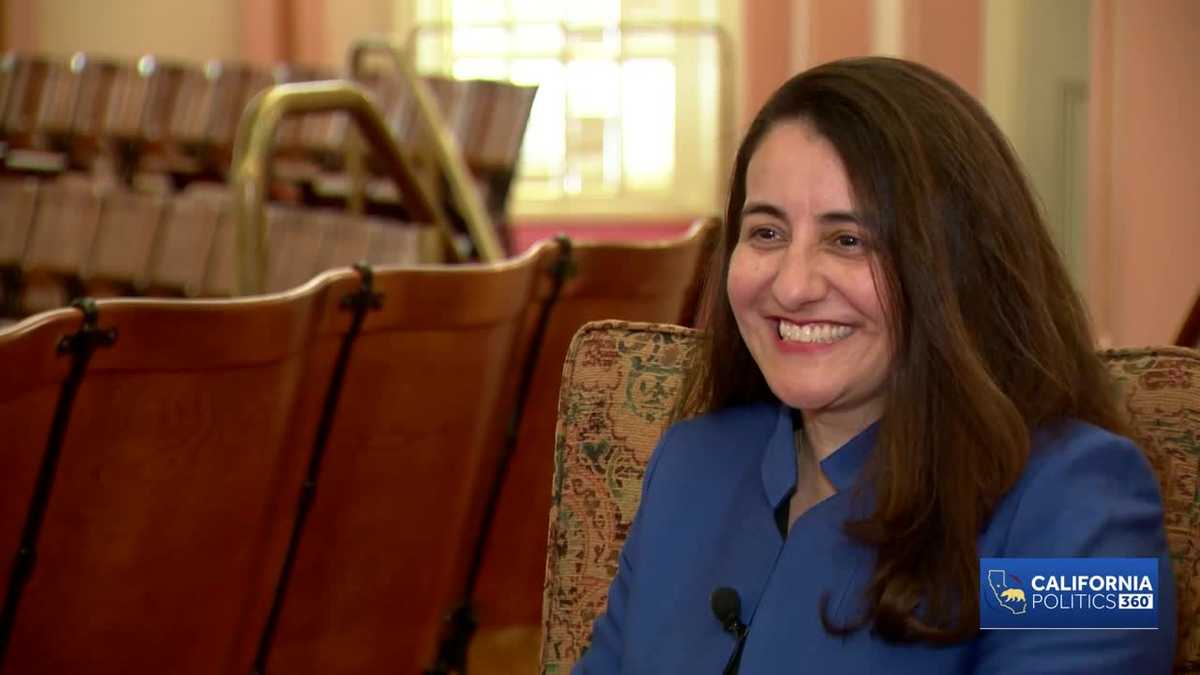
New California Senate leader Monique Limón on the year ahead that she didn’t expect | California Politics 360
Well, California Senate pro tem Monique Limon, thank you so much for making time for us. No, thank you. Thanks for doing this. How have the first couple of weeks been for you in this new role? So look, I think the first couple of weeks have been *** lot. Um, there’s just *** lot happening in our state and in the country and all of that. Gets you know translated over to the stuff that we are doing here in the legislature so it has been good but also recognizing that the world we know today might be different tomorrow and I think we’ve seen *** few examples of that um in the first few weeks certainly starting out the first week of session. Um, with, you know, *** celebration because I was moving in this role, but also watching what was happening around the country, watching what was happening in Minnesota, and so I think that those are the types of things that, um, very quickly humble us to, to remember that while we may be doing some good work here. That the world keeps changing and needing us to address some of the challenges that we’re seeing, sure, and, and challenges here at home though, and the primary role of the California legislature is to figure out how to use taxpayer dollars. Governor Newsom last week rolled out his state spending plan. And we’ve seen both sides of the aisle raise flags about the governor waiting until May to come with concrete solutions when it comes to healthcare spending and when it comes to California’s overall apparent structural budget problem. Um, with shortfalls in the years after he leaves office, I mean, are you OK with waiting until May to hear what his ideas are? Well, I think that what happens with the California legislature and with the Senate in particular and the Senate Democratic caucus is we don’t wait until May. We begin to craft and form and deliberate on solutions, uh, immediately, so we will have, uh. See conversations we will have budget conversations we’ve already had uh some of those conversations among our caucus we have an upcoming budget retreat uh what those moments do for us is they inform our decision making, but we do not wait um until we have the final numbers, um, in May. Now certainly, uh, the Janu January budget, uh, helps us. Start thinking about it’s *** signal for us, right? Like where things could go, um, but we are prepared, uh, that before May you will see, uh, the Senate, uh, you will see our Senate Democratic caucus come out with the solutions that we feel, um, are important to move forward given the signaling that’s happened thus far. But really in the last 6 years as an observer of this building you have been here. Uh, the legislature and governor, there’s *** term that has been used annually called jam. The governor has consistently jammed this legislature at the last minute for his big asks, and Whatever those solutions might be, they may be big asks. I mean, it could we expect to see another year of, of jamming here? I think you can probably expect to see *** year of big asks because that is what, uh, you know, I’ve served under multiple governors and I will say that that is something that is, uh, not specific to any one governor. I also think that you see, uh, the legislature, um, also have big ask. Um, the, the, our process, our legislative process allows us to put forward our big ask. Through *** different means you see that in bills and you’re gonna see some uh you know, very thoughtful and exciting and big um bills that come from our caucus and so I think that we all have different means of how to put those priorities in front of us and I think that this year will not be the exception that whether you are the legislature whether you are *** governor you will put those big priorities for uh forward in front of us we have different deadlines and ways to do that and that’s not um that’s not gonna change I think when it comes to how members. Um, and our caucus and the legislature feel, uh, certainly, um, you know, there’s *** lot of focus put on what our priorities are and anything that comes that’s big that’s different than what we were working on always feels, you know, has *** moment of pause like how do you, how do you grapple with that in the midst of the things that also continue to be important for us but from my perspective, um, as the leader of the California State Senate certainly making sure that those priorities for the Senate continue independent of who’s asking what they’re asking around us that our priorities. You to be at the forefront. So I mean, and just for example, uh, the Senate and the Assembly went into *** special legislative session to pass two measures that had major impacts on the oil industry, and, um, I know that some of your colleagues are having some heartburn now that two refineries are one has already closed and another is going to. I mean, what I guess my question to you is, can we see more oversight? Can we see more of *** check on Governor Gavin Newsom’s power this year even though he may or may. Not be running for president yeah look I think that um our legislature has the ability to always, you know, pause to move things forward. One of the things that I found and certainly in my previous role serving as the caucus chair is that um we always have caucus members who are excited and eager to move forward uh with big ideas and we have caucus members who are not and so we come together as *** caucus to try to determine um which of those ideas makes sense to to keep moving forward, which we can align with I. I will say that you know in my first answer and kind of comments to you is about how the world keeps changing. One of the things about being *** legislator is that our positions evolve, uh, and certainly time and context matters. The laws that we have created in the past, you know, very well could be the laws that work for that moment and for the future, but there have been times, um, and they’re not all related to energy, they’re in different spaces where we have had to adjust our laws. Just this year, for example. Um, the in the Senate, um, there were big decisions that were made. We created two new committees, um, one related to privacy, one related to emergency management that was different in the history of the Senate. Those had not existed, and those were *** reflection of adapting our legislative priorities to *** world that continues to bring these issues forward. We’re seeing more bills in that space and so I use that as an example of something that it’s like, look, we, we can pause and we can reflect on whether we need to keep moving in *** different direction. Or whether we move in the same direction, those things are part of this review, deliberate process that we do here in the legislature. But the Senate has mostly gone along with Governor Newsom. So I mean, can we expect you to continue going along with the governor, or will we see more of *** check on his power? The Senate will go with the Senate priorities, and so it is our hope that we can share priorities with the governor, with the assembly, but it will be the Senate. Priorities that will move forward so I know you have *** big caucus, um, *** lot of ideas and, and the democratic spectrum is is wide here but what do you see some of those priorities being specifically under your leadership? Well, I think one of the first and foremost, I think one of the things that our caucus is united about is really prioritizing how California is going to respond um to. The challenges that we’re seeing with the uh different direction that the federal government is going and California is going, I would say that that is at the forefront of our caucus. Our caucus is identifying um ways and you’re gonna see this, you know, worked itself out through the legislative process. You will see bills that will be introduced um that respond to some of these big changes we’re seeing come from the federal government, um, and the impacts they are having to the people that we represent to the programs, um, that help our community. Communities and so that’s I think gonna be probably at the top of the list. The budget conversation is going to continue to be at the top of the list. We have *** Senate Democratic caucus. We have *** house, um, where the majority of them are going to be, right? We are all going to be here longer, um, than the next 12 months and so, uh, *** lot of members are really thinking also long term, not just short term in terms of what the budget is gonna look like. I think 3 years ago you had the hope, um, that the budget. Would you know maybe shift and change um in *** way that was uh you know better and moving in the right direction and we have seen signs of that but not enough um to be able to move at the same pace in terms of some of the work that we were doing and advancing some of our programs and that level of funding so I think you’re gonna have more members that are gonna think about what are the long term implications, um, do we start to make some of the changes um you know some of the shift. Um, that might need to happen in the budget this year, uh, shifting as in cutting shifting as in taxes, I think, you know, sometimes shifting is just *** matter of being more flexible with funds, right? Knowing that we have funds, um, that are there. I think it could mean, um, you know, any possible one of those things. I don’t know that it necessarily means, um, those things. I know that folks have thought *** lot and have I’ve gotten *** lot of questions about revenues and what that looks like. I can tell you that with. The diverse caucus that we have with different perspectives, um, there is not one singular idea on what *** revenue measure could potentially look like and I think that that’s something that you’re going to see, um, members, uh, explore and look at but I think that we are in the process of really trying to analyze in this moment what does that look like? what does it feel like? um, certainly there’s been *** lot of attention on one particular measure it’s not necessarily been something that, you know, you’ve seen work. Itself out through the legislature, uh, I appreciate that, you know, on the outside the public and you know, stakeholders are having this conversation simultaneously as the legislature is having the conversation, but I, I do think that our caucus is going to be looking at what’s on the table, what isn’t on the table, what we should consider, and what we should move forward in *** slightly different way than we have the last 3 years. What about affordability. I mean, could we, could we, is that among the priorities, do you think? I mean, whether is that in the energy space, is that in the housing space? Do you know yet? Yeah, so, so look, I think that our caucus is going to drive the work and certainly under, you know, last year our caucus and the legislature got *** number of bills out in this particular space. There was also then and now *** recognition that you can’t be one and done with affordability, um, that one bill alone or 4 or 5 or 6. Alone won’t be able to solve um some of the bigger pictures. What I see as being *** real challenge for example is that in the same at the same time that we’re having this conversation about affordability uh here in the state of California you see uh that the federal government is cutting those exact things that we’re trying to make affordable child care, for example, that is an economic means for people to go to work, uh, for people to be able to say I am going to be *** *** working parent and also. Um, you know, I rely on *** system that is here to help us work and contribute to the economy. Well, when you see *** $10 billion proposed cut, um, that doesn’t make our world or California or our communities more affordable. So when I describe the priority for the caucus, those are some of the examples that our caucus is grappling with looking at these federal changes both in policy directions and in budget on how we can do better, um, and how we’re going to be able to mitigate. What is coming um to us very fast from the federal government uh and in some cases we will not be able to solve for all of those make up the gaps for all of what the, you know, federal government is cutting, but you can, you know, rest assured that health care, child care, education, transportation, housing, energy are all being impacted by what’s coming from us for the federal government. I know we’re tight on time, so my last one for you is just what makes you different from previous California. Pro, you know, for me, uh, I think, uh, this is not, uh, ***, *** role that I thought I would, you know, do, um, when I got to the legislature and certainly not when I got to the Senate. When I got to the Senate, um, uh, you know, I was really focused. I was *** new member of the Senate. I was *** new mom, um, and so I, I think that, you know, for me it’s also realizing that this moment is unique and makes *** leader unique in how we have to respond, um, to the issues that are in front of us. I am *** leader who will build off of what previous leaders have done. I’m grateful for the work and the foundation that previous leaders have set for us and also I’m *** leader that I hope it won’t be all about me. It will be also about the caucus members. Um, there are phenomenal intelligent, hardworking members of the California State Senate that lead that are thought leaders um that are putting issues forward that make up *** team um I you know I may have this title, but we are *** team and how we’re working forward and I’m looking. Forward to that. I’m really excited about working with my colleagues about what they, you know, what I see coming forward, um, and the ideas that we will collectively bring, uh, to try to tackle some really big challenges because we wake up every day and we recognize that there are things to be solved, uh, challenges to overcome, but also California has incredible opportunity to be able to do things that feel right that work for our communities. All right, Madam Protem, I really appreciate your time. Thank you. Thank you.
New California Senate leader Monique Limón on the year ahead that she didn’t expect | California Politics 360

Updated: 8:33 PM PST Jan 16, 2026
California’s newest Senate Pro Tem, Monique Limón, said when she was first elected to serve at the State Capitol, this was not a role she thought she would do. “I am a leader that, I hope it won’t be all about me, it will be also about the caucus members,” Limón said in an interview on California Politics 360 when asked what makes her different from previous Democratic California Senate leaders. Limón is two weeks into her new leadership role and has said she’s in the process of figuring out where the state’s other Democratic Senators are on a variety of issues. She has not taken a position on the controversial proposed ballot initiative that could ask voters to approve a new wealth tax, and she did not provide specific proposals she’ll push for in the year ahead. As California faces financial issues that could require state leaders to raise taxes, cut spending or both, Limón did not say which is most likely this year. She did say the budget issues will be a top focus for lawmakers. Pointing to the unrest in Minnesota over the Trump administration’s immigration operations and the death of Renee Good, Limón signaled that fighting the President will be a top priority for California Senate Democrats. “Really prioritizing how California is going to respond to the challenges we’re seeing with the different direction the federal government is going and California is going, I would say that is at the forefront,” Limón said. Gov. Gavin Newsom’s proposed spending plan does not provide specific ideas to tackle some of the funding-related issues related to the Trump administration, including steep healthcare cuts. The governor has said he’ll provide more ideas in May, when the state has a better sense of the money it will be working with in the upcoming year. When asked if the Senate was OK with the governor waiting months to provide specific proposals, Limón said that before May, the Senate would have its own ideas. “We’ve already had some of those conversations,” she said. While they are separate but equal branches, Gov. Gavin Newsom typically gets his way with the California Legislature. Since the pandemic, when the Legislature agreed to give up its power and allow the governor to take control of the majority of state decisions, the governor has been known to jam lawmakers with major, last-minute asks. For example, in 2023, the governor pushed for an overhaul of the state’s permitting process to speed up infrastructure and energy projects through the state’s opaque budget process, where major law changes proposals can be written and passed in a matter of weeks. In 2024, a group of Democratic lawmakers essentially admitted they didn’t read a bill they approved that would have allowed the state to set utility rates based on a customer’s income. In both 2023 and 2024, Gov. Gavin Newsom called last-minute special legislative sessions to target oil company profits and set new rules for refiners. Despite serious concerns from Democrats that the state would lose more of its few refineries, which could further increase gas prices, the legislature approved both measures. Two refineries have either already shut down or plan to. Limón would not directly say if the Senate would put more of a check on the governor’s power under her leadership. “I think you can expect to see a year of big asks. I’ve served under multiple governors and that is not something that is specific to just one governor,” she said.”One of the things about being a legislator is that our position evolves and certainly time and context matter,” Limón said, noting laws can be adjusted. “The Senate will go with the Senate priorities. It’s our hope we can share priorities with the governor.” Watch the full interview with Senate Pro Tem Monique Limón in the video player. KCRA 3 Political Director Ashley Zavala reports in-depth coverage of top California politics and policy issues. She is also the host of “California Politics 360.” Get informed each Sunday at 8:30 a.m. on KCRA 3.
SACRAMENTO, Calif. —
California’s newest Senate Pro Tem, Monique Limón, said when she was first elected to serve at the State Capitol, this was not a role she thought she would do.
“I am a leader that, I hope it won’t be all about me, it will be also about the caucus members,” Limón said in an interview on California Politics 360 when asked what makes her different from previous Democratic California Senate leaders.
Limón is two weeks into her new leadership role and has said she’s in the process of figuring out where the state’s other Democratic Senators are on a variety of issues. She has not taken a position on the controversial proposed ballot initiative that could ask voters to approve a new wealth tax, and she did not provide specific proposals she’ll push for in the year ahead.
As California faces financial issues that could require state leaders to raise taxes, cut spending or both, Limón did not say which is most likely this year. She did say the budget issues will be a top focus for lawmakers.
Pointing to the unrest in Minnesota over the Trump administration’s immigration operations and the death of Renee Good, Limón signaled that fighting the President will be a top priority for California Senate Democrats.
“Really prioritizing how California is going to respond to the challenges we’re seeing with the different direction the federal government is going and California is going, I would say that is at the forefront,” Limón said.
Gov. Gavin Newsom’s proposed spending plan does not provide specific ideas to tackle some of the funding-related issues related to the Trump administration, including steep healthcare cuts. The governor has said he’ll provide more ideas in May, when the state has a better sense of the money it will be working with in the upcoming year.
When asked if the Senate was OK with the governor waiting months to provide specific proposals, Limón said that before May, the Senate would have its own ideas.
“We’ve already had some of those conversations,” she said.
While they are separate but equal branches, Gov. Gavin Newsom typically gets his way with the California Legislature. Since the pandemic, when the Legislature agreed to give up its power and allow the governor to take control of the majority of state decisions, the governor has been known to jam lawmakers with major, last-minute asks.
For example, in 2023, the governor pushed for an overhaul of the state’s permitting process to speed up infrastructure and energy projects through the state’s opaque budget process, where major law changes proposals can be written and passed in a matter of weeks. In 2024, a group of Democratic lawmakers essentially admitted they didn’t read a bill they approved that would have allowed the state to set utility rates based on a customer’s income. In both 2023 and 2024, Gov. Gavin Newsom called last-minute special legislative sessions to target oil company profits and set new rules for refiners. Despite serious concerns from Democrats that the state would lose more of its few refineries, which could further increase gas prices, the legislature approved both measures. Two refineries have either already shut down or plan to.
Limón would not directly say if the Senate would put more of a check on the governor’s power under her leadership.
“I think you can expect to see a year of big asks. I’ve served under multiple governors and that is not something that is specific to just one governor,” she said.
“One of the things about being a legislator is that our position evolves and certainly time and context matter,” Limón said, noting laws can be adjusted. “The Senate will go with the Senate priorities. It’s our hope we can share priorities with the governor.”
Watch the full interview with Senate Pro Tem Monique Limón in the video player.
KCRA 3 Political Director Ashley Zavala reports in-depth coverage of top California politics and policy issues. She is also the host of “California Politics 360.” Get informed each Sunday at 8:30 a.m. on KCRA 3.