
It was a late Sunday afternoon like any other on San Francisco’s Alcatraz Island. The day was winding down, and Aidan Moore, a guest relations employee for Alcatraz City Cruises, was at the dock of the tourist attraction helping visitors disembark. Suddenly, one of the tourists approached him, wide-eyed: They had just seen a coyote swimming to shore, something that has never been recorded before.“I didn’t believe them to start with,” Moore, who has been working on the island for the past two and a half years, told SFGATE over the phone. But the guest insisted they had the video to prove it. They held up their iPhone to show him the screen, and sure enough, there it was: a coyote paddling through the water and eventually reaching the craggy coast on the southern edge of the island near the Agave Trail, panting and shivering. Moore said he never got the guest’s name, but asked them to AirDrop the video to his phone. He then called in the sighting over the radio to the park rangers on site, who went to the trail to look for the animal. By then, it had already disappeared. “I suspect he fell into the water chasing something and was swept away,” Moore said.The captain of the boat told him there were some unusual currents in the bay that day, likely runoff from recent storms that were coming in at approximately eight or nine knots. That’s somewhere between seven-and-a-half to eight-and-a-half miles per hour, a speed no animal could outswim if they got caught in it.“He didn’t look like he was in very good condition, which I’m not surprised by given the harrowing experience,” Moore said. It’s not clear where the coyote came from. He speculated it swam the mile-and-a-quarter journey from San Francisco, which faces the southern edge of Alcatraz, though it could have also been swept in from Marin or Angel Island, where a family of coyotes also recently established territory after making the swim from the North Bay. Julian Espinoza, a spokesperson for the Golden Gate National Recreation Area, which oversees Alcatraz, confirmed the sighting with SFGATE, but could not immediately share more information about how it got there or what may have motivated its voyage.“Coyotes can be commonly seen throughout our San Francisco and Marin parklands but never before on Alcatraz,” he wrote in an email. “This was the first time our park biologists observed anything like this.”Christine Wilkinson, a conservation scientist and carnivore ecologist who has studied coyotes for UC Berkeley and the California Academy of Sciences, has a couple of theories. First, she speculated the canine was most likely trying to find a territory of its own. She thinks the animal came from the pack that lives in the Coit Tower area, a territory that has very little green space, making the jaunt particularly appealing. Though coyotes usually seek out new territory in the fall through early winter, an individual doing so in January is not unheard of, Wilkinson said, especially since it’s now mating season for the animals. Interstate 280 can “pose quite a formidable barrier for coyotes trying to disperse south,” she said. Recent studies have shown vehicle strikes are a leading cause of mortality for the animals, so taking to the water might not seem like such a bad idea to them. Like Moore, Wilkinson was concerned about the fate of the coyote, which looked “pretty weak” to her. But she noted the animals are “incredibly resilient” and would have plenty of food options available on the island, including rodents like rats or mice. Moore said it’s currently nesting season for the birds on Alcatraz, including western and California gulls, cormorants and snowy egrets. Birds of prey that used to be on the island have since disappeared due to suspected avian flu, he said. With the lack of predators on the island to manage the population, the coyote could easily scout out eggs or chicks if it had the energy.“It’s one thing to see something like this with your own eyes, but to have a video record of it is pretty cool,” Moore said. “I hope we can learn more.”Wilkinson noted the coyotes on Angel Island likely formed their pack after one of the animals swam over and called until a mate arrived. She wondered if the individual on Alcatraz will try something similar. “But it is a much smaller island and I am not sure if I’ve heard of a coyote pack ever establishing such a tiny territory,” she said.Moore still doesn’t know if the coyote has already made its way back across the bay — or was unfortunately washed out to sea — but said it’s also possible the animal could be hiding out on another part of the island that isn’t as accessible to people.“We’ve been wandering around the island looking for him, but no one has been able to spot him,” he said. “It’s possible he might not be seen for a while.”
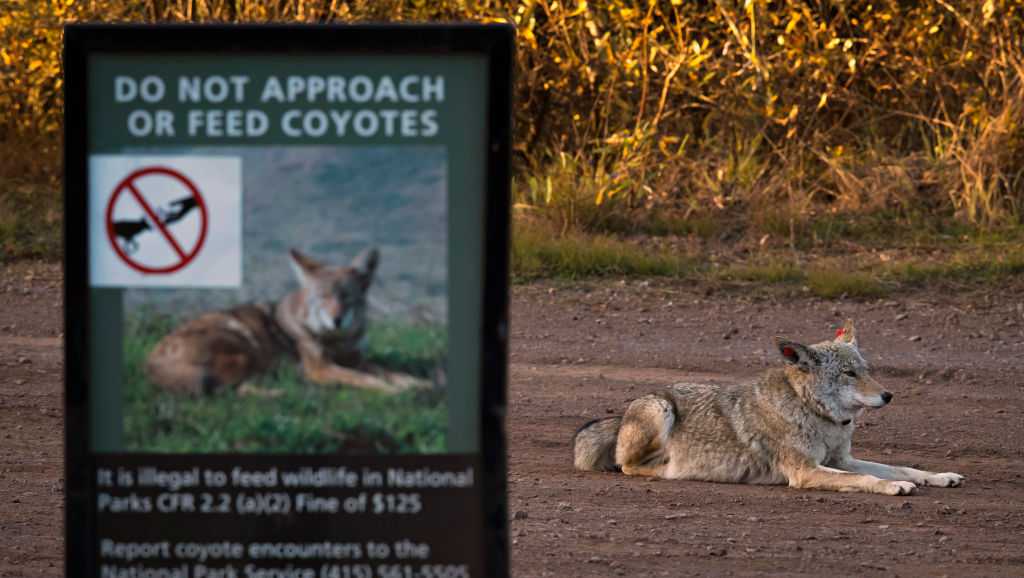
It was a late Sunday afternoon like any other on San Francisco’s Alcatraz Island. The day was winding down, and Aidan Moore, a guest relations employee for Alcatraz City Cruises, was at the dock of the tourist attraction helping visitors disembark. Suddenly, one of the tourists approached him, wide-eyed: They had just seen a coyote swimming to shore, something that has never been recorded before.
“I didn’t believe them to start with,” Moore, who has been working on the island for the past two and a half years, told SFGATE over the phone. But the guest insisted they had the video to prove it. They held up their iPhone to show him the screen, and sure enough, there it was: a coyote paddling through the water and eventually reaching the craggy coast on the southern edge of the island near the Agave Trail, panting and shivering.
Moore said he never got the guest’s name, but asked them to AirDrop the video to his phone. He then called in the sighting over the radio to the park rangers on site, who went to the trail to look for the animal. By then, it had already disappeared.
“I suspect he fell into the water chasing something and was swept away,” Moore said.
The captain of the boat told him there were some unusual currents in the bay that day, likely runoff from recent storms that were coming in at approximately eight or nine knots. That’s somewhere between seven-and-a-half to eight-and-a-half miles per hour, a speed no animal could outswim if they got caught in it.
“He didn’t look like he was in very good condition, which I’m not surprised by given the harrowing experience,” Moore said.
It’s not clear where the coyote came from. He speculated it swam the mile-and-a-quarter journey from San Francisco, which faces the southern edge of Alcatraz, though it could have also been swept in from Marin or Angel Island, where a family of coyotes also recently established territory after making the swim from the North Bay.
Julian Espinoza, a spokesperson for the Golden Gate National Recreation Area, which oversees Alcatraz, confirmed the sighting with SFGATE, but could not immediately share more information about how it got there or what may have motivated its voyage.
“Coyotes can be commonly seen throughout our San Francisco and Marin parklands but never before on Alcatraz,” he wrote in an email. “This was the first time our park biologists observed anything like this.”
Christine Wilkinson, a conservation scientist and carnivore ecologist who has studied coyotes for UC Berkeley and the California Academy of Sciences, has a couple of theories. First, she speculated the canine was most likely trying to find a territory of its own. She thinks the animal came from the pack that lives in the Coit Tower area, a territory that has very little green space, making the jaunt particularly appealing. Though coyotes usually seek out new territory in the fall through early winter, an individual doing so in January is not unheard of, Wilkinson said, especially since it’s now mating season for the animals.
Interstate 280 can “pose quite a formidable barrier for coyotes trying to disperse south,” she said. Recent studies have shown vehicle strikes are a leading cause of mortality for the animals, so taking to the water might not seem like such a bad idea to them.
Like Moore, Wilkinson was concerned about the fate of the coyote, which looked “pretty weak” to her. But she noted the animals are “incredibly resilient” and would have plenty of food options available on the island, including rodents like rats or mice. Moore said it’s currently nesting season for the birds on Alcatraz, including western and California gulls, cormorants and snowy egrets. Birds of prey that used to be on the island have since disappeared due to suspected avian flu, he said. With the lack of predators on the island to manage the population, the coyote could easily scout out eggs or chicks if it had the energy.
“It’s one thing to see something like this with your own eyes, but to have a video record of it is pretty cool,” Moore said. “I hope we can learn more.”
Wilkinson noted the coyotes on Angel Island likely formed their pack after one of the animals swam over and called until a mate arrived. She wondered if the individual on Alcatraz will try something similar. “But it is a much smaller island and I am not sure if I’ve heard of a coyote pack ever establishing such a tiny territory,” she said.
Moore still doesn’t know if the coyote has already made its way back across the bay — or was unfortunately washed out to sea — but said it’s also possible the animal could be hiding out on another part of the island that isn’t as accessible to people.
“We’ve been wandering around the island looking for him, but no one has been able to spot him,” he said. “It’s possible he might not be seen for a while.”