
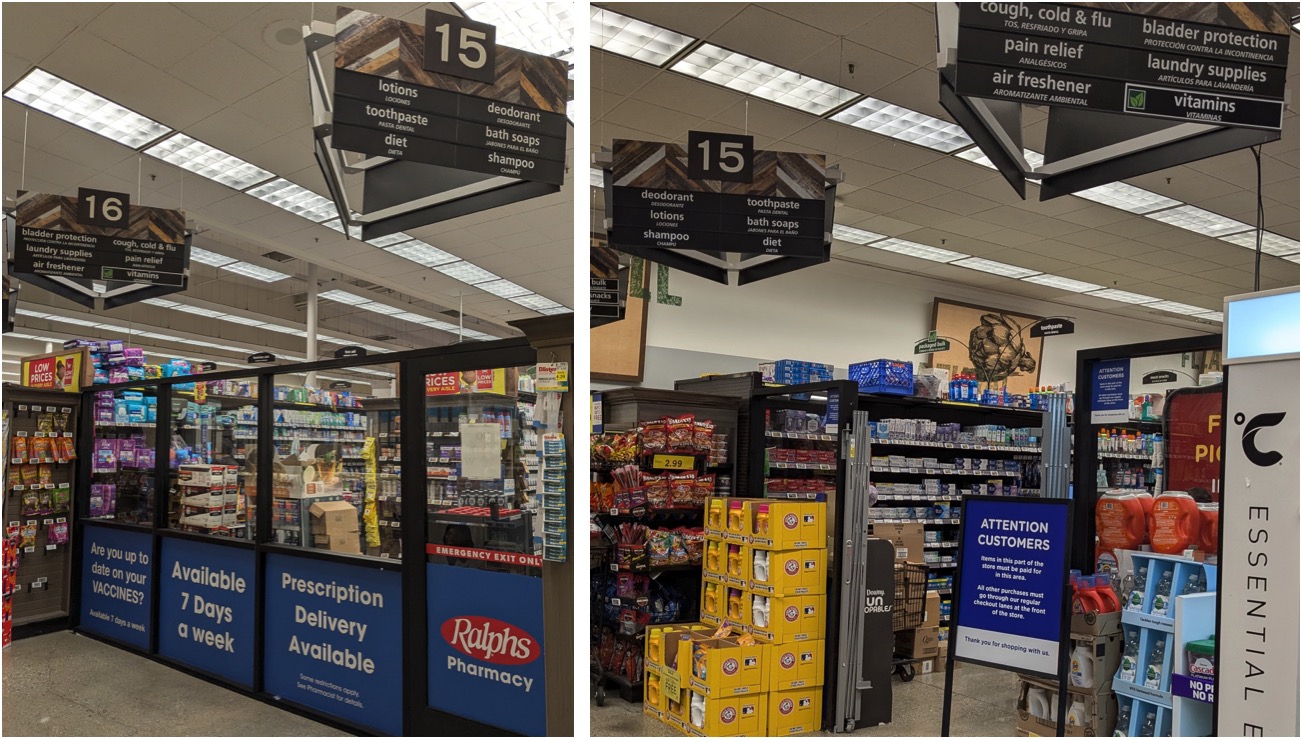
CAGED-IN SHOPPING — For decades, the Ralphs at 11727 W Olympic Blvd has been a staple for the West Los Angeles community. But as we move through 2026, the store has become a focal point for a controversial experiment in “hardened retail”: the high-security enclosed aisle.
While Kroger corporate defends these “cages” as a necessary response to the organized retail theft waves of 2024 and 2025, a growing rift is forming between the store’s loss-prevention goals and the actual human experience of buying a bottle of lotion.
Kroger calls it loss prevention — We call it loss of revenue
The “Double-Pay” Dilemma
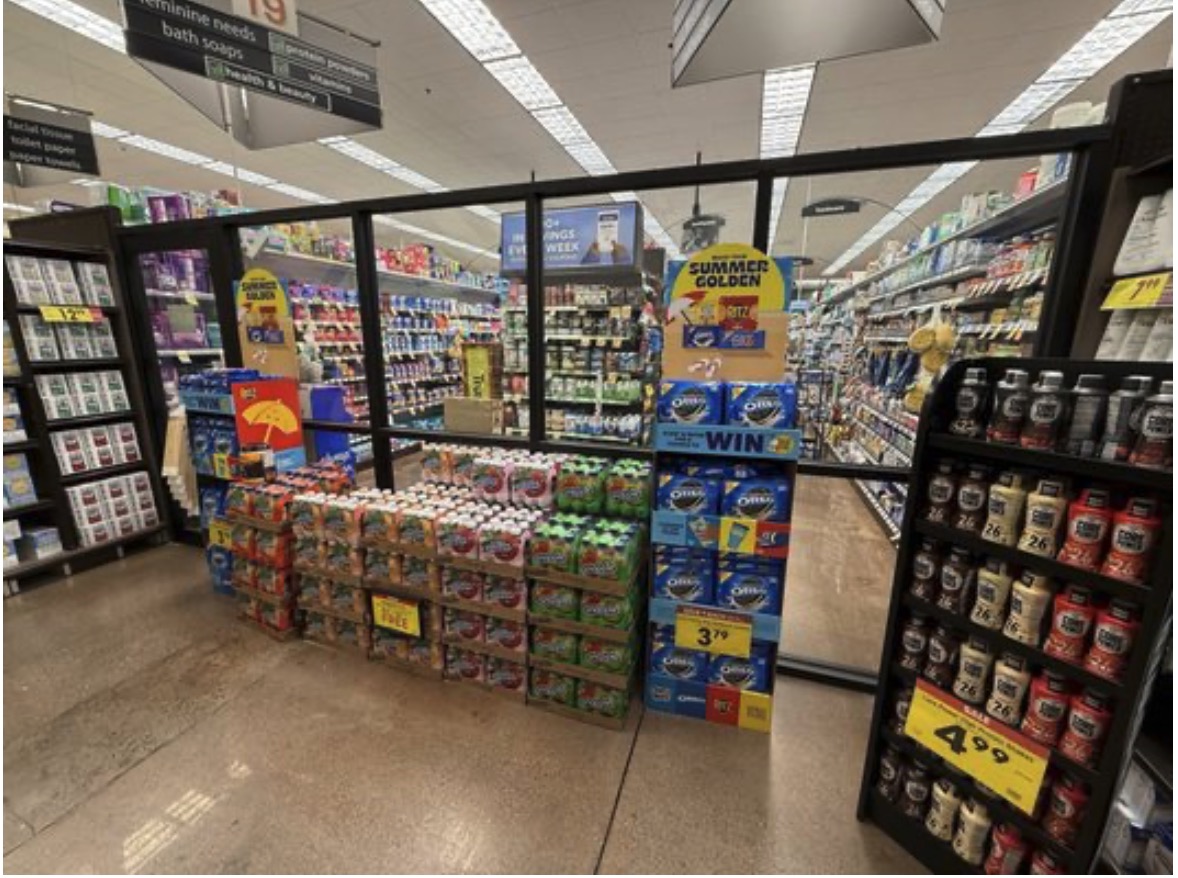
The theory behind the enclosed high-security aisle is simple: isolate high-shrink items, such as laundry detergents, cosmetics and over-the-counter medicines (such as Alka Selzer, Pepto Bismol, etc.) and require a transaction before the customer leaves the zone.
However, in practice, this creates a store-within-a-store that often treats the customer as a burden rather than a guest.
During a visit this week, the systemic flaws of this cage were on full display. In one instance, an irritated shopper entered the enclosure, selected his items, and prepared to leave, only to be stopped by the internal cashier. The requirement? He had to pay for those specific items right there.
The result was a logistical comedy of errors: the customer began unpacking his entire handheld basket to reach the bottom, only to be told he couldn’t pay for his other groceries there. Faced with the prospect of two separate lines and two separate transactions, the shopper did the only thing a rational consumer would do: he returned the items to the shelf, and walked out of the store empty-handed.
The After-Hours Lockout: 11:00 PM and Beyond
Perhaps the most egregious finding is the After-Hours Lockout.
While the Olympic Ralphs remains open until 1:00 AM, the high-security cage shuts down two full hours early, at 11:00 PM.
For the late-shift nurse, the exhausted student, or the parent in need of emergency cold medicine, the store essentially becomes a museum of products they cannot touch. After 11:00 PM, customers must flag down one of the few remaining staff members to unlock the gate, retrieve the item, and escort it to the front. By closing the cage early, Ralphs has effectively signaled that after 11:00 PM, certain essentials are “off-limits” to the law-abiding public unless they are willing to jump through corporate hoops.
The Alternatives: A Study in Contrast
Shoppers in West LA and Santa Monica are starting to realize they don’t have to tolerate the cage. A quick survey of the local landscape reveals that Ralphs’ approach is far from the industry standard:
Vons (Wilshire Blvd, Santa Monica): While they utilize targeted locking cabinets, they have avoided the “one-way cage” model, allowing for a traditional single-stream checkout experience.
Whole Foods (West LA/Santa Monica): Relying on a mix of concierge service and high-tech invisible security, Whole Foods allows customers to shop for cosmetics and high-end essentials without feeling like they’ve entered a detention center.
Smart & Final (Ohio & Bundy): Even this warehouse-style competitor manages to maintain an open-floor plan. While they have increased surveillance, they haven’t resorted to physical barriers that dictate a customer’s movement through the store.
A Breakdown in Brand Loyalty
This friction is actively driving customers away. When another pair of shoppers—looking only for two bottles of lotion—refused to enter the cage, they took their grievance directly to the front-end manager. “We were not about to stand in line twice,” they explained. Their ultimatum was clear: assist us in a single transaction, or we will take our entire business elsewhere, including Vons.
While the manager eventually intervened by instructing a young associate to escort the lotion to the main register, the solution created a new set of problems. The entire line of customers at the main register was forced to wait, effectively held hostage, until the associate returned with the items.
This didn’t just resolve a single complaint; it broadcast the store’s operational dysfunction to every person in line, creating an uncomfortable experience for everyone involved.
The Takeaway – Safety at What Cost?
The manager at the Olympic & Barrington location proved that flexibility is still possible, but it shouldn’t require a confrontation or the halting of an entire checkout line to achieve a simple purchase. As retailers across Los Angeles continue to battle theft, the real “shrink” might not be the items leaving the shelves—it might be the customers leaving the store for good.
(Ziggy Kruse Blue is a freelance contributor to CityWatchLA) Ziggy and Bob can be reached at [email protected])