
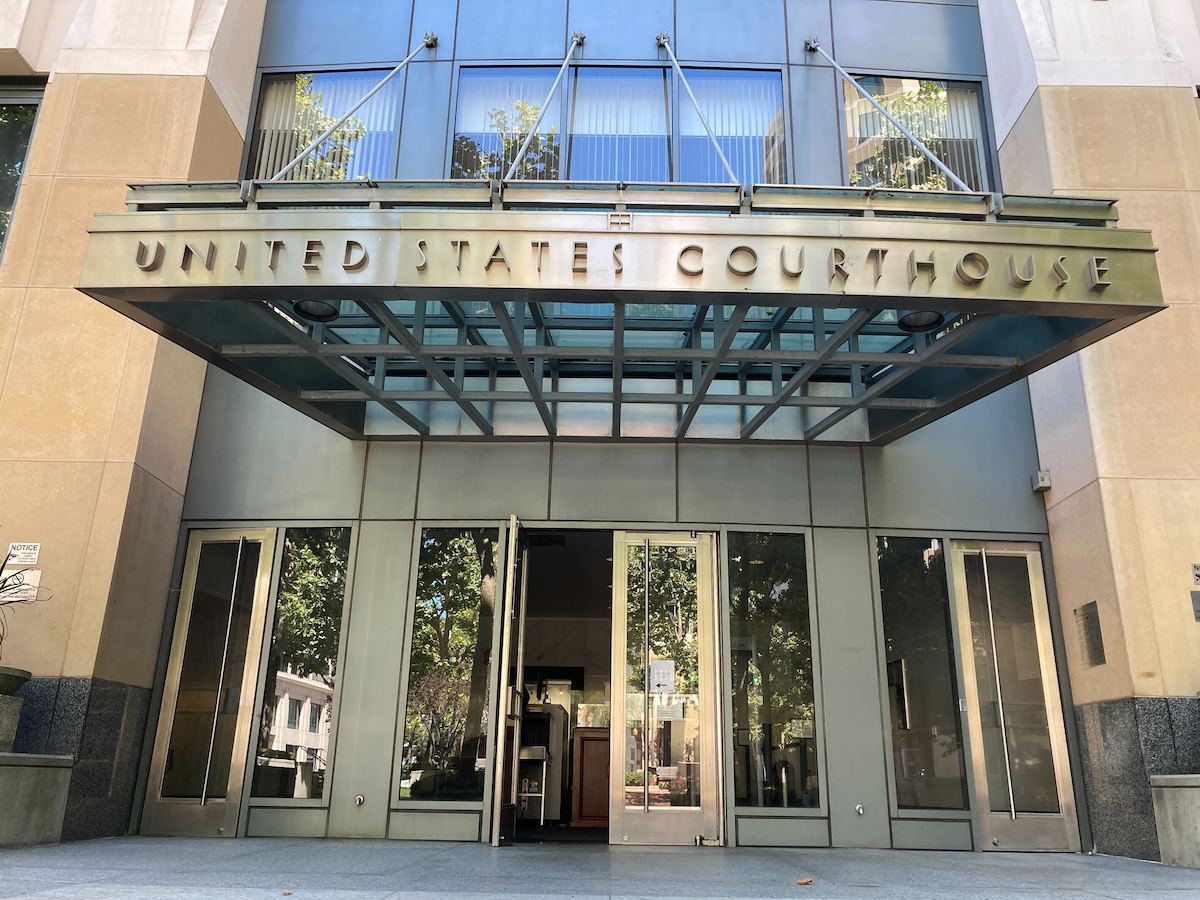
The federal government says it had ample evidence to pursue its case against former Oakland Mayor Sheng Thao and three other defendants without relying heavily on the testimony of an informant with a checkered history.
This is one of the big takeaways from a motion prosecutors filed last week in the case against Thao, her romantic partner Andre Jones, and David and Andy Duong of California Waste Solutions.
Prosecutors also revealed that the informant referred to numerous times in court papers is working with them under the terms of a proffer, a deal in which this person has provided information helpful to the case in return for some unnamed benefits, potentially including immunity or other leniency.
The prosecutors’ latest court filing sets the stage for the first major hearing in March in the sprawling Oakland corruption case, which erupted into public view a year and a half ago with raids of Thao, Jones, and the Duongs’ homes.
Thao, Jones, and the Duongs are accused of participating in a conspiracy in which the Duongs helped Thao get elected and paid bribes to Jones in exchange for various favors, including the promise to award a lucrative housing contract to a company called Evolutionary Homes. The housing company was controlled by the Duongs and a person identified in court filings as “Co-conspirator 1.”
Based on records and interviews, we’ve identified Co-conspirator 1 as Mario Juarez, a Fruitvale businessman who has been accused in court of fraud and embezzlement on multiple occasions over the past two decades. He has also been charged in three criminal cases but never convicted.
The Duongs, Thao, and Jones have tried to undermine the government’s case by attacking Co-conspirator 1’s credibility. They filed motions asking a judge to suppress evidence gathered from their homes and devices, arguing the FBI omitted key details about the informant’s background that might have led the court not to grant the search warrants. Among the things they cited were Juarez’s voluminous history of civil lawsuits and discrepancies in his story about being attacked by gunmen outside his home in June 2024.
US Attorney Craig Missakian dismissed the idea that agents omitted relevant information about Juarez when they sought the search warrants.
According to the new motion, the warrant affidavit disclosed pending fraud charges against Co-conspirator 1, as well as six sets of other charges and arrests over two decades. It also included more recent allegations that Co-conspirator 1 had committed fraud in connection with a $250,000 loan.
And the affidavit noted that Co-conspirator 1 appeared to be “motivated by revenge against the Duongs and a desire to obtain protection from law enforcement from the Duongs,” among other things.
Prosecutors did acknowledge that Co-conspirator 1 gave conflicting accounts of a shooting he was involved in on June 9, 2024.
In his initial account to OPD, Juarez claimed he confronted people breaking into his vehicle, and one of them shot at him, prompting him to return fire, according to the motion. The FBI later determined that Juarez fired first, but prosecutors said they only learned this fact several months after the search warrants had been executed.
Prosecutors claim the defendants haven’t met the legal standards to justify suppressing evidence. They also argue that Juarez provided contextual information to build their case, but what he gave the government wasn’t necessary for showing probable cause to execute the search warrants.
“While Defendants’ motions contain significant hyperbole and aggressive language, their arguments are hollow in substance and repeatedly misstate and mischaracterize the record and applicable case law,” Missakian wrote in the motion. Three other prosecutors, Abraham Fine, Molly Priedeman, and Lloyd Farnham, are working the case.
Juarez declined to be interviewed and directed us to his attorney, Ernie Castillo. Castillo did not respond to our inquiry. Attorneys for David Duong referred us to their previous motion. None of the attorneys for the other defendants responded to our inquiries.
New motion seems to confirm that Juarez is working with federal agents
The prosecutors wrote that they started their investigation of the defendants in “early 2023” when looking into Juarez, who had failed to pay for a political mailer targeting Thao’s opponents in the 2022 mayoral election.
The FBI secured a warrant for Juarez’s iCloud account, which gave investigators access to materials that outlined the alleged bribery scheme.
By “spring of 2024,” the federal government had “amassed a significant amount of documentary evidence tying each of the Defendants and Co-conspirator 1 to the conspiracy,” according to the government’s motion. This included text messages, Apple notes, calendar entries, financial records “showing the corrupt payments,” phone records of communications among the defendants, and other documentary evidence.
Prosecutors say they were able to use that evidence to secure warrants in February and May of 2024 from two different magistrate judges.
As the government amassed its documentary evidence, the business relationship between the Duongs and Juarez broke down. This culminated in an altercation outside the company headquarters for Evolutionary Homes, where Juarez claims he was beaten up. On May 5, 2024, Juarez filed a police report with OPD and made “a series of criminal allegations against the Duongs, including referencing the bribery scheme involving Thao and Jones,” according to the federal government’s motion.
The FBI learned about Juarez’s allegations later that month, and it appears they moved quickly to cut a deal with him.
According to the prosecutors, Juarez was first interviewed by federal agents on June 6, 2024, “pursuant to a proffer agreement,” where he admitted his involvement in the bribery scheme, according to the court filing.
There is another eyebrow-raising allegation buried in the government’s motion. According to prosecutors, one of the affidavits used to justify the search warrants “detailed multiple instances where Andy Duong and others attempted to bribe various City of Oakland and Alameda County officials.”
The motion doesn’t name any names. Prosecutors are currently pursuing a similar bribery case against San Leandro Councilmember Bryan Azevedo, who is accused of accepting a bribe from a housing company that wanted to secure a city contract. Azevedo initially pleaded not guilty to the government’s charges. But according to court filings, Azevedo is scheduled for a hearing next month for a potential change of plea. This may indicate that Azevedo is working on his own deal with the federal government.
“*” indicates required fields