
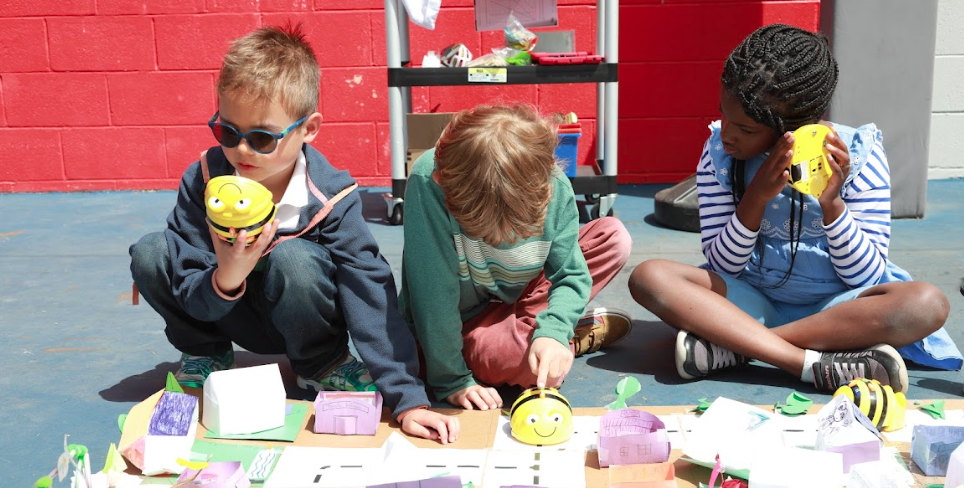
In a world where information is abundant and change is constant, curiosity remains one of the most valuable skills a young person can develop. It nurtures critical thinking, creativity, empathy and adaptability–core traits that prepare students to thrive in any future they choose.
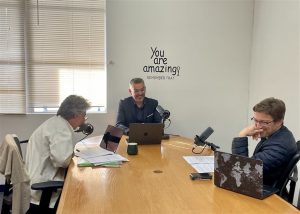 At Ecole Bilingue de Berkeley, curiosity is not an abstract ideal; it is a daily practice that shapes how students think, feel, and relate to the world around them. Division heads, Magali Noth and Fabien Lombard joined Head of School Sébastien Robert for Episode One of EB’s newly launched podcast for a discussion of what this looks like in practice from preschool through middle school.
It Begins With Wonder
 For our youngest learners, curiosity is truly, “through the roof.” As Primary School Head Magali Noth explains, “In preschool, I think it’s more children who are teaching us about curiosity.”
This is because two-, three-, and four-year-olds experiment through their senses using anything tactile, visual, or auditory. “For children at a young age, to crack an egg can be something amazing,” says Noth, “you hear the ‘wow’ and the excitement of the children.”
From Fairness to Empathy
 As children move into the primary grades, curiosity begins to turn outward toward others and their questions shift toward deeper themes of fairness, and the impact of one’s actions on others.
Such questions open an important door to empathy. With tools like guided reflection, social-emotional conversations and collaborative problem-solving, EB helps students understand not only the world, but also one another. By inviting children to be curious about others and to consider different perspectives, EB helps students connect fairness, empathy, and responsibility in ways that evolve as they grow.
From Curiosity to Critical Thinking
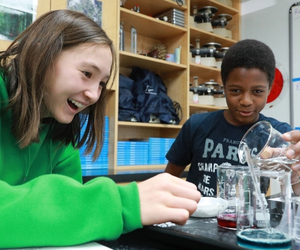 In adolescence, curiosity does not fade—but it does change. “Teens are not less curious than the younger students,“ says Middle School Head Fabien Lombard, “But they are curious in a very different way.”
EB’s inquiry-based approach responds to this shift.
“We don’t want to teach students what to think, but how to think,” says Lombard. “Especially as they encounter more complex material in grades six to eight.”
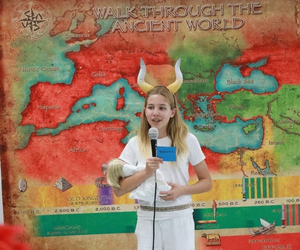 In a recent eight grade History–Geography class, for instance, students explored globalization through multiple lenses rather than memorizing a single answer. The central question—“Is globalization a good thing or not?”—prompted students to examine economic, ecological, social, political, and cultural impacts. They compared perspectives from wealthy and developing countries, considering how experiences differ between places like Berkeley and regions that suffer from globalization.
“Students are encouraged to keep asking questions, instead of settling for a binary view,” says Lombard. “[In this way], the world becomes more complex, and therefore more interesting,”
Fifty Years Nurturing Curious, Compassionate Thinkers
From the preschooler asking “Pourquoi?” for the tenth time, to the middle schooler wrestling with a global issue, EB remains a Bay Area leader in nurturing curious, compassionate thinkers who love to learn and are ready to make thoughtful choices in a fast-changing world.
Are you curious about the vibrant world of bilingual learning at École Bilingue de Berkeley? Families are warmly invited to attend EB’s upcoming admissions events for Preschool, Lower School and Middle School, including our Accelerated French Program for students with no prior French. RSVP on our website to reserve your spot!
Article published in partnership with École Bilingue de Berkeley