
(The Center Square) – California lawmakers and finance officials on Wednesday talked over how best to resolve a budget deficit totaling billions of dollars, as well as how to pay for federally supported programs many Californians rely on.
Legislators who sit on the Senate Budget and Fiscal Review Committee said during their meeting that they were concerned about the discrepancies in two projections of the deficit. The nonpartisan Legislative Analyst’s Office predicted in November that the state faces an $18 billion budget deficit, driven largely by funding obligations for education and the state’s “rainy day” fund. The governor proposed a budget this month that predicted only a $2.9 billion budget shortfall.
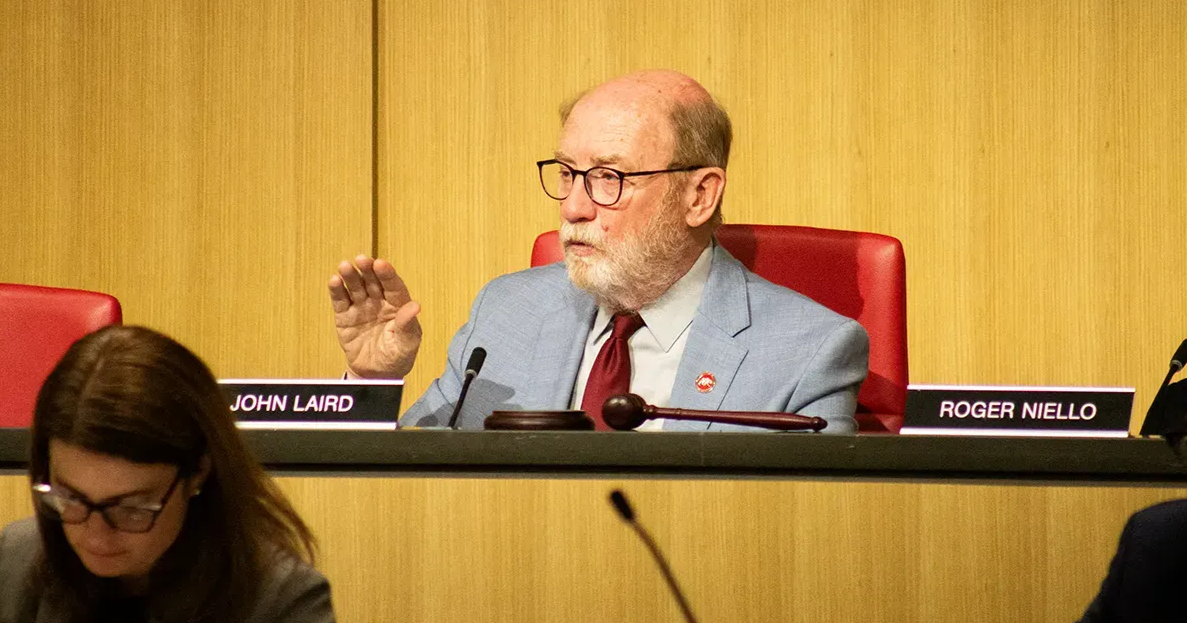
“The updated forecast in May will play a real role in our decision-making in the final budget,” Sen. John Laird, D-Santa Cruz and the committee chair, told legislators. “But the estimates we ultimately use to craft our final budget will have a significant impact if we can adopt a plan like the governor’s January proposal, or whether the much more difficult decision needs to be made after the May revise.”
Despite the differences in projections, lawmakers said there might need to be cuts to California’s programs and agencies.
“In order to truly balance the structural deficit, we have to take time to analyze programs, particularly those either established or enhanced in the last few years, as to whether or not they are achieving what they are expected to achieve,” said Sen. Roger Niello, R-Roseville and the committee’s vice chair. “I call on the Department of Finance to do this difficult, but I think, very essential work. That’s the only way we’re going to cure this structural deficit.”
Roughly $350 billion is projected in expenditures in the coming year, with $250 billion coming from the state’s general fund, according to Erika Li, the deputy director of budget at the California Department of Finance.
The state’s revenue forecast, according to the governor’s budget, is expected to be higher in the new year, bringing in more than $42 billion as a result of strong stock market performance, Li testified during the meeting.
“The strength in revenues is due largely to capital gains, our personal income tax withholding and strong cash receipts,” Li told the committee. “A significant portion of that we’re seeing come from the tech sector, and specifically, a few California-based tech companies.”
Despite the high revenues, the state is still expecting a $2.9 billion budget deficit, Li testified. She said that is driven largely by constitutionally-required funding for K-12 and community college education and deposits into the state’s “rainy day” fund.
That will account for the $20 billion the state has to spend this year, Li said. She noted the state also started 2026 with a $12.6 billion shortfall.
“We also have increased expenditures,” Li testified. “We wanted to build a strong State Fund for Economic Uncertainty, because we are certainly surrounded by a lot of uncertainty these days. That is what gets us to this $2.9 billion budget deficit.”
However, the Legislative Analyst’s Office, which projected an $18 billion budget deficit in their November report, previously called Gov. Gavin Newsom’s proposed budget “alarming” because Newsom didn’t offer any solutions to closing the state’s multi-year budget deficits.
The LAO’s projections are based on a dimmer view of the stock market’s performance in 2026. Under those projections, big tech companies in California won’t produce as much in corporate income tax as the governor’s proposal suggests.
“The main explanation for this difference, of course, does have to do with the administration’s revenue estimates, which are about $30 billion above what our revenue estimates are,” Gabriel Petek, the California legislative analyst, testified during the meeting.
The budget was previously the subject of a California State Assembly Budget Committee meeting on Tuesday, in which Petek and representatives from the California Department of Finance spoke about the state’s worries about backfilling funding for Medi-Cal and CalFresh, two federally funded programs that have seen drastic budget cuts from the federal government.
Attempting to make up the difference that the federal government is no longer paying would cost the state billions of dollars, according to budget projections and officials who spoke during the committee meeting on Wednesday.
Key issues that were raised during the meeting included what the state could expect to pay for as California grapples with how to pay for Medi-Cal, the state’s version of the federally-funded Medicaid program. Under the federal government’s budget passed last year, the One Big Beautiful Bill Act (House Resolution 1), roughly $30 billion will be cut from the state’s Medi-Cal program, according to the California Budget & Policy Center. That has forced the state to make difficult decisions about who is covered and who isn’t, according to lawmakers.
“We’re looking at people and saying, ‘You can have it,’ ‘You can have some of it,’ ‘You can have none of it,’ ” said Sen. Caroline Menjivar, D-Van Nuys, during Wednesday’s meeting. “I think we need to do better than that. I’m disappointed that the state of California, with all its rhetoric that we’re fighting against the federal government, completely takes the need and absorbs every single request from H.R. 1.”
Those costs the state would have to absorb would also affect more than 3 million households across California who rely at least partially on food benefits through the federally-funded Supplemental Nutrition Assistance Program, or SNAP, known as CalFresh in California, according to the budget and policy center.
The high cost of making up that lack of federal funding might be onerous, finance officials testified during the meeting.
“To be perfectly frank and clear, where there have been decreases in federal support for programs, we are not in a position to backfill,” Li told the committee. “They will result in costs, and we will have to address those costs, and they will result in people falling off of Medi-Cal, CalFresh and other federally-funded programs. That’s just a very frank, realistic numbers answer, but we also have to consider the real impacts on people’s lives.”