
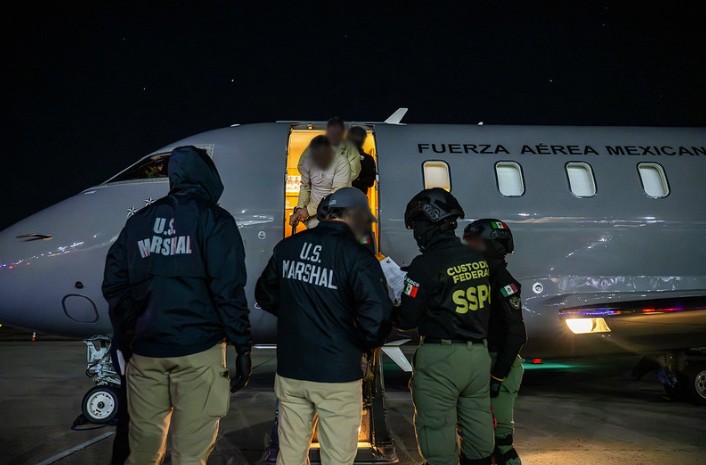
Five alleged drug traffickers, including two suspected of being high-ranking members of the Sinaloa cartel, appeared Wednesday in San Diego federal court a day after Mexican authorities sent them and 32 other alleged cartel figures to the U.S. to face charges.
Tuesday marked the third time since President Donald Trump’s return to the White House that Mexico has forgone the lengthy extradition process and instead expelled large batches of suspected cartel members to the U.S. Mexican Security Minister Omar García Harfuch said on social media that the 37 people sent to the U.S. on Tuesday “represented a real threat to the country’s security.” He said 92 people have now been sent to the U.S. in the three recent expulsions.
Mexican President Claudia Sheinbaum said that although the transfers were made at the request of the U.S. government, the decision was taken by her country’s National Security Council after analyzing what was “convenient for Mexico” and in terms of its “national security.”
“Mexico is put first above all else, even if they ask for whatever they have to ask for. It is a sovereign decision,” she said at her regular morning news briefing.
Four of those who arrived Tuesday to the U.S. have been indicted by federal grand juries in San Diego and made initial appearances Wednesday in U.S. District Court for the Southern District of California. A fifth defendant who was also expelled from Mexico appeared Wednesday in San Diego federal court, though he is facing federal charges in Arizona.
Among those was Pedro Inzunza Noriega, 63, the lead defendant in a San Diego-based federal indictment that was the first in the nation to allege narco-terrorism charges against suspected drug traffickers. The Trump administration paved the way for such charges last year when it designated the Sinaloa cartel and five other Mexican criminal groups as Foreign Terrorist Organizations and Specially Designated Global Terrorists.
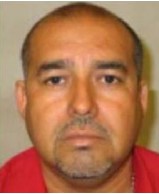 Pedro Inzunza Noriega, 62. (Courtesy of U.S. Department of the Treasury Office of Foreign Assets Control)
Inzunza Noriega is accused of being one of three top leaders of the Beltrán Leyva organization, which prosecutors say is a violent faction of the Sinaloa cartel. He was captured by Mexican authorities just three weeks ago, on New Year’s Eve morning, in Culiacán, the capital of the state of Sinaloa.
He pleaded not guilty to the charges in the indictment, which include narco-terrorism and providing material support to a foreign terrorist organization in addition to more traditional drug trafficking conspiracy charges. His defense attorney, Danni Iredale, declined to comment.
Inzunza Noriega, who appeared in a wheelchair, said little at the hearing but exchanged hand signals of encouragement with two supporters as he was wheeled out of the courtroom. At a news conference last year, prosecutors said he was partially paralyzed in a shooting by a rival cartel and has used a wheelchair ever since, which led to one of his aliases — “El de la Silla.” He is also known as “Sagitario” and “120.”
Prosecutors have alleged that Inzunza Noriega has been a prolific cocaine trafficker since the early 2000s, and that more recently he and his son Pedro “Pichón” Inzunza Coronel were “leaders of one of the largest and most sophisticated fentanyl production networks in the world” that was responsible for trafficking “tens of thousands of kilograms of fentanyl into the United States.”
Prosecutors said that in December 2024, Mexican authorities raided multiple fentanyl production labs across Sinaloa that were allegedly controlled by the father and son and made the world’s largest ever fentanyl seizure, which totaled more than 3,300 pounds of the ultra-potent drug.
In a statement Wednesday, the U.S. Department of Justice confirmed that Inzunza Coronel, who was the No. 2 defendant in the San Diego indictment behind his father, was killed by Mexican military personnel during an attempted capture operation in November in Sinaloa.
Also appearing Wednesday in the San Diego courtroom was Juan Pablo “Payo” Bastidas Erenas, an alleged high-ranking lieutenant in the same Beltrán Leyva organization. The Department of Justice said in a statement that he was the “long-time right-hand man” of one of the organization’s other top three leaders, Oscar Manuel Gastelum Iribe, alias “El Musico.”
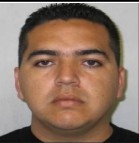 Juan Pablo “Payo” Bastidas Erenas. (Courtesy of U.S. Department of the Treasury Office of Foreign Assets Control)
“Bastidas has operated with impunity for over 20 years and has imported and distributed thousands of tons of cocaine from Colombia to the United States, via Mexico,” the Department of Justice alleged in its statement, adding that he’s also accused of trafficking large quantities of fentanyl and methamphetamine to the U.S. from Mexico.
“Bastidas is also responsible for laundering millions of dollars from drug proceeds, weapons trafficking, and has engaged in kidnapping, torture, and murder,” the Department of Justice said. The agency said that Mexican officials captured Bastidas last May.
Bastidas pleaded not guilty to the indictment. An attorney believed to be in the process of being hired to represent Bastidas declined to comment Wednesday.
Julio Cesar Mancera Dozal and Juan Carlos Alonso Reyes also pleaded not guilty to indictments against them that were unsealed Wednesday.
The Department of Justice said Mancera was the leader of a Tijuana-based drug-smuggling organization that is part of the Sinaloa cartel. The group is suspected of importing hundreds of pounds of cocaine through San Diego ports of entry in vehicles with sophisticated hidden compartments and then distributing the drugs across other parts of Southern California and the U.S.
Reyes, who spoke English to the judge and did not need an interpreter, is alleged to have been the leader of a transnational criminal organization known as “The Office” that operated storefronts in Tijuana where customers could purchase fentanyl and methamphetamine, according to the Department of Justice.
“The Office’s physical locations worked as a type of illicit 24/7 drug convenience store for mostly American buyers,” the Department of Justice said in a statement. “It operated so openly and notoriously that at one time you could search The Office on Google Maps, and the physical location would appear in Tijuana.”
Reyes also allegedly coordinated drug smuggling across the Tijuana-San Diego border.
The Associated Press contributed to this report.