
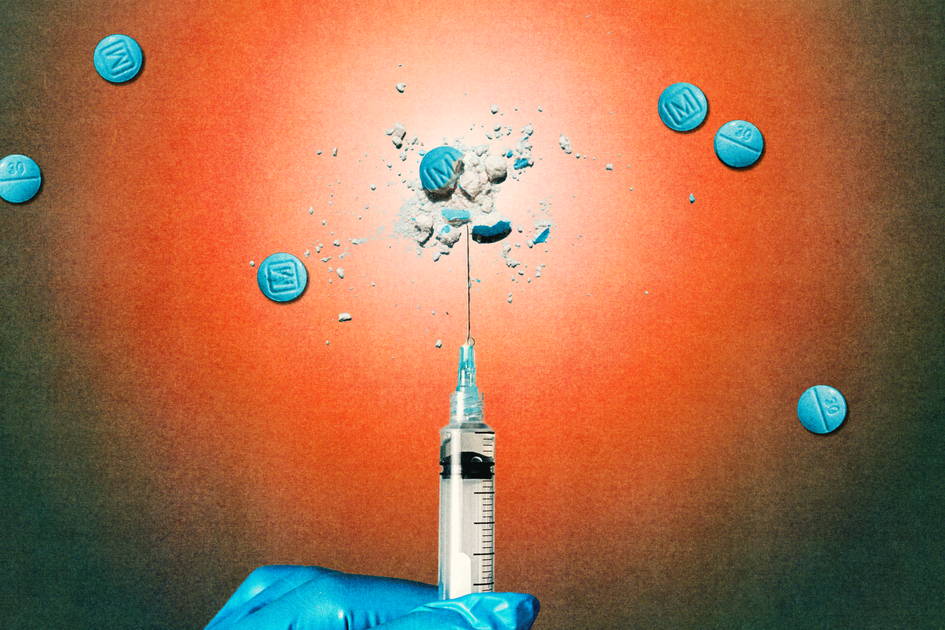
Candra Jordan had used fentanyl for years in San Francisco when she got her first injection of extended-release buprenorphine, a nascent kind of medication that promised to make her stop wanting the drug, at least temporarily. It worked. After her treatment last summer, she was sober enough to visit her son for the first time in six years.
“I’ve tried to do it myself over and over again, and nothing ever works,” Jordan said of kicking her addiction. “Nobody would have ever thought I would’ve gotten clean.”
Where Narcan has proved to be a last-ditch lifesaver for overdoses, the treatment Jordan received is spurring hope among physicians and addiction treatment specialists in San Francisco for longer-term freedom from fentanyl.
The long-acting injectable buprenorphine acts as an “opioid blockade,” binding with receptors in the brain and desensitizing the patient to the narcotic effects of fentanyl for up to a month at a time. Until recently, fentanyl users hoping to kick the habit have had to take a daily pill of the withdrawal medication, which causes complications for those living on the streets. The longer-acting version of buprenorphine gives doctors a higher probability of following up with patients before fentanyl cravings return.
However, the medication can lead to temporary withdrawal symptoms that are so intense that some patients decide to forgo further treatment. The first injection — the effects of which last roughly a week — carries the risk of sending the patient into sudden and violent withdrawal if the amount of fentanyl in their body isn’t accurately calculated. That’s a difficult task for doctors administering the medication, as users are often unsure exactly how much opioid they’ve taken.
But in spite of these drawbacks, public health experts and addiction specialists believe the injections to be one of the most promising therapeutics in the fight against the fentanyl epidemic. Though they have declined from an all-time high in 2023, annual overdose deaths in San Francisco have plateaued at more than 600.
In other states and cities, the use of long-acting buprenorphine is still emerging or under study. But San Francisco has been an early adopter. In Jan. 2024, the city’s Department of Public Health first began trialing the long-acting injections just a few months after one of the medications received approval from the Food and Drug Administration. That year, DPH administered more than 1,400 injections across the city.
In 2025, DPH use of the drugs doubled, to more than 2,800 injections, giving hundreds of people who were imprisoned by their addiction a chance at recovery.
This month, DPH expanded use of the medications to jails, where incarcerated people can receive their first dose within eight hours of their arrest.
“It’s a very empowering way for people to be on medication and not have to think about the daily planning, the daily routine, keeping track of their medications,” said DPH physician Dr. Jeffrey Hom. “It allows them to focus on other aspects of their lives that they may not have been able to.”
How it works
As overdose deaths have mounted, effective long-term treatments for opioid addiction have proved elusive. Fentanyl vaccines have been in development for years, with at least one entering early trials (opens in new tab), but FDA approval is years away. In the meantime, use of injectable forms of buprenorphine, sold under the brands Sublocade and Brixadi, is growing worldwide. Once the extended-release formulation is injected, the drug is released gradually over several days or weeks, eliminating the ups and downs of taking a daily pill.
However, their promise comes with a catch.
If doctors administer the wrong amount of the drug, patients can experience an acute dayslong illness. The hot flashes, cramps, vomiting, and diarrhea can leave people bedridden and in misery. Even if they’re temporarily unable to feel the effects of fentanyl, they’re so sick that they may no longer trust the treatment.
“It’s kind of like you’re driving a car at 100 mph, and you slam on the brakes to get to 50 mph,” explained Dr. Christine Soran, deputy medical director of substance use services at the DPH. “That sudden change is really uncomfortable.”
Rudy Batka had been addicted to fentanyl for five years and living on the streets of San Francisco when he received his first injection of Brixadi. The medication made him so sick that he left a sobering center in SoMa and chose not to continue treatment.
A week later, a doctor at a drop-in clinic assured Batka he was in the “perfect window” to receive the second dose, which would have made him essentially immune to the narcotic effect of fentanyl for another month. The doctor assured him it wouldn’t make him sick again.
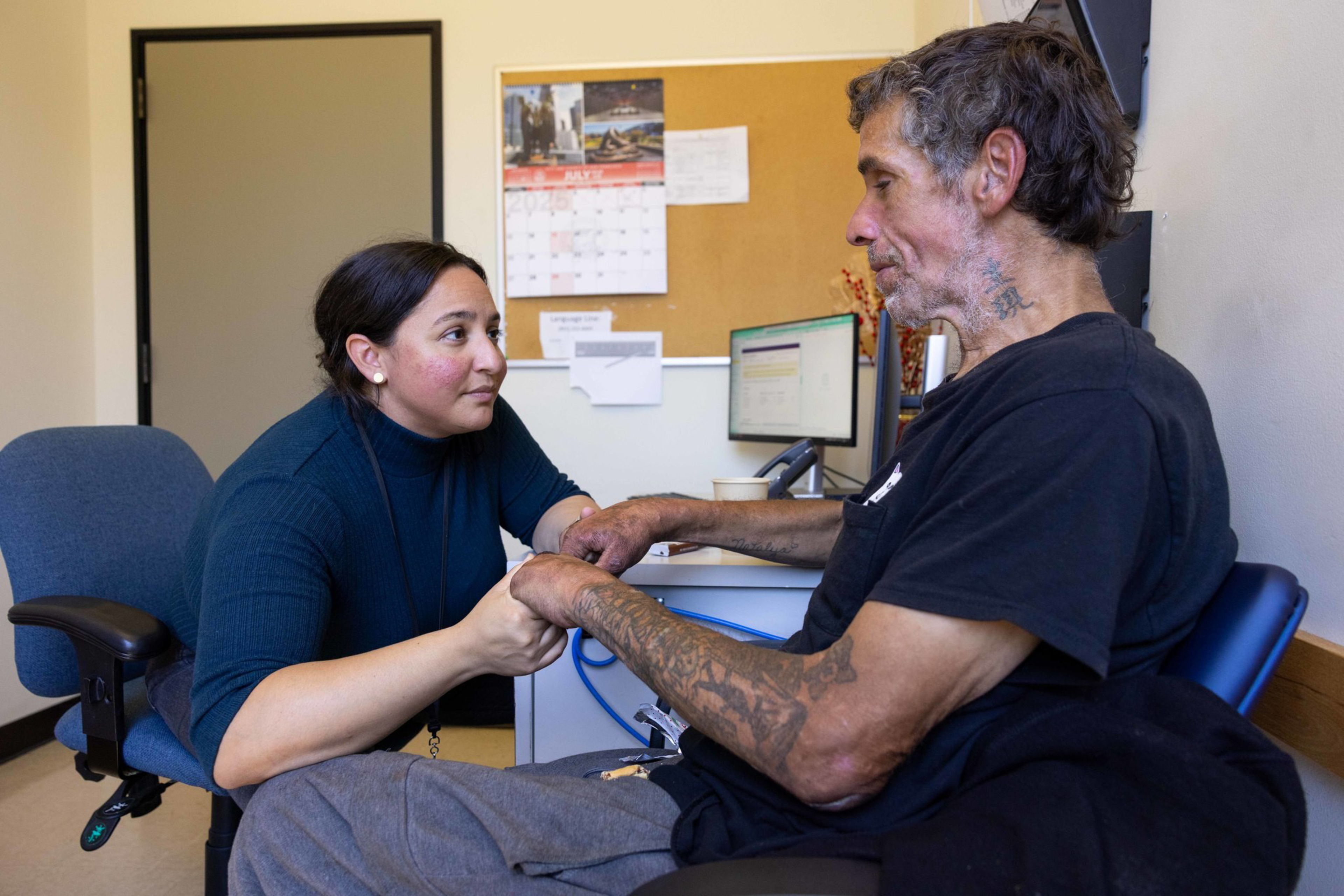 Dr. Noelle Martinez holds Rudy Batka’s hands in an effort to keep him awake during a visit to the Behavioral Health Access Center. | Source: Amanda Andrade-Rhoades/The Standard
But Batka was too scared to consent. Instead, he returned to the streets, where he soon relapsed.
Experts say they recognize the difficulty of administering the first dose of the drug. Even so, early studies have shown that the long-acting injectables have a higher retention rate than comparable daily medications.
A study in July found that 43% of patients in jail who received their first injection attended a follow-up appointment after their release. Comparatively, the average follow-up rate for patients who used the daily pill version of buprenorphine while in custody was 29%.
The injections offer more freedom for patients than daily medication.
“They can leave San Francisco and don’t have to think, ‘Oh my gosh, am I going to run out [of pills]?’” Hom said. “They can travel, they can see family. … Those are the sort of moments where I really realized that this can be very empowering.”