
Come for the jeans — stay for the eyeball scanning.
A gleaming white device courtesy of billionaire Sam Altman’s secretive crypto startup is collecting data for “human verification” inside a San Francisco Gap store — and the retailer isn’t saying why, Gazetteer reported.
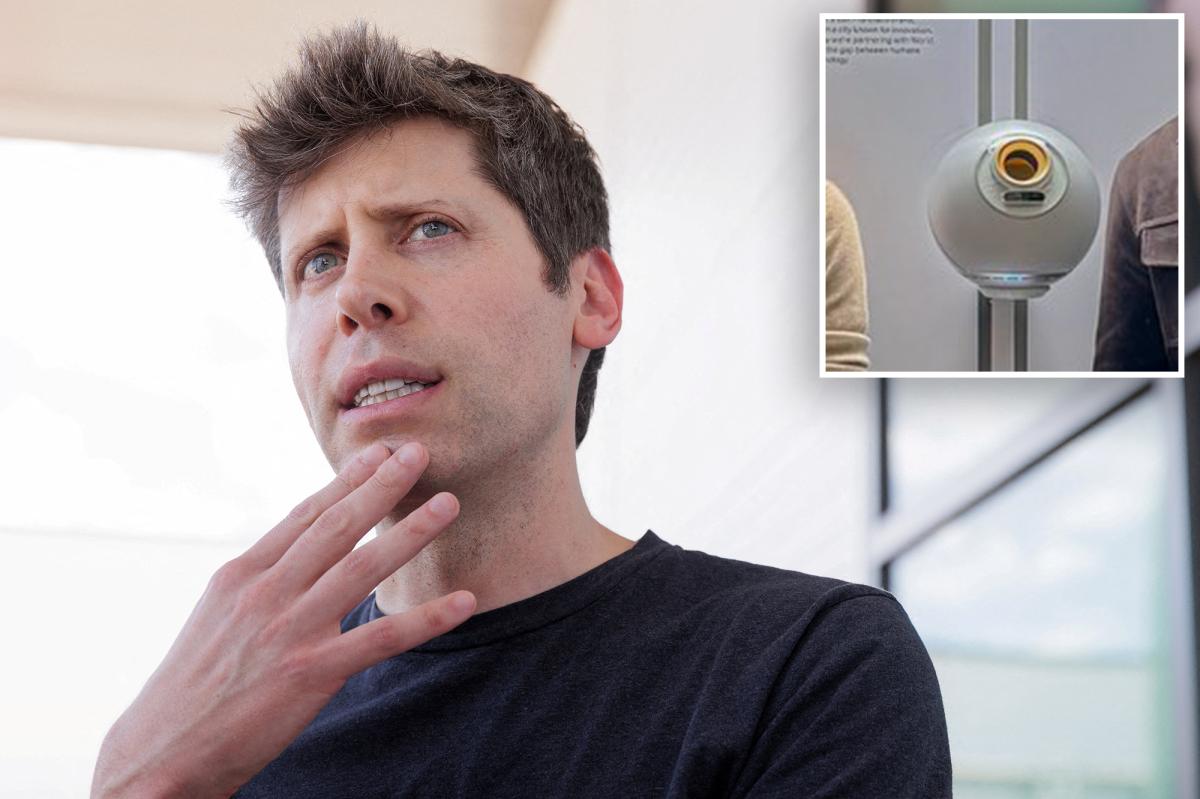
The bowling ball-sized orb, mounted on a wall inside the shop in the Marina District, collects biometric data by snapping images of people’s faces with a “glowing orange eye.”
REUTERS
Sam Altman’s secretive startup is collecting human data from a Marina District Gap store. instagram/world
“At Gap, we believe in originality, authenticity — what makes us human,” the plaque reads. “That’s why we’re partnering with World, to bridge the gap between humans and technology.”
World, the Altman-backed startup formerly known as WorldCoin, bills itself as “the real human network” to distinguish humans from artificial intelligence bots. It aims to provide a “world ID” alongside an app, blockchain and digital token, according to its website.
The orb takes pictures of consenting participant’s irises and faces in order to create a unique ID stored on their phones.
The California Post is coming soon. Sign up for updates.
Get in early. Be the first to know about launch and home delivery.
Thanks for signing up!
The company reportedly set an ambitious goal of acquiring 1 billion users — but only had a tiny fraction of that as of November with privacy concerns mounting its around data collection.
World has incentivized people to take part by issuing its Worldcoin cryptocurrency tokens to those who consent to have their faces scanned, offering the equivalent of $42. It drew scrutiny after reports that homeless and other vulnerable people were exploited using the financial incentives.
The company set an ambitious goal of gaining 1 billion users. AFP via Getty Images
Gap and World did not immediately respond to a request for comment.
The orbs are found in North America, Colombia and parts of Asia, but regulatory challenges have stalled their expansion in some European countries.
A World consultant stationed at the Gap store emphasized that the orb generates an encrypted code that doesn’t collect extra data about a person apart from verifying that they are human, the Gazetteer reported.