
For over a century, Michelin has been a pioneer in the motorcycle industry. Embracing the philosophy of continuous improvement, Michelin consistently delivers innovative solutions and cutting-edge technology for all segments of motorcycling. Michelin’s off-road motorcycle tires incorporate state-of-the-art materials and tread designs to deliver optimal grip, durability, and riding confidence to meet the demands of riders in all conditions and terrains. Learn more at www.michelinman.com/motorcycle.
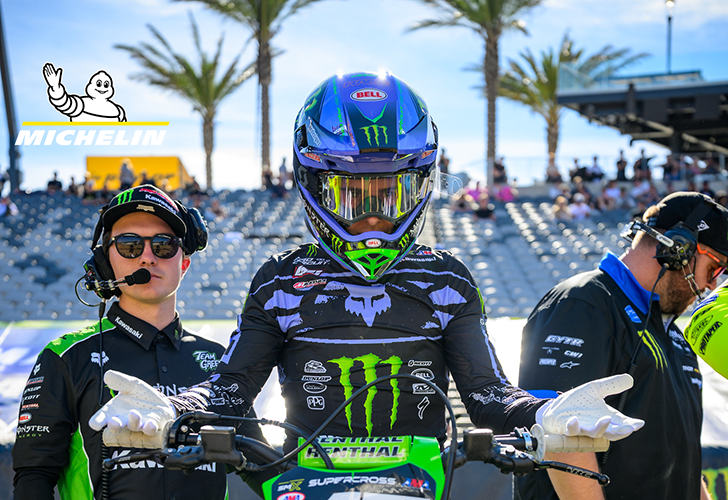
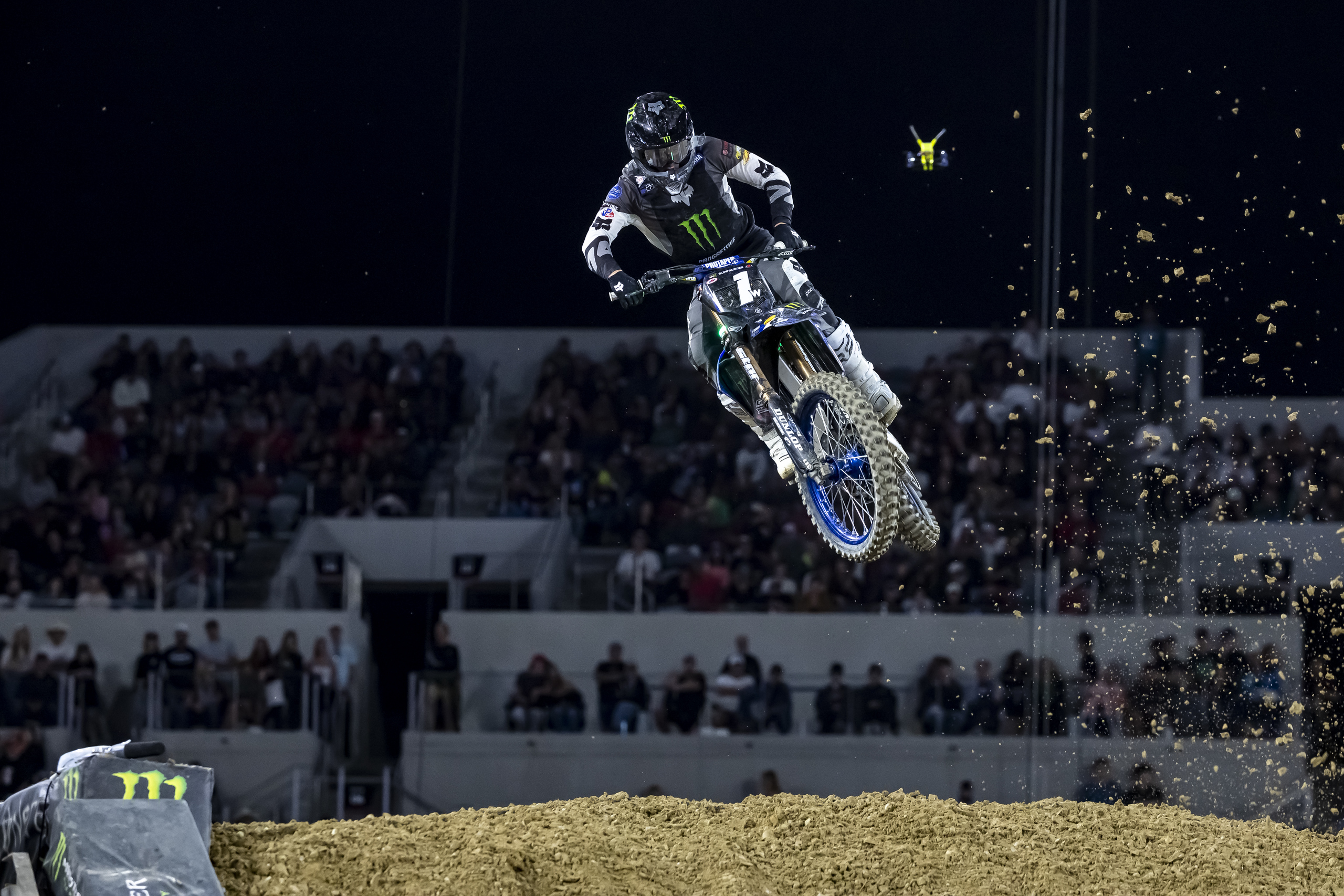
Watching Haiden Deegan ride is like watching a guy who’s allergic to second place. He attacks early, rides like he’s got an M80 under his seat, and forces the pace when he’s in clean air. That’s not just for style points, it’s his weapon.
Anaheim 1 and San Diego showed that again. Deegan consistently posted some of the fastest laps in the class, and when the race was fresh, he was often the fastest rider on the track. That part isn’t debatable. Deegan is faster. The real question isn’t who has the most speed, it’s how that speed holds up once the race stops being perfect.
Before diving deeper, it’s worth setting expectations. Lap-time data is a strong tool, but it isn’t flawless. Lapped traffic, yellow flags, line choices, and where a rider catches slower riders all influence the clock. Racing isn’t a lab experiment. When you peel away as many variables as possible and focus on trends rather than single laps, it becomes a super fun way to evaluate consistency.
It’s also important to clarify why some of Deegan’s lap-time variance exists. When he’s out front with a cushion, that fluctuation isn’t a weakness, it’s race management. His priority shifts from chasing lap times to minimizing risk. He’s protecting his position, not sniping tenths.
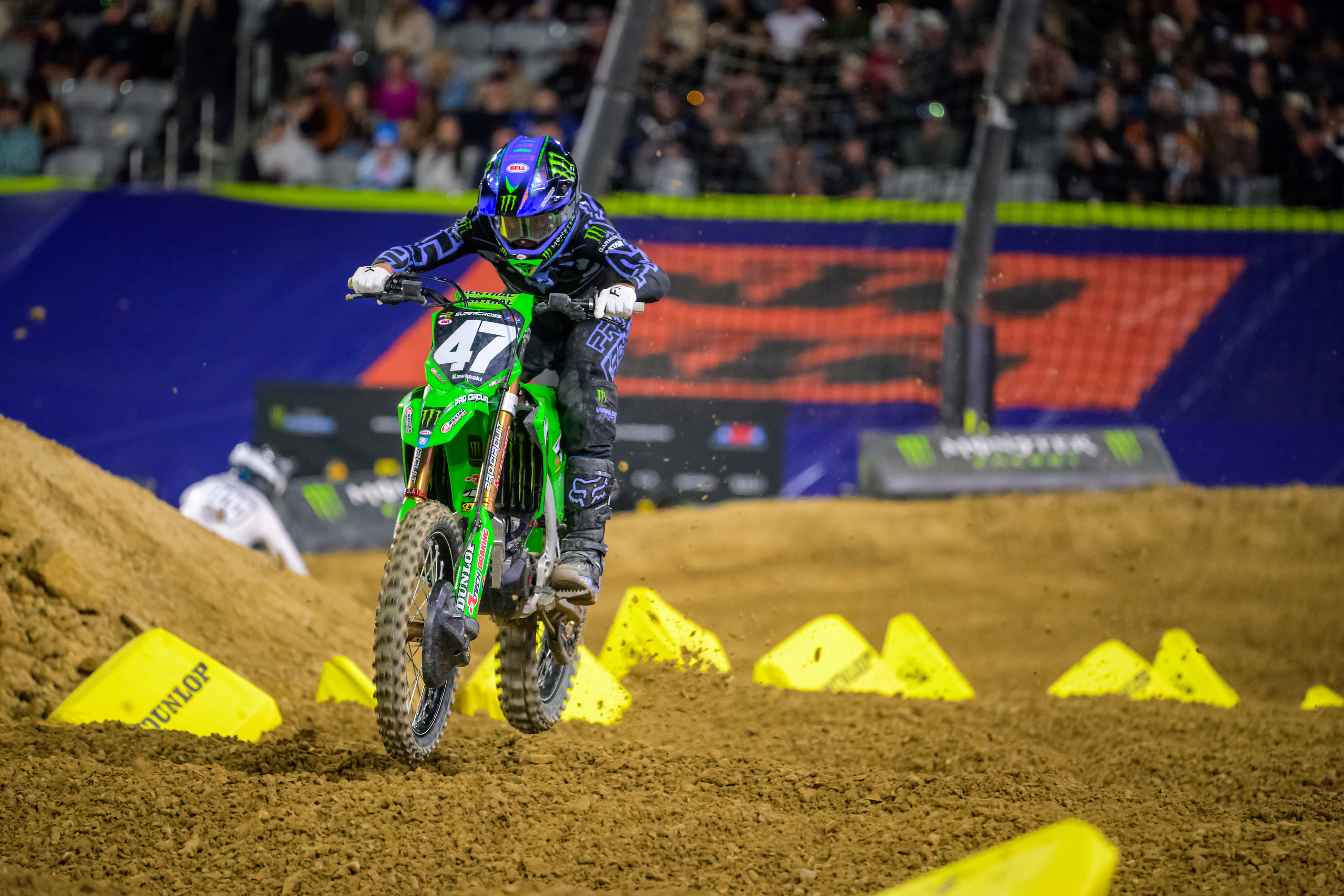
On the other end of the spectrum, there is Levi Kitchen. His pace has stayed compressed even when he hasn’t had clean air at the opening two rounds. Consider this: he started 16th last week in San Diego and worked all the way back to fourth. He’s achieved consistency while navigating traffic, fighting for position, and dealing with a track that’s actively falling apart. Kitchen doesn’t rely on gap management to stabilize his race, he builds it lap by lap like a seven course meal.
This is where the difference shows up.
Deegan’s lap times tend to fluctuate more in the later stages of a race. Not a collapse. Not a fade. But variability as the track breaks down and execution becomes more important than aggression. His final-lap slowdown in San Diego came after the win was already secured, throwing whips and saluting the fans, so that lap alone isn’t the point.
San Diego Supercross Lap Chart Comparison
LapDeegan’s TimesPosLapKitchen’s TimesPos138.1173144.05716254.3672256.25212353.4242356.12511453.7282456.46612553.2972554.95111654.0162654.9848754.1091754.9136854.7001853.9846954.5641954.44061054.06311054.54261154.80011155.16161254.66011254.52961355.33211354.93161454.94711454.82661555.19711554.83441656.10911655.14541756.88011754.56741858.69511854.9374Avg54.876Avg55.034Avg Top 5:53.706Avg Top 5:54.412Consistency97.629%Consistency98.830%
So far this season, Kitchen hasn’t done that. You would think from his overall results he’s having a rough go. But he is able to maintain consistency while coming up through the pack.
At San Diego, Kitchen’s fastest lap was a 53.9. His slowest lap was 4 laps later at 55.1, a 1.2-second spread. That’s not panic, not damage control, just a small decline as the ruts square up, rhythms disappear, and lappers get in the way. Kitchen keeps his throttle steady, his mistakes small, and his lap times tight.
The numbers back it up. Deegan’s overall consistency rating sits at 97.6, while Kitchen’s comes in at 98.8. On paper, that gap looks slim, but at this level, on a tight Anaheim 2 layout where momentum is fragile, it matters.
One more important assumption needs to be made: starts are key. This argument assumes Deegan and Kitchen get similar starts. Either both launch clean into the top five or both have to work from the middle of the pack. If one rider checks out up front while the other is buried, the math changes completely. But if they’re racing the same race, same traffic, same chaos, same deteriorating track, that’s where this discussion becomes relevant.
Head spinning yet?
Anaheim 2 rarely rewards the rider with the fastest single lap. It rewards the rider who can repeat a fast lap over and over, while the track breaks down and everyone else starts searching for grip. That’s not a knock on Deegan, he’s a bad hombre! It’s a description of what Anaheim 2 historically demands.
And that’s Kitchen’s recipe.
A1 was loose and marbley, and we saw Kitchen come from 20th to 6th. If he can get a cleaner start and avoid first-lap chaos, not necessarily a holeshot, top 5 through the first corner, he will set the stove to preheat. He might not be the fastest rider in a vacuum, but I believe he’s the most reliable once the race goes deep and stops being clean.
Deegan has the speed and the race IQ to manage a lead. Kitchen has the execution when the race refuses to cooperate.
This weekend, that execution will be everything. Especially with additional track abuse from SMX Next, when the surface deteriorates faster and line choices shrink. That environment favors the rider who bleeds the least time, not the one with the highest peak.
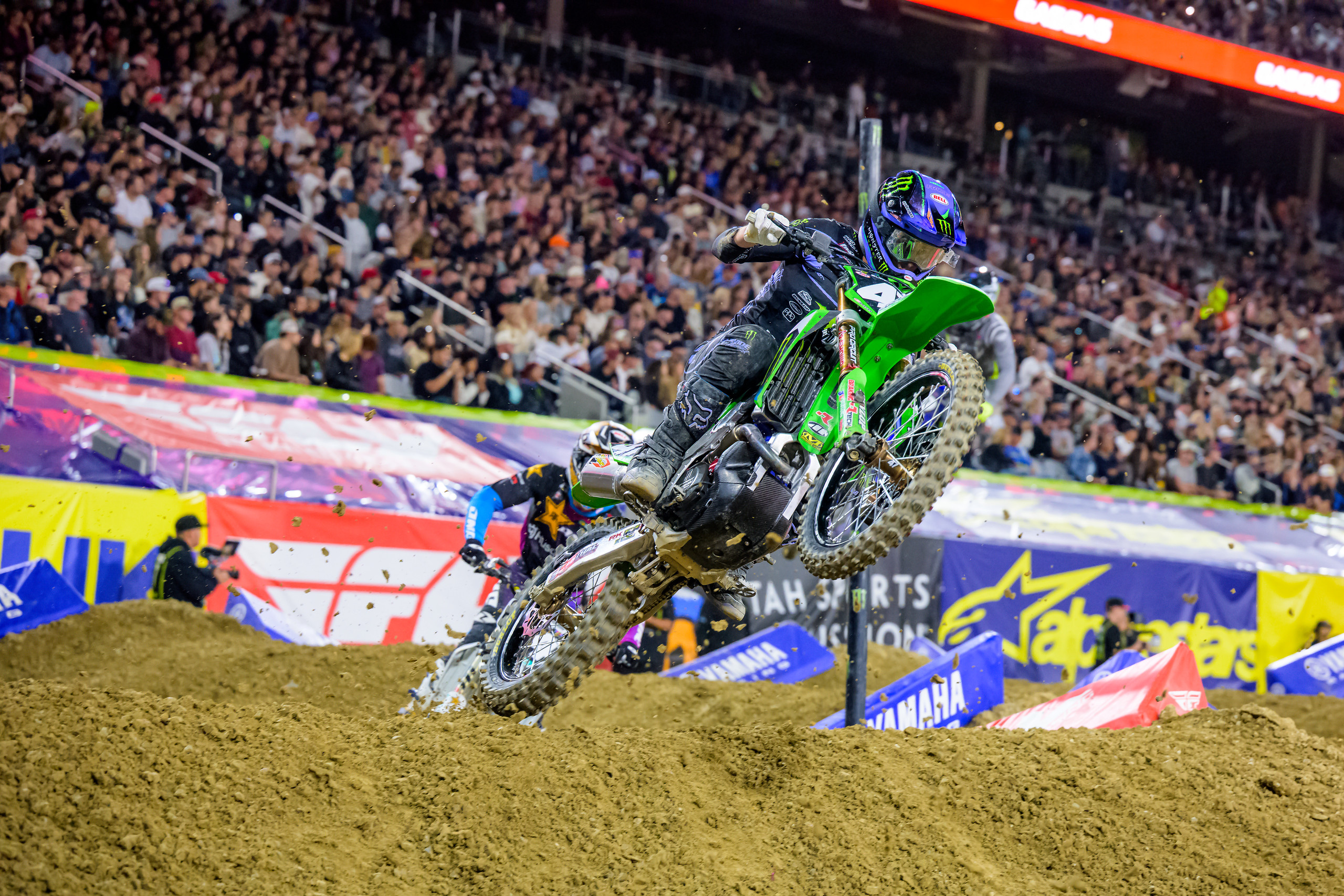
Deegan is the guy throwing steaks on the grill at high heat: fast, loud, with all the sizzle and spice. Kitchen is the chef who sets the slow cooker, walks away, and comes back 15 minutes plus one lap later with a gourmet result.
That’s why I’m picking Kitchen to win Anaheim 2.
And honestly? Even beyond the pick, the real win this weekend is simple: give us both of them battling for the entire main event. No gaps. No cruise control. Just speed versus execution, lap after lap, until the checkered flag decides who cooked it better.
Images: @octopi.media