
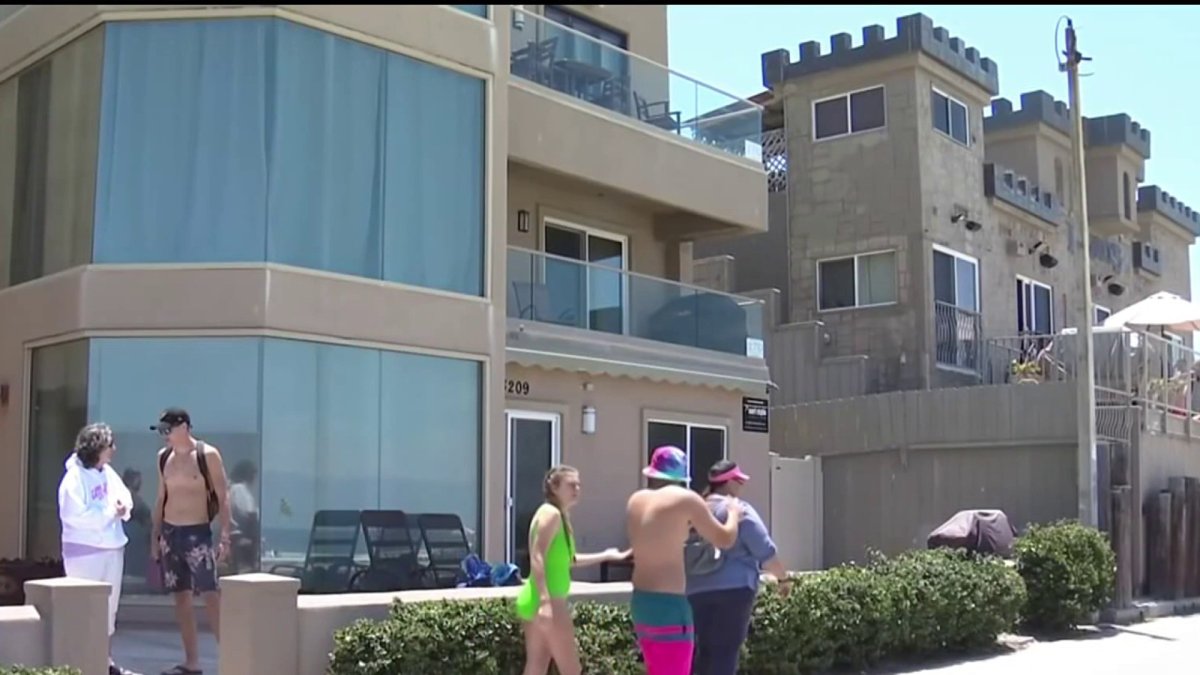
San Diego City Councilman Sean Elo-Rivera has proposed a tax on vacant second homes and vacation rentals, which he said are driving up housing costs, particularly for students.
On Tuesday, Elo-Rivera was joined by educators, students and policy advocates at Torrey Pines Elementary School to discuss a proposed tax on those under-used properties, a levy intended to discourage the practice.
“Students shouldn’t be pushed out of the city where they study, work and plan their futures,” Elo-Rivera said. “When homes are turned into vacation rentals or sit empty as second homes, students pay the price through higher rents, longer commutes and fewer options. The Empty Second Home and Vacation Rental Tax is a common-sense way to return housing to San Diegans and make sure those taking homes off the market contribute to the city we all share.”
The proposed tax would apply only to second homes that sit vacant and to whole-home short-term rentals, not to primary residences, renters or long-term rentals, according to Elo-Rivera’s office. The measure would impact fewer than 1% of San Diegans.
“San Diego has been my home my entire adult life and I love this city,” said Aarohan Hariharan, a student at UC San Diego. “But the longer I stay here, the harder it is for me to afford to stay here. Every year that I’ve lived off-campus, I’ve had to move farther and farther away from my campus solely to reduce rent. I love this city and want to continue to live here, but if rent prices keep going up the way they have, that may not be possible.”
Tuesday’s event was part of a weeklong media tour focused on San Diego’s housing crisis and how it impacts students, families, workers, veterans and seniors.
“The stress of finding and maintaining housing is relentless, and the cost, uncertainty and instability of housing is debilitating,” said Nicole Lillie, executive director of Our Time to Act United. “Housing is a human right. When homes are used instead for profit, as tools for corporate greed, sitting empty or used as vacation rentals, students suffer. San Diegans suffer. We are forced further and further away from our school, jobs and community until we can’t afford to stay in our home at all. If we want a city where youth can stay, contribute and thrive, we must put homes back in the hands of people who live here.”
In December, home prices dropped across the state for the third consecutive month. The median selling price of an existing, single-family home in California declined 3.9% from November down to $852,680, unchanged from a year ago.
In San Diego County, the median price increased 0.5%, up to $990,000, which is 1.5% higher than one year ago. In neighboring Imperial County, the median price was up 8.1% to $432,500, 11.6% higher than one year ago.
Educators speaking Tuesday said housing instability directly impacts learning, equity and long-term outcomes.
“When students are forced to move farther away or relocate multiple times during the school year, it disrupts their education and their sense of stability,” said Cody Petterson, trustee for the San Diego Unified School District. “Housing policy is education policy. If we want students to succeed, we have to make sure they can afford to live in the communities where they learn.”
According to Elo-Rivera’s office, the Empty Second Home and Vacation Rental Tax could generate up to $90 million annually, with corporate owners and “repeat nuisance properties” paying higher rates. The proposal also includes requirements for audits and public oversight intended to ensure transparency.
“Students shouldn’t be pushed out of the city where they study, work, and plan their futures,” Elo-Rivera said. “The stories shared today were a devastating reminder of the way lives of our young people are upended when homes are turned into vacation rentals or sit empty as second homes. Students pay the price through higher rents, longer commutes, and fewer options.
“Schools struggle to keep their doors open and teachers cannot afford to live in the communities where they teach. The Empty Second Home and Vacation Rental Tax is a common-sense way to return housing to San Diegans and make sure those taking homes off the market contribute to the city we all share.”
AirBnB spokesman Justin Wesson sent NBC 7 and Telemundo 20 the following statement:
“Airbnb supports meaningful solutions that help generate new local revenue, but a hefty tax that significantly raises costs for residents who occasionally share their home to make extra money is not the right approach. While the tax aims to address corporate-owned vacation rentals, the reality is it significantly impacts local residents who already pay taxes and fees to share their home: over 81% of Airbnb hosts in San Diego are residents, and nearly 75% share just one entire home listing. We welcome the opportunity to work with city council on legislative efforts that would actually help bolster affordability in the city.”