
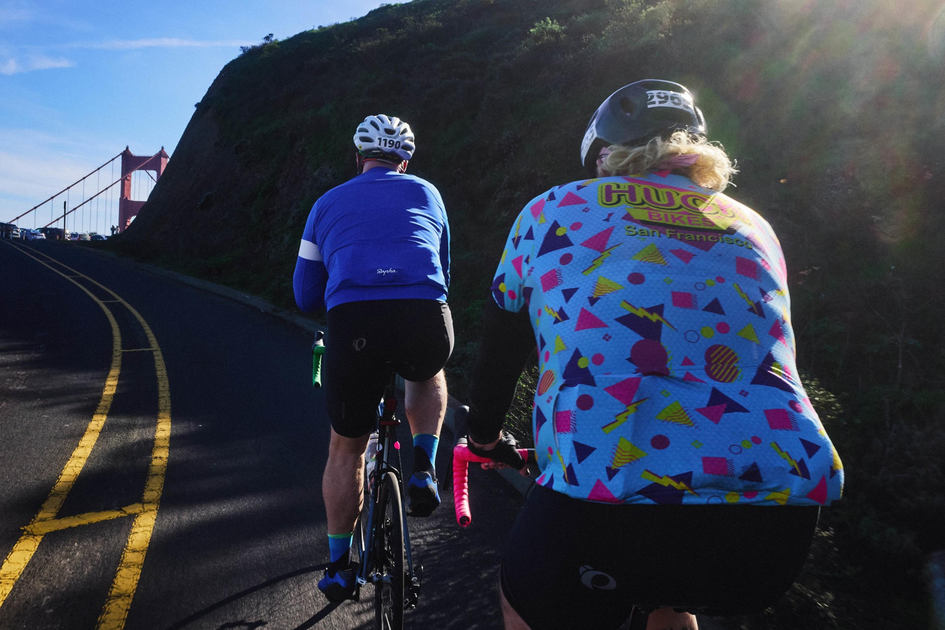
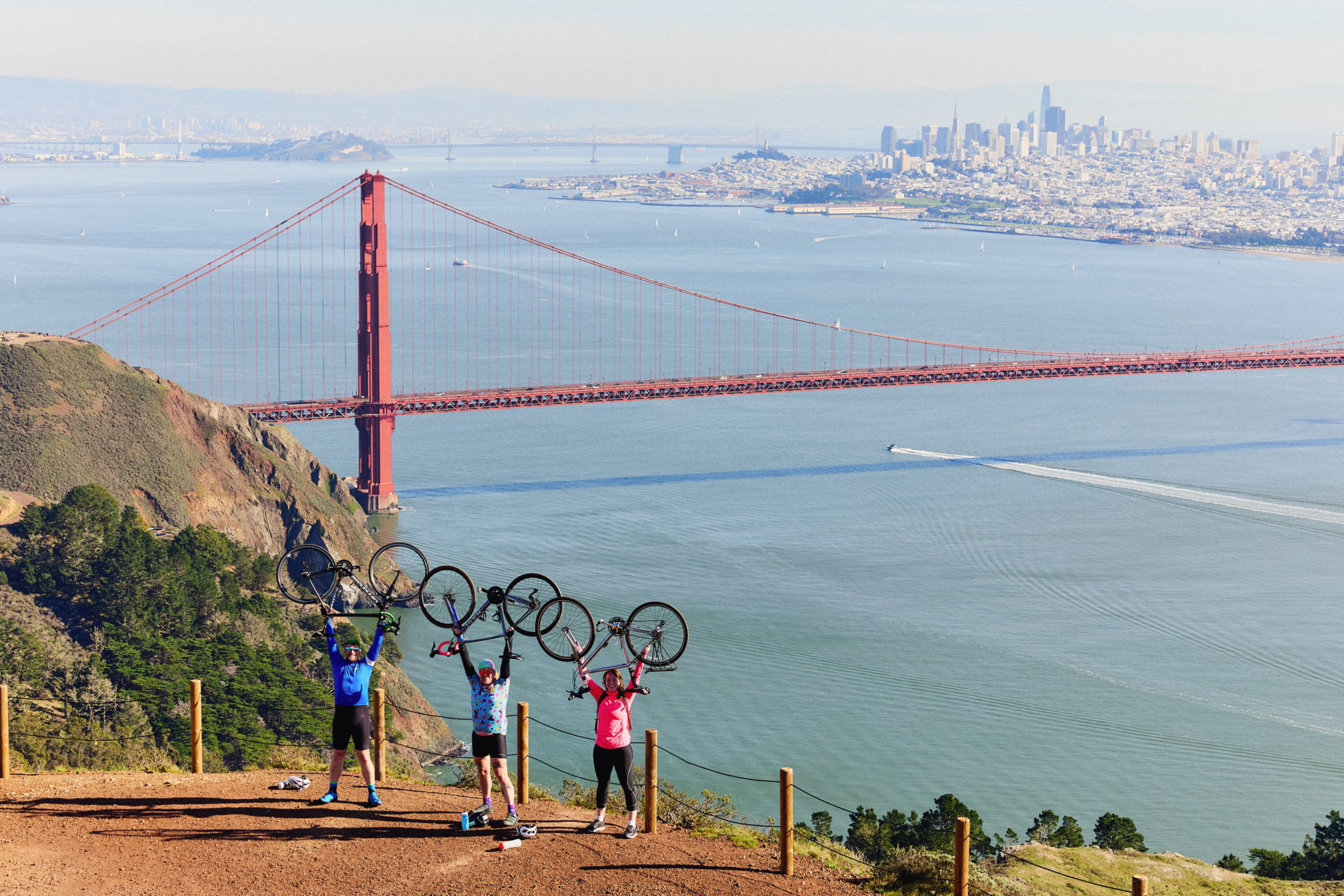
Nine hundred feet above the bay, the only sounds are the faint thrum of bridge traffic and the panting of winded cyclists who’ve just finished the arduous, 2-mile climb up Hawk Hill (opens in new tab). In spite of its proximity to a major city, the highest point of the Marin Headlands is all about silence — and the view. From here, visitors have a 360-degree panorama of San Francisco, Alcatraz Island, the East Bay Hills, plus much of rugged Marin County, including Rodeo Beach and the ridgeline of Mount Tam.
After being closed for about a year, Hawk Hill is open once again — and even easier to enjoy.
The centerpiece is a new trail installed by the National Park Service, leading from the upper parking lot to the summit. Although the agency has been in a state of disarray since the start of President Donald Trump’s second term — with staff reductions, fee increases for nonresidents, and crackdowns on free expression at Yosemite and elsewhere — it continues to plow ahead with improvements to Golden Gate National Recreation Area.
Park Service Superintendent David Smith said the Hawk Hill project, broken up into several phases and delayed by the pandemic, cements GGNRA’s reputation as one of the world’s great urban green spaces. “I really want to give the people of San Francisco what they deserve: a fantastic park with top-rate infrastructure,” he said.
Hawk Hill is technically just 75 feet higher than Conzelman Road, the steep and somewhat terrifying route that winds west from the bridge toward the Point Bonita Lighthouse. But this path enables a view that can’t be rivaled even by SF’s Twin Peaks.
On the first sunny Saturday after early January’s extended rain, I decided to see for ourselves. It had been a while since I tackled the ascent, and it was as beautiful and challenging as ever. The first segment is the steepest, followed by a long section of almost-level “false flats” before the final, winding push up Conzelman to the upper parking lot, where a dozen riders were taking selfies and catching their breath. Six hundred feet up from the Golden Gate Bridge Plaza, you’re at a higher point than the top of the bridge itself — that postcard-famous, “Full House” opening-credits view.
Laid with crushed gravel, the new trail begins at that upper parking lot and winds around the decommissioned, Cold War-era Nike Missile Site (opens in new tab), running a few hundred feet to the top. There are plenty of benches and viewing spots, with one area sheltered from the wind (which can be intense).
A second trail, longer and also new, meanders from a tunnel off Conzelman Road and around the hillside, connecting at the top to make an easily traversed, zigzagging loop. After this winter’s parade of atmospheric rivers, the landscape is lush and green.
While there is no running water — make sure to fill any bottles before venturing up — a restroom with two vault toilets has replaced the former hilltop Porta Potty. Routine maintenance work (opens in new tab) will periodically close the far side of Conzelman Road in the coming weeks but won’t impede access to Hawk Hill.


Two cyclists who gave their names as Bryan K. and Mark Y. knew the hill had reopened but were unaware of the improvements when they biked up together. Civil engineers by trade, they wanted an excuse to take advantage of the good weather. “It was the first clear day in a while, and I was stuck in an office all week,” Bryan said. Sharing his professional opinion, he added, “If they wanted to make it a little more accessible, they could compact the gravel to something more stable.”
Indeed, the sharp terrain means the path is even but not ADA-compliant, Smith says. Still, the $3.5 million restoration project, a partnership between GGNRA and the nonprofit Golden Gate National Parks Conservancy (opens in new tab), broadens access and provides volunteers for graffiti abatement and other maintenance. Smith, who spent some of his undergraduate years studying owls in the headlands, says expanded access to Hawk Hill has been a boon for everyone who monitors birds of prey.
“Adding places to sit makes it easier for the hundreds of volunteers to document raptors (opens in new tab) during the migration period,” he says. “That was a benefit we didn’t see.”
The improvements, which began in 2017, are ongoing. The Park Service will begin revegetation work in the spring, and some viewing platforms and other World War II-era infrastructure require stabilization before visitors can safely climb them. Then the agency will move on to other things, including lead remediation at a former shooting range and redwood restoration at Muir Woods.
“We really have a commitment to this area,” Smith says. “We want to make sure people can enjoy it.”