
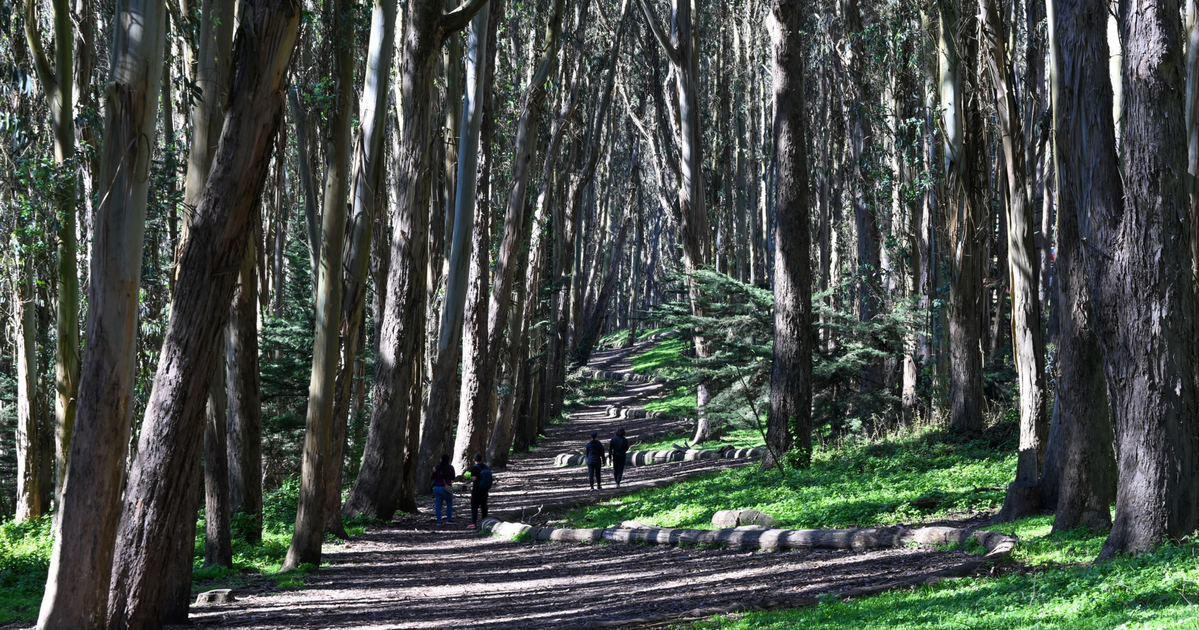
It’s hard to find someone who doesn’t love the Presidio (President Donald Trump notwithstanding). The city’s crown-jewel park boasts miles of hiking trails, postcard-worthy views, and even a statue of Yoda (opens in new tab). What was once a culinary dead zone now has a burgeoning dining scene, and VC bros have made it the new power address north of Sand Hill Road.
The thought often comes to mind: “I could totally live there.”
But few know what that’s like. Just 3,000 San Franciscans call the former army base home, and openings are scarce. These are the five things you need to know if you want a chance to live in the national park.
Want a spot? Be ready to wait
The Presidio’s 1,400 rental housing units are 97% occupied, and the turnover rate is 15% a year, according to Van Cornwell, director of residential asset management for the Presidio Trust, which oversees the park.
Most units are available on a first-come, first-served basis, though national park employees and those who work at One Letterman, the commercial campus that houses Lucasfilm Ltd. and other companies, are among those who get priority.
 Of the 1,400 rental housing units in the park, 97% are occupied. | Source: Tayfun Coskun/Anadolu/Getty Images
Everyone else is added to a general waitlist, where they stay for months or even years. When they do get to the top of the list, and they want the unit that’s available, it’s theirs. If they pass, it goes to the next person, and so on. For each prospective renter, the trust offers housing a maximum of three times. With the third decline, the hopeful goes back to the end of the line.
Wait times in neighborhoods built in the 1940s or earlier tend to be longer, while newer apartments and houses in areas like Baker Beach are more readily available. Last year, the Presidio jumped up five spots to become the fourth-favorite rental location in the city, according to Rent Cafe.
Some on the waitlist already live in the Presidio but want to be in a different neighborhood or snag an extra bedroom. Darin Delagnes, regional director of the John Stewart Company, which manages leasing, said a few dozen households a year move internally.
Others are trying desperately just to get in. Pacific Heights resident Gregor, who declined to give his last name, said he has been waiting a year and a half for a house on Liggett Avenue in a quaint 1930s neighborhood near Lover’s Lane.
“It doesn’t get much better for an urban lifestyle living in nature,” Gregor said as he toured a three-bedroom, one-bath brick duplex on Liggett. It was only the third listing that had become available on the street since he joined the waitlist, he said.
Lauren Zaner, who lives next door to the unit, said it took nine months to land half of a duplex in 2022. She and her husband snapped it up.
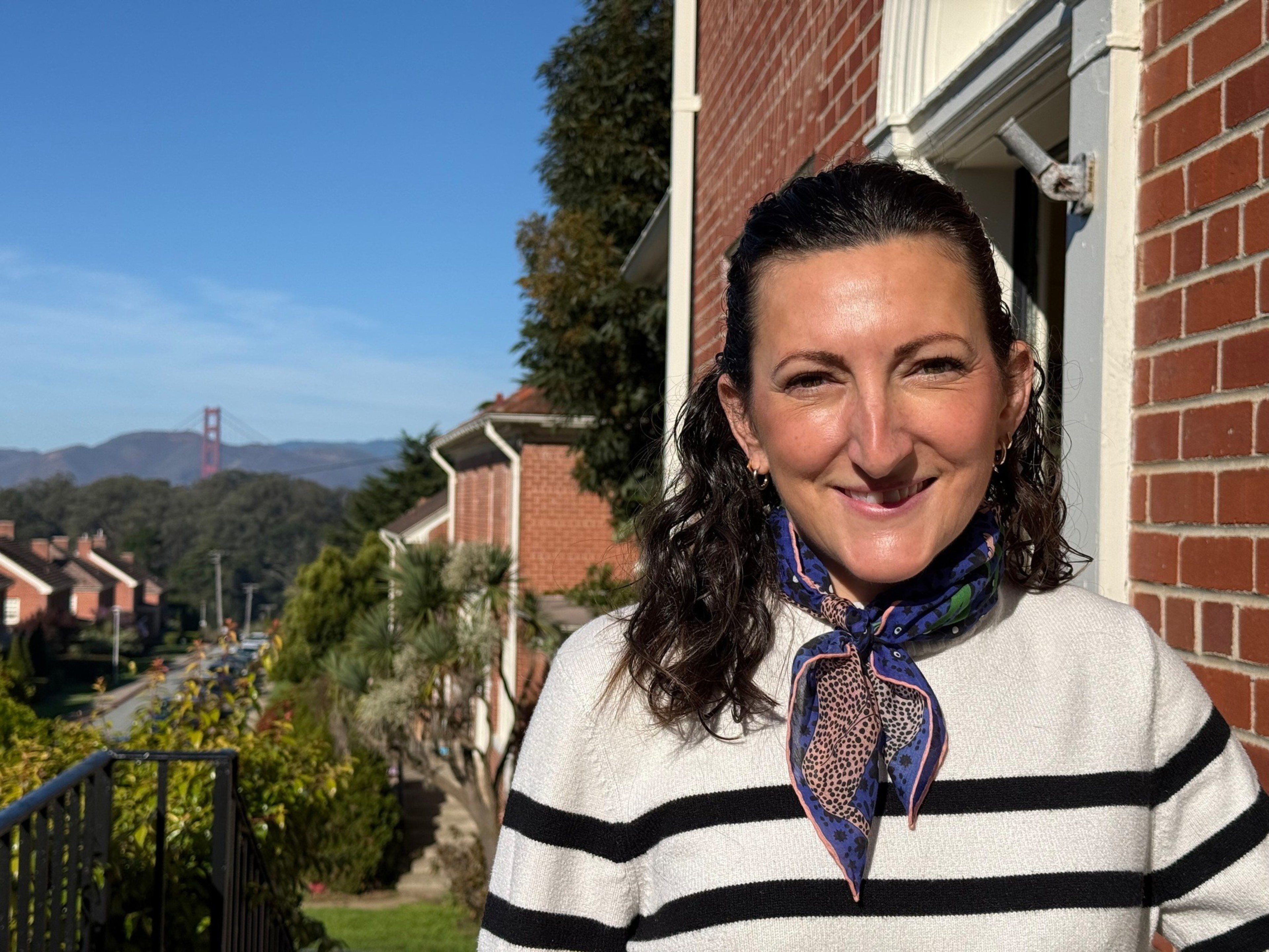 Lauren Zaner has lived in the Presidio for three years. | Source: Emily Landes/The Standard
“We are nature lovers and wanted to be in it as fast as possible,” she said.
Zaner grew up in a military family and said the Presidio reminds her of her childhood. Neighbors drop off soup when she is sick, and kids hang candy canes from the trees on Lover’s Lane during the holidays. “It’s very Mayberry,” she said.
The first civilian residents lived there, alone, for eight years
When the Presidio began its transformation from military to civilian housing in 1995, there was no community. There was just Marc and Cat.
It was the middle of the dot-com boom, and rent prices were soaring. Married couple Marc Kasky and Cat Carr had been kicked out of their North Beach apartment to make way for condos.
On a whim, Kasky, then executive director of the Fort Mason Center, put in a call to Arnie Rossi at the National Park Service. Rossi had previously sought Kasky for advice on how the U.S. Army and the park service would work together during the handover of the Presidio.
The two struck a deal: Kasky and Carr could move into a former officer’s quarters so long as they took care of the property themselves.
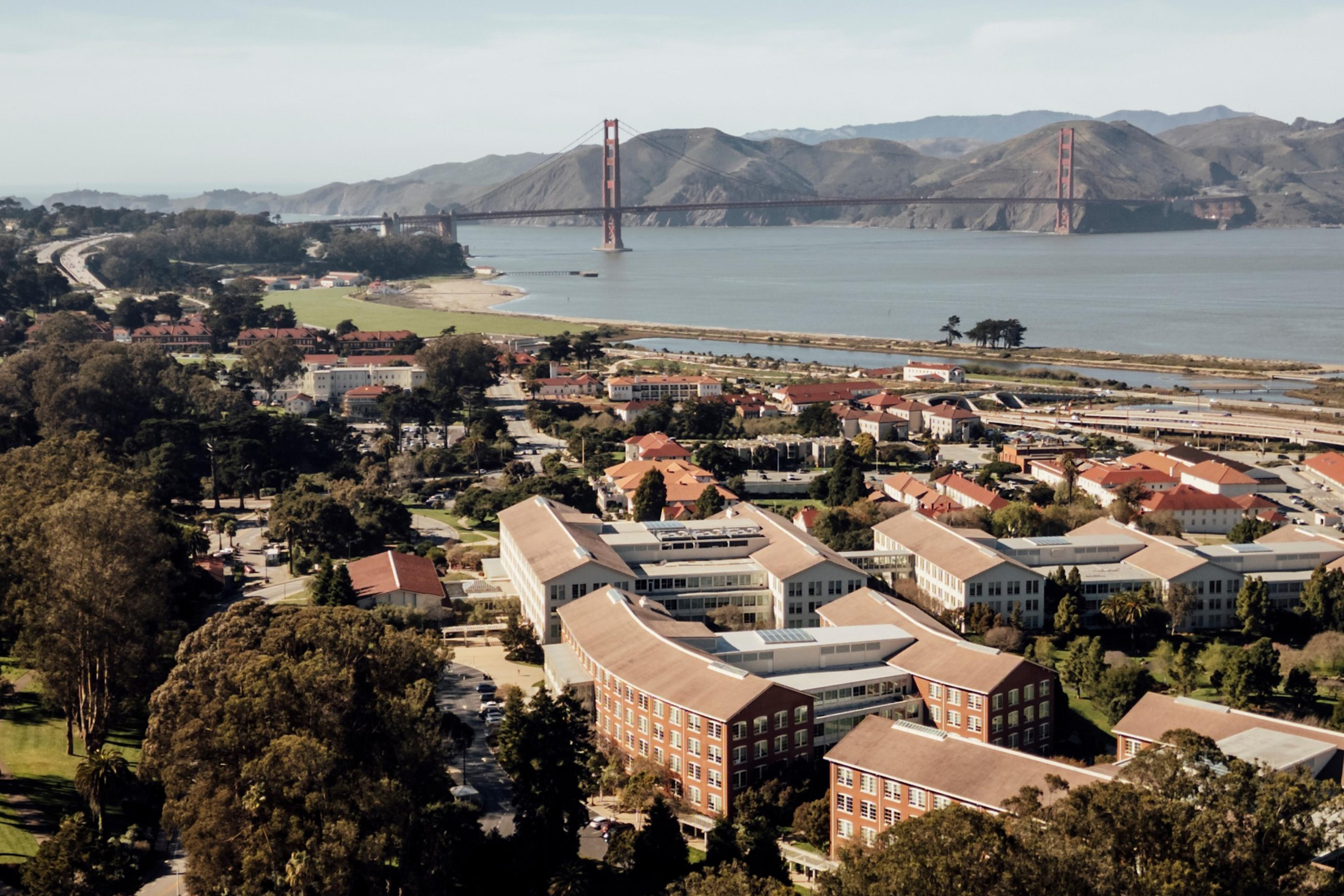 The park’s first civilian residents moved into a former officer’s quarters. | Source: Stephen Lam/SF Chronicle/Getty Images
The couple still resides in the 1889-built house with a long front porch on Funston Avenue, San Francisco’s oldest intact streetscape, which, unlike almost anywhere else in the city, has plenty of space between neighboring properties.
“My wife says it’s like living in Camelot,” Kasky said.
For eight years, they lived without neighbors or working streetlights in what was functionally the country. When the houses across the street hit the rental market in the early 2000s, there were bidding wars.
San Francisco has rent control. The Presidio doesn’t
People are still bidding up properties so rare that they are rented outside the usual waitlist system. “When a unit is unique and in high demand, we will request bids,” Presidio Trust spokesperson Lisa Petrie said.
The starting bid for a recently listed four-bedroom, three-bathroom duplex on Simonds Loop was $13,800 per month. Petrie declined to reveal the final accepted figure, citing privacy concerns.
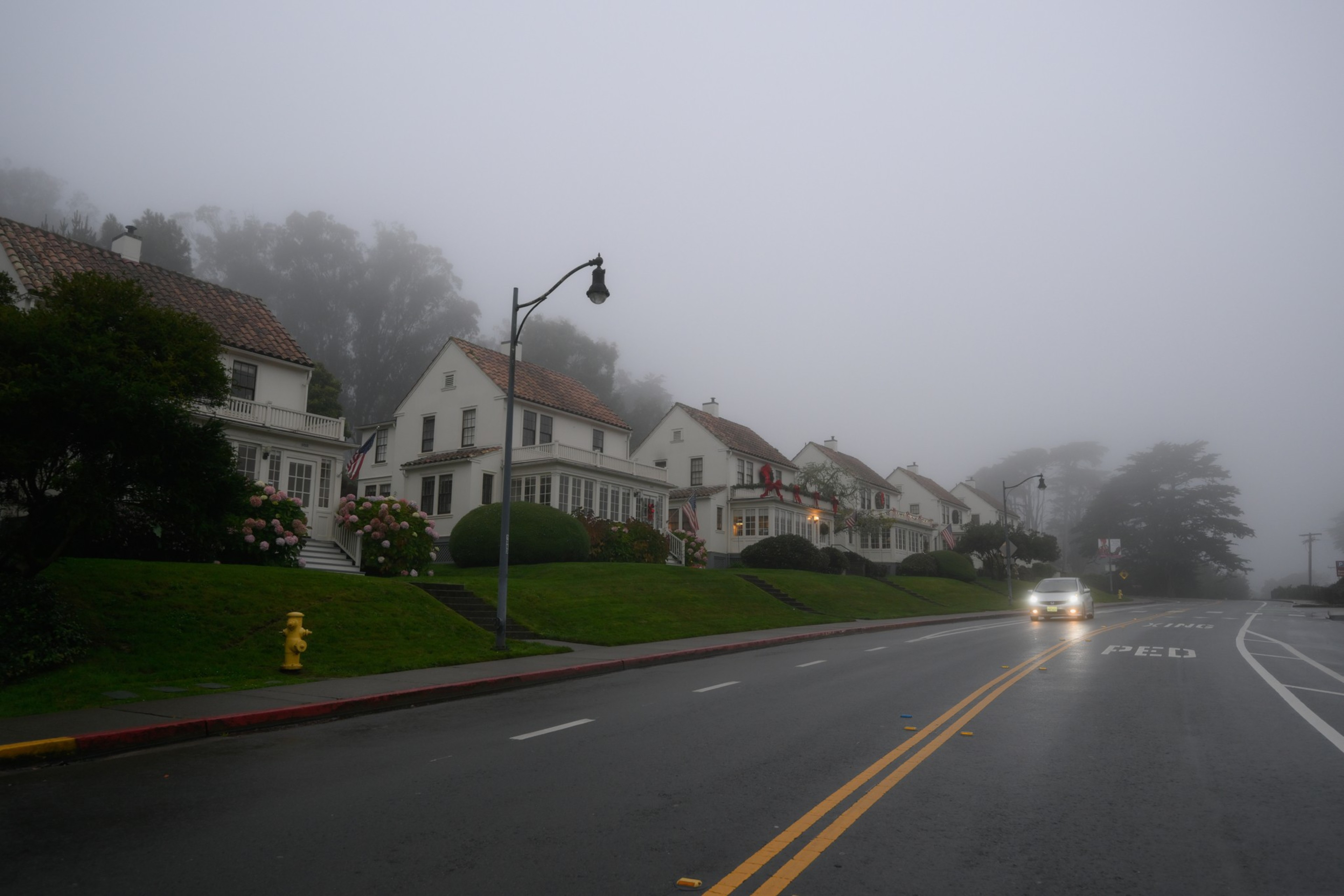 Presidio houses. | Source: Tayfun Coskun/Anadolu/Getty Images
Bidding up apartments happens in other areas of the city, especially in a hot market. But rents on pre-1979 properties — the vast majority of San Francisco units — are largely set for the length of the tenancy, other than small annual increases.
While nearly all the current housing stock in the Presidio predates 1979, there is no rent control because it’s federal land. The median rent jumped nearly 30% in 2025, from $4,865 to $6,300 a month, according to Zumper. Residents have reported their rents going up by thousands, even doubling in some cases, in just a few years. The bidders for the Simonds Loop home had to write down how much they were willing to pay in rent increases as part of the application process.
Cornwell said Presidio rates follow market trends, and rental income pays for park maintenance and operations. Because residents often stay for many years, the trust sometimes does a full renovation when units turn over.
“The challenge is that we’re like a small city: All of the infrastructure we inherited from the U.S. Army is aging rapidly,” Cornwell said. “We’re doing this gradually but need to finance it all ourselves.”
So the Presidio charges what people are willing to pay. Zaner said the rent on her Liggett Avenue duplex has gone up faster than in the rest of the city, but she and her husband plan to stay as long as they can afford it.
“We wake up every day grateful to live here,” she said.
It’s a park. There will be animal encounters
Zaner marks her day by the birds that visit: hummingbirds sipping nectar from the flowers in the morning, three red-tailed hawks circling for their lunch mid-afternoon, owls hooting at night. “We’ve become the weird bird people now,” she said.
 Source: Janet Kessler
There are also rats, and of course coyotes, but they come with the territory.
Nina Schwartz has lived in the Presidio’s West Washington neighborhood for 20 years. Since her unit is right by the golf course and an open meadow, she has accepted coyotes as her neighbors. Still, she sometimes gets surprised by a bushy tail going by the kitchen window as she washes dishes.
She once found raccoons on her doorstep, eating candy left out for trick-or-treaters. “I had to scare them off with my headlights,” she said. “They were having a great party here.”
New housing is on the way
The Presidio Trust plans to build 196 homes at the site of the Army’s former Letterman General Hospital. Initial designs from David Baker Architects include a six-building apartment complex on 4.6 acres.
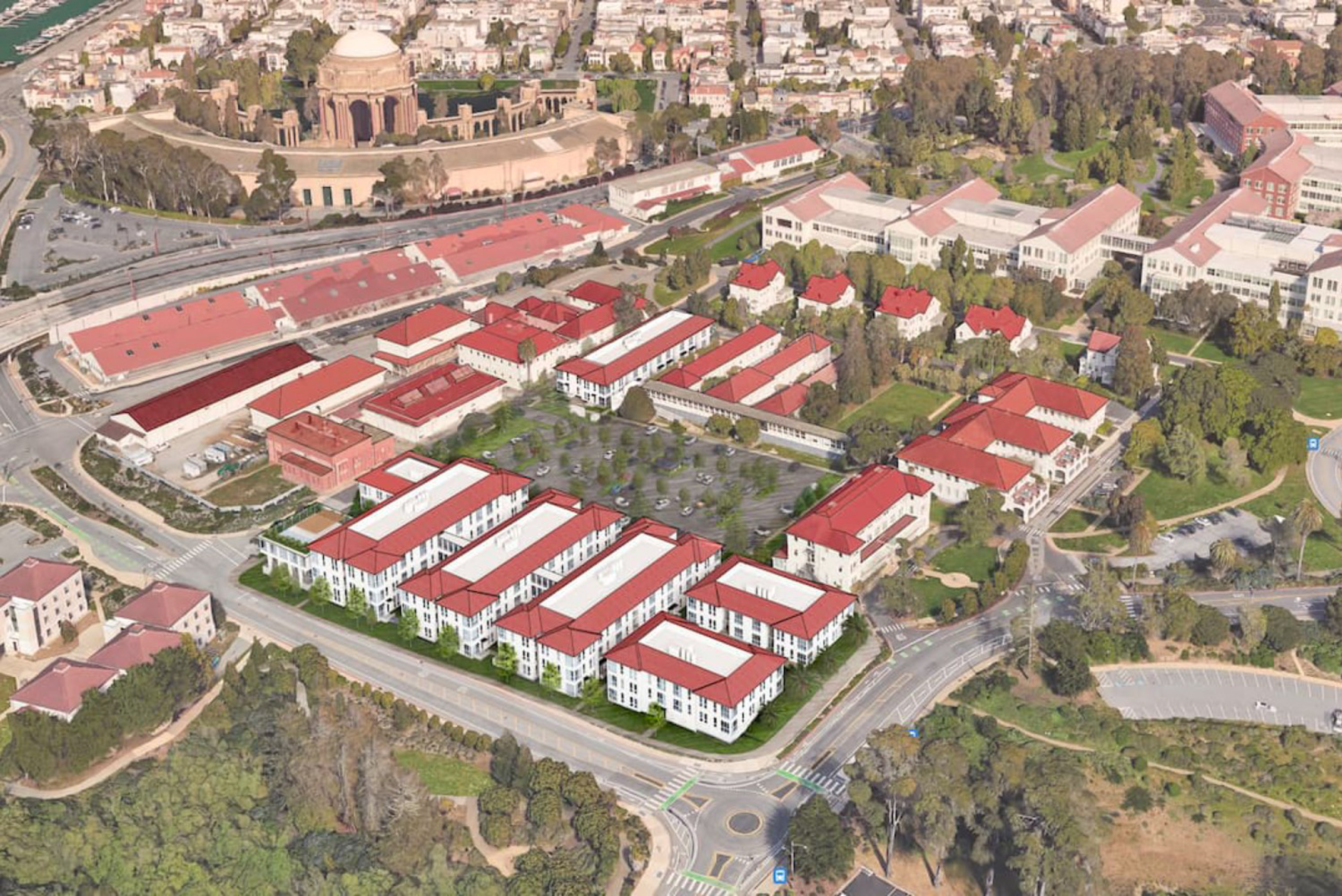 Nearly 200 homes are planned for the site of a former hospital. | Source: Courtesy David Baker Architects
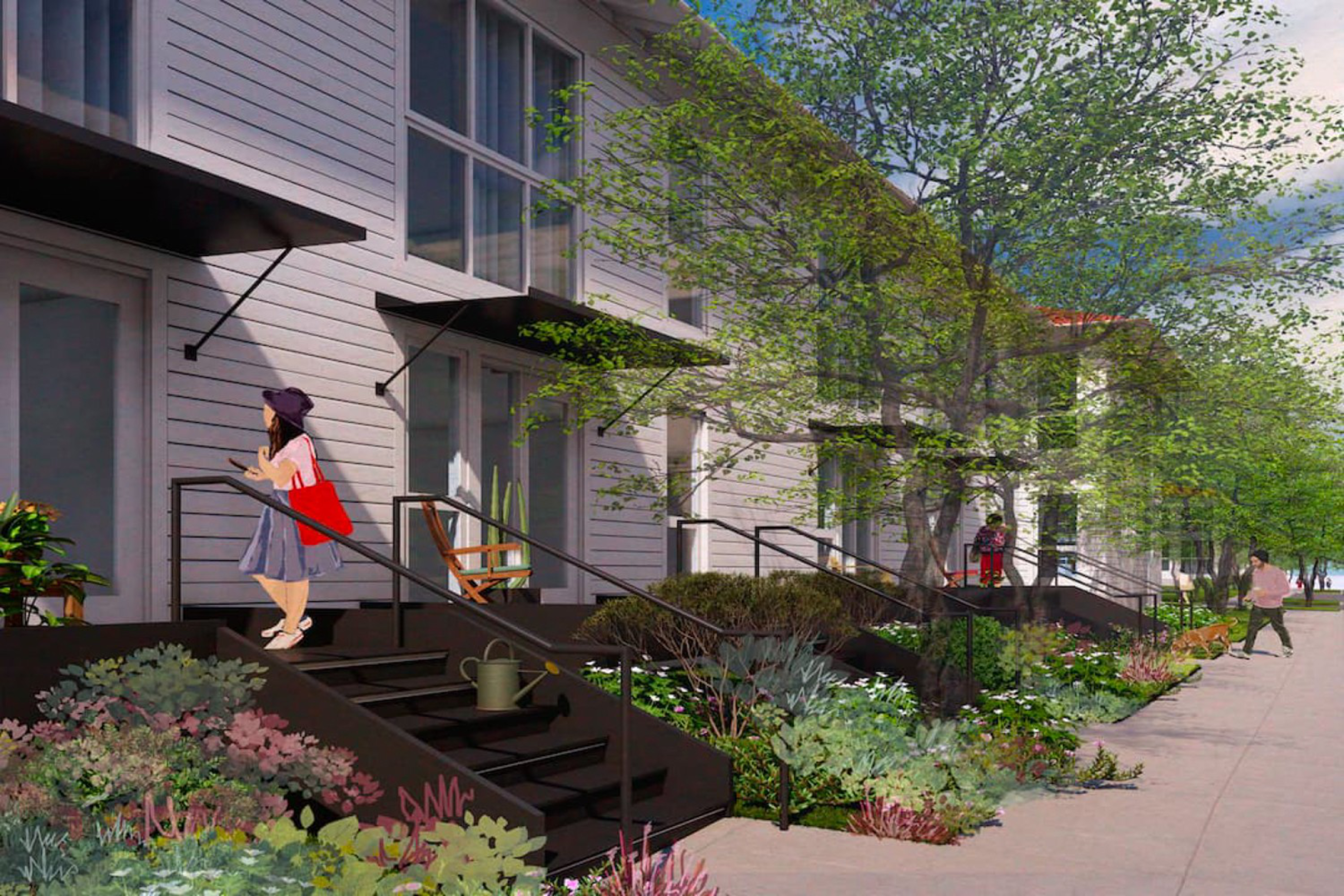 Construction could begin in 2027. | Source: Courtesy David Baker Architects
Final designs could be adopted by June, following an environmental assessment and public comment. Demolition of the existing buildings should take place this year, with construction beginning in early 2027.
This is the first time the trust will act as its own developer, according to Deputy Chief Business Officer Josh Bagley. The $150 million project is being funded through a combination of U.S. Treasury loans and trust capital.
Schwartz said she’s open to the new development as long as it doesn’t change the laid-back lifestyle of the Presidio, where she often goes days without running into anyone — human, at least — on her walks.
“I understand the rationale. We’re low on housing,” she said. “But I would hope it wouldn’t impact too much what I love about the place.”