
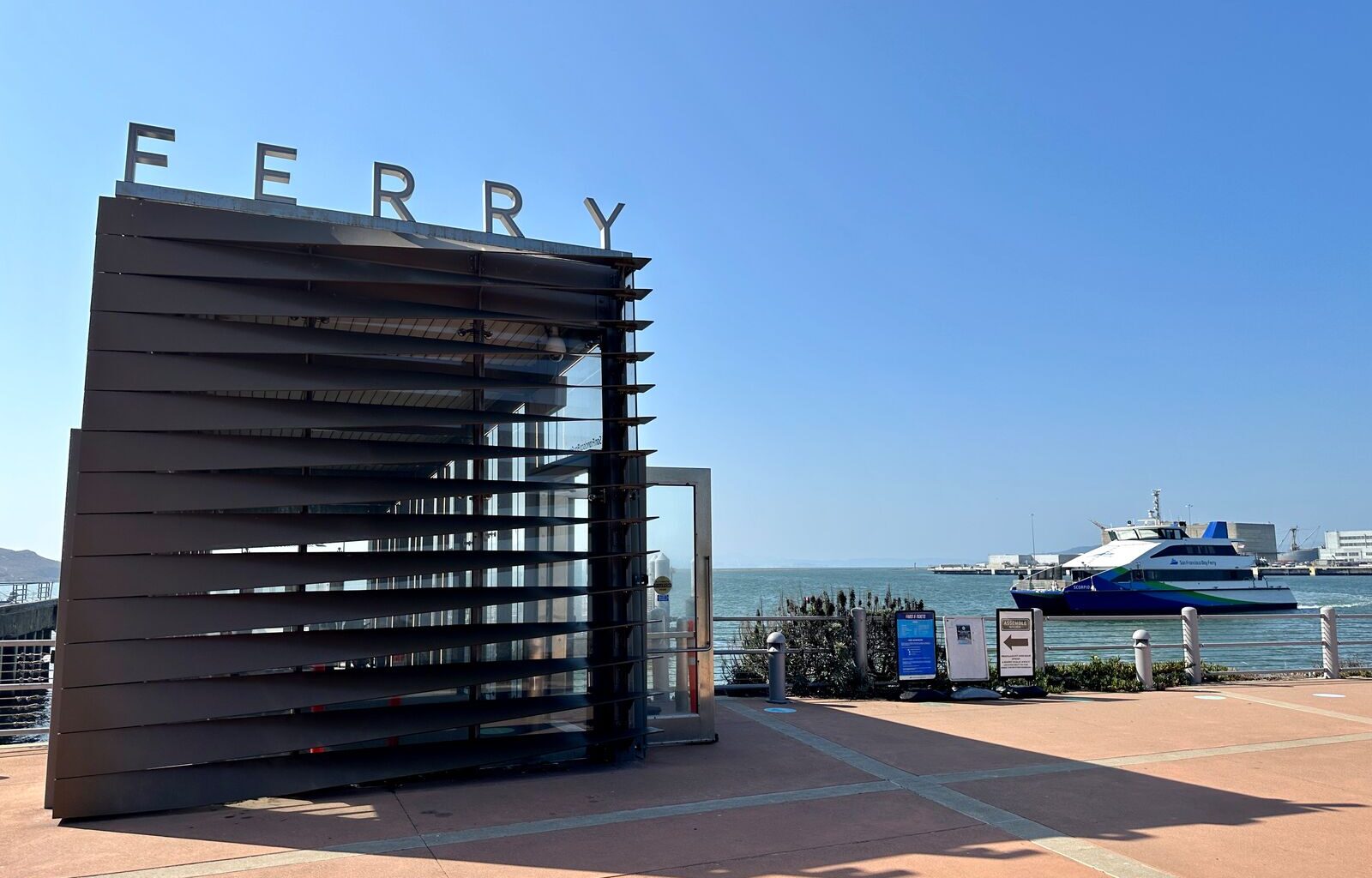
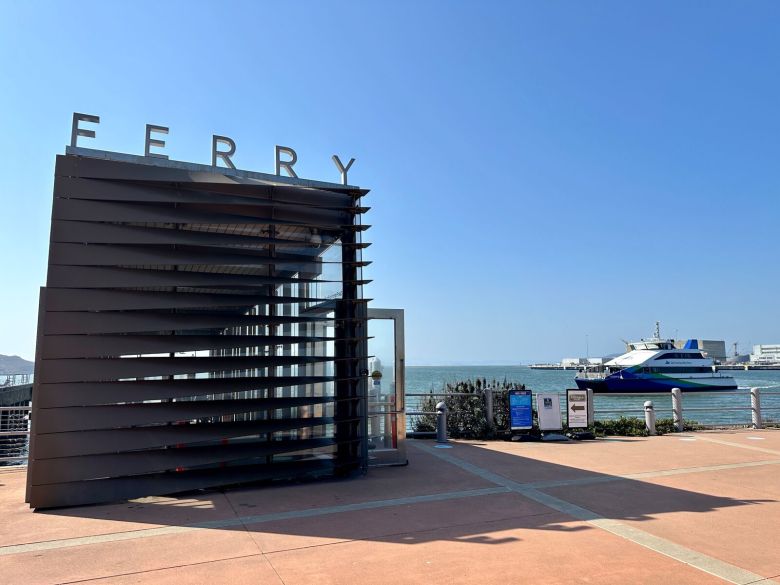
 The San Francisco Bay Ferry Terminal in Richmond. Credit: Tracey Taylor
The plan to launch ferry service from Berkeley to San Francisco took an important step forward Wednesday night, as Berkeley’s Planning Commission signed off on a zoning change that would enable the project.
The commission’s unanimous vote is the first in a long line of approvals and permits the project will have to secure over the coming months from the myriad local, state and federal agencies that oversee the bay.
If all goes according to officials’ plans, commuters and day-trippers three years from now could step from a rebuilt Berkeley Pier onto all-electric boats that would whisk them to San Francisco’s Ferry Building in 25 minutes.
But it remains unclear how Berkeley and the Water Emergency Transportation Authority, which operates the ferry system, will pay for the project. Cost estimates for the new pier and ferry terminal have topped $100 million, not including the electric vessels.
Berkeley Parks Director Scott Feris told Berkeleyside this week that the city is “working with a variety of funding agencies and WETA to look for dollars to fund this project.”
Backers of the plan, including city leaders and business officials, contend it will give people who live and work in Berkeley a new option to cross the bay without needing a car, and stands to benefit the waterfront by restoring the closed-off pier and bringing in new visitors.
“This project is a smart investment in Berkeley’s transportation network, waterfront and local economy,” said Robert Rodgers, a representative from the Bay Planning Coalition who spoke at the Planning Commission meeting Wednesday night.
Opponents, meanwhile, remain concerned that the project will spoil the natural beauty of the waterfront and lead to an influx of park-and-ride commuters who will make it harder for those who use the marina now to find parking.
“The vision they’re adopting is making [the marina] a commuter terminal — as opposed to the uses that are there now, as a place for respite,” said Berkeley resident and Cal Sailing Club member Camille Antinori, who said she was not speaking on the club’s behalf. “That’s going to make it a whole lot more difficult to access those recreational aspects.”
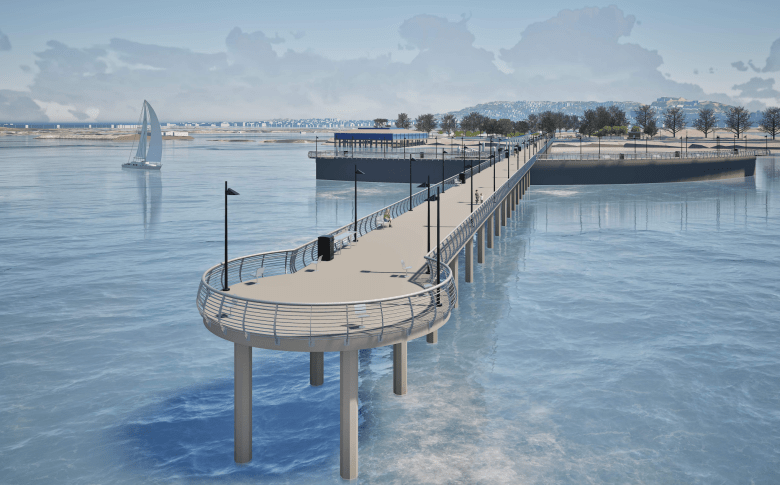 A rendering shows the city’s vision for a rebuilt Berkeley Pier. The proposed new ferry terminal would be on the structure’s north side, just in from a breakwater. Credit: Robin Chiang & Company
Long road to approval for project
The Berkeley Pier has been closed to the public since officials declared it structurally unsafe in 2015. The city’s plans call for tearing down the structure — which opened a century ago to serve a car ferry that brought drivers to San Francisco in the years before the Bay Bridge opened — and build a new pier in its place. The ferry terminal would sit along the new pier’s north side, just in from a nearly 300-foot-long breakwater bisecting it.
A business plan drafted by San Francisco Bay Ferry calls for operating service during the morning and evening commute on weekdays, with boats departing every 35 minutes during those hours. Ferries would run all day on weekends, with boats every 90 minutes.
The agency projects its Berkeley service could carry about 950 riders each weekday and nearly 700 on weekends, and suggested it could offer special service to Oracle Park or the Chase Center, or even one day create a Berkeley-to-Larkspur route bringing riders to the North Bay.
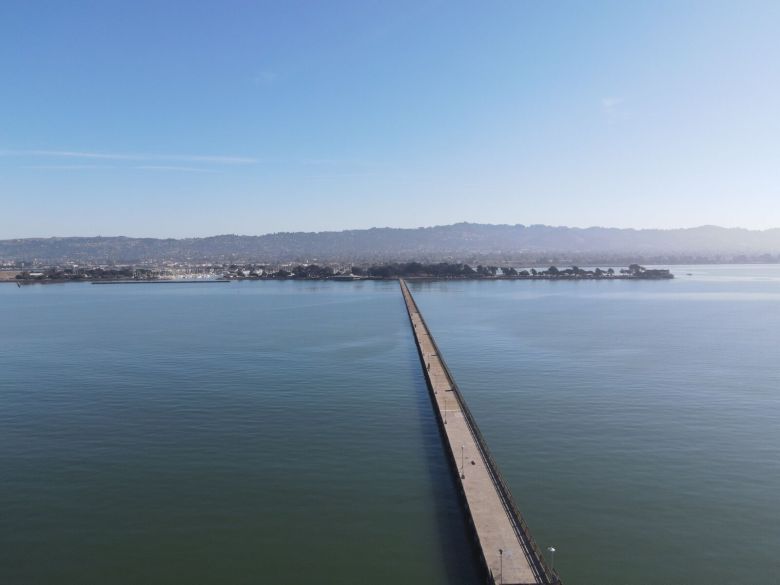 Drone shot of the Berkeley Pier and marina, taken on Oct. 12, 2020. File photo: Phil Rowntree
Wednesday night’s Planning Commission meeting didn’t address details like how the project would be funded or managed. It instead focused on narrower questions of whether to change zoning for the Berkeley Pier to allow a transportation operation there, and approving a use permit for the ferry project. Commissioners were enthusiastic about the plans, which they saw as an opportunity to revitalize a waterfront that has been struggling economically.
The zoning change now moves on to Berkeley’s Zoning Adjustments Board, which is expected to take it up next month, and will then advance to the City Council.
From there, elements of the project will have to get the green light from a half-dozen other agencies — such as the Bay Conservation and Development Corporation, the state Department of Fish and Wildlife and the Army Corps of Engineers — a process city officials expect will stretch into next year. In the meantime, Ferris said, parks staff are also preparing the project’s environmental impact report, continuing to develop the design and searching for funding.
Berkeley plans to find funding to pay for the cost to build the new pier, Ferris said, while WETA will be responsible for the ferry terminal, boats and a planned charging station that would float on the bay next to the pier. Officials have estimated the cost of demolishing the old pier and building the new one at $21.2 million, while other marina projects tied to the service could run another $23 million; the ferry terminal and dredging work was estimated to cost $53.7 million.
WETA spokesperson Alexis Matsui referred questions about the project’s details to the city, and said the agency is still determining costs and its operations plan.
What will ferry service mean for the marina?
Parks officials maintain the project won’t push out the swimmers, sailors, kayakers and fishermen who use the marina today.
They say there’s enough parking at the waterfront for everyone, and that the city can manage the marina’s lots by imposing time limits to ensure commuters don’t park in the most in-demand spaces, such as the South Cove lots near Adventure Playground or several lots near marina berths. Improved transportation infrastructure such as new bike lanes along University Avenue and ride-share pickup points will also provide more options to get to the ferry without needing a parking space, the city contends.
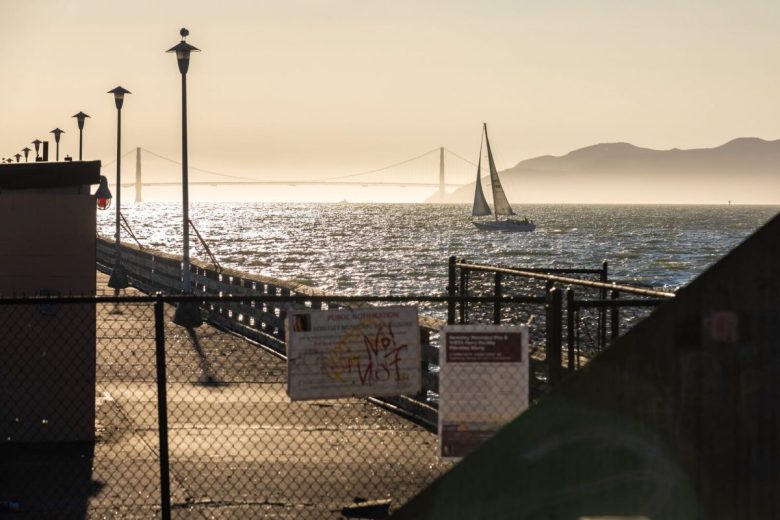 The Berkeley Pier has been closed since 2015. Credit: Kelly Sullivan
Antinori and other critics aren’t convinced.
“They’ll use up all the spaces,” Jim McGrath, a former Parks and Waterfront commissioner, said of ferry commuters. He was dubious about studies conducted by the city to inform its parking plans, and doubted the time limits would be enough to keep commuters out of other lots.
Critics have also speculated that Berkeley could end up subsidizing ferry operations at the marina.
Before the pandemic WETA was funded primarily by bridge toll revenue and rider fares; more recently, like other agencies, it has depended on temporary COVID-era relief funds. WETA officials wrote in their business plan that “it is not expected that the city of Berkeley will subsidize operations of the ferry services from its general fund.” But they noted ferry operations in the city of Alameda receive revenue from a local property tax, while a transportation sales tax measure in Contra Costa County helps fund service in Richmond.
Ferris said that won’t happen in Berkeley.
“The city is not going to pay for the operations of the ferry, or supplement the operations of the ferry,” he said.
McGrath said he plans to lobby the Bay Conservation and Development Commission to reject the ferry project, arguing that it will threaten the recreational uses that are supposed to be central to Berkeley’s marina.
“I think our parks should remain parks,” he said.
West Berkeley Councilmember Terry Taplin counters that fears the project will remake the marina as people know it today are overblown, and said it will instead improve the waterfront by restoring public access to the pier.
“Ultimately the project will nest quite comfortably into the overall ecosystem of the marina,” Taplin said. “People are thinking that it’s going to be this huge, giant terminal, but that’s not the case.”
Related stories
Berkeley gets $5.1M to plan for ferry service
May 26, 2023May 28, 2023, 6:28 a.m.
Berkeley Marina ferry plan raises concern among recreational users
October 22, 2021Aug. 4, 2022, 10:47 a.m.
Ferry service, new hotel, pier rebuild among ideas to revive Berkeley Marina
February 19, 2021Aug. 4, 2022, 11:14 a.m.
“*” indicates required fields