
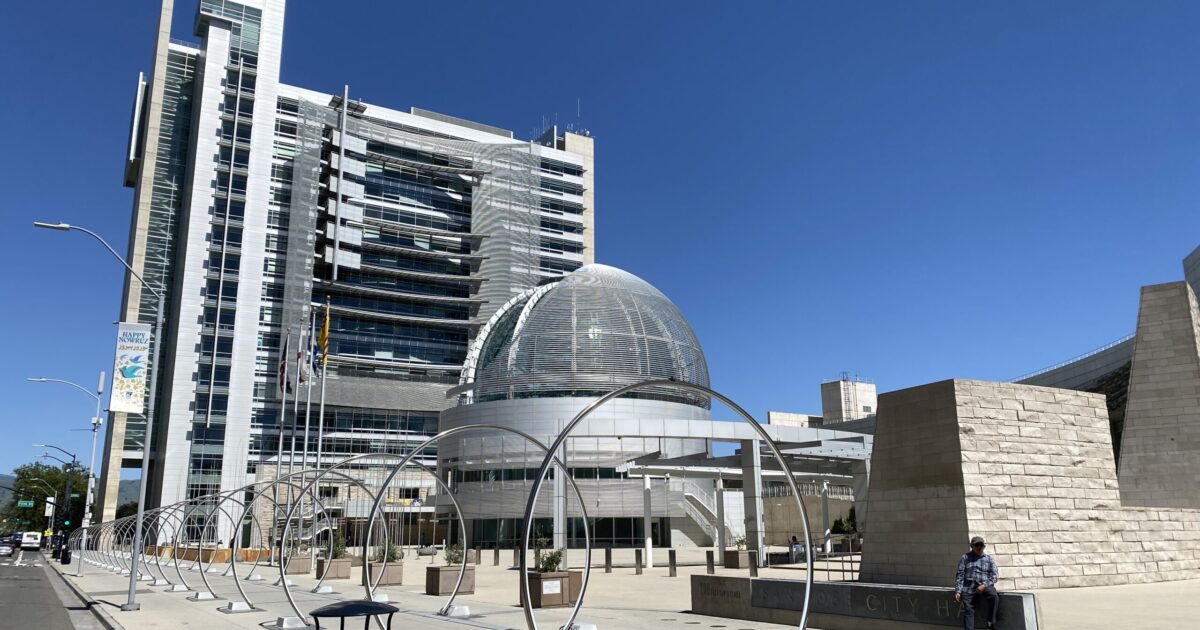
San Jose is considering a policy package intended to spur local housing development by adjusting certain requirements that homebuilders say have stymied new projects.
Both measures are set to go before the City Council Tuesday. One would extend an incentive program for large housing developments, first passed in December 2024, designed to help projects advance by reducing the city’s construction tax and easing other requirements. The other revamps San Jose’s inclusionary housing policy, which requires market-rate housing developers to direct a portion of their investments toward affordable housing set aside for low-income residents.
Some of the proposed changes could prove controversial. If councilmembers agree to extend the incentive program to February 2027, the change could mean forgoing an estimated $6.6 million in waived construction taxes, which help fund key city priorities such as transit programs. Meanwhile, affordable housing advocates have voiced fierce opposition to the proposed changes to the city’s inclusionary housing policy, warning they will result in less support for the city’s lowest income renters.
But local housing boosters say the policy package provides crucial relief for San Jose’s beleaguered housing industry, which has struggled to advance projects amid spiraling construction costs and high interest rates.
“It needs to be understood that this is truly a 911, five-alarm emergency. The lack of housing is really the root cause of many of our challenges,” land use consultant Erik Schoennauer told San José Spotlight. “The city council must take every step to make it cheaper, faster and easier to build housing. The industry and the market needs help.”
The first phase of the development incentive program — which cuts the city’s construction tax by 50% for qualifying projects — wound down at the start of the year. In addition to pushing out the program’s end date to early next year, the proposed extension also increases the number of projects that would be allowed to participate.
Backers credit the program with helping five projects — totaling more than 1,400 homes — begin construction last year. In contrast, over the entirety of 2024, not a single market-rate housing construction project got off the ground, according to city officials.
“Most of the multifamily housing units that finally got started did so because of the incentive program,” Schoennauer said.
The other measure to go before councilmembers Tuesday, deferred from a November vote, introduces several changes to the city’s inclusionary housing program. The changes are intended to make the policy’s affordable housing requirements less burdensome for developers to carry out.
The most controversial change is a proposal to increase the targeted income range for the beneficiaries of the below-market rate homes generated by the program.
For example, the policy as written requires developers to set aside 15% of the homes in large residential projects for renters making between 50% and 100% of area median income. The change would adjust that range upward to between 60% and 110%. At the highest end of the new range, a family of four could make as much as $214,000 a year and still qualify for an affordable apartment.
A staff memo outlining the proposal argues that by allowing developers to charge higher rents for their affordable homes, the change to the inclusionary program will help balance the financial math for many proposed projects and allow them to move forward.
But critics have balked at such figures, arguing that focusing housing support on such affluent families would undermine San Jose’s efforts to keep more economically precarious residents housed.
“It means that what is getting produced will be targeted to folks who could easily compete on San Jose’s rental market,” Alison Cingolani, a director for the San Jose-based affordable housing advocacy nonprofit SV@Home, told San José Spotlight.
Throughout Santa Clara County, 40% of renters and homeowners are considered cost burdened, meaning they spend more than 30% of their income on housing, according to the most recent Silicon Valley Pain Index report. Cingolani warned that taken together, the changes introduced in the inclusionary housing policy as well as the development incentive program, which also eases some affordable housing requirements for developers, could mark a significant setback for the city’s efforts to provide low-income renters with housing they can afford.
“Because of the city’s position financially, because of dwindling federal support, we’re running out of ways to assist the production of affordable housing,” Cingolani said.
The San Jose City Council meets at 1:30 p.m. Tuesday.
This story will be updated.
Contact Keith Menconi at [email protected] or @KeithMenconi on X.