
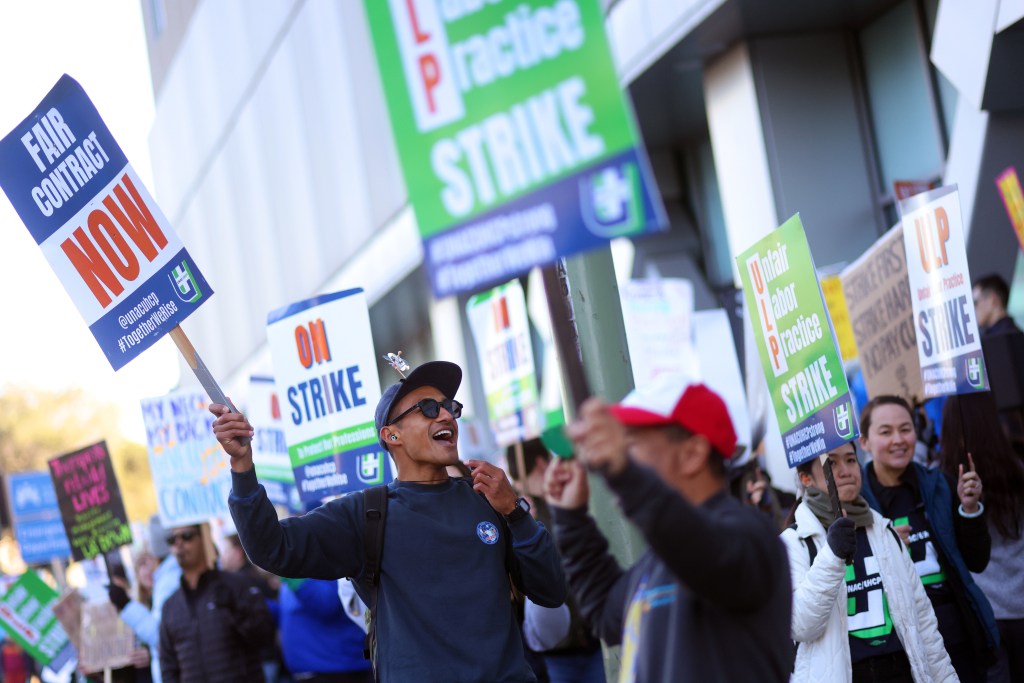

Medical workers and their supporters walk a picket line outside of the Kaiser Oakland Medical Center on Monday, Jan. 26, 2026, in Oakland, Calif. Thousands of striking workers, who are represented by United Nurses Associations of California/Union of Health Care Professionals, are expected to strike indefinitely amid stalled labor negotiations. (Aric Crabb/Bay Area News Group)
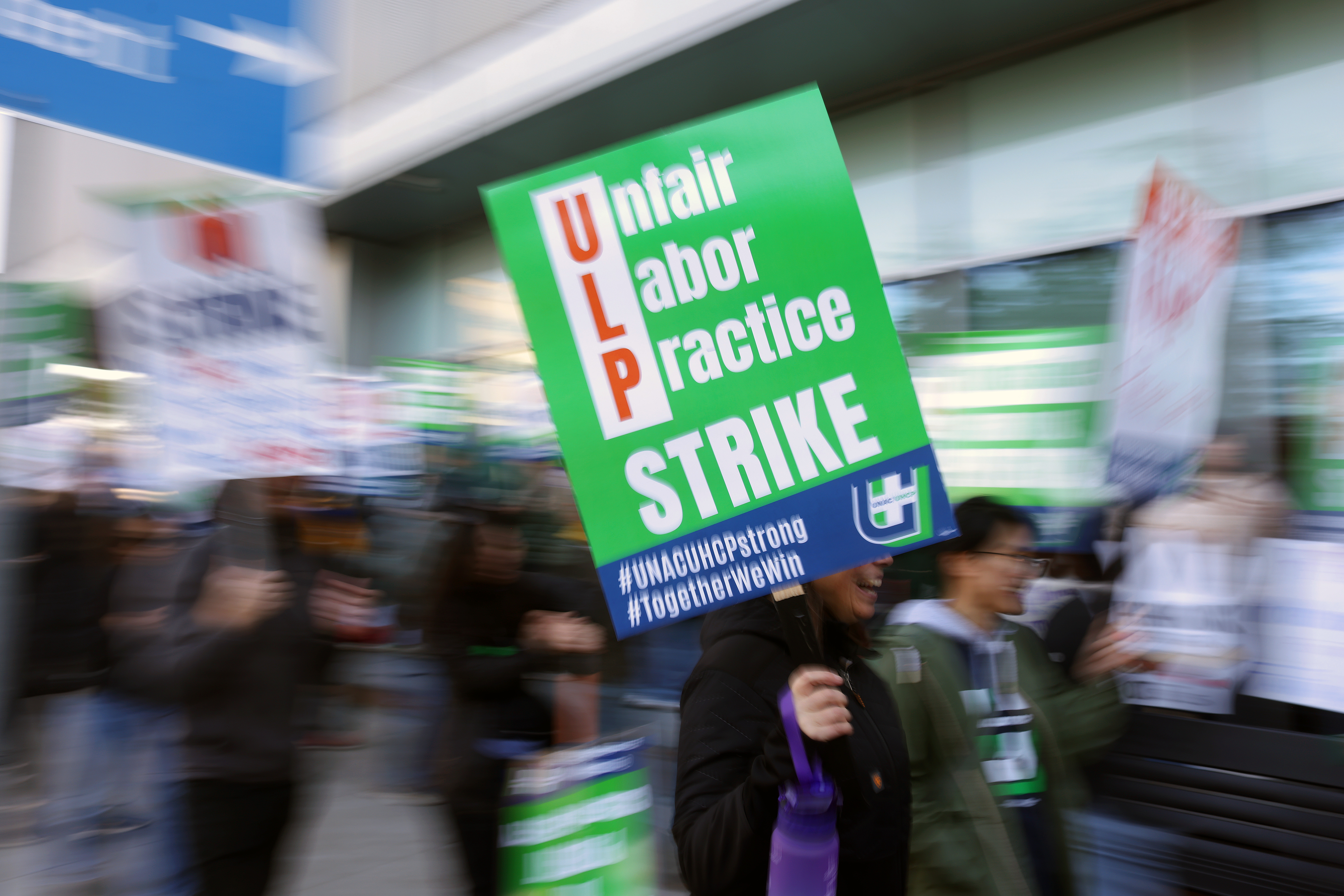
Medical workers and their supporters walk a picket line outside of the Kaiser Oakland Medical Center on Monday, Jan. 26, 2026, in Oakland, Calif. Thousands of striking workers, who are represented by United Nurses Associations of California/Union of Health Care Professionals, are expected to strike indefinitely amid stalled labor negotiations. (Aric Crabb/Bay Area News Group)
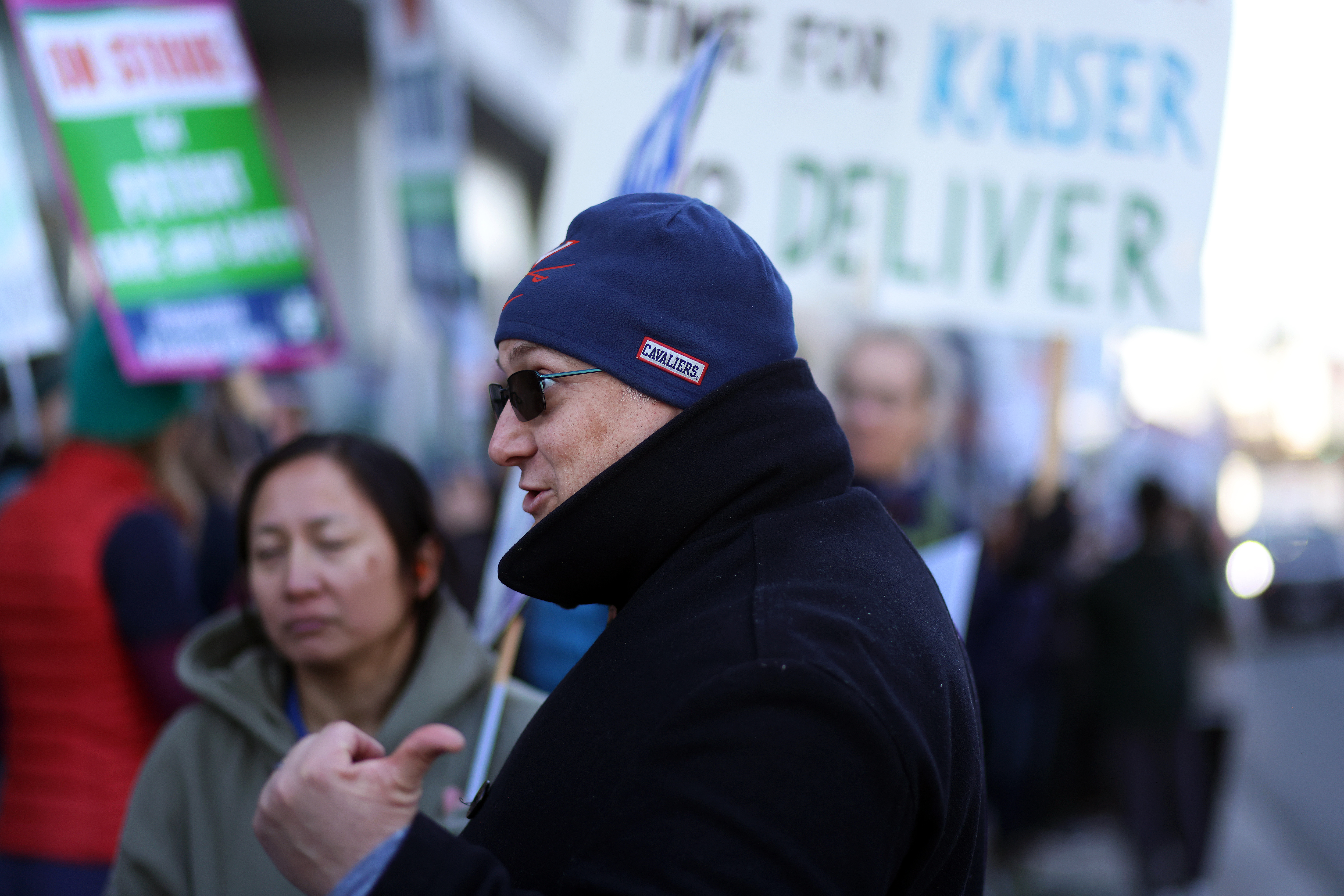
Mark Van Riper, center, a senior physical therapist takes part in a picket line outside of the Kaiser Oakland Medical Center on Monday, Jan. 26, 2026, in Oakland, Calif. Thousands of striking workers, who are represented by United Nurses Associations of California/Union of Health Care Professionals, are expected to strike indefinitely amid stalled labor negotiations. (Aric Crabb/Bay Area News Group)
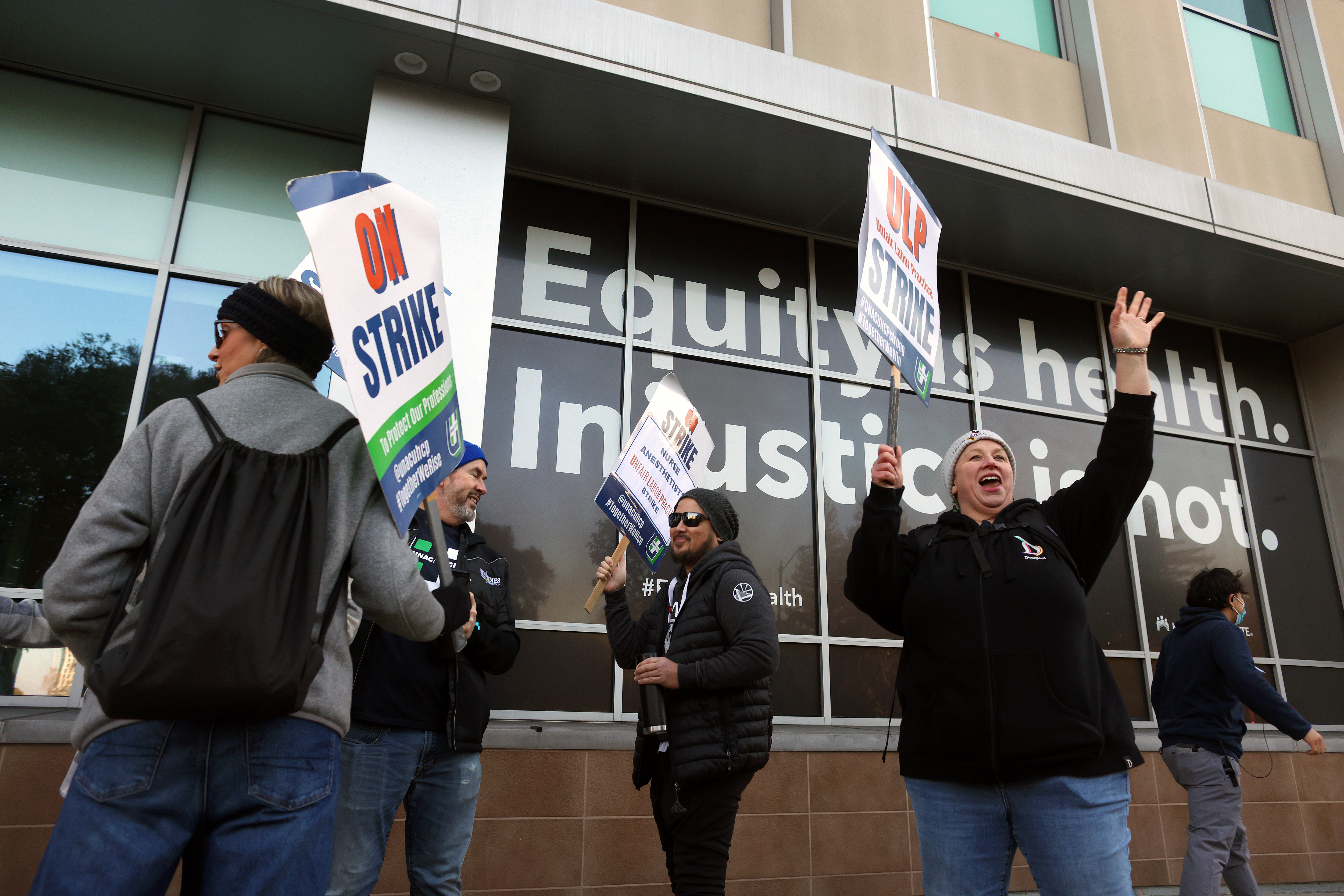
Medical workers and their supporters walk a picket line outside of the Kaiser Oakland Medical Center on Monday, Jan. 26, 2026, in Oakland, Calif. Thousands of striking workers, who are represented by United Nurses Associations of California/Union of Health Care Professionals, are expected to strike indefinitely amid stalled labor negotiations. (Aric Crabb/Bay Area News Group)
Show Caption
1 of 4
Medical workers and their supporters walk a picket line outside of the Kaiser Oakland Medical Center on Monday, Jan. 26, 2026, in Oakland, Calif. Thousands of striking workers, who are represented by United Nurses Associations of California/Union of Health Care Professionals, are expected to strike indefinitely amid stalled labor negotiations. (Aric Crabb/Bay Area News Group)
More than 30,000 Kaiser Permanente health care workers started an open-ended strike early Monday at dozens of hospitals and hundreds of clinics in California and Hawaii.
Northern California physician assistants, nurse anesthetists, midwives and others represented by United Nurses Associations of California/Union of Health Care Professionals, rallied outside facilities starting at 7 a.m. in Oakland, Santa Clara and Roseville.
Their union is calling on Kaiser, the North Bay’s largest health care provider and one its largest employers, to improve staffing levels and pay. Negotiations have largely stalled amid sharp public sparring between the two sides.
Jennifer Van Buskirk, a Kaiser physician assistant in Santa Rosa, was among those on the picket line in Oakland, along with a number of colleagues. The union represents more than 120 workers in Sonoma County who walked off the job Monday.
“None of us wanted to be here. We were hoping it wouldn’t get to this,” said Van Buskirk who held a “people over profit” sign. “It’s frustrating, but we’re here because we’re standing up for our members and patients.”
In her nearly nine years at Kaiser, Van Buskirk said there’s been a shift in culture, “pressure on providers to do more with less.”
On Monday, the turnout was strong, both from workers and other community members, Van Buskirk said. One man wore a sign that said “KP patients support KP workers.”
In a statement, Kaiser said “we look forward to being able to finalize new contracts for our employees and their families.”
Kaiser noted that the involved union represents 2,800 workers in Northern California and that hospitals, emergency rooms, and medical offices will remain open. In some cases, appointments are being shifted virtual or procedures are being rescheduled, and patients are being contacted if affected. Kaiser said staff is being onboarded or reassigned to work during the strike.
Union representatives said Monday that some employees are being asked to take on roles outside their job descriptions and training.
“These negotiations come at a time when health care costs are rising, and millions of Americans are at risk of losing access to health coverage,” Kaiser’s statement said. “This underscores our responsibility to deliver fair, competitive pay for employees while protecting access and affordability for our members. We’re doing both.”
United Nurses Associations of California/Union of Health Care Professionals moved to strike after contract negotiations broke down late last year. Workers previously took to the picket lines in a similar action in October, billed at the time as the largest in the union’s history at the time.
More than seven months into bargaining, negotiations have become increasingly contentious. Union members have accused Kaiser of prioritizing executive pay and private investments while refusing to tap massive financial reserves amid worker concerns over fair pay and benefits and chronic staffing shortages.
Kaiser officials have said they’re proposing significant increases to already generous compensation for rank-and-file workers against a backdrop of rising costs and instability across the health care industry.
In December, Kaiser paused national bargaining after officials said the union threatened to release damaging information if the health care giant did not agree to labor demands, which “undermined both parties’ ability to continue good faith bargaining,” Greg Holmes, Kaiser’s chief human resources officer, said in a Dec. 18 video. In a recently released report, the union highlighted steadily increasing patient premiums and detailed the company’s billions in profit and reserves and an expanding investment portfolio. The union responded by filing an unfair labor practice accusing Kaiser of bypassing the bargaining processes and delaying progress.
Then, on Jan. 21, Kaiser sued the Alliance of Health Care Unions, seeking release from national bargaining obligations in favor of local-level contract negotiations, alleging the union’s “sensational” report and other tactics breached their partnership agreement.
The United Nurses Associations of California/Union of Health Care Professionals is part of the Alliance of Health Care Unions, a federation of 21 local unions representing more than 60,000 Kaiser employees.
While Kaiser announced a return to the bargaining table over the weekend, union negotiators called it a disingenuous attempt to signal to the public they’re engaging. “We went back to the table on Friday. They kept us sitting, waiting in rooms all weekend and then called us to a 10 p.m. meeting Sunday with the same proposal from November – the same reasons we’re out on the strike line,” said Brian Mason, the union’s chief negotiator in Northern California.
“We’re fighting to keep what the employees already have. They’re wanting to take things away,” he said pointing to proposed cuts to 401k plans, pensions and health insurance benefits and a failure to address staffing pressures. “These are all benefits that Kaiser has been giving them for years.”
In a statement, Kaiser confirmed “our offer has not changed. It includes the strongest compensation package in our national bargaining history.”
That proposal would include a 21.5% wage increase over a four-year contract, with 16% frontloaded over the first two years, representing nearly $2 billion in new payroll costs. The union’s alternative wage ask would add another $1 billion in costs, Kaiser said, “making health care less affordable for our members and customers.” The healthcare provider said it has also put forward a proposal to give employees greater input into how patients are scheduled and tentative agreements with other unions strengthen staffing by developing dashboards that give access to staffing data and create educational resources and toolkits for staffing committees.
“Despite the union’s claims, this strike is about wages,” Lionel Sims, senior vice president for human resources at Kaiser Permanente Northern California said in a separate Jan. 25 statement. “This open-ended strike by UNAC/UHCP is unnecessary when such a generous offer is on the table. The strike is designed to disrupt the lives of our patients — the very people we are all here to serve.”
Arezou Mansourian, a bargaining team member and physician assistant at Kaiser in Walnut Creek denied that characterization and noted that, conversely, union member demands are in large part focused specifically on patient care gaps. Understaffing has caused long delays – “three months for a mammogram, four weeks after a fractured wrist to come in” – “that’s not thriving,” Mansourian said, referencing the company’s “Thrive” tagline.
“They’re not hiring. They’d rather keep the profit. Patients keep complaining. None of us went into health care for this,” she said. “We can’t help people because we don’t have enough time with patients or can’t see them in a timely manner. It’s frustrating for everyone.
“They don’t care about the patients, and they don’t care about the employees, so at this point I ask: What does Kaiser care about?”
Mansourian was also on the picket line in Oakland Monday, like she was in October. “I think there was a lot more people than last time,” she said. “We gave Kaiser a chance to do the right thing, and they haven’t.”
You can reach senior reporter Marisa Endicott at 707-521-5470 or marisa.endicott@pressdemocrat.com. On X @marisaendicott and Facebook @InYourCornerTPD.