
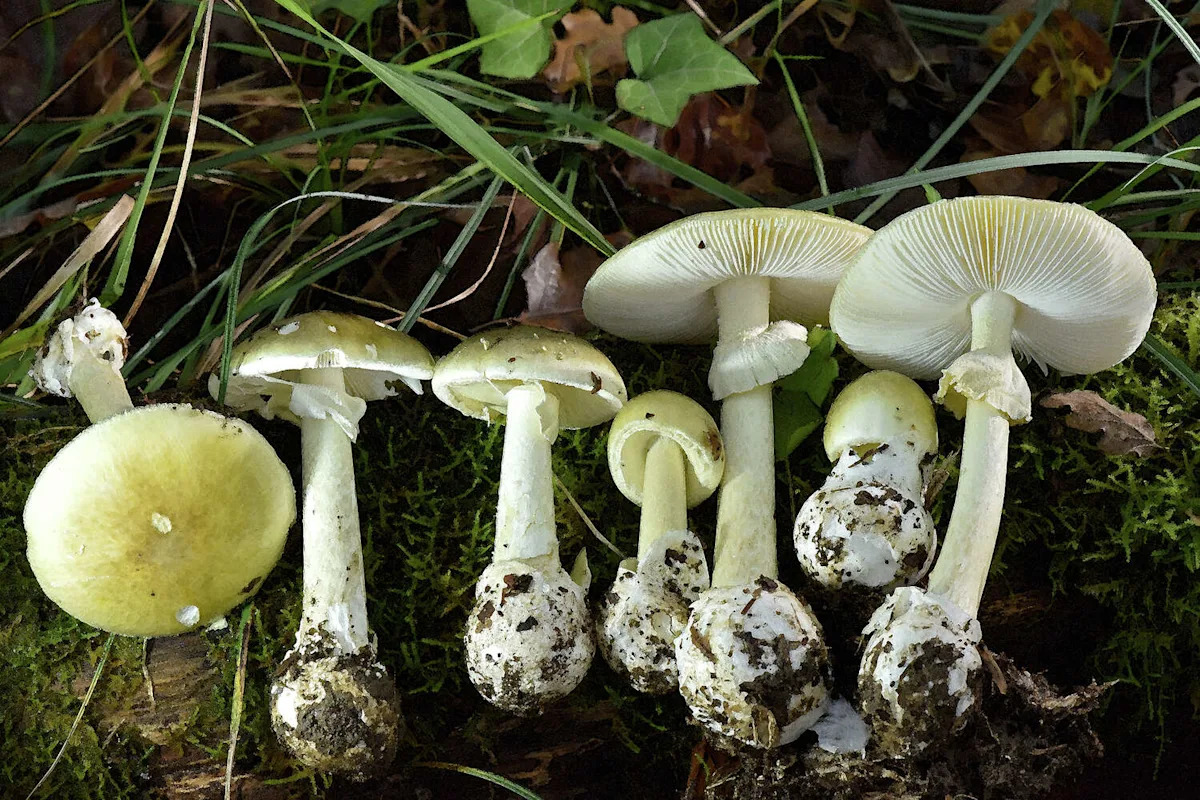
A Contra Costa man has died after ingesting wild mushrooms, according to county health officials. The man, whose name was not released, is the the fourth person to have died in recent months due to consuming wild mushrooms.
Officials in Contra Costa County reported the death on Tuesday.
The case is the latest in an “unprecedented outbreak” of wild mushroom poisonings due to Amanita phalloides or “death cap” mushrooms that have sickened 39 people and left four dead in California since November. Earlier this month, health officials from across the state warned residents to avoid foraging for mushrooms and said this might be the largest outbreak of wild mushroom-related poisoning in California.
Dr. Lisa Rodelo, the deputy health officer at Contra Costa Public Health, said the individual who died was a Hispanic man in his 60s and told SFGATE that those who are determined to forage should understand the dangers they face by eating wild mushrooms.
“If you do forage, you definitely want to watch out for yellowing of the skin, vomiting, increased appetite, headache, dizziness, confusion, things of that sort,” Rodelo said.
The “death cap” mushrooms look similar to edible mushrooms but contain a dangerous toxin that can injure the liver.
After eating the poisonous mushrooms, people may experience gastrointestinal symptoms, including nausea, within six to 24 hours. But even if those initial symptoms subside, the toxins in the mushroom can start to affect the liver. This can result in liver damage that requires hospitalization within days or even a liver transplant.
“Livers can often tolerate some damage, but there eventually is a point of no return, and at that point is usually when it’s recommended to get a liver transplant,” Rodelo said.
Dr. Monica Gandhi, an infectious disease expert at UC San Francisco, called the death cap mushroom the “deadliest mushroom” worldwide and warned that they can look very similar to the common button mushroom. She also pointed out that you can’t prepare the mushrooms in a way that they are safe to eat.
“They’re really thermostable,” she said of the toxin. “Cooking or freezing doesn’t actually inactivate the toxin, and just like about a half a mushroom can kill someone.”
The recent cases have been centered in the Bay Area and central region of the state, with people hospitalized in Alameda, Contra Costa, Monterey, San Francisco, San Luis Obispo, San Mateo, Sacramento, Santa Clara, Santa Cruz and Sonoma counties.
While the outbreak has been associated with the death cap mushroom, the California Department of Public Health also warns that the Amanita ocreata or “Western Destroying Angel” mushroom can also be dangerous to ingest.
More News
– COVID’s long shadow looms over new generation of college students
– Outrage after stranded wild horses die in California forest
– Calif. tech CEO and electric vehicle pioneer accused of murder
– ‘Majestic’ mountain lion captured after hourslong SF standoff
Sign up for daily SFGATE breaking news alerts here.
This article originally published at Another death reported in California’s worst outbreak of wild mushroom poisoning.