
FRESNO, Calif. (FOX26) — What makes Fresno… Fresno? It depends on whom you ask.
But whether it’s the industries, the ag, or the cultures, one place aims to provide insight into what shaped Fresno County.
FOX26 News Anchor Liz Gonzalez took a trip to the Fresno Fairgrounds to explore the Fresno County Historical Museum in this week’s celebration of Amazing America 250.
AMAZING AMERICA 250: Stepping into Fresno County’s history (FOX26)
There are the sights of Fresno, of times long ago, and the people — lots of them, through the years, that have led us to the city of more than half a million people, as we know it today.
“I think it’s important to go to museums to recognize and respect your history, in order to recognize and respect your future,” said Fresno Fair Program Coordinator Taylor Collins.
The two-story, 14,000-square-foot museum offers something for everyone, inside and out.
For starters, the Paul Paul Theater at the fairgrounds is part of the museum, too.
“All of these signs have been restored to their original glory,” said Collins.
For hotels, like the Hacienda and Fresno Motel, once along Highway 99, now Golden State Boulevard.
Other signs of markets and restaurants, long gone but not forgotten.
“When people come, they’re like, ‘I had no idea this was here. I had no idea this was even an option,” said Collins
There’s even the cupola that topped the original Fresno County Courthouse.
And inside, nostalgia nirvana. The original furniture from an old courtroom before the courthouse was demolished. The statue from its outdoor fountain, too.
Downstairs — a 100-year-old fire engine.
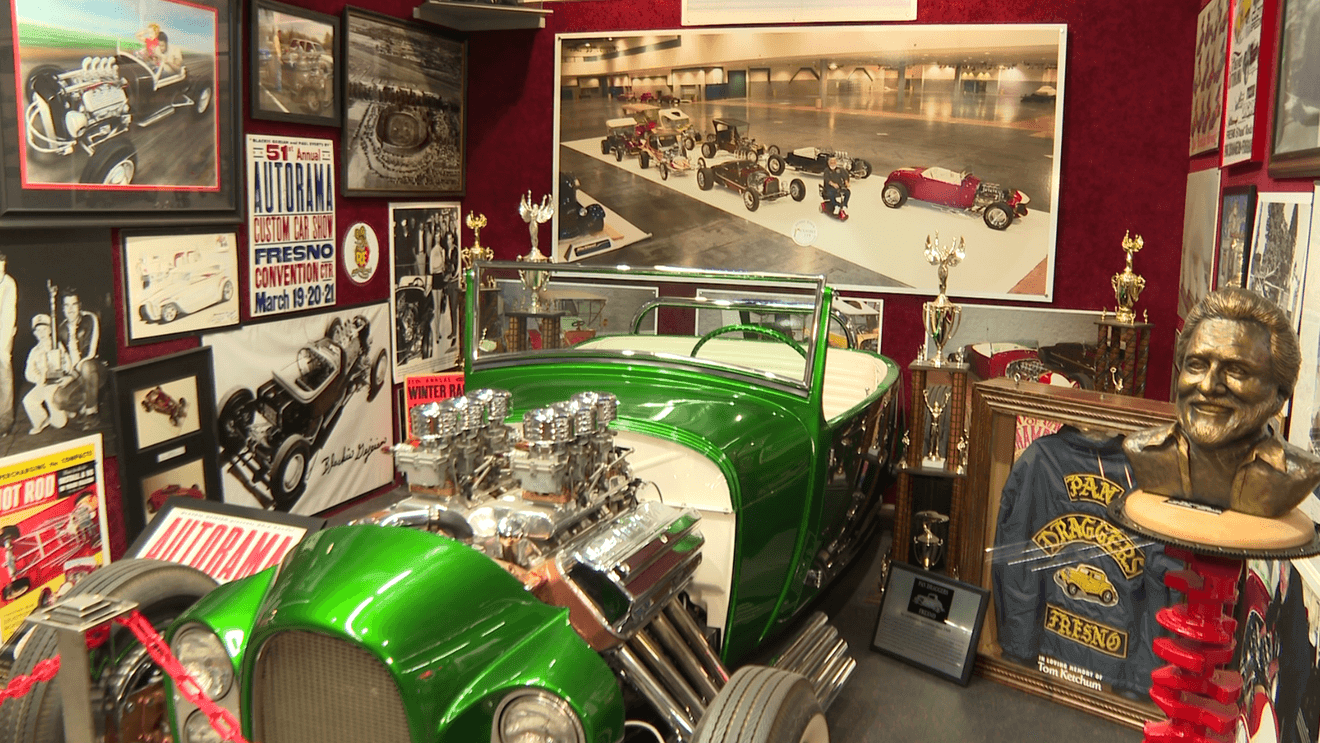
A primer to the Fresno Athletic Hall of Fame, a tribute to race car builder and hot rod enthusiast Blackie Gejeian.
And a flume that helped move logs to the mill, and once powered the economy of our local mountains.
“You’ve got commerce. You’ve got factories. You’ve got a lot of things that are here. Tthere’s a lot to be proud of,” said Nat Dibuduo, who sits on the board of directors for Friends of the Fair.
He’s worked to see the museum grow into what it is today, making connections to expand exhibits and representation.
“It’s unbelievable and what it represents, the history of cultures,” said Dibuduo.
Which he considers the crown jewel of the museum.
From Hmong to Mexican — “We would not survive without our farmworker base,” he said.
Japanese, Armenian, Sikh, and, near and dear to Dibuduos’ heart, the Italian community.
You talk about immigrants today. My grandparents were immigrants in the early 1900s.
Interactive displays explain the history of the founding families, with pride at the core of the museum and its message to visitors.
“You forget. This is to keep you from forgetting,” said Dibuduos. “It’s to help families remember their roots and not only their nationalities by what Fresno County means to them as individuals.”
And how all of this has helped shape who we are — and where we’re going.