
Congratulations, San Francisco: You are officially not the most expensive urban area in California. But you’re close.
Data released Friday by the national Council for Community and Economic Research crowns San Jose as the priciest urban area in the state and the second most expensive in the country, after Manhattan. San Francisco comes in at sixth in the country, just after Los Angeles. The Cost of Living Index (opens in new tab) is based on average annual costs in 2025, across a range of household expenses and goods.
For California, the report paints a picture of a state wrestling with affordability. Five California cities rank in the 10 most expensive, with seven in the top 25. Nine California cities have a higher cost of living than the national average.
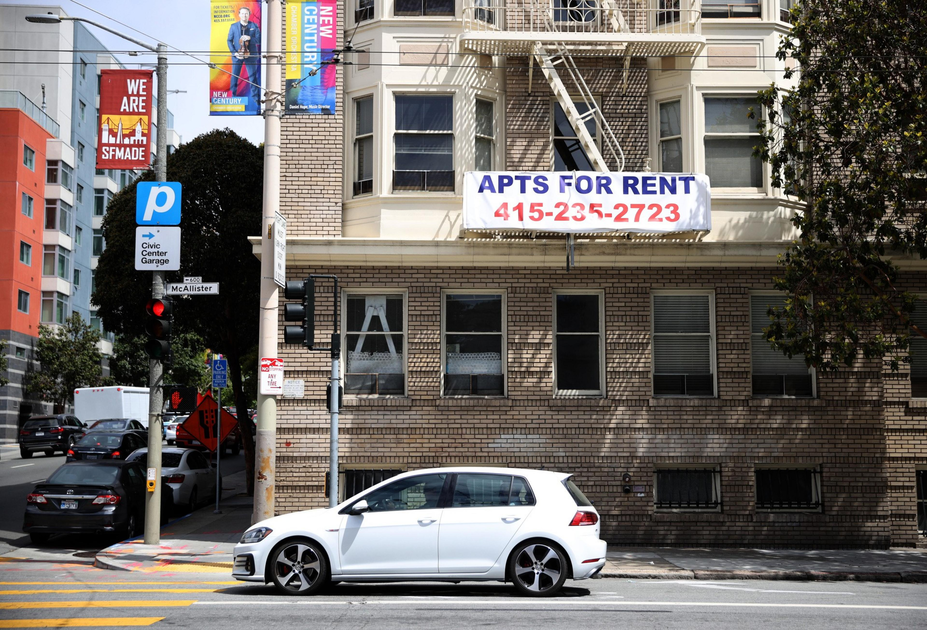
The index calculates the total cost of living by measuring consumer expenditures across various categories, including housing, transportation, and healthcare. In San Francisco, housing was by far the most expensive category. Where Appleton, Wisconsin, came in at an average cost of housing (which includes rents and home sales), with a score of 100, San Francisco is two and a half times higher than the national average, with a housing score of 254.
Matthew Lewis, director of communications at California YIMBY, which aims to increase housing supply across the state, said housing costs have a spillover effect. He pointed to child care, which costs more when providers are paying higher rent. “Housing is such a primary good; as in, it’s something everybody has to buy,” he said. “Its high cost trickles into everything else.”
San Jose fared even worse than San Francisco on housing: 3.3 times more than the national average. This was not surprising to Lewis, who noted that 94% of the city’s land is designated for single-family housing, one of the highest rates in the country.
Enrico Moretti, economics professor at UC Berkeley, noted that high costs in the Bay Area affect people differently. Tech employees, for instance, benefit from sky-high salary packages, which means that, for college-educated residents, the Bay Area “ranks fairly high in terms of the ratio between labor earnings and cost of living.”
But for those not in the highly paid tech sectors or without a degree, the Bay Area quickly becomes “a very unaffordable place.”
San Francisco has started to move to address the issue. Mayor Daniel Lurie’s Family Zoning Plan, in theory, should pave the way for more housing. In his State of the City speech this month, Lurie shifted his focus from public safety, the issue at the heart of his campaign, to his city’s rising cost of living.
“Families are being forced to make impossible choices, delaying having children, sacrificing savings or leaving the communities they call home,” he said. “I will not let that be the future of San Francisco.” He also announced that he would expand child-care subsidies for families of four.
Lewis is hopeful that in the coming years, Lurie can create a regulatory environment that’s friendly to housing developers and meaningfully increases supply, so that housing costs ameliorate. “San Francisco is at the beginning of its recovery,” he said. “But recovery is a long road.”