

Oakland’s mayor should have a lot more power.
That’s the vision presented in a report published Friday by Mayor Barbara Lee’s working group on charter reform. The group also proposes bolstering the City Council’s strength and independence.
“We recommend strengthening the mayor’s powers to establish clear executive authority,” the working group wrote in the report, “and empowering the City Council in ways that support rigorous legislative and budget analysis and oversight.”
Lee convened the working group this summer, as Oakland’s government faced record-low trust and satisfaction from the public. The electorate had just recalled its former mayor — who is now facing federal corruption charges — and the City Council had only narrowly closed a massive budget deficit.
Upcoming public meetings about the charter reform recommendations
Political observers in Oakland have increasingly placed blame for many of the city’s problems on the structure of the city’s government. For almost 30 years, Oakland has operated under an unusual hybrid form of government, which, critics say, gives neither the mayor nor the City Council enough power to get things done. The mayor can’t directly decide on policy, because they don’t serve on the council and don’t have veto power over its decisions. But the council lacks authority too, as it’s prevented from directing the city administrator, whose boss is the mayor.
“Too often, residents see confusion over which office or department is in charge, whether it’s financial planning, housing, or public safety,” said Lee in a press release Friday.
The complex system was approved by voters at the behest of Jerry Brown when he ran for mayor in 1998.
The working group Lee assembled shortly after she office was composed of people with expertise or experience in local government, law, and ethics, and facilitated by the League of Women Voters of Oakland and advocacy organization SPUR.
Funding came from the San Francisco Foundation and Akonadi Foundation. Records show Lee solicited a $50,000 payment from the San Francisco Foundation (whose CEO Fred Blackwell was part of the working group) for SPUR in November.
The group met five times and conducted interviews with about 60 city staff, officials, community groups, governance experts, and representatives from other cities with different government structures, facilitators said. There were also 14 community meetings in recent months and a survey of hundreds of residents.
“One message emerged consistently,” the group wrote in its report. “Oakland’s current charter assigns powers and responsibilities in ways that create confusion, undermine accountability, and impede the city from addressing its most pressing challenges effectively.”
Two types of government — which one is best for Oakland?
 Oakland City Hall. Credit: Amir Aziz
The group examined two classic local government structures: “strong mayor” and “council-manager.”
Under the strong mayor system, the mayor serves as the chief executive of the city and has veto power over the budget and legislation. The council can check the mayor’s power by overriding vetos with a two-thirds vote.
Under the more common council-manager system, the mayor is a regular voting member of the City Council, and the council as a whole has power over the city administration.
The strong mayor system ultimately prevailed in the working group’s recommendations. Under the proposed system, Oakland’s mayor would still nominate a city administrator who would be approved by the City Council. But the city administrator would fulfill more of a chief operations officer role, and the mayor would be the one directly managing city staff.
“The recommendations we received will help us create a system that delivers results and supports our frontline departments in moving forward critical services like public safety and safe and clean streets,” Lee said.
Many residents wrongly assume that Oakland’s mayor currently has direct power over services and operations in Oakland, the report notes.
Big changes recommended for Oakland City Council, too
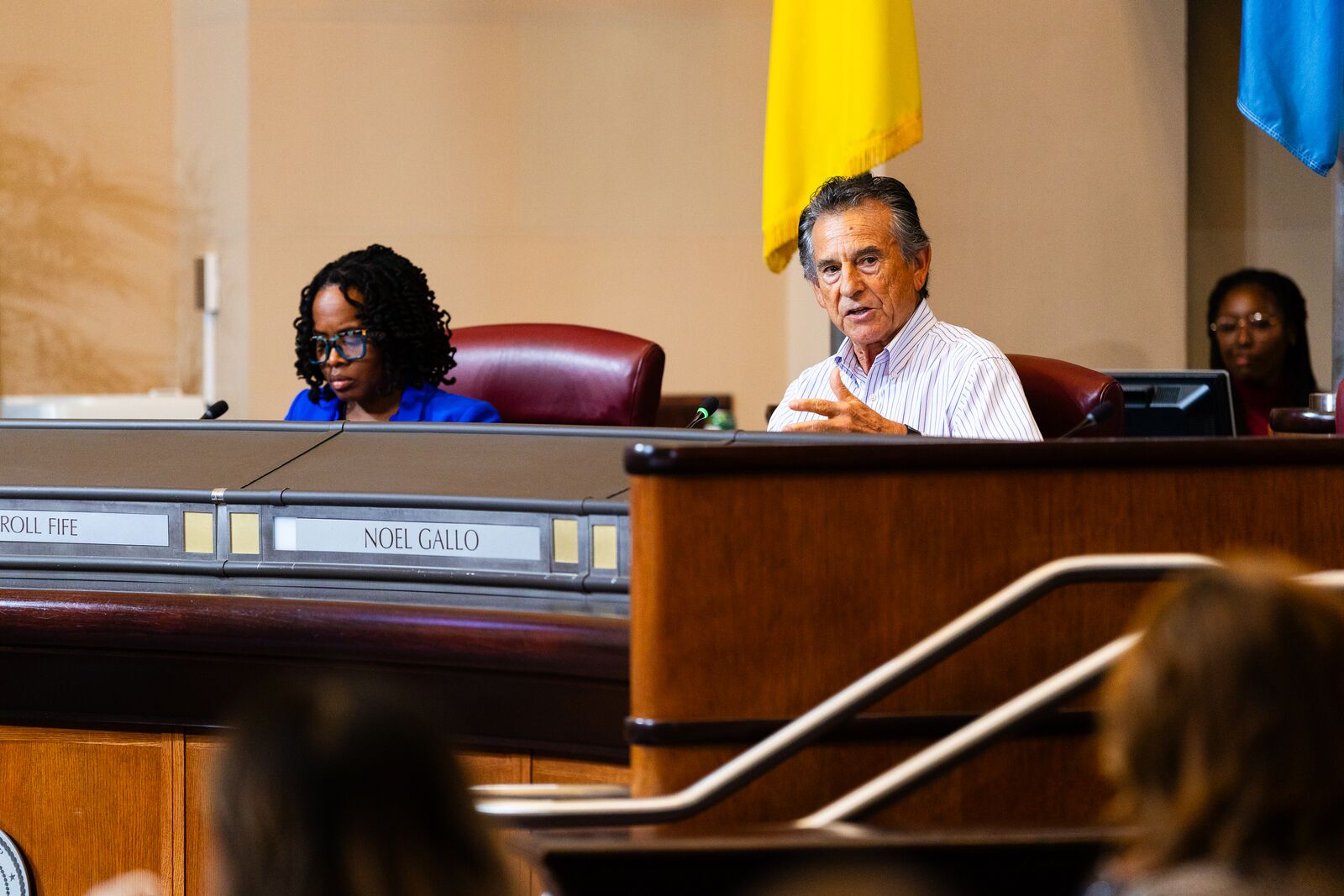 The working group on charter reform recommends eliminating one City Council seat and giving the officials the ability to override a mayor’s veto. Credit: Estefany Gonzalez for The Oaklandside
While the proposal puts the mayor in charge, the group is also recommending changes to the City Council intended to strengthen its powers and independence.
The report recommends creating a new, permanent budget and legislative analysis office. This office, like similar offices in some other major California cities, would provide the council with independent policy analysis. Currently, the council often relies on the city administration for this analysis, which can create conflicts and capacity issues.
There are other steps the report suggests to “clarify the council’s role as head of the legislative branch,” like giving councilmembers the ability to hold hearings and subpoena witnesses. The charter would also be revised to officially make the job of a city councilmember a full-time one where outside work is prohibited. The task force also recommends that the salaries of all elected officials in Oakland be set through a standardized process.
The elimination of the at-large seat on council is another big change suggested. This is the sole council position that represents, and is elected by, the entire city instead of a single district. By phasing out the at-large position, the council would become an odd-numbered body, so there would be no ties — which the mayor currently has to come in to break. The at-large seat is currently held by Rowena Brown, whose term ends in 2028.
This change would help concentrate citywide leadership with the mayor, reducing confusion, the working group argues.
The mayor’s citywide role is one reason the group supports a strong mayor system. The powerful official could focus efforts on whichever parts of the city need the most resources and service, reducing racial and wealth disparities, according to the report.
We were unable to reach working group members for an interview in time for publication, but were briefed on the report by its facilitators. Councilmembers and the mayor have also been briefed.
Oakland charter reform ultimately requires voters’ approval
Several significant steps remain before the working group’s plan — or any other changes to the city charter — can become reality.
Most likely, the mayor and council will then bring a formal proposal for a ballot measure to the full City Council, which will need to approve it before it goes to voters, who will have the final say. Alternatively, a group of residents could gather enough signatures to put their own measure on the ballot.
The city will also need to find funding for whatever changes are ultimately put in place.
The hill in front of anyone seeking to implement a strong mayor structure in Oakland, and market the plan to voters, will be steep. Some voters could be skeptical about vesting more power in the mayor’s office as controversy and accusations of corruption swirl around the former mayor. After her recall, Sheng Thao was indicted by a federal grand jury on charges that she and her partner accepted bribes from local businessmen. She has pleaded not guilty. Her trial is set to start just a month before the November election.
 Sheng Thao on the night of the election that ultimately saw her recalled. Credit: Estefany Gonzalez for The Oaklandside
The working group acknowledges downsides of its preferred model: the strong mayor system “concentrates power in a single elected individual, which can heighten risks of politicization, misuse of authority, or governance driven by short-term elected individuals,” the report says.
Even if the council or voters reject the working group’s proposal, its members have a strong advisory: if not the strong mayor system, pick a true council-manager approach. The city’s hybrid structure of government, they say, has got to go.
As work on the report was underway, there were rumors that the task force might propose stripping power away from — or vesting more of it in — other elected offices and city commissions. The final report does not recommend changes to roles like the city attorney or auditor, or to oversight groups like the Oakland Police Commission and Public Ethics Commission, although facilitators said those should be considered in the future.
If a measure is placed on the November ballot, candidates running for mayor and council in that election may not know the exact description of the jobs they’re vying for.
Lee has not announced whether she’ll run for reelection.
“*” indicates required fields