
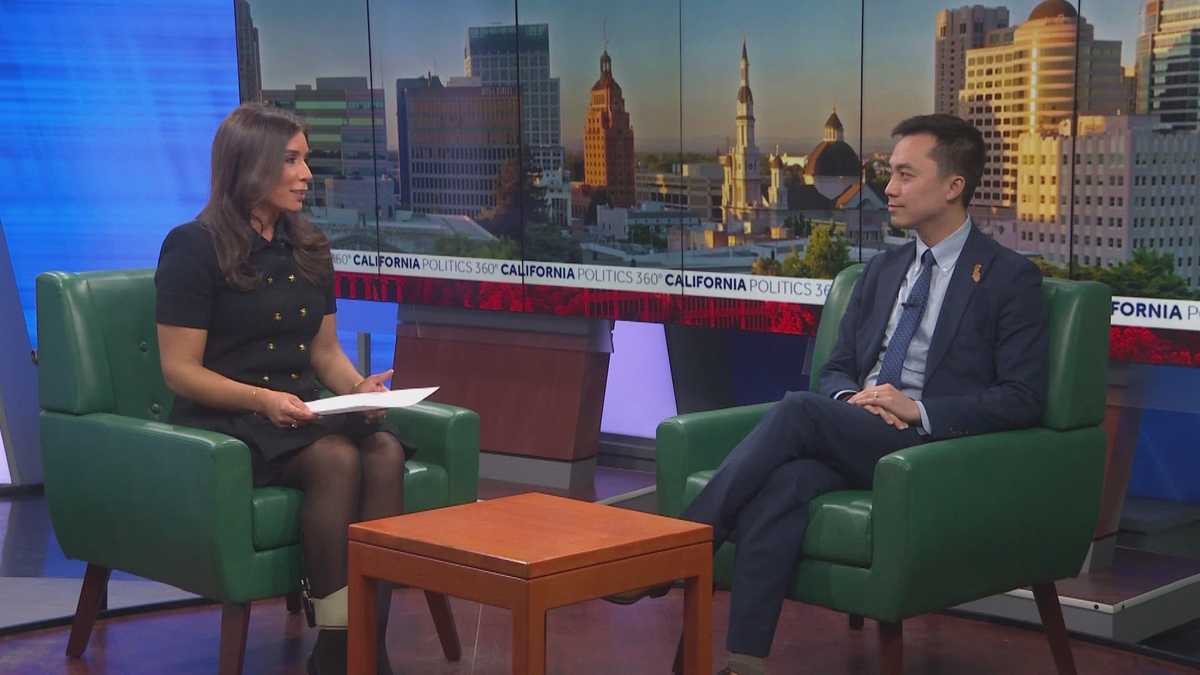
Assemblyman Alex Lee on corporate housing, anti-ICE and wealth tax proposals | California Politics 360
Joining us now is Assalliman Alex Lee, who is also the chair of the Progressive Legislative Caucus. Aselliman Lee, thank you so much for making time for for having me on the show. I appreciate it. I want to start with Governor Gavin Newsom’s State of the State this year. He announced that he would like to do more to crack down on corporations who are buying up single family homes. This is something that you have pitched in the past that has died at the state capitol. Were you surprised to hear that? I was absolutely surprised. I was very pleasantly surprised. So I’ve been. Working on limiting the effect of Blackstone affiliated corporations buying up the American dream, outcompeting people to have single family homes and have *** dream of buying *** house. I’ve been working on that bill for some time. Last year we got the bill out just barely because of so much lobbying against it. And then, uh, first week in January I was really pleasantly surprised in the morning to wake up that Donald Trump, the President Donald Trump, has announced his support for such *** program to curb these corporations buying single family homes, and then 4 hours. Later, Governor Gavin Newsom also said he was going to do the same thing and puts it in his State of the State. And so I’m very surprised at all the great ways, and I think it shows how salient this issue is for all Americans. You said so much lobbying against it. I acknowledge the president and the governor could be the factor that changes things this year, but who is lobbying against this specifically? Oh yeah, the corporations that own thousands of single family homes across America are spending so much money in lobbying, particularly invitation homes. And Tricon, these companies are the kind of companies that we’re trying to crack down on who have bought swathes of houses after 2011, after the housing bubble. Those are the companies we’re trying to crack down on, and those are the same companies that are drawing the ire of President Donald Trump and Governor Gavin Newsom. What’s the status of your proposal now? You’ve introduced *** bill, so AB 1240, which would ban any corporation from having more than 1000 single family homes, and I did the thousands. Just stress how ridiculous that number is, right? It’s not Grandma and grandpa who have 1000 houses, it’s corporations who do this. That bill has stalled in the state Senate, in the Senate Judiciary Committee, and with the renewed interest from the governor and the president too, we hope to be pushing it forward and working with the governor’s office and even now also some Republicans who are more interested in this issue now. Have you spoken to Governor Newsom directly about this proposal yet, given that he mentioned it in his State of the State? I’ve talked to his staff who are very responsive. And I look forward to collaborating with them. They certainly have some other ideas about how to approach this. He mentioned in his State of the State to take *** look at the tax code. I know that President Trump is obviously using the Treasury Department to analyze what kind of financial instruments are being used to support or not support these corporate entities. So we’ve had some good productive conversations with the governor’s office, but I think it still remains to be seen what exactly will land on. Do you have *** sense of how many single family homes are owned by these major corporations? Um, I do. It’s in America there could be millions of these. I don’t remember the exact number right now, but there are 3 known corporations in California that already own more than 1000. Invitation Homes alone, just as an example, they own 11,000 houses in California, and many of those actually are concentrated in the Sacramento area. There’s *** really great map from the Sacramento appraiser that actually puts out all these pin dots and you can see all the houses they own and you can see that almost whole neighborhoods, some streets there could be two houses owned by Invitation Homes that they rent out all within the same city and this is true for mostly starter starter home cities, you know, for myself as *** San Jose person. Um, many of my friends, they flee and go over to the valley or they go to Sacramento and look for cheaper housing, right? This is the same place that the corporations are competing for because for their bang for their buck is, and they, and Invitation Homes, *** Blackstone affiliated corporation, they said that they look specifically for markets with high rent growth potential, which means places that can jack up the rent, and so they look for the starter home places where you’re probably also trying to compete for *** house, and they have *** hyper concentration there which also has. I suppose some market manipulation factors which interestingly enough is what Trump’s DOJ is looking at because he wants the DOJ to look at if there is an antitrust or market manipulation factors from these corporations, and it is in California too, but they also operate in the Sun Belt, in the South and the East Coast. So these are national companies that could be possibly owning millions of houses. One of the few. Areas in which California Democrats and the Trump administration can see eye to eye here. I want to switch gears to you introduced *** bill this week also trying to crack down on corporations, but those who have contracts with immigration, the federal administration, with ICE, essentially, what can you tell us about that? What are you hoping to? Accomplish there, yeah, I’ve only just introduced it, uh, recently, but this is *** bill to curb our corporate friends from not doing business with ICE. Very simply, very simply stated is this bill does one thing. It says that if you’re *** corporation with contracts with ICE, the Department of Homeland Security, then you will not benefit from California tax breaks. This is *** choice. Either *** corporation can do business with the people of California and do all the amazing things that they’re doing, or they can aid and abet ISI’s reign of terror. They have *** choice, and there are many companies ranging from armories, ammunition, Palantir. Private detention facilities that are partnering and and actually getting lots of profits from these ICE contracts, of course, as you’ve seen, Congress had authorized lots of money towards ICE and lots of companies are in line to try to suckle off of that and gain more profits from this, but we try to make it clear in California is that we don’t want our companies, our corporations to be aiding and abetting, and if you do, then do it on your own dime. And hopefully this will force the choice that many of the employees of those companies and consumers of the companies will say, Well, we don’t really want to be affiliated with ICE, so it’s better that we keep our tax breaks than keep our contract with ICE. How much of this immigration situation, this confrontation with the federal government over what happened in Minneapolis, over what has happened in Los Angeles, how much of Is going to suck up the oxygen, do you think from your perspective when it comes to lawmaking and the use of taxpayer dollars at the capital? I think it’s going to be *** matter of high importance and it’s going to take up *** lot of attention in all the positive ways. I think last year in 2025 when we had no extent that I would be kidnapping babies and using them as bait or murdering people in the street, of course there’s 9 people so far that we’ve known have been murdered by ICE already. Even back then in 2025 we were on the defensive. We created *** legal defense fund for immigrants. We created *** fund for our Department of Justice to sue the Trump administration, and they’re on like Lawsuit 54 right now to make sure we have ways to defend our freedoms and also to claw back the money that we’re owed. So we’re on the defensive. In 2026. I think we’re going to offense. You’re going to see *** lot more legislation aimed at curbing the behavior of ICE, holding the federal government accountable, and in my case, making sure that corporations aren’t in bed with ICE. Separate from that, the Trump administration also imposing *** lot of healthcare cuts. Um, I know there’s *** lot of questions about what Medicaid funding looks like in the future. SEIU, UHW, the healthcare labor group, is pitching this billionaire tax they’re saying is one time 5% on the billionaires in this state. As someone who has pitched wealth taxes in the past, where do you stand on this one specifically? Well, I’m *** proud supporter of the proposal for the billionaire tax. I’m *** proud supporter and early supporter of it, and I was really happy to work with them early on this. It very much is very similar to the proposals of taxing billionaires that I have done in 2021 and 2024. This time, of course, the key difference being at one time, and I’ll say why it’s. They’re doing the one time thing. There is of course *** political element to it saying, oh, we’ll drive rich people to leave, etc. etc. but I think it’s also important is that this really captures an element of tax flight. So with billionaires and mega millionaires, tax evasion and legalized tax avoidance is always gonna be part of the game they play, right? They have an army of lawyers and accountants that play this game with the federal government and the state tax authority. Um, that’s one time tax is really good at capturing this part, right, because when, you know, ultimately I think myself and most people prefer it to be ongoing just like every Californian they pay ongoing taxes. The money you make each and every year you pay more of the one time thing is in response to an acute emergency. That we hope to be out of soon, right, is that Trump has gutted our healthcare spending, is gonna gut the healthcare, and there will be millions of Californians who may literally die, who may literally get much sicker, and having this one-time fee is about capturing it because billionaires who lived in California on *** certain date, I think it’s within the year of 2025. Will have to pay the tax no matter what. So say you’re, uh, Peter Thiel or what all these other crybaby billionaires who say, Oh, I’m gonna leave. OK, well if you leave you still gotta pay *** tax. You still gotta pay it in one way or another because this game we’ve seen it time and time again as they threatened to leave. They threatened to leave New York City when Mayor Randoni comes in. And by and large most of them stay. It’s the small acute number of uh billionaires with *** lot of political spending and who like to whine *** lot. They will throw lots of money in political campaigns to avoid paying *** little bit in taxes, but *** company CEO in my neck of the woods in my district in Silicon Valley, Jensen Huang, the CEO of Nvidia, which Nvidia is like larger than the economy of California right now valued at, he also said he’s like, Yeah, it’s fine. Because he, he knows he gets to keep 95% of his wealth at that time and his wealth will only grow. So I think most reasonable billionaires and businessmen understand that this is an investment, *** down payment in the future of California, and to help their employees, help Silicon Valley, and I think they understand that it is very rational and that’s why I’d say it’s *** very. It’s *** very palatable compromise to do one time because it’s about capturing people who might leave and it’s also *** one-time investment. Sure, I personally and most people prefer that you keep paying over and over again, but this is *** compromise measure in an acute time of crisis. But even if those people leave, what Governor Gavin Newsom and others are worried about is that California already has *** very progressive tax system already relying on the state’s top 1% for more than 40% of the tax income revenue that comes into the state. I mean, don’t you run the risk of potentially losing those dollars further down the line and more consecutively as the years go on? No, I don’t think so, and I’ll say for two reasons, right? Well, I’ll say for three. The first one being the tax flight myth where they all say they will all leave en masse and everything will be horrible. We’ve seen time and time again in the East Coast, New York, Massachusetts, all these places that have even California. When we’ve raised high income taxes or anything like that and people say they leave, they never really do, and there’s *** fundamental reason for this is because the the flight you’re seeing with people exiting California are usually working class, middle class people who cite cost of living issues, and they gotta leave. But if you’re *** mega billionaire or *** millionaire and you got yachts and you have *** lifestyle, your friends are all in San Francisco, you party every weekend and on your jet in Los Angeles. Los Angeles, why do you trade that for Idaho or Montana or like Texas? I mean, Austin’s nice, right? But like why do you trade that for that? Um, most people don’t because their business connections, their business investments are all still here and it doesn’t really make sense for most of them to leave. And that’s why for the most part the ones who are savvy and not complaining on Twitter most of the time, they’re gonna be the ones to stay. The second part I will say is yes, we have *** very strong progressive taxation system. If you earn *** paycheck, but when you’re *** billionaire and your wealth and power comes from owning stuff, that’s how Mark Zuckerberg has infamously *** paycheck of $1 right? You kind of almost become invisible until you realize, uh, your wealth, right? Um, *** lot of these folks, right, they do generate *** lot of, uh, taxes via capital gains. So you trade in, trade in your stock, you liquidate your stock, but if you’re just holding, which is what they’re doing for us, and they hold it and they leverage on on wealth, then it doesn’t mean anything. They become invisible taxation system, so. Uh, that’s *** part of I think is super overblown. It’s actually very good at the good lawyers and, you know, celebrities and stuff like that, maybe, and they’re spending *** lot of activity and earning paychecks, but if they’re not, then it’s not really *** big deal. So I would say it’s like it’s super overblown in those myths we’ve seen time and time again these threats are pretty idle and as you see in New York closing in the ranks, California, even Seattle, like where are they gonna live? You wanna live in Idaho or you wanna live in. Nebraska, which is awesome too. They’re awesome places, but I don’t think it suits their lifestyle. The Democratic leaders, California’s Assembly Speaker and the Senate pro tem, they’re not taking *** position on this yet. What do you make of that? Um, I think our legislative leaders, of course, generally have to take positions in line with the rest of the caucus, so it doesn’t surprise me they don’t usually come out full swing in the beginning, but I think as the campaigns roll out and more and more of our colleagues, and there are *** lot of my colleagues signing up to support, um, I think they’ll probably have to, I mean they will probably change their position soon. All right, Suman Alex Lee, we really appreciate your time. Thank you. Thank you.
Assemblyman Alex Lee on corporate housing, anti-ICE and wealth tax proposals | California Politics 360

Updated: 8:25 AM PST Feb 1, 2026
Democratic Milpitas Assemblyman Alex Lee said he was surprised that both Gov. Gavin Newsom and President Donald Trump this year have declared their support for an idea he’s been pushing for years: limiting the number of homes major corporations can buy. The push comes as California continues to struggle with housing affordability and the cost of buying a home. (See the full interview in the video above.)”I’m very surprised in all the great ways and I think it shows how salient this issue is for all Americans,” Lee said in an interview on California Politics 360. He noted for years, companies such as Invitation Homes and Tricon have been lobbying to keep the ability to buy up single family homes. Invitation Homes alone owns about 11,000 homes in California, Lee said. Lee this year filed a proposal known as AB 1240, which would ban any corporation from owning more than 1,000 single family homes. He noted the bill stalled in the Senate Judiciary committee last year. “With the renewed interest from the Governor and President, too. We hope to be pushing it forward,” Lee said. The Assemblyman said he has spoken to the governor’s staff about the proposal, which is also looking at changes to the tax code to potentially address the issue. In addition to cracking down on corporations in the housing space, Lee this week filed a proposal to block state tax breaks from companies that have contracts with Immigration and Customs Enforcement and the Department of Homeland Security. “Either the corporations can do business with the people of California, or they can aid and abet ICE’S reign of terror, they have a choice,” Lee said. He pointed to armory and ammunition companies and private detention facilities that have been benefitting from tax breaks that would have to make the choice. When asked if the response to the Trump administration’s immigration policies and federal agent conduct will dominate work at the state Capitol this year, Lee said, “I think it’s going to be a matter of high importance.” “Back in 2025, we were on the defensive,” Lee noted pointing to work to establish a legal defense fund for the state attorney general and funds to help immigration attorneys. “In 2026, I think we’re going on offense.” Lee pointed to the anti-ICE legislation being proposed at the state Capitol in addition to his proposal. On the controversial, proposed billionaire tax, Lee said he is a proud supporter. Lee has proposed wealth taxes at the Capitol over the last few years. “The one-time thing is in response to an acute emergency,” Lee said. On billionaires leaving, Lee noted the way the measure is written would require billionaires who were living in California on Jan. 1 of this year to pay the one-time tax. “So say you’re Peter Thiel or all these other cry-baby billionaires who say, ‘Oh I’m gonna leave,’ you still have to pay a tax,” Lee said. “This game they play… by and large most of them stay.” KCRA 3 Political Director Ashley Zavala reports in-depth coverage of top California politics and policy issues. She is also the host of “California Politics 360.” Get informed each Sunday at 8:30 a.m. on KCRA 3.
Democratic Milpitas Assemblyman Alex Lee said he was surprised that both Gov. Gavin Newsom and President Donald Trump this year have declared their support for an idea he’s been pushing for years: limiting the number of homes major corporations can buy.
The push comes as California continues to struggle with housing affordability and the cost of buying a home.
(See the full interview in the video above.)
“I’m very surprised in all the great ways and I think it shows how salient this issue is for all Americans,” Lee said in an interview on California Politics 360. He noted for years, companies such as Invitation Homes and Tricon have been lobbying to keep the ability to buy up single family homes.
Invitation Homes alone owns about 11,000 homes in California, Lee said.
Lee this year filed a proposal known as AB 1240, which would ban any corporation from owning more than 1,000 single family homes. He noted the bill stalled in the Senate Judiciary committee last year.
“With the renewed interest from the Governor and President, too. We hope to be pushing it forward,” Lee said. The Assemblyman said he has spoken to the governor’s staff about the proposal, which is also looking at changes to the tax code to potentially address the issue.
In addition to cracking down on corporations in the housing space, Lee this week filed a proposal to block state tax breaks from companies that have contracts with Immigration and Customs Enforcement and the Department of Homeland Security.
“Either the corporations can do business with the people of California, or they can aid and abet ICE’S reign of terror, they have a choice,” Lee said. He pointed to armory and ammunition companies and private detention facilities that have been benefitting from tax breaks that would have to make the choice.
When asked if the response to the Trump administration’s immigration policies and federal agent conduct will dominate work at the state Capitol this year, Lee said, “I think it’s going to be a matter of high importance.”
“Back in 2025, we were on the defensive,” Lee noted pointing to work to establish a legal defense fund for the state attorney general and funds to help immigration attorneys. “In 2026, I think we’re going on offense.”
Lee pointed to the anti-ICE legislation being proposed at the state Capitol in addition to his proposal.
On the controversial, proposed billionaire tax, Lee said he is a proud supporter. Lee has proposed wealth taxes at the Capitol over the last few years.
“The one-time thing is in response to an acute emergency,” Lee said.
On billionaires leaving, Lee noted the way the measure is written would require billionaires who were living in California on Jan. 1 of this year to pay the one-time tax.
“So say you’re Peter Thiel or all these other cry-baby billionaires who say, ‘Oh I’m gonna leave,’ you still have to pay a tax,” Lee said. “This game they play… by and large most of them stay.”
KCRA 3 Political Director Ashley Zavala reports in-depth coverage of top California politics and policy issues. She is also the host of “California Politics 360.” Get informed each Sunday at 8:30 a.m. on KCRA 3.