
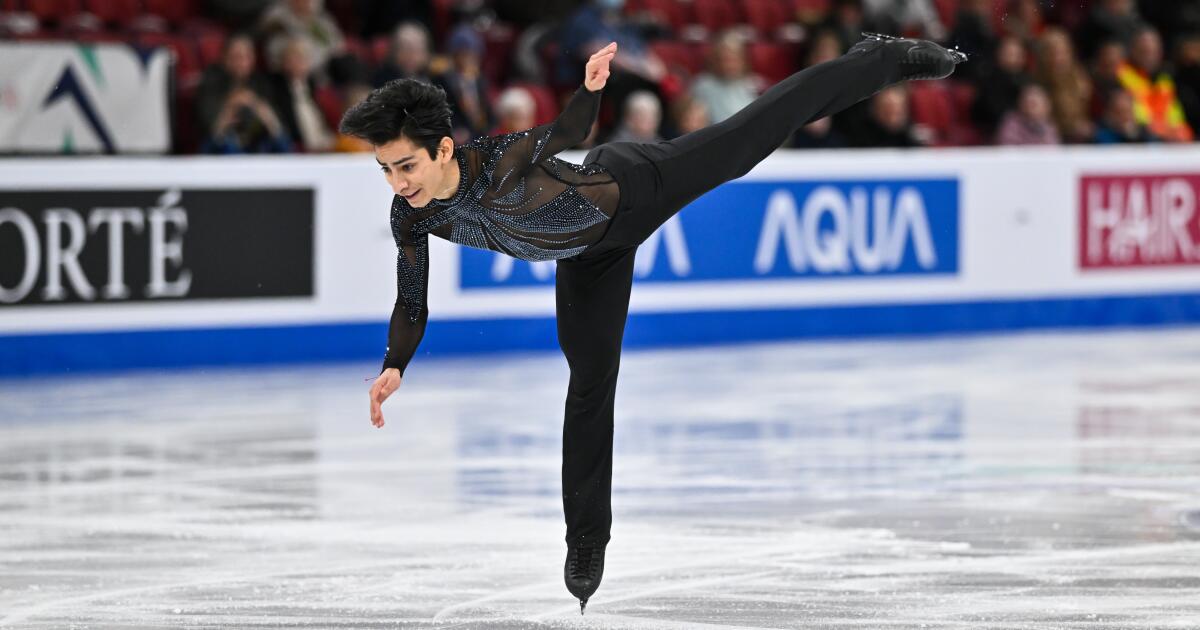
MARKHAM, Canada — Suburban Toronto is more than 2,000 miles from Mexico City, but in many ways it might as well be in another universe. On the dreary fall day the first snow fell in Toronto, for example, it was 78 degrees and sunny in the Mexican capital.
Yet on the northeast edge of Canada’s largest city, hidden behind the library and a seniors club deep inside the Thornhill Community Centre, Mexico’s Olympic figure skating team has found a home.
“Team” is a bit of a misnomer since Mexico will send just one skater, Donovan Carrillo, to next month’s Milan Cortina Winter Games. Carrillo was also the only Mexican — and one of just three Latin Americans — to skate in the 2022 Olympics in Beijing.
But his migration to the Great White North 2½ years ago may prove to be the first step in a major transformation for Mexican figure skating. Last summer Andrea Montesinos, a two-time Mexican women’s champion, followed him to Toronto to train with coaches Jonathan Mills and Myke Gillman, who also work with teenager María Velazquez, Mexico’s novice national champion.
“With him coming from the background that he’s come from and seeing how he’s grown and developed, it’s given nothing but a positivity to the younger skaters in Mexico to feel like they can do it too,” Gillman said. “He’s a huge influence on them. He’s their hero.”
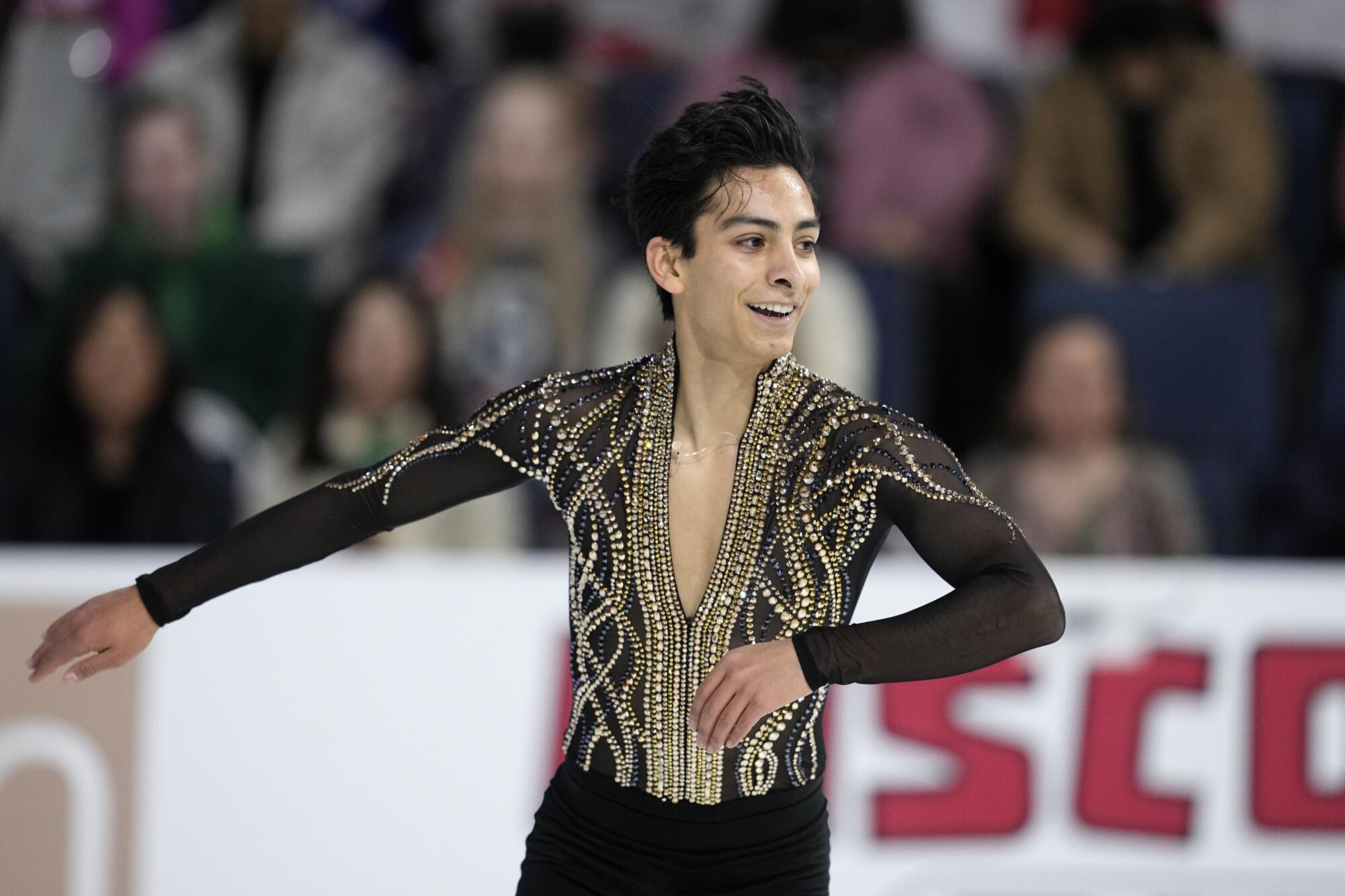
Donovan Carrillo competes in the men’s short program at Skate America in October 2024.
(Tony Gutierrez / Associated Press)
It wasn’t always that way. But moving to Toronto, Carrillo struggled in anonymity for ice time and support in a country with more symphony orchestras than skating rinks. On the eve of his junior international debut, the rink where he trained in Guadalajara closed so, at 13, Carrillo followed his coach, Gregorio Núñez, to León, where he practiced in a shopping mall, sharing the dark, undersized ice with teenagers on dates and frightened preschoolers wobbling on rented skates.
“In Mexico, it’s always a bit of a challenge to practice figure skating,” he said. “But I’m not here complaining. That made me value this more. Maybe if I didn’t have conditions like that, I wouldn’t appreciate what I have here today.”
While it lasted, the Carrillo-Núñez partnership was the most productive in the history of Mexican skating. After winning the first of seven national championships as a teenager, Carrillo scored six top-10 finishes in major international events before becoming the first Mexican skater in three decades to qualify for the Winter Olympics, where Mexico has never medaled — with all of that coming under Núñez.
That success changed everything, for Carrillo and Mexico.
“It’s something special that he was able to go for his country four years ago,” Gillman said.
“It think he’s opened the road for new countries to get involved and become included in the [International Skating Union]. That’s a big step. Other skaters feel like they can do it and other countries feel like they can open up opportunities for their athletes too.”
To some, that seemed like the summit; to Carrillo, that was just the foothills of the climb he envisioned. But he couldn’t go much higher with the handicaps he faced at home. So after missing much of the post-Olympic season to an ankle injury that required surgery, he parted with Núñez, who had become his housemate as well as his coach, and moved to Toronto to train with Mills and Gillman in facilities far superior to what he had in Mexico.
The split didn’t go over well with Núñez, who coached Carrillo for more than a decade.
“Unfortunately, politics and many vested interests surround sports (the great athletes, their greatest quality isn’t talent, but rather what they’re willing to do to reach the top, even if it means compromising their values and principles),” he wrote in Spanish from León. “The ambition of these athletes and their families can cloud their humanity. In the end, perhaps they get what they want — fame, money, recognition — but all of that is fleeting and ephemeral.
“Nowadays we venerate national heroes. These are false images created by teams of marketing and social media professionals to inspire people, but much of it is fake and manufactured. Yet, that’s the reality we live in today.”
Carrillo, however, said he needed to break with the past to move his career forward.
“I’m very grateful with what he did for me,” the skater said of Núñez. “But I felt like I needed something different because I’m getting older and I didn’t want to regret not going somewhere else.
“I felt like my skating stayed the same for the past three years. So for me to get different results, I needed to expose myself to a life change.”
He got that in Toronto.
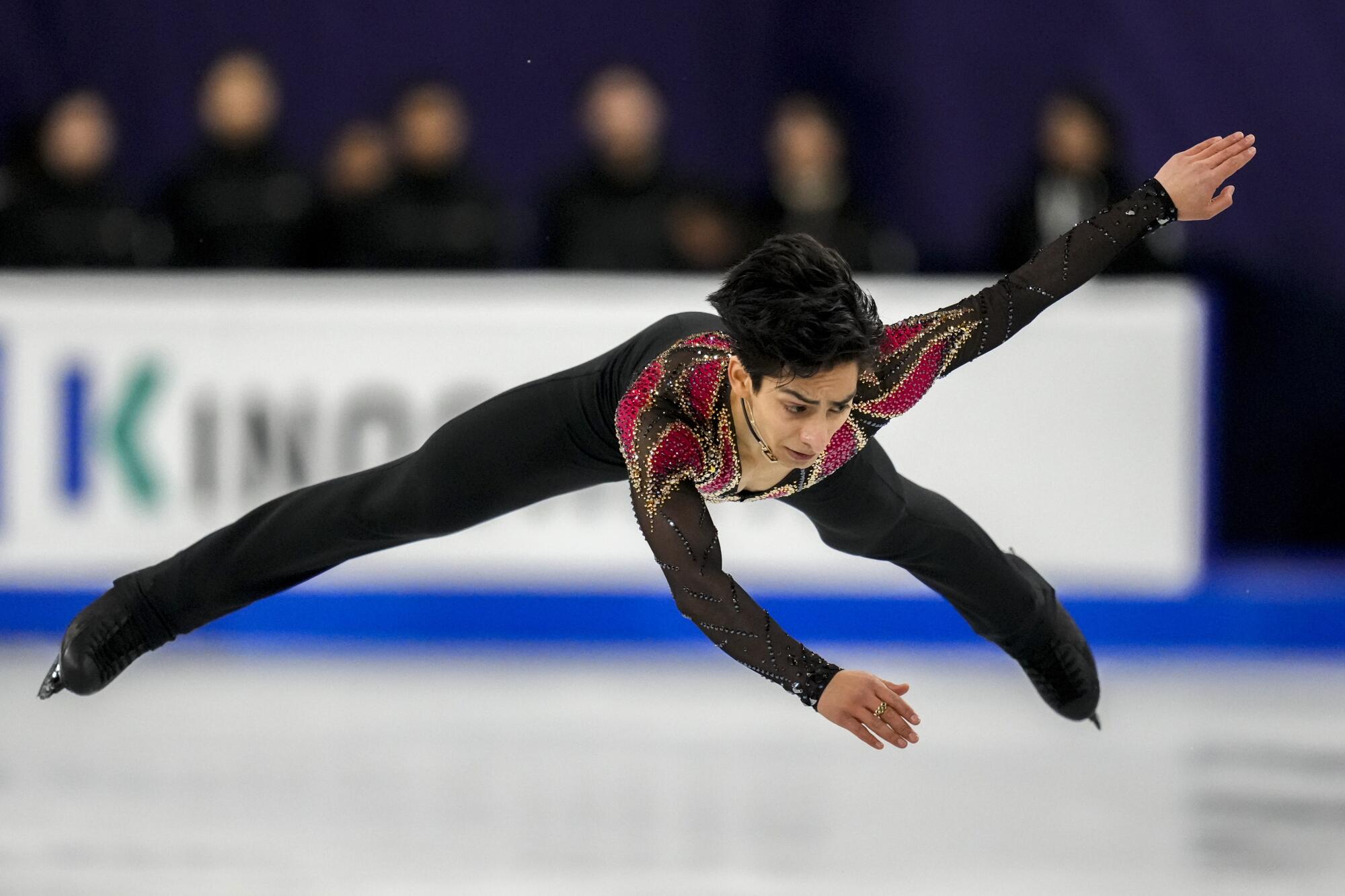
Donovan Carrillo performs during the Four Continents championships in Seoul in February 2025.
(Lee Jin-man / Associated Press)
“Before I was so angry and just so tense. Now I just move on easier and faster when things don’t go my way.”
— Donovan Carrillo, on the different mindset he’s adopted.
“Sometimes I get nostalgic and I go downtown to try to find a taco place,” said Carrillo, whose 22nd-place finish in the Beijing Games four years ago marked the best performance by a male Latin American skater. “I’m still trying to find the most legit tacos in Toronto.”
The changes he’s experienced in Canada haven’t been limited to skating and food. He’s also learned about patience and perspective.
“It’s not just work on the sport, not just to teach me the jumps,” said Carrillo, whose slender 5-foot-7 build and wide smile belie a fierce competitiveness that sometimes has been his worst enemy. “But also giving me life advice. Showing me how to enjoy the process. I was so hard with myself, always trying to be perfect. And they were like ‘you don’t have to be perfect every single day.’
“I try to forget what I learned in the past in Mexico and try to build a new Donovan that really enjoys what he’s doing and really find joy every single time I am on the ice. Even when I’m falling I try to laugh now. Before I was so angry and just so tense. Now I just move on easier and faster when things don’t go my way.”
Partly as a result, his training has never been better.
Early on a brisk weekday afternoon, Carrillo, Montesinos and Velazquez have one of the community center’s two full-size rinks to themselves. In León, Carrillo frequently had to skate without music so as not to disturb the children with whom he shared the ice. The Thornhill Community Centre enforces no such rule so a pair of Elvis Presley songs — “Jailhouse Rock” and the rocker’s version of “My Way” — blare from loudspeakers as Carrillo dances on the ice under the watchful eye of Gillman, his chief choreographer.
Carrillo can dazzle with his athleticism. His routines include technically demanding jumps — he landed a quadruple toe loop and triple axel in Beijing — but his style is defined more for its passion, artistry and a cheerful, smiling exuberance that wins fans over.
“He is 100% a crowd favorite,” Gillman said. “His personality is contagious to the audience. They love him. He’s a great performer.”
Mills and Gillman, who have spent most of their career working with young novice skaters, said Carrillo, 26, needed time to warm to his new coaches and environment, a process that took nearly 18 months. But once they weaned him off some of the bad traits he had developed in Mexico and earned his trust, they were able to take his skating to a new level.
“Technically he’s improved a lot,” said Mills, who was first introduced to Carrillo by one of their former students when Carrillo was still a teenager. “He’s just a much more mature athlete, the way he trains on a daily basis on the ice, off the ice.
“We’ve been able to give him a really positive skating experience. Give him the ice time, give him the access to great rinks, great facilities, great coaching, amazing off-ice facilities, off-ice teachers. That’s really been, for us, the best of all this: giving him a really positive, normal skating experience.”
In Toronto, Carrillo works with an athletic trainer, a psychologist, a chiropractor and a masseur. He does Pilates, has regular sessions in a gym, has taken dance classes and — aside from an occasional taco binge — has adjusted his diet as well. On and off the ice, he said he spends about six hours a day working on some part of the physical or mental facets of his skating.
“There’s been almost a breakthrough with him,” Gillman said. “I feel like there’s a huge independence shift from him now. He feels very confident in himself. It’s always a collaboration with what’s best for him. Where he should go to compete, what we need to do for him on his training.”
He’s funded all that in part with a stipend from CONADE, Mexico’s cabinet-level sports ministry, as well as sponsorships with Toyota, the British bank HSBC and others.
“It’s just a life-changer for me,” Carrillo said of the move. “I’ve been enjoying skating. I really love the lifestyle. I eat healthy. I train. I also try to sustain [good] habits, which is what I was missing back in Mexico.”
“I kind of found what works best for me and my skating and for my mindset, for my approach in competitions,” he added. “I just feel more complete. I’m also better prepared. The conditions where I train, the coaches that I have, everything is just better than before.”
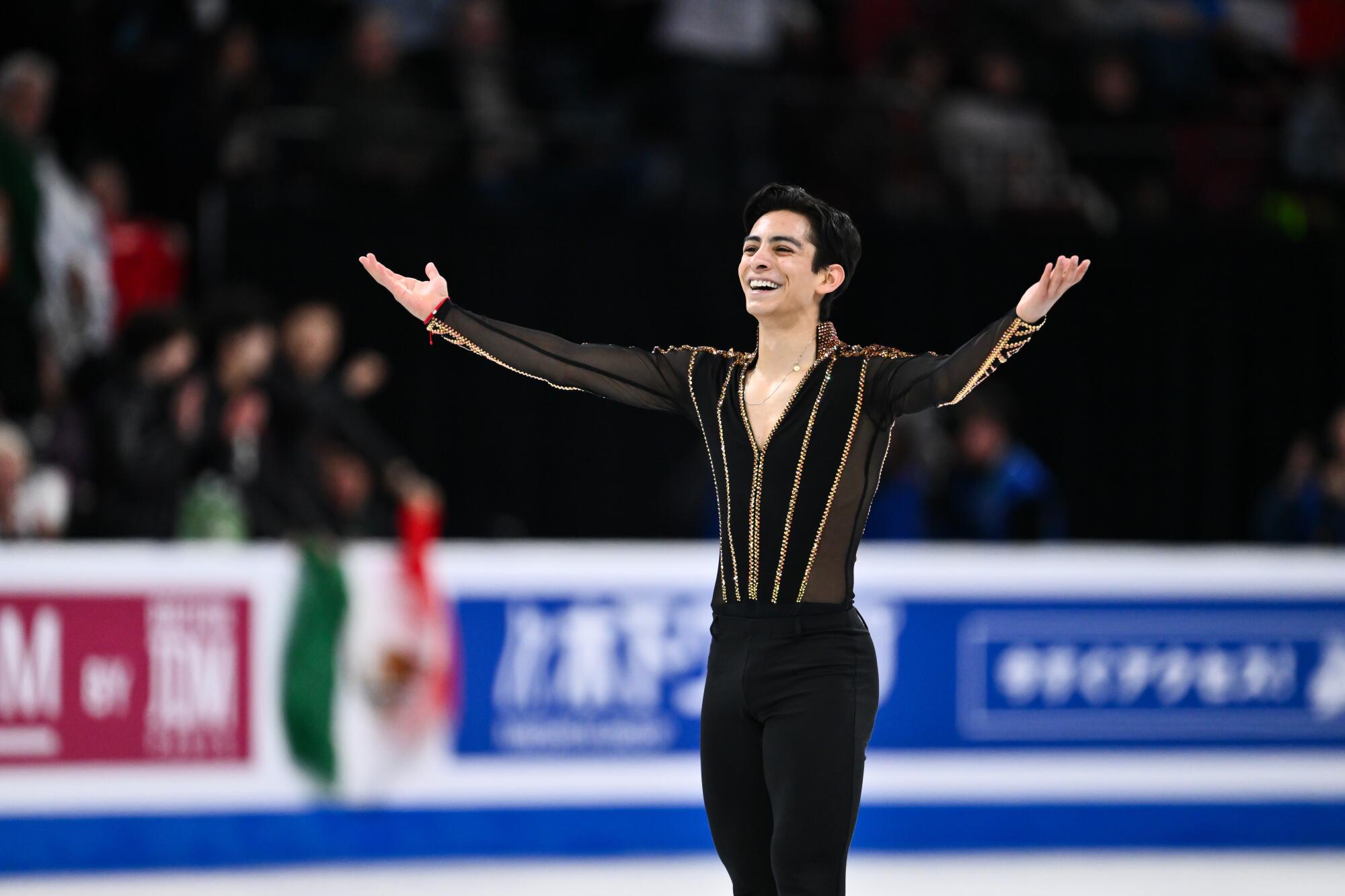
Donovan Carrillo acknowledges the crowd after competing at the world championships in Montreal in March 2024.
(Minas Panagiotakis / Getty Images)
The only thing he regrets about the move is that it didn’t happen earlier. Yet at the same time, it’s a move he someday hopes no other Mexican skater will have to make. Carrillo’s career now is as much about legacy as it is about success; as much about removing barriers as it once was about breaking them.
“I’m very aware that maybe I’m just opening the door for more athletes in the future to try to be their very best and maybe put Mexico in the top of world skating. We’ll see,” he said. “One of my goals as an athlete, as a person, is to also build a team in Mexico.
“Mexicans have a lot of potential for this type of sport. You see great results in diving, in gymnastics and there’s not a big difference between figure skating, diving, gymnastics. Hopefully in the future we could have conditions like here in Canada that will allow us to train this way.”