
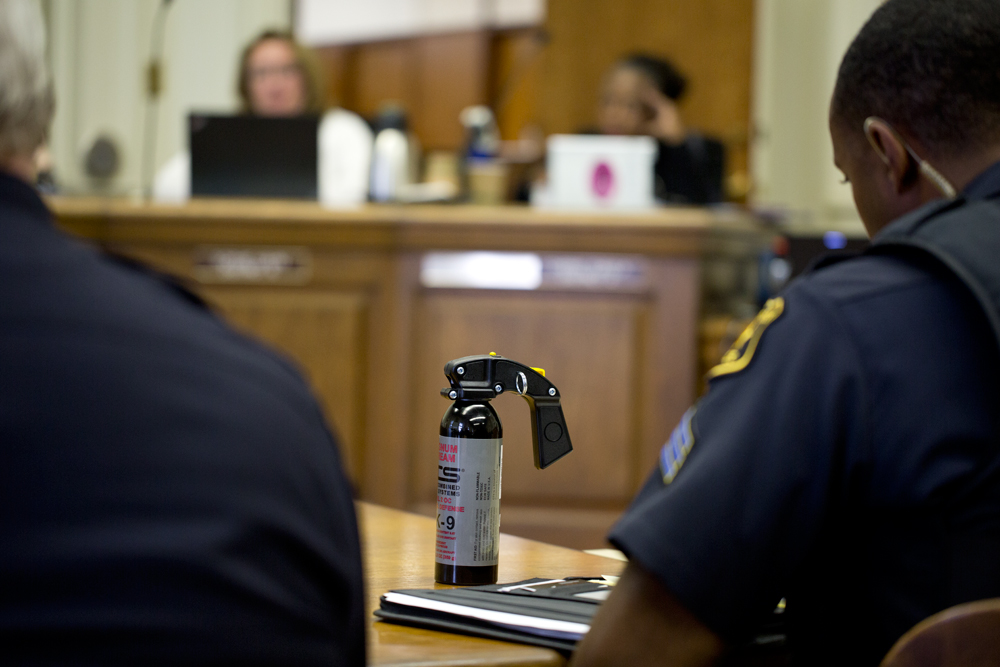
 A City Council committee endorsed loosening reporting requirements when police use pepper spray. Credit: Emilie Raguso
Some city leaders want to ease restrictions and reporting requirements for the Berkeley Police Department’s use of pepper spray, tear gas and other tools.
But following several killings of Americans by immigration authorities in Minnesota, some Berkeleyans are concerned that police might abuse their power if offered more latitude— despite recent efforts by BPD and other city officials to distance themselves from federal law enforcement agencies.
Dozens of people crammed into a conference room or called in via Zoom to protest three proposals that went before the City Council’s three-member Public Safety Policy Committee on Thursday. The changes would reduce officers’ paperwork when they use pepper spray, make it easier for BPD to request air and canine support, and allow police to use tear gas again while also permitting smoke and pepper spray in more situations.
Councilmember Rashi Kesarwani, the main author of all three proposals, said she wants to give BPD modern tools and eliminate duplicative reporting requirements and unnecessary administrative obstacles.
Nearly three decades ago, in 1997, the City Council ordered that police notify the council each time an officer used pepper spray. That was a quarter century before a state law took effect mandating all police agencies report annually on how and when they use their weapons and equipment, pepper spray included. On top of that, BPD makes its use-of-force data available on its Transparency Hub, although those entries do not include many details.
Kesarwani, who represents Northwest Berkeley, proposed rescinding the city’s reporting requirement for pepper spray, which BPD used four times in 2025, and once the year before, according to BPD data. But some worried that eliminating the extra reporting requirement was a sign that officers wanted to use it more frequently.
Ida Martinac, a Rent Stabilization Board member, asked why Berkeley was entertaining the proposals at such a fraught moment for the country.
“Why now, when our community is living under constant terror, visited on our nation by the law-breaking regime that has occupied our federal government and has been shredding the Constitution from day one?” Martinac said Thursday. “We have plenty of other public safety concerns, even without relaxing accountability and transparency requirements for the use of chemical weapons by our police department.”
“I’m kind of shocked to see this in Berkeley of all places. I’m in opposition to all three proposals,” Sangeeta Swami, a therapist and educator, said over Zoom. “These proposals are traumatizing for community members. It erodes trust, not only [in] the police but the City Council.”
Kesarwani said her concern was making the best use of officers’ time in a perennially understaffed department.
“I am looking at every opportunity to do things more effectively, and doing the same report twice, to me, is not an effective use of time,” Kesarwani told Berkeleyside.
The three members of the Public Safety Policy Committee — Kesarwani and councilmembers Shoshana O’Keefe and Brent Blackaby — voted unanimously to advance the proposal to the full City Council.
Berkeley could roll back 2020 ban on tear gas
The committee only had time to vote on the pepper spray reporting proposal, and tabled Kesarwani’s other two policy changes.
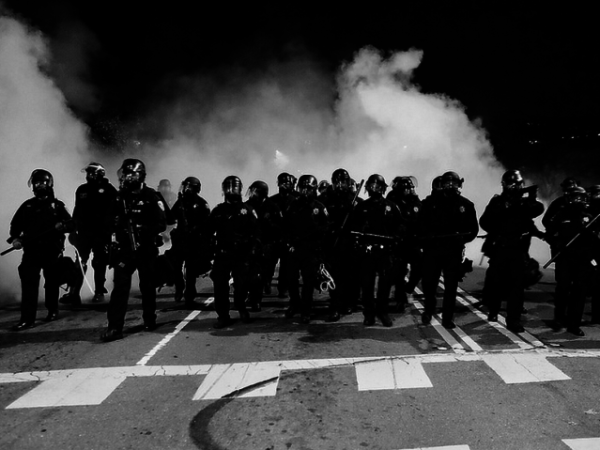
One would have rolled back COVID-era restrictions on using pepper spray or smoke for crowd control. The proposal would also rescind a 2020 citywide ban on tear gas, allowing BPD’s Special Response Team (SRT) to “use tear gas when responding to a critical incident that poses a significant threat to public or officer safety,” but “excluding its use for crowd control or in connection with civil unrest.”
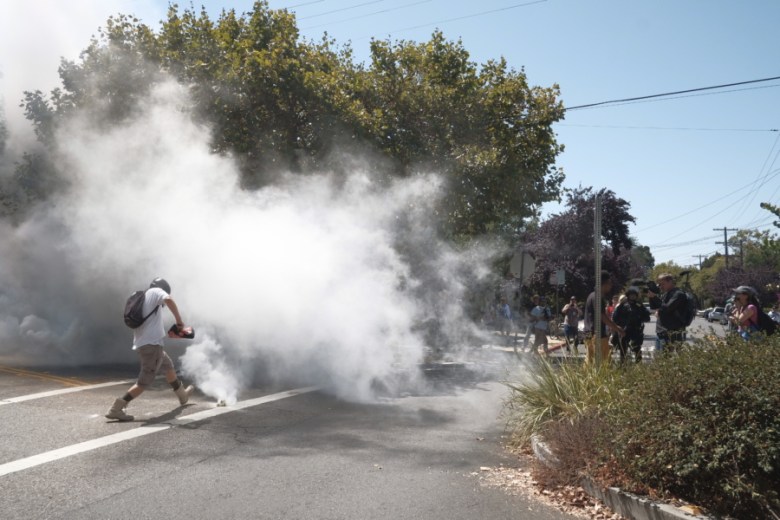 Smoke used during a 2017 demonstration in Berkeley. Photo: Pete Rosos
Kesarwani said that as far as tear gas was concerned her proposal was specifically meant to help the SRT deal with armed, barricaded people.
“The safest way to deal with that could be the use of tear gas,” Kesarwani said. “That is really the only scenario we are contemplating.”
The residents who attended or called in to the meeting Thursday, however, thought the very notion of bringing back tear gas in any circumstance was “damaging” and “deplorable.”
In a memo to the committee, the Police Accountability Board wrote that given how infrequently BPD has historically used tear gas and other chemical agents, and the “significant liability” that comes with them, it was “unclear why reinstating chemical agent authority is necessary at this time.”
Should police get city manager’s OK to use helicopters and dogs?
Kesarwani’s third proposal would allow BPD to ask other law enforcement agencies for outside air or canine support without first clearing the request with the city manager, a condition put in place in 1982 along with other restrictions. BPD has no helicopters or K-9 units of its own, and there has been no proposal to acquire them.
“The requirement to contact the city manager means that you’re losing valuable minutes that you can get the helicopter or the K-9 unit,” Kesarwani told Berkeleyside. “The goal here is to let the police chief make the determinations so that we can save time and be more effective.”
The restrictions on dogs would remain largely the same. City police could ask for canine support to find missing persons, locate crime scenes and, in limited circumstances, such as when lives are at risk, to apprehend suspects. The proposal states “that the use of dogs is explicitly prohibited for use in crowd control,” the same language as the 1982 resolution.
The 1982 restrictions only specifically list disaster response, missing persons searches and rescue attempts — though not attempts to rescue hostages — as justification for requesting air support. Kesarwani’s proposal would add vehicle pursuits, situations where officers are in danger and pursuits of dangerous felons.
Members of the public who spoke at the committee meeting Thursday were steadfastly opposed to Kesarwani’s proposal.
“The reason why it’s important for the city manager to approve the use of helicopters and canines is because helicopters are so intimidating and canines are so personally terrifying,” John Lindsay-Poland, co-director of the American Friends Service Committee’s California Healing Justice Program, said via Zoom.
The committee is scheduled to take up that proposal, and the one on tear gas, smoke and pepper spray, at its February meeting. If the committee approves them, they would also have to go before the full council.
Related stories
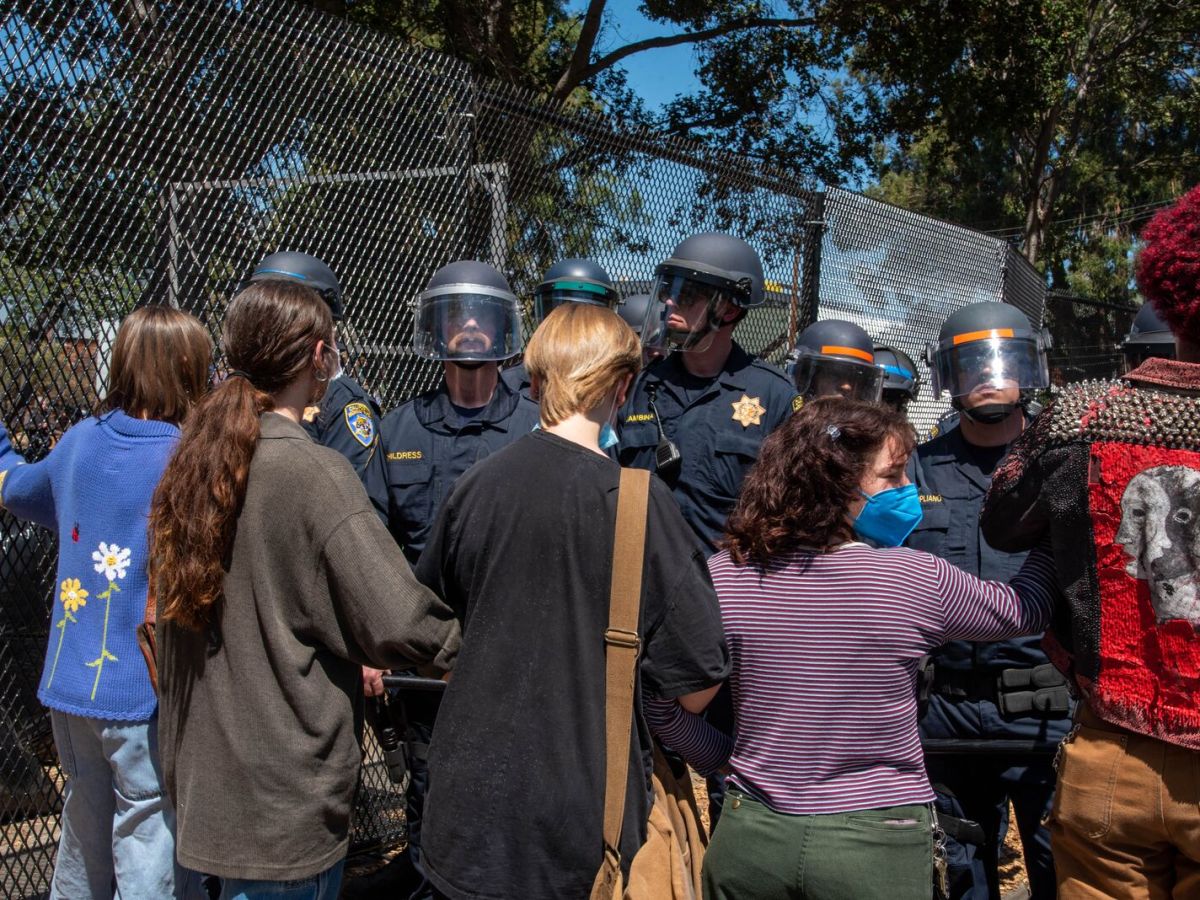
Berkeley City Council will not lift tear gas ban amid People’s Park protests
August 4, 2022Aug. 5, 2022, 9:33 a.m.
Police Review Commission asks for suspension of tear gas
December 12, 2014Oct. 4, 2022, 1:22 a.m.
Abused as a puppy, UC Berkeley’s new police dog finds second life on campus
March 29, 2018Oct. 4, 2022, 1:49 a.m.
“*” indicates required fields