
BAKERSFIELD, Calif. (KGET) – The Bakersfield City Council has a reasonably representative mix of demographics these days: a female Chinese-American mayor, a female Punjabi-American vice-mayor, a Persian-American councilman, two Latino councilmen, and three Anglo councilmen.
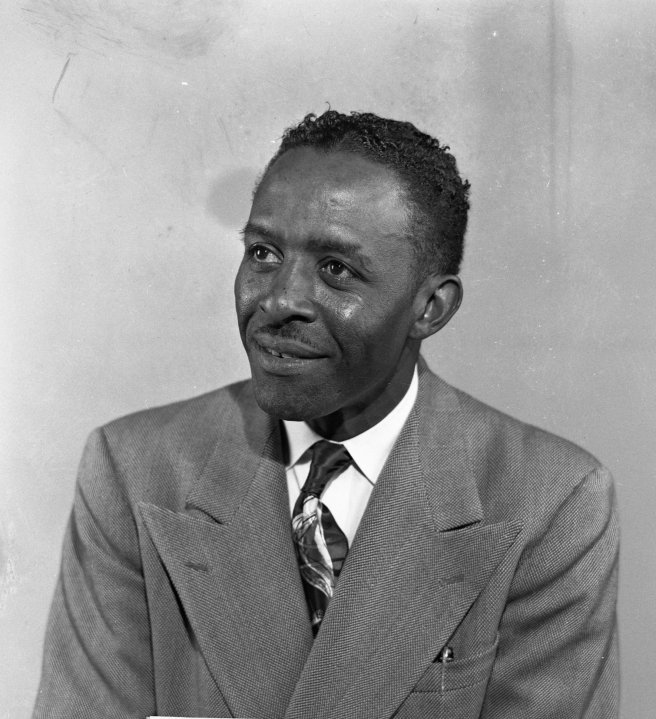
Things were decidedly different in 1953 when the Rev. Henry H. Collins, a newcomer to Bakersfield, took out papers to run for the council. One might think the Bakersfield of 1953 was a somewhat enlightened place to have elected an African American to the city council, one of the first California cities to do such a thing.
The U.S. military had integrated its ranks only six years earlier. Brown v. Board of Education, which declared school segregation unconstitutional, would not come down from Earl Warren’s Supreme Court for another year and the landmark Civil Rights Act was more than a decade away.
But the fact is, the Bakersfield of 1953 was collectively not especially enlightened. In a 1951 interview, the Rev. Henry Holton Collins of Saint Paul’s Methodist Episcopal said, “I was born in the South and lived in Georgia, Florida, Tennessee, Louisiana and Mississippi, and never have I seen conditions as they exist in Bakersfield.”
He was talking about low-income housing, but he might just as well have been talking about race relations.
Like much of the country, Bakersfield has a deep rooted history of racism. Early city developers routinely used restrictive covenants, called red-lining, that primarily targeted Black people.
C. Elmer Houchin, founder of the Westchester Tract north of 24th Street, for example, restricted ownership in his new post-war neighborhood with this language: “No part of said property shall be used or occupied or permitted to be occupied by any person not of the White or Caucasian race.” Businesses, from luncheonettes to retail stores, posted signs banning non-whites.
Then came along Henry Collins.
In 1951, he was transferred from San Diego by his Methodist church supervisors, taking over as minister of Saint Paul’s, the congregation had three members. Within two years, it had 151.
Collins, who held a graduate degree in criminal psychology, saw bigger issues – namely housing. His opportunity came when in December 1950 the city annexed the Sunset and Mayflower districts of southeast Bakersfield, around what is now Dr. Martin Luther King Jr. Boulevard, enfranchising hundreds of new voters – most of them Black. The city held a special election for the redrawn Ward 1, and, after finishing first in the primary, Collins, on April 14, 1953, beat the incumbent, James W. Shurley.
That made him, according to the NAACP and Jet Magazine, one of the first Black councilmen in California. Thomas Yarborough, elected to the Lake Elsinore City Council in 1948, is widely regarded to have been the first.
Collins went right to work.
He ran unopposed for reelection in 1957 and was joined on the council that year by the city’s first female member, Kathryn Balfanz.
During Henry Collins’ time on the council, the city approved construction of the 178 freeway, a boon for Bakersfield’s east side that broke ground in 1965. Collins was on the council for the approval and construction of Bakersfield Civic Auditorium, which became the cornerstone of today’s arena and convention center, and the new Beale Clock Tower, a scaled down replica of the original destroyed in the 1952 earthquake.
He was a leading voice in the development of the southeast side’s most notable amenity – what is today known as MLK Park. He helped push local school districts to integrate teaching staffs. He brought the first curbs and sidewalks to the Lakeview, now MLK area, and he helped develop the city’s first fair employment practices ordinance, which specifically protected applicants “regardless of race or color.”
Not everything turned to gold.
Collins pushed for low income housing in the poor, underserved Mayflower district, but neither city government nor affected residents embraced the two main projects. Prospective homeowners, who’d been red-lined out of the better neighborhoods, were wary of the predatory terms practiced by many lenders, and city officials disparaged subsidized housing as communist.
Donato Cruz, an archives specialist at CSUB who has studied red-lining practices, describes what one might characterize as a reflection of the era’s two warring ideologies — underregulated capitalism and a backlash against government programs.
“It was a mixed reaction,” he said. “Especially after the 1940s. In the 1950s, you get a lot of red scare, right? A lot of associating New Deal community projects with communism and socialism. You get a lot of associations with those, right? And then also you get a lot of resistance from realtors that see public housing as a challenge to their market.”
Collins advocated for the Sunday closure of supermarkets – an idea that foundered – and for a ban on the sale, distribution and furnishing of comic books containing “horror, sex, depravity, crime and licentiousness.” When a similar ban failed at the state level, Collins’ local version fizzled.
Collins accepted a transfer to a church in Berkeley in 1961 and resigned from the council. He died in 1972, just 66, but he left his mark on the city he called home for a decade. And that mark endures.
Cruz says Collins made a difference.
“He’s worth remembering with all that he accomplished,” Cruz said. “It shows that we can overcome challenges, we can re-imagine a new system, and to not become disheartened with what we see as challenges. There are some things that we can overcome.”
Copyright 2026 Nexstar Media, Inc. All rights reserved. This material may not be published, broadcast, rewritten, or redistributed.
For the latest news, weather, sports, and streaming video, head to KGET 17 News.