
This week, the city is shutting down blocks downtown around the Moscone Center, where the NFL is hosting events for football fans.
Officials at the Department of Emergency Management, which oversees the city’s street crews that respond to homeless encampments, said they are continuing with their regular schedule and are not ramping up enforcement efforts.
“San Francisco’s work to bring people indoors and improve street conditions is ongoing every day — regardless of whether a major event is happening in the Bay Area,” a spokesperson from DEM said. “Neighborhood Street Teams are extending hours and proactively encouraging people to accept services, as they do every day. The message is simple: help is available, and today is a good day to come inside.”
Other cities in the Bay Area looking to lure tourists are also continuing to clear encampments ahead of the event and maintaining that they are not ramping up enforcement around any particular event.
“These efforts are part of San José’s ongoing, year-round strategy to reduce homelessness with compassion, dignity and long-term solutions — not a one-time response tied to any single event,” said Sarah Fields, deputy director of public affairs for San José’s Housing Department.
Tent clearings and citations for people sleeping outside have increased across San Francisco in the last year, especially after the 2024 U.S. Supreme Court ruling in the Grants Pass case that made it easier for cities to force homeless people to move, even if shelter is unavailable.
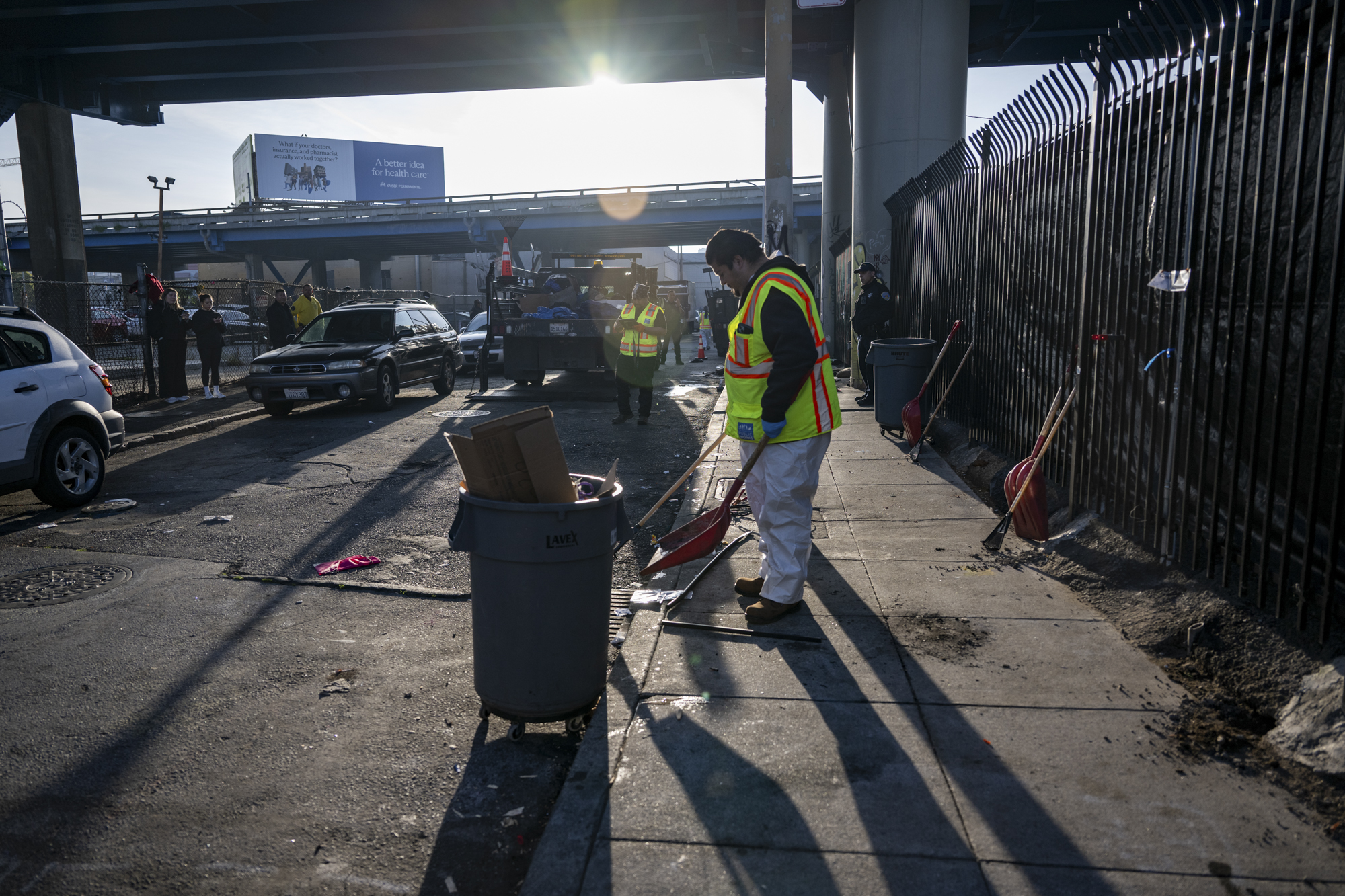 Department of Public Works employees clean up debris after a sweep of an encampment on Merlin Street in San Francisco’s South of Market neighborhood on Jan. 27, 2026. (Beth LaBerge/KQED)
“There’s certainly been an uptick in operations for months now,” said John Do, an ACLU attorney who worked on a lawsuit against San Francisco over how it conducted homeless sweeps. The $2.8 million settlement for the case was officially finalized in September 2025. “The city wants to hide their homelessness crisis by displacing people … But those are temporary measures, which don’t, of course, address the underlying issues.”
This year’s Super Bowl also comes as nearly 400 residents remain on San Francisco’s waitlist for a bed at one of the city’s 53 shelter sites, while others struggle to obtain permanent housing.
As the city opens up additional beds at Gubbio in the Mission District, it’s also winding down more than 100 beds at the Monarch and Adante hotels downtown. At the same time, dozens of displaced residents of a Tenderloin building that burned in December say they are struggling to find shelter even months after the blaze.
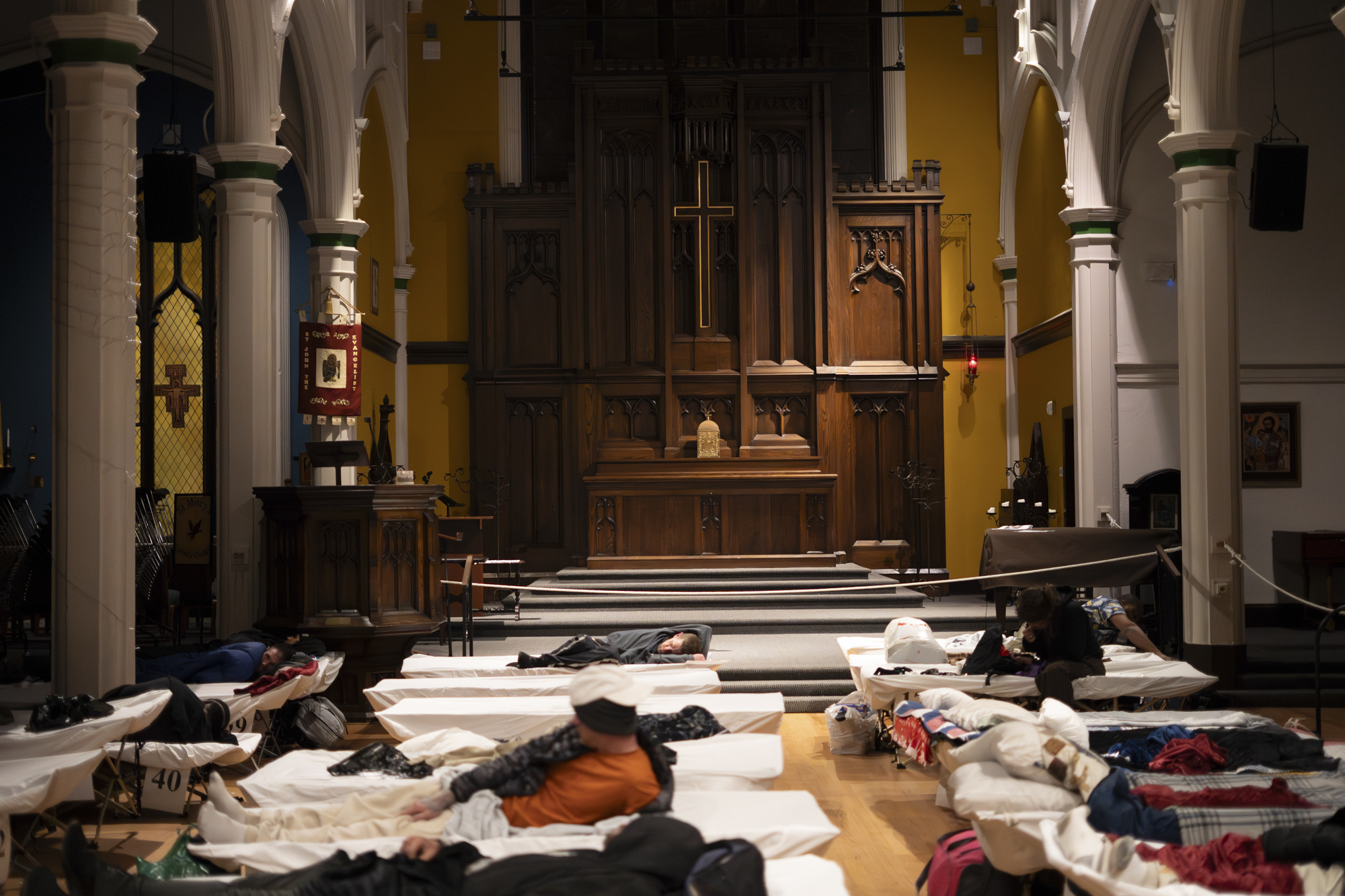 Guests sleep on cots arranged throughout the sanctuary at St. John’s the Evangelist Episcopal Church, where the Gubbio Project is operating an overnight shelter during Super Bowl weekend on Feb. 2, 2026, in San Francisco. (Gustavo Hernandez/KQED)
“Shelters are full. All of the sudden, the city is providing additional beds when we have been asking for this for months,” said Gardenia Zuniga-Haro, an advocate for the residents who previously lived at the burned building. “It’s convenient for the mayor to make it look like everything is peaches and cream, but that’s not the case. He has done nothing but spend millions on bringing in celebrities and promoting Taco Bell.”
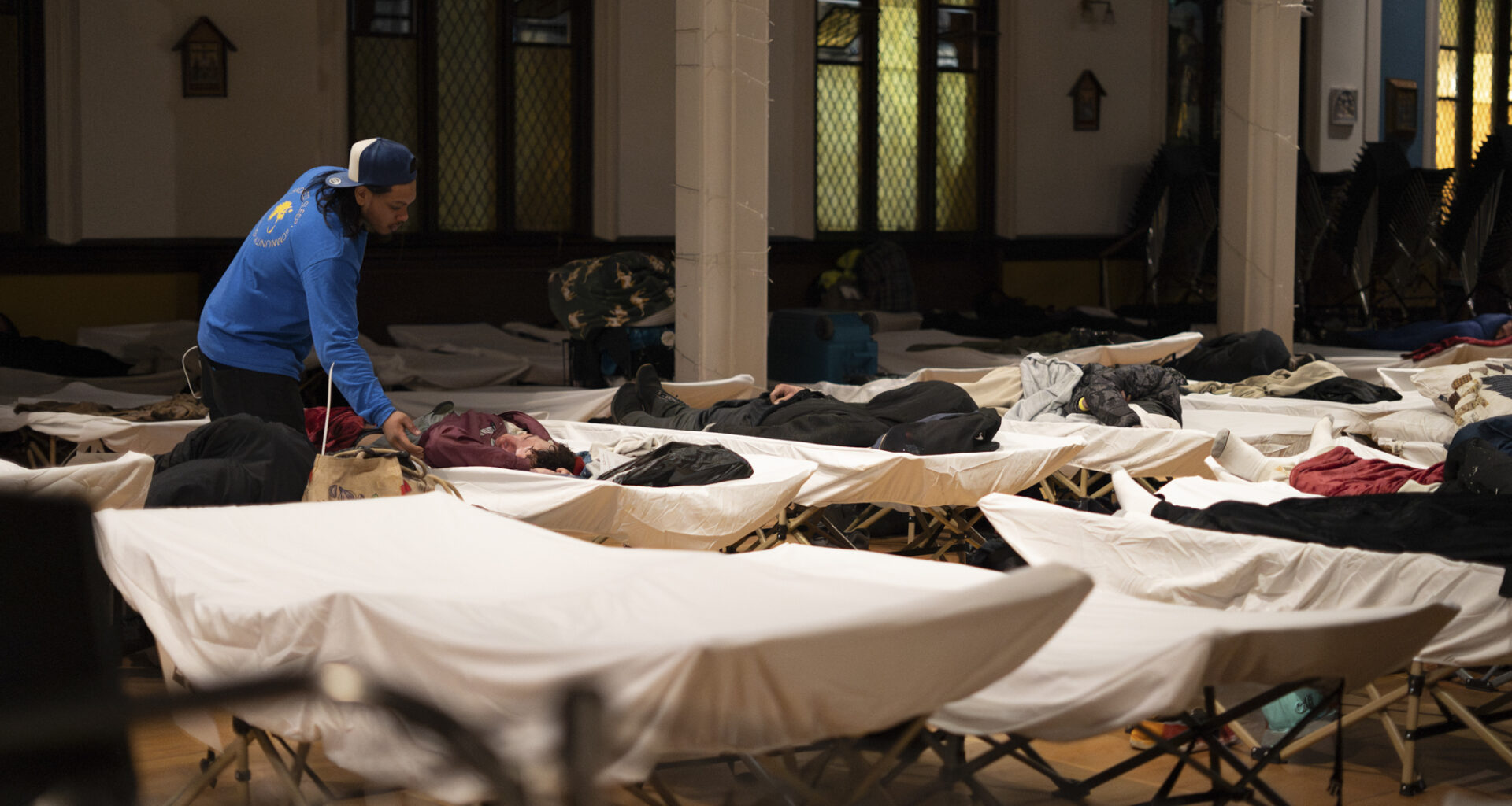
Lydia Bransten, executive director at the Gubbio Project, said the city’s decision to open additional beds at their site during Super Bowl week was a welcome change from past responses to major events, when the city cleared streets of homeless residents but offered them nowhere to go.
“As much as the city is being really hard on our folks who are experiencing homelessness, this is a good move to say we understand that people are going to be displaced and we’re going to respond to it by giving people an option of someplace to be,” Bransten said. “We can’t serve everybody, but we’ll maybe serve 80 people a night. That’s a lot of people.”
On Monday night, several dozen guests lingered around the quiet courtyard at the Gubbio Project. Gubbio staff, who are working 12-hour shifts this week to take on the new 24-hour model, prepared chicken alfredo pasta with broccoli and buttered biscuits. Rows of cot beds lined the inside of the church where the Gubbio Project is based, with soft sounds of snoring from those who had gone to sleep early.
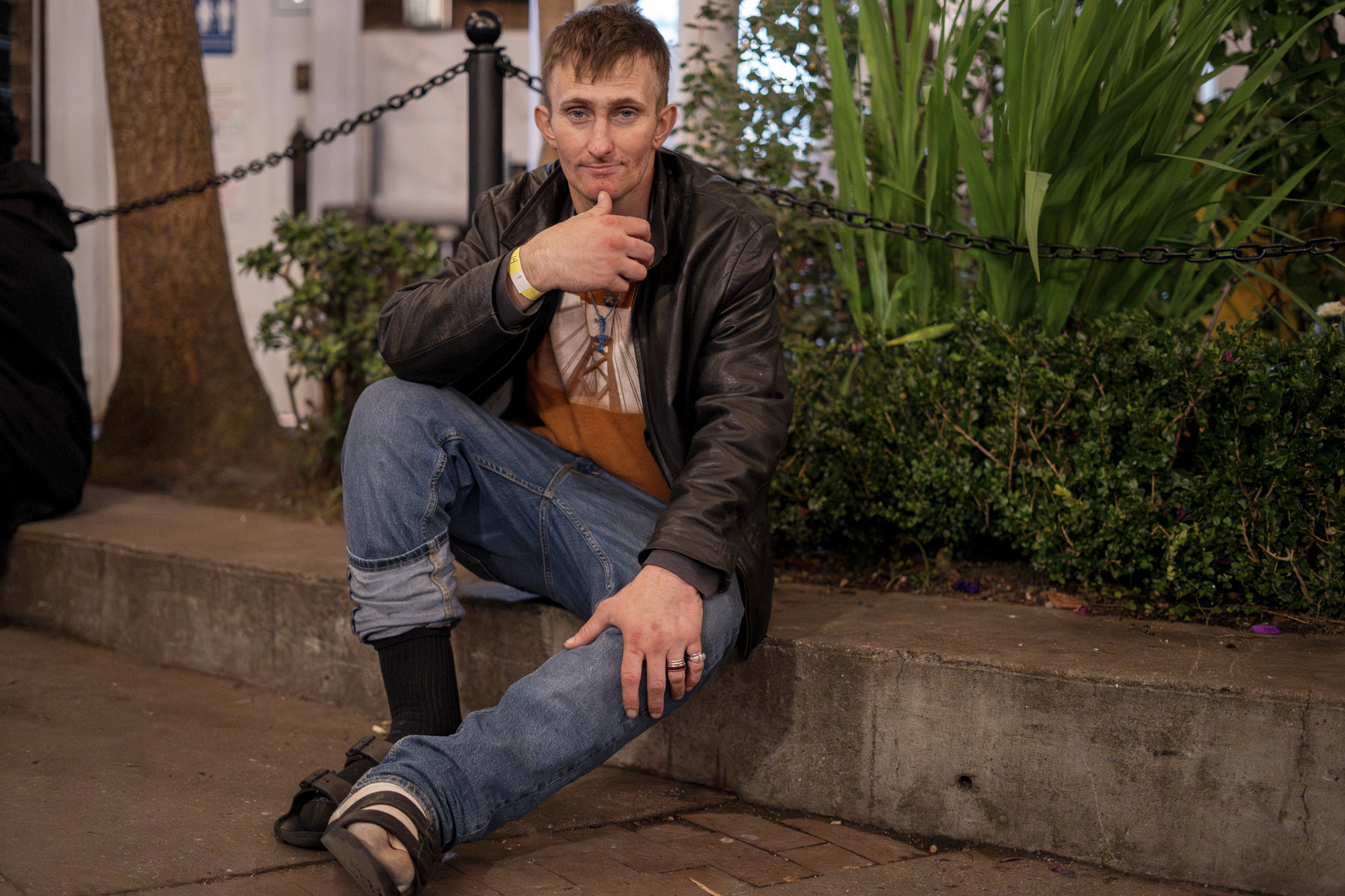 Joshua Wagner sits outside the Gubbio Project at St. John’s the Evangelist Episcopal Church on Feb. 2, 2026, in San Francisco. The program allows unhoused guests to rest inside the church without intake forms or barriers, emphasizing dignity, accessibility and safety. (Gustavo Hernandez/KQED)
The quiet shelter offered a place to finally relax for Joshua Wagner, who had been asked to move off the sidewalk on 11th Street in the South of Market neighborhood earlier that day.
“Me and several people that I’ve been with were told that we were not allowed to be out when the Super Bowl is happening this week, whatever the hell that means. We’re homeless. How can we not be allowed out?” Wagner said. “I can’t even rest for five minutes without somebody telling me to get up and go. I have health problems causing me great distress every time I have to battle gravity just to move along.”
Thomas arrived at the shelter after city outreach workers told him about the beds that would be available that night.
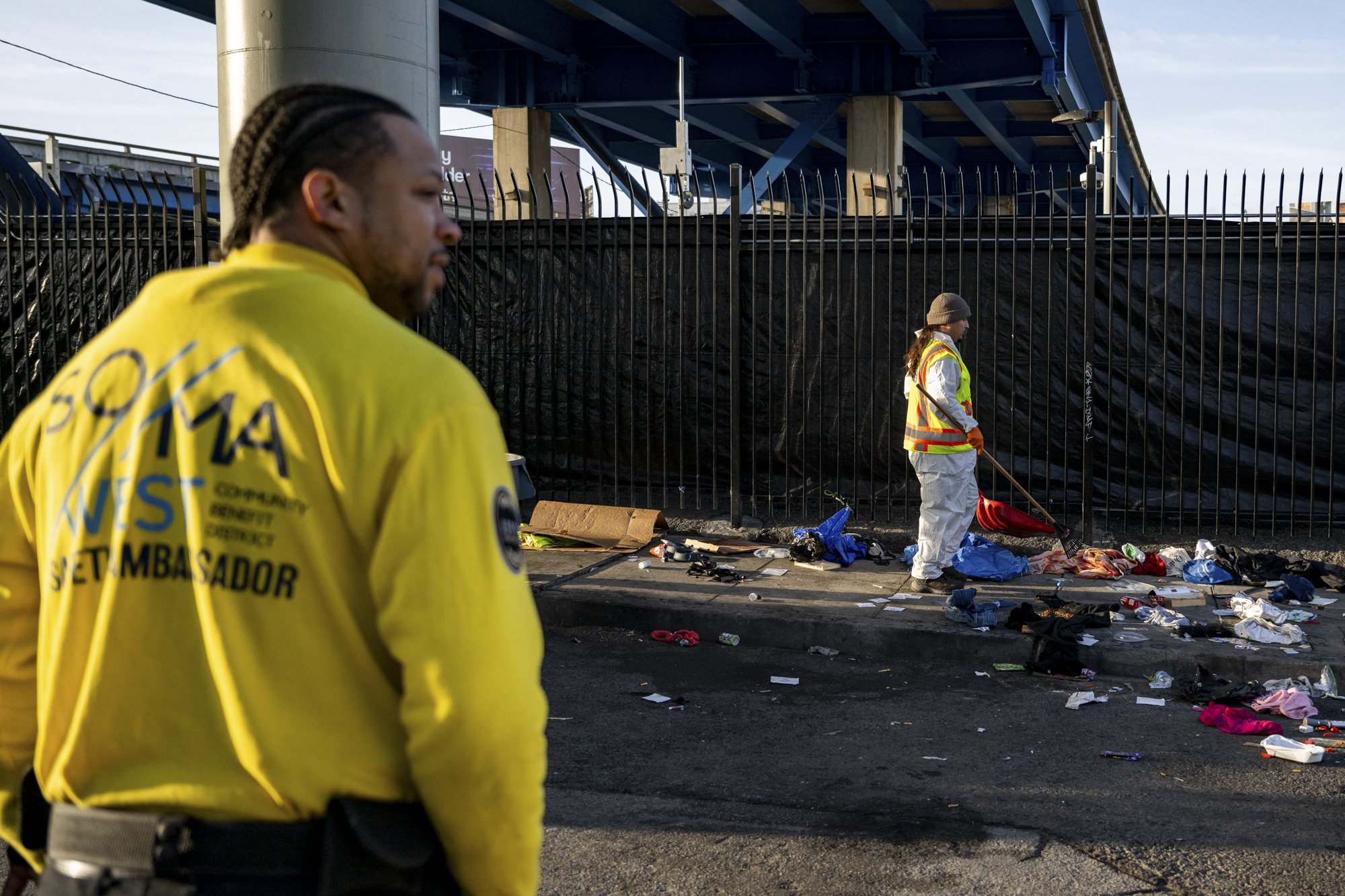 Department of Public Works employees clean up debris after a sweep of an encampment on Merlin Street in San Francisco’s South of Market neighborhood on Jan. 27, 2026. (Beth LaBerge/KQED)
“They said that the church is opening the shelter for the week of the Super Bowl, because the city wants the homeless people off the streets for all the fans coming from the East Coast to see the city and celebrate for the Super Bowl,” Thomas said.
Born in San Francisco, Thomas said street crews have asked him to move along before. He’s stayed in shelters, but has experienced harassment and had his items stolen in those spaces before, so he sticks by himself on the street.
Lately, however, he said there’s been even more shuffling around. “There’s increased police, and an obvious police presence today to say the least,” he said Monday evening.
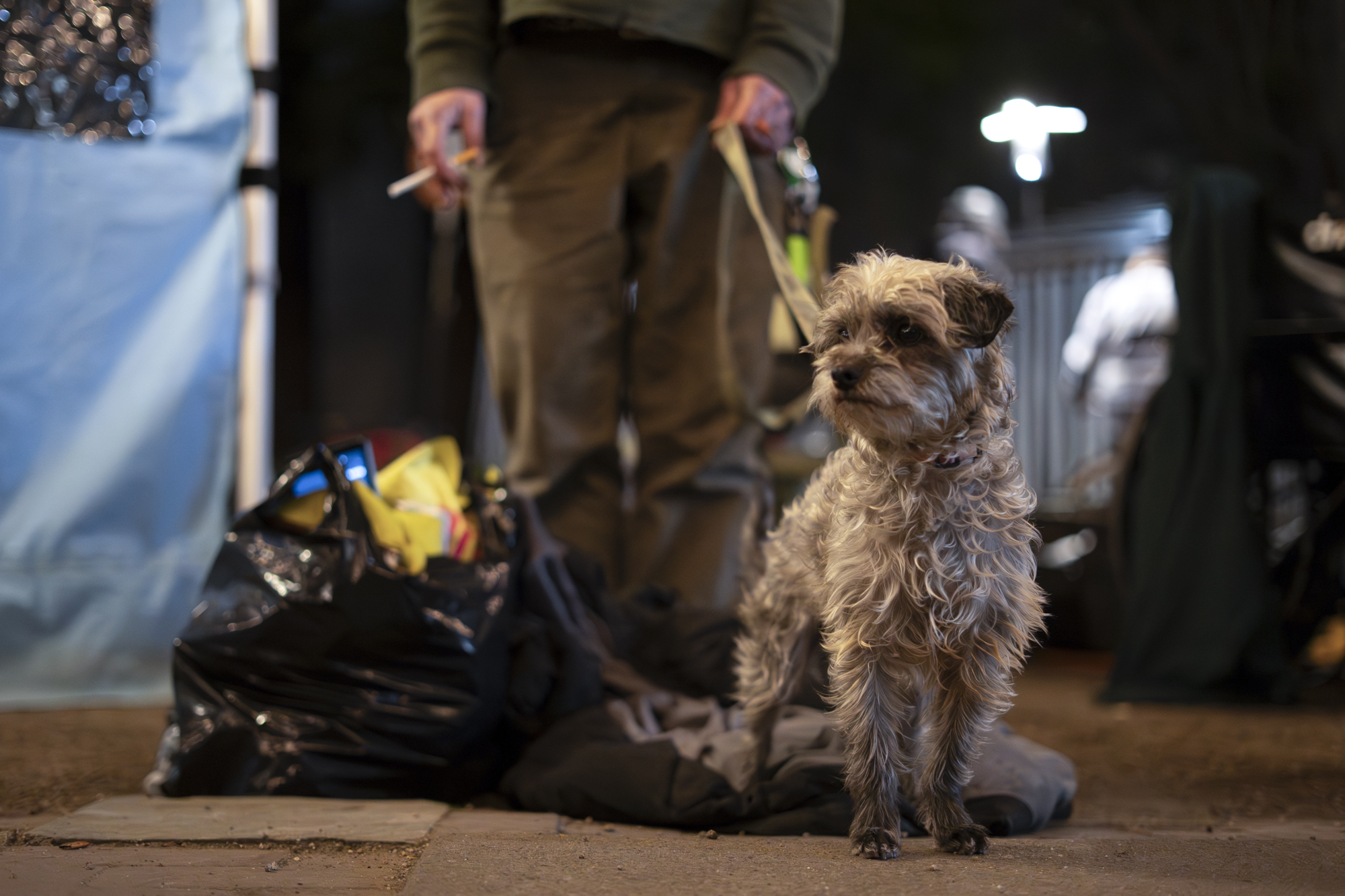 Felony, a Chihuahua-poodle mix, stands on a leash beside owner Kali Donlin outside the Gubbio Project at St. John’s the Evangelist Episcopal Church on Feb. 2, 2026, in San Francisco. (Gustavo Hernandez/KQED)
He hopes to one day do outreach himself for people in his situation. He has an idea of what could get him there: “What would be helpful for me is an opportunity for housing without all the hoops you have to go through for federal assistance.”
Even though he’s had negative experiences at some shelters, he was feeling good about his stay at Gubbio on Monday.
“I like it so far. The dinner’s good. The beds are, you know, they’re comfortable. They let you bring in your things. They don’t have so many restrictions. And I feel like the staff is more understanding here than at other shelters,” he said. “It’s like a breath of fresh air.”