
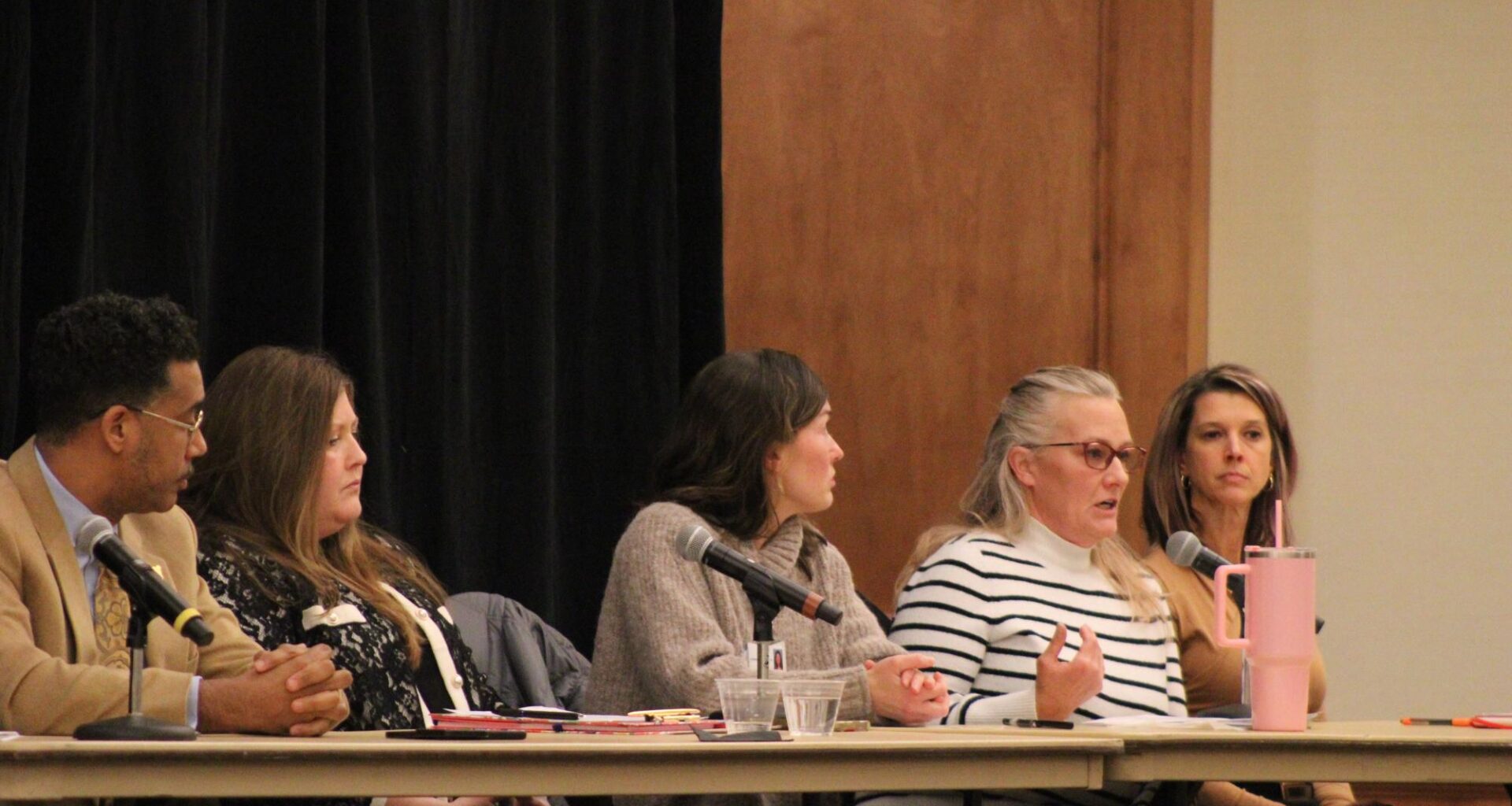
Under the slogan, “led by survivors, supported by allies,” the Criminal Justice Department at Oakland University hosted a career panel addressing human trafficking on Jan. 29. From law enforcement and social work to counseling and nursing, the panel delved into the complexities and opportunities of combating human trafficking daily.
The recruitment, transportation, harboring or receipt of people through force or deception to exploit them for profit is defined as human trafficking. Trafficking for sexual exploitation is of great concern for Michigan and the United States at large, where you can “get a child ordered and delivered to your door faster than a pizza,” FBI Victim Specialist Melissa Novock said.
Working with survivors for 30 years and more than six at the FBI, Novock cautioned students and attendees from “quantifying” human trafficking. With many instances of trafficking crimes going unreported, miscommunication among agencies and nonprofits, and the different fronts from which professionals can identify survivors, Novock explained, the whole story cannot be told without human testimonies.
“The biggest thing is that you just listen,” Laura Dillaber, victim advocate at Common Ground, said. “That and be patient and look them in the eyes, talk to them, and take your time when you’re talking.”
As a survivor, Dillaber highlighted the importance of not re-victimizing survivors as many OU students prepare to help them across various fields.
“People want to hear the stories, you know, they want to hear about what happened, because, I mean, those are things that interest us,” Dillaber said. “That’s something that [survivors] need to deal with, and we don’t want to pressure them into talking about something that they’re not ready to talk about.”
With an outline of the field and the six speakers’ life stories, students inquired about career guidance and words of wisdom from the interdisciplinary panel. As a licensed professional counselor, Jennifer Dulchavsky, one of the panelists, advised students to be proactive and specific with their education.
“A lot of people come straight out of their programs and want to do the best help that they can, which I totally understand, but aren’t necessarily trained, and that does create a lot of burnout and kind of those moral challenges that we tend to see,” Dulchavsky said.
Underscored by all the professionals, self-care and a close-knit support system are the best ways to provide compassionate and healthy care for trafficking survivors.
“Belonging to groups is helpful, being able to talk about things,” Dulchavsky said. “The challenge with being a therapist is that it is confidential. You can’t just talk to anybody about the clients that you see, which is why, like doing individual supervision, as well as group supervision, can be extremely helpful. Then seeking my own therapy.”
Patience was also a key point for panelists who shared stories of helping people who didn’t know they were being trafficked or had returned to endangering situations. With almost 27 years of service at the Detroit Police Department, Commander Jevon J. Johnson said progress is being made across the board, thanks to long-term initiatives.
“That’s the hard part about law enforcement, it’s very long-term,” Johnson said. “That’s the difference between TV and real life: it’s not over in 30 minutes. A lot of the stuff that happens on TV does happen, but sometimes that takes years or months or even decades.”
Whether it is getting more funding at the state level, training workers on prevention, gathering social work resources for people in marginalized communities, or providing emergency care for survivors, the panelists agreed that working intentionally makes the biggest impact.
“The number one thing is, you have to care,” Johnson said. “You’ve got to care, and then you put in the work, and then, as you see the results, I think that that gives you a little extra energy. If you put in the work, you are going to see the difference.”
If you or someone you know is a victim or human trafficking or have identified someone who may need help please contact the National Human Trafficking Resource Center at 888-373-7888.