
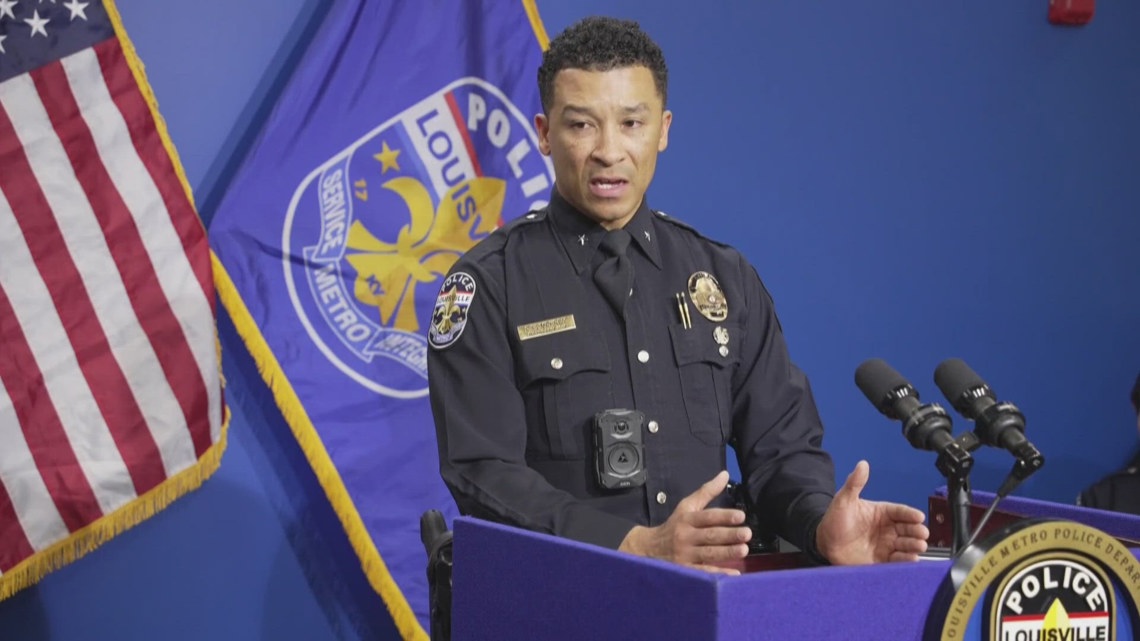
The department is focusing on real-time data, organized group crime, and directing extra resources to five neighborhoods.
LOUISVILLE, Ky. — Louisville Metro Police announced their 2026 crime reduction plan Tuesday, adding the California neighborhood in the West End to their list of five target areas.
The updated strategy keeps much of last year’s approach intact, but shifts the list of areas that will see added resources. The California neighborhood replaces an area near Fern Valley that saw improved crime scores and no longer requires the same level of focused intervention, according to Deputy Chief Emily McKinley.
“The way those are set are based on the violent crime scores for census blocks,” Chief Paul Humphrey said, explaining how target areas are selected using data analysis.
The five neighborhoods now receiving focused attention span from downtown to the south end and West Louisville. McKinley said the approach emphasizes “tackling blight, building community ties and boosting engagement.”
“It’s not about enforcement, it’s about prioritizing the needs of the community that is hurting the most, directing resources where they’re most needed and improving our neighborhoods together,” McKinley said.
The department’s 2025 results showed progress in target areas, with total violent crime down 14% compared to 2024. Homicides across the city were down 23%.
Citywide, Louisville recorded 105 homicides in 2025 — the first time since 2019 the total fell below 130. Burglaries of homes and businesses also decreased, along with auto thefts.
However, thefts of items from cars increased, which Humphrey called concerning.
“While our strategy remains very similar to it was last year, we want to make sure we’re doing it better, more professionally and safer for everyone,” Humphrey said.
California neighborhood resident and violence prevention activist Norman Parker said he wants to see genuine partnership with officers, not just increased presence.
“It sounds like we’re begging for them to come out and do what they say they’re doing, but we’re not seeing it,” Parker said. “We know an officer’s presence will deter, but it’s the things that go on once they get inside these neighborhoods. It’s the harassment, it’s the over policing.”
Humphrey said post-interaction survey feedback helps measure officers’ professionalism.
“You can do really hardnose policing and treat people the right way at the same time and that’s what we’re asking of officers,” he said.
The 2026 plan will use real-time data to assign officers to areas where violent crime is prevalent, target group violence and violent offenders, and incorporate more community feedback. Advancements in technology also play a role in the strategy.
“The results from 2025 show and we’ll continue that momentum in 2026,” McKinley said.