
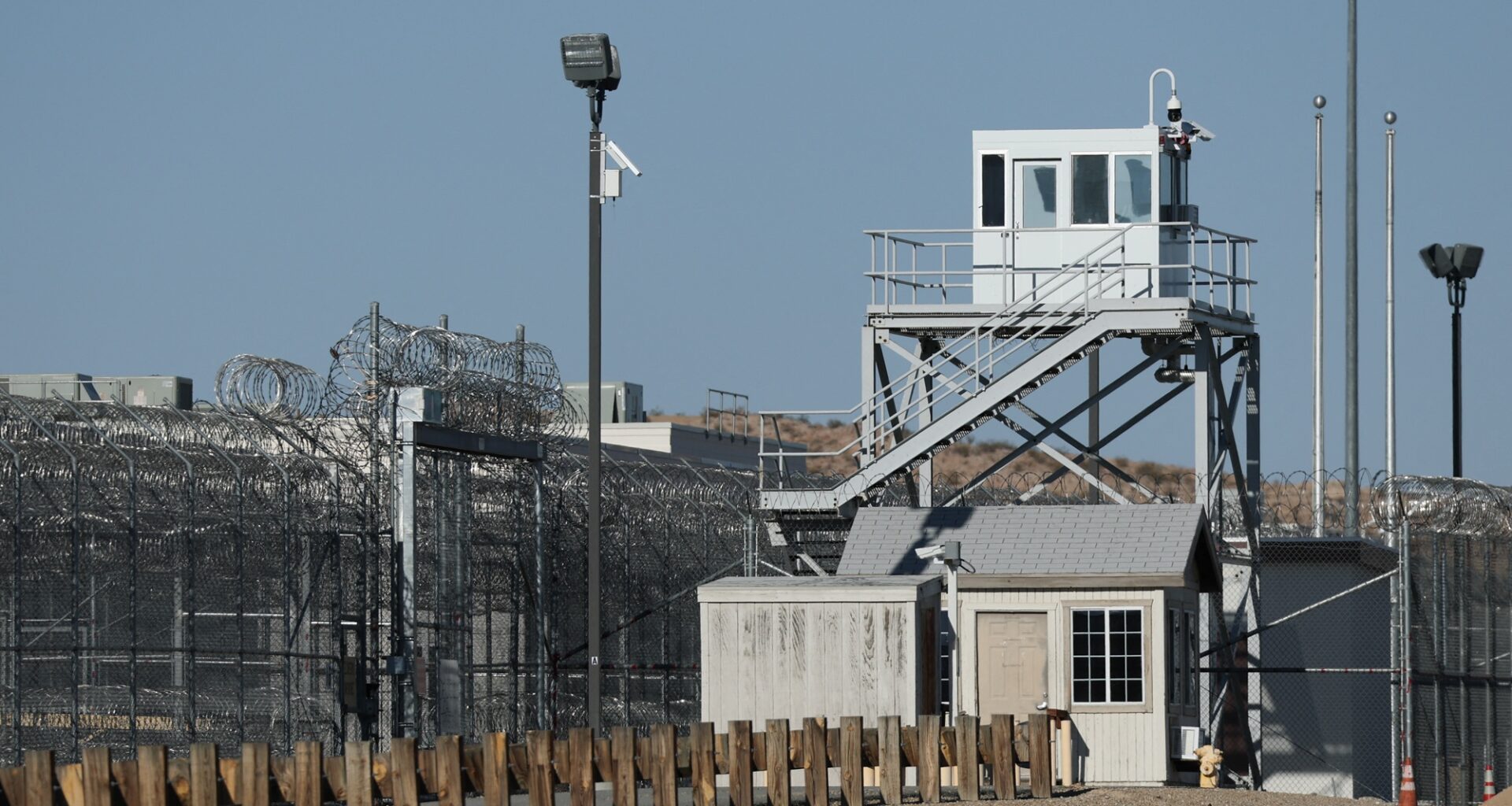
“Their staffing was not ready, their training was not ready, the facility itself wasn’t ready,” he said. “They set out to make this the biggest immigration detention facility in the entire state … and they just weren’t ready to do that.”
ICE and the Department of Homeland Security dispute the allegations. In court filings, they argue that the law does not require them to treat detainees better than prisoners and say the California City facility has an experienced warden who follows ICE’s detention standards.
They say plaintiffs’ complaints about health care reflect isolated lapses, not systemic problems, and that the staff now meets medical needs in a timely way. And they say they allow detainees access to legal counsel, subject to the facility’s “operational limits.”
ICE generally does not comment on pending litigation, but in this case, DHS sent KQED a statement from spokesperson Tricia McLaughlin that reads in part: “Any claims there are subprime conditions at the California City detention center are FALSE…. This type of garbage about ICE facilities is contributing to our officers facing an 8000% increase in death threats against them.”
McLaughlin has cited the 8,000% figure repeatedly in recent months, but DHS has not offered publicly verifiable data to support the claim.
McLaughlin said detainees get nutritious meals, access to phones to contact family and lawyers, and disability accommodations. She said comprehensive medical care is provided “from the moment an alien enters ICE custody.” She added: “The average illegal alien gets far more due process than most Americans.”
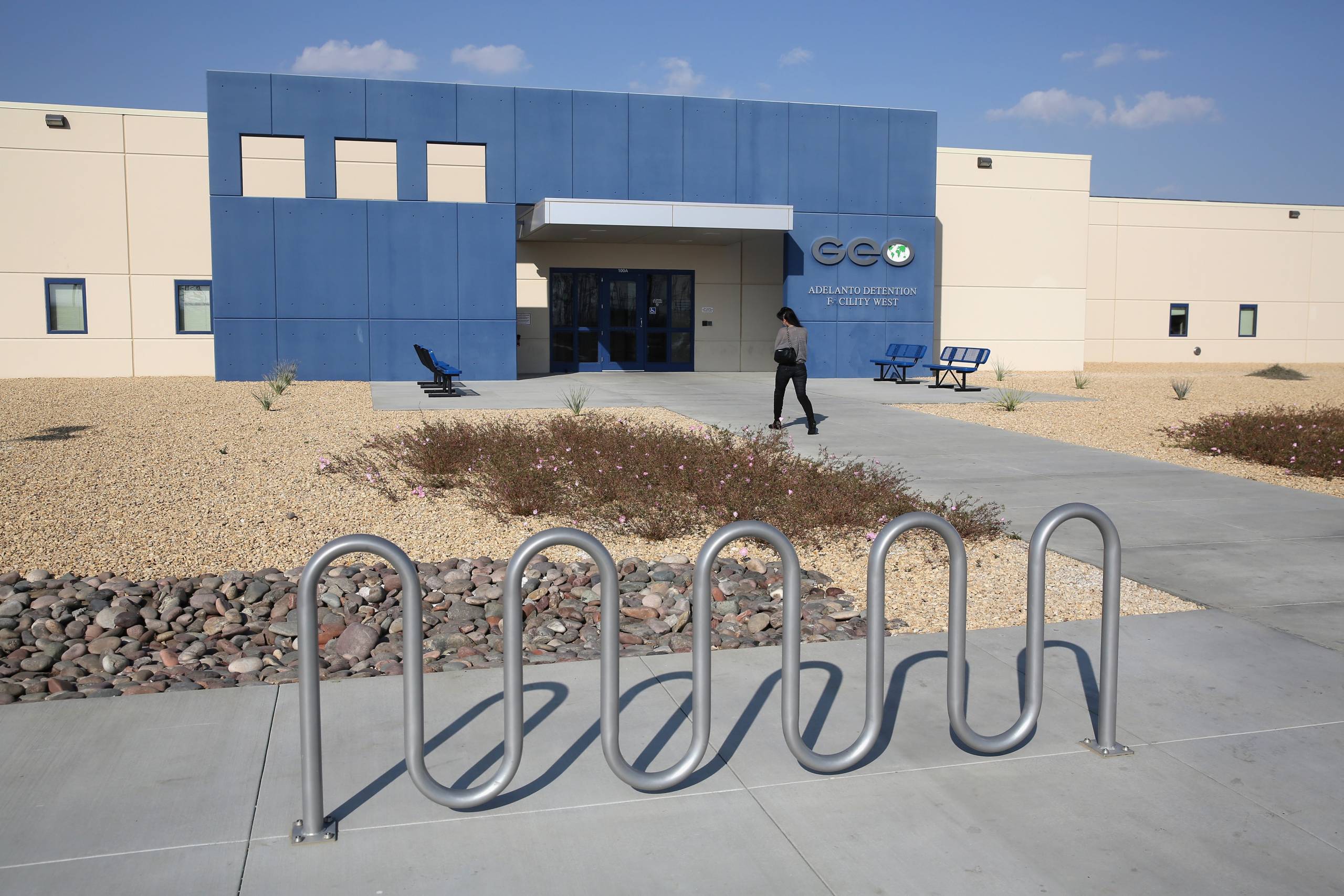 The Adelanto Detention Facility is the largest U.S. Immigration and Customs Enforcement detention center in California. The private GEO Group manages the facility. Organizers signal that distrust of for-profit prison operators like GEO Group and Core Civic among detained migrants could complicate the process to vaccinate this population. (John Moore/Getty Images)
Meanwhile, the government is also asking that the case be moved from San Francisco to a court in the Eastern District of California, which includes Kern County, where the California City facility is located.
Lawyers for the detainees say the case should stay in San Francisco because the ICE field office that sends arrested immigrants to California City is located here, and the Eastern District has a severe shortage of judges, which could delay the case.
Last week, detainees at another California ICE facility, the Adelanto ICE Processing Center in San Bernardino County, filed a similar lawsuit. That suit alleges ICE denies critical medical care, adequate nutrition and sanitation, and abuses solitary confinement at Adelanto. Two men died in ICE custody at Adelanto last fall.
Harris said, regardless of how Americans feel about immigration, he hoped they could agree that the government has a legal and moral duty to treat people in custody with human dignity.
“The federal government can’t just lock people up and treat them however it likes and throw away the key until it deports them. It has some basic obligations,” he said. “How you treat people you’re detaining says a lot about your values as a country. And right now, what’s being said is pretty ugly.”