
by Vanguard Staff
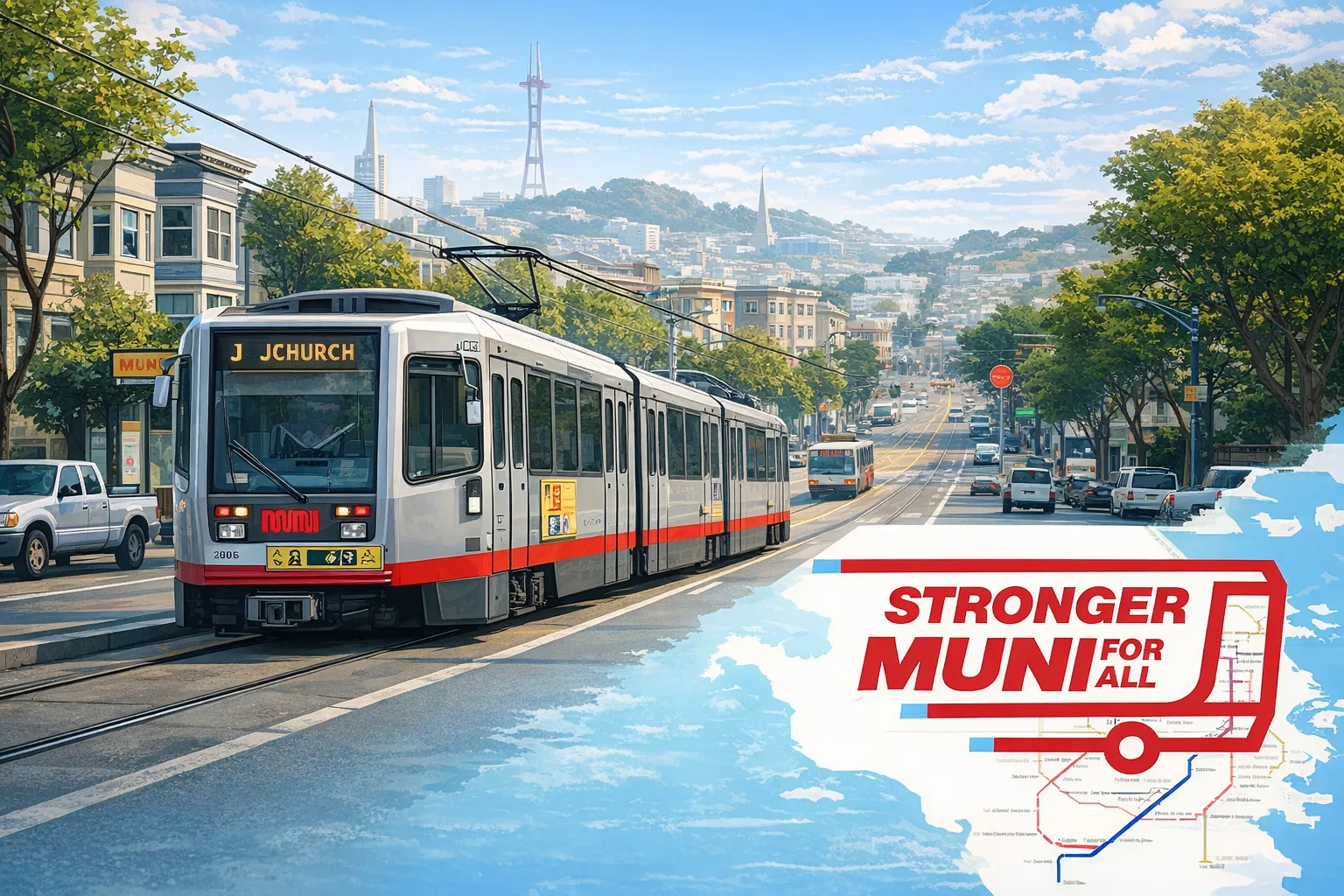
SAN FRANCISCO — Proponents of the Stronger Muni for All campaign filed notice of their intent to begin collecting signatures to qualify a local ballot measure for the Nov. 3, 2026, general election, launching an effort supporters say is aimed at preventing major transit service cuts and stabilizing San Francisco’s public transportation system.
The proposed measure is intended to avert what supporters describe as catastrophic reductions to Muni service, which they say would have ripple effects on traffic congestion, economic recovery and daily mobility across the city. Backers argue the measure would help maintain service levels while investing in long-term safety, reliability and affordability.
“Muni gets people to work, and it gets our kids to school, all while cutting down on traffic congestion—saving families time and money,” said Mayor Daniel Lurie. “Safe, reliable and affordable Muni is critical to powering the economic recovery underway across San Francisco. I’m inspired by the broad coalition of San Franciscans that are all-in to pass both the local and regional transit measures in November.”
According to campaign materials, Muni recently recorded its highest customer satisfaction scores in 20 years, and weekday ridership has rebounded to more than 75% of pre-pandemic levels. At the same time, the expiration of temporary state and federal funding, combined with lingering economic impacts from the COVID-19 pandemic, has left the transit system with a projected budget shortfall of $307 million. Without a new, dedicated revenue source, the city could face significant service reductions, including the elimination of as many as 20 bus routes and substantially longer wait times.
“Safe, reliable, and affordable Muni is an essential cornerstone of the San Francisco economy,” said Rodney Fong, a proponent of the initiative and president and CEO of the San Francisco Chamber of Commerce. “The business community believes that without public transit, the economic recovery we’re undergoing won’t be able to continue and could decimate our tax base. The Chamber of Commerce and our members are proud to help lead the Stronger Muni for All campaign.”
Campaign supporters say the stakes extend beyond transit riders. San Francisco already ranks among the most congested cities in the United States, and they argue that major service cuts would push more residents into private vehicles, worsening traffic, lengthening commutes and increasing safety risks for people on city streets.
Over the past year, Muni has also undertaken a series of cost-saving and operational reforms, according to campaign statements. Those efforts reportedly include eliminating more than 500 vacant positions, consolidating operations, reducing layers of management and improving service efficiency, generating nearly $137 million in ongoing annual savings.
“Teamsters are proud to represent many of the men and women that keep San Francisco moving,” said Tony Delorio, a proponent of the initiative and principal officer of Teamsters Local Union No. 665. “Working people rely on safe and affordable Muni to get them to work and their kids to school. My brothers and sisters in labor will work tirelessly to pass this measure and build a stronger Muni for generations to come.”
Under the proposal, the Stronger Muni for All measure would establish a progressively structured parcel tax on both residential and commercial properties. Campaign materials state that 95% of single-family homes would see their annual assessment capped at $129, while larger homes would be subject to higher, tiered rates. The largest commercial properties would pay up to $400,000 annually.
“Muni is the heartbeat of San Francisco: when Muni thrives, the whole city thrives,” said Kat Siegal, a proponent of the initiative and transit advocate. “Every San Franciscan deserves transportation they can depend on, whether they ride the bus every day or just benefit from safer and less congested roads. That’s why advocates across the city are all in to make sure Muni is there for us and our neighbors for years to come.”
Revenue generated by the measure would be subject to oversight provisions, including financial efficiency reviews and the creation of a citizens oversight committee tasked with monitoring how funds are spent on maintaining and improving Muni service.
The initiative is sponsored by Siegal, Fong and Delorio, who are leading the effort to gather the signatures required to place the measure before voters in 2026.
Follow the Vanguard on Social Media – X, Instagram and Facebook. Subscribe the Vanguard News letters. To make a tax-deductible donation, please visit davisvanguard.org/donate or give directly through ActBlue. Your support will ensure that the vital work of the Vanguard continues.
Categories: Breaking News San Francisco Transportation Tags: Daniel Lurie economic recovery local ballot measures MUNI public transit San Francisco Transportation Funding