
For The Union-Tribune
When Jen Pinto, senior interior designer at Jackson Design and Remodeling, and her husband bought their house, she was pregnant with their first child and knew she’d need some area beyond a nursery for her daughter to play. Moving from a one-bedroom apartment to a four-bedroom house required the purchase of a lot of furniture, and they never got around to buying a dining set. So, they decided, they’d turn the dining room into a playroom.
“We don’t have carpet. We have vinyl plank flooring,” she said. “So I realized we needed a big rug for tummy time. And there’s going to be a time when she was going to start trying to learn to crawl.”
The dining room has just three walls, so it feels like its own room, just not enclosed — the better to supervise her now 3-year-old daughter’s play. And Pinto’s mom also created a play area in her house for her grandchildren.
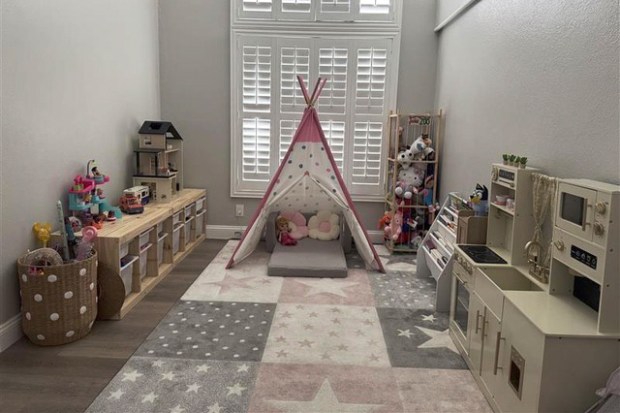 Designer Jen Pinto of Jackson Design and Remodeling repurposed the dining room space in her own home as a playroom for her daughter. The features in the space evolve as her activities change. (Jen Pinto)
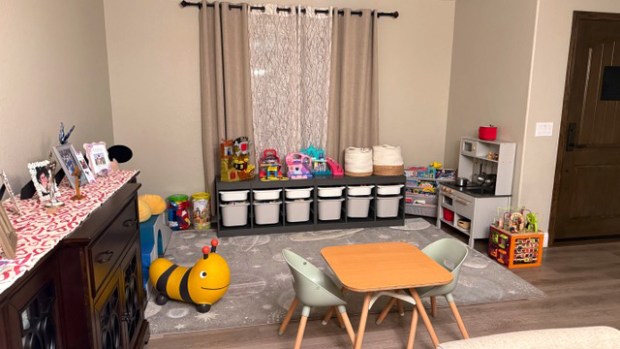 Pinto’s mother also carved out a space with plenty of interactive elements for when her granddaughter comes to visit. (Jen Pinto)
“As she got older, I added storage,” Pinto said. “Now she’s got a play kitchen and a little reading nook, and a little table with a set of chairs if she wants to sit down and have a snack, or color or something like that. And so that area has just sort of evolved as I’ve needed to adjust to what she’s doing.”
When I was growing up, I wasn’t aware of playrooms, per se. My siblings and I just either played with our toys in our bedrooms or my friends’ bedrooms or hauled everything into the family room (we rarely entered the living room, of course). A playroom, if we’d had the space for it, might have made our mom’s life easier. We might have avoiding errant Tinker Toys or puzzle pieces or crayons scattered and forgotten in public spaces to step on or rush to put away before guests came over. But here we are with designated play areas for children.
Pinto has an explanation for this.
“There’s this trend going on right now that people are talking about on Instagram and TikTok about millennial parents, which I am,” she noted. “The saying is that millennials grew up as bedroom kids, so a little bit more private, kind of isolated from their parents. They kind of wanted to do their own thing. And I do remember growing up like that, kind of just hanging out in my own room. Now it’s a little bit of a shift. We’re trying to create a more inviting, kind of open communal space for all our children, because we want to raise them as more open to spending time with their parents.
“We want to promote togetherness, family, closeness and promoting more communal spaces,” she added. “And so the saying now is, like on TikTok, that we’re trying to raise living room kids, kids that kind of hold us around and want to be in the spaces that we are.”
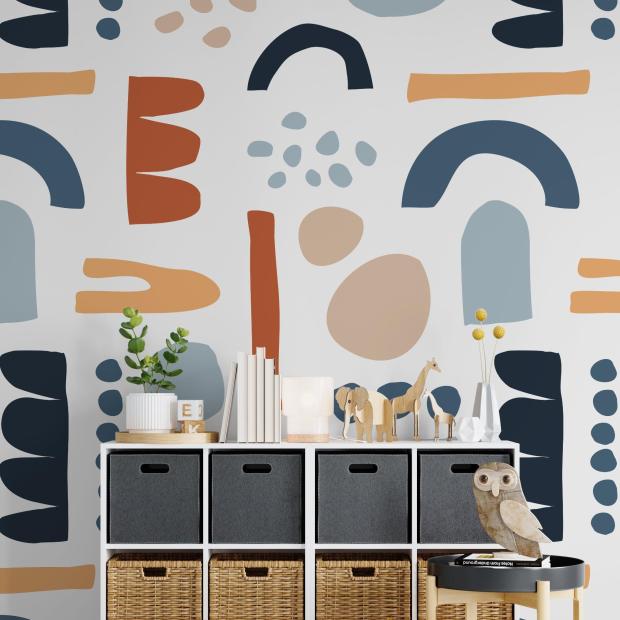 Milo wallpaper from Wall Blush adds a colorful sense of movement and fun to the room. (Wall Blush)
The challenge is that a lot of bedrooms today are quite small — just room enough for a bed, dresser and chair. There may not be enough room to store toys, and a living room can be designed for adults, with sharp-edge coffee tables and fragile items, including table lamps, that invite breakage. They’re not designed for safety for little ones. So a dedicated space — a safe space to play with and store toys, paint or color or curl up with a book — is the solution for some families.
If you’re a parent or grandparent in a similar situation, how do you go about setting one up?
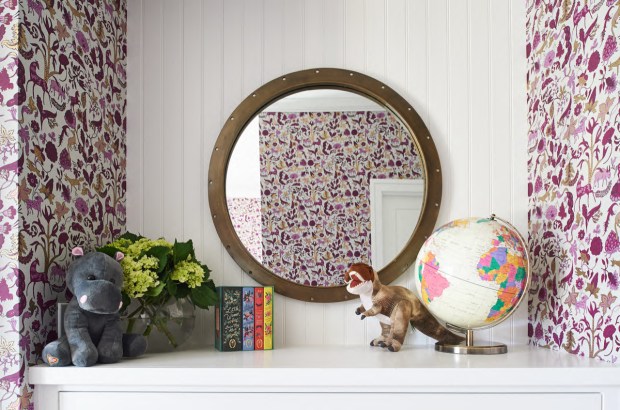 Wall covering in a playfully pink woodland feel brings a cozy vibe to this playroom. (Bungalow 56)
Jessica Nicolls, principal designer at Bungalow56 Design, agreed that in Coronado, where her business is based, and other tighter San Diego neighborhoods, bedrooms are smaller with little floor space or storage.
“We’ve found that if we do have a bonus area that it just lessens the clutter and keeps it more accessible for the kids, to keep the rooms clean, and it’s not so overwhelming for everyone. And then if you have guests over, and your playroom does have a door, you just shut the door. You don’t have to worry about cleaning up that space.”
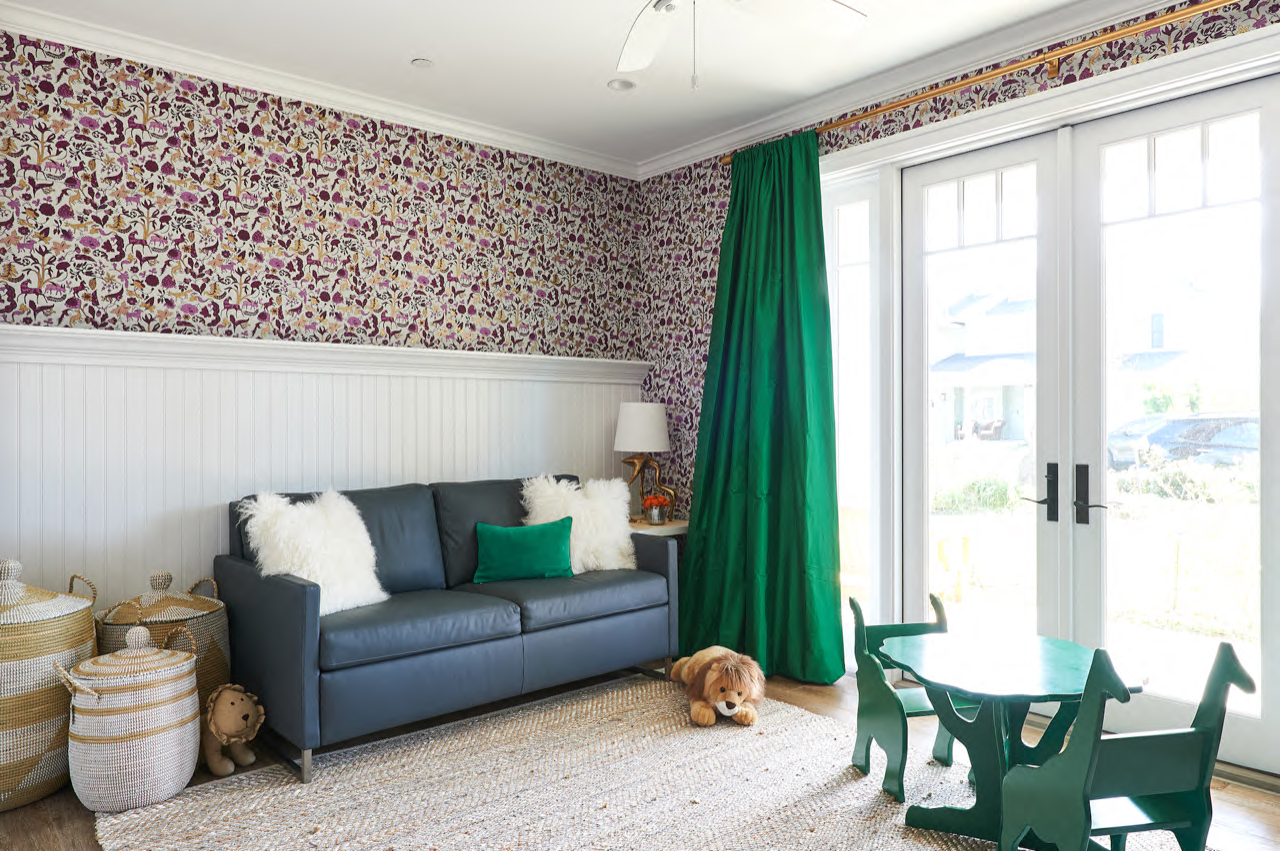
Designer Jessica Nicolls’ colorful additions include animal-shaped chairs. (Bungalow 56)
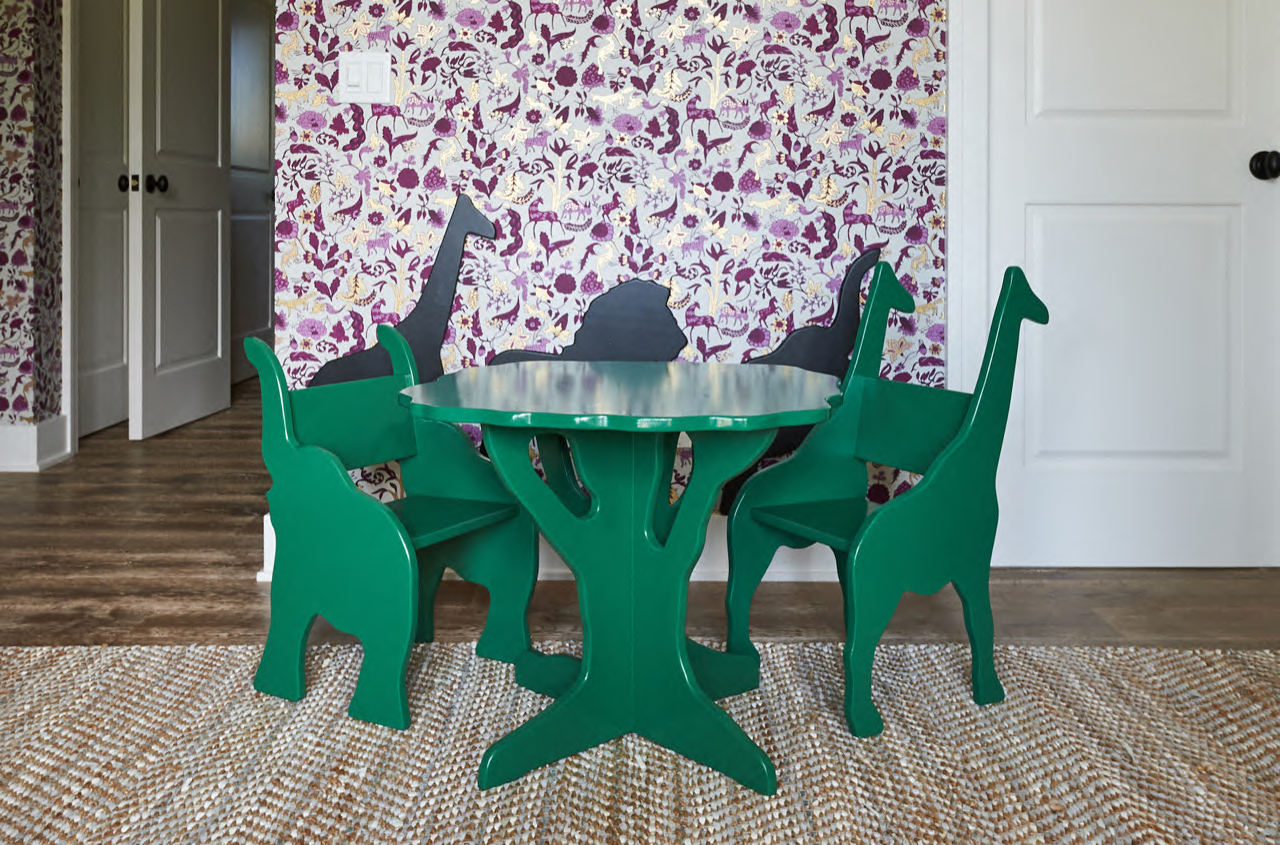
The child’s table has chairs that capture the imagination. (Bungalow 56)
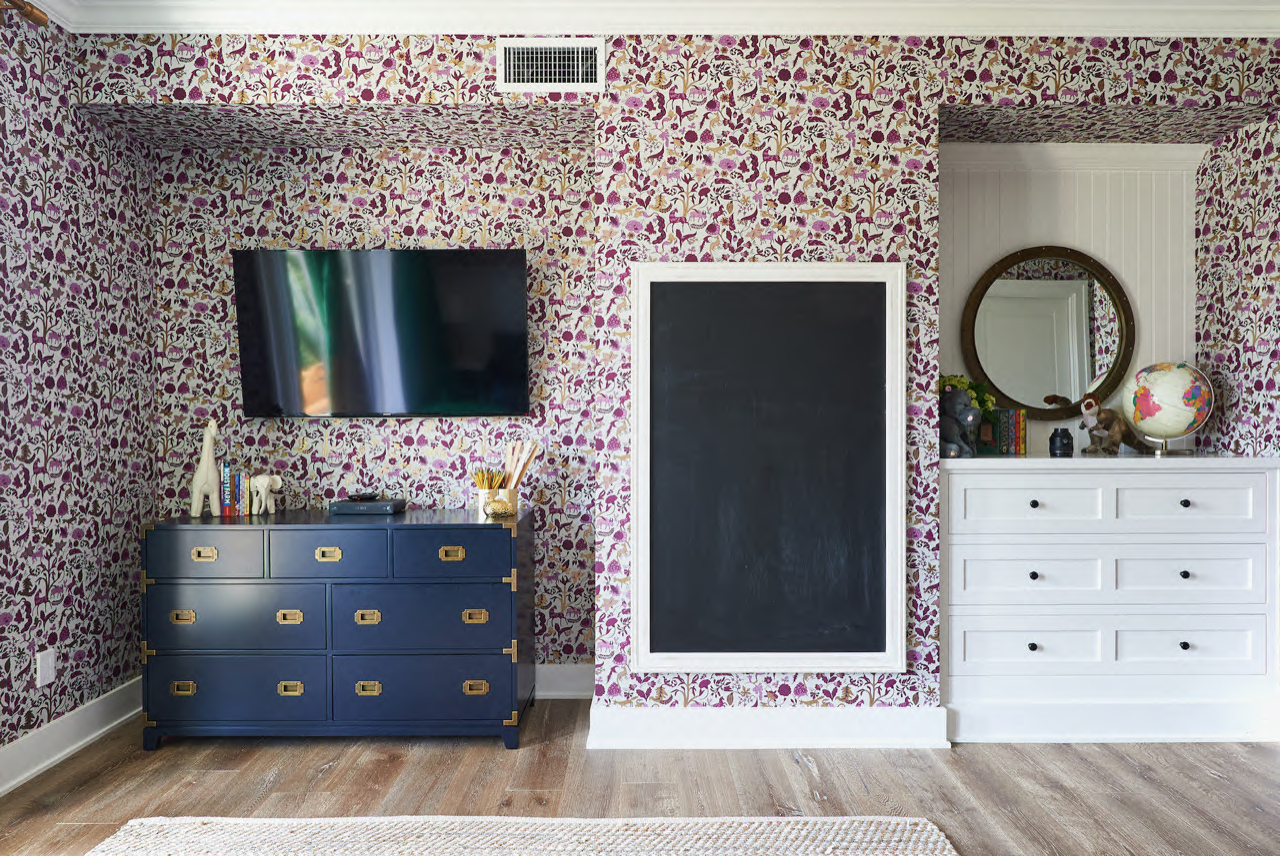
A chest provides storage and the room can also be a TV hangout. (Bungalow 56)
Show Caption
1 of 3
Designer Jessica Nicolls’ colorful additions include animal-shaped chairs. (Bungalow 56)
Consider a guest bedroom, a media room or that large, open loft-style landing at the top of the stairs as potential playrooms. No extra room? How about this: Section off part of a living room or the dining room. If there’s no closet available for storage, you can easily create storage with baskets, hanging cabinets or built-ins, book cubbies or bookcases or sliding bins. Just make sure they’re low enough for young children to both be able to reach for what they want and help put things away later. And label bins for designated storage of items like Legos, blocks, games and art supplies.
“We’ve found that having an organized playroom makes it more fun,” said Nicholls. “If it’s too chaotic and messy and there aren’t systems for kids to be able to put it back together, they’re not going to use it.”
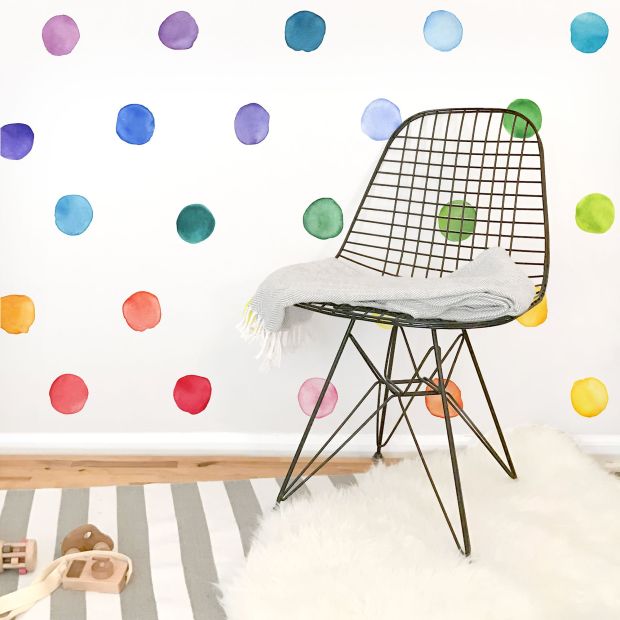 For a whimsical print, West Elm offers peel-and-stick wall decals, Mej Mej Color Story Rainbow Watercolor Dots, that can be repositioned and leave no sticky residue. (West Elm)
There was a time when playrooms, like kids’ bedrooms, went wild with color — whether paint or wallpaper or furnishings. That seems to have abated. Mary Wadstrom, Tracy Lynn Studio’s accessory designer, explained that designing spaces for children using neutrals as a foundation is “more trending.” It’s a way to keep the budget down as you update spaces to meet growing children’s changing needs and interests.
“You don’t see the primary colors as much as you used to, but we obviously think color is amazing for kids,” she said. “We add pops of color to make it feel fun and playful.”
Love color and patterns? Pinto suggested peel-and-stick decals and wallpaper, like those sold by companies like West Elm, HappyWall and Wall Blush. You can make the room as whimsical as you like and then remove or change them out as tastes change.
Here are some other tips:
• Kids don’t all color in the lines. Pinto loves giant coloring sheets from Lalo that help prevent furniture and floors from being targeted.
• If you don’t have carpeting, make sure to have well-padded area rugs for little ones to crawl on and older ones to roughhouse on. Another option is interlocking floor mats. The benefit of these is that you can take apart the mats to clean or replace those that got spilled on or otherwise soiled or damaged.
• Create zones for different activities — a place for arts and crafts, another for reading. I’ve seen one playroom where a little stage with curtains was created in a corner for performances. And, as the kids grow up or you have kids of different ages and interests, have a space where older kids can do homework at a desk or chill on a beanbag chair to read or game while little ones can still enjoy their activities.
• For families with multiple children, Nicholls suggested setting up separate storage spaces for special things they don’t want to share, or little ones can get into. Maybe even little lockers for sports gear or special toys — with their name on it.
• Consider pullout sofas and chairs as the kids get older and want to have sleepovers.
• Make sure the fabrics and materials you select are nontoxic and stain resistant, that paint is washable and tall furniture is well secured.
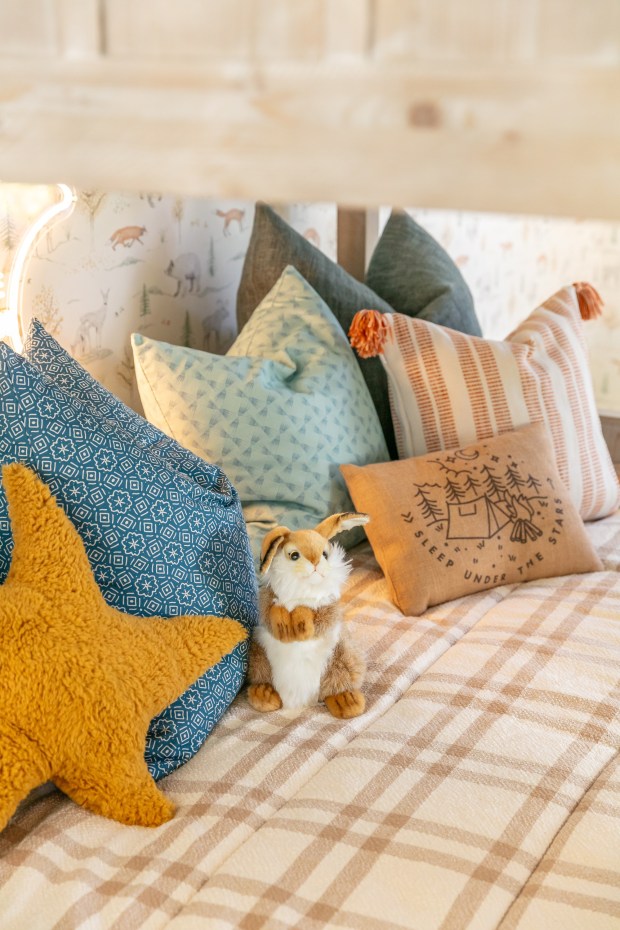 A cozy snuggle spot on the cabin bed.(Tracy Lynn Studio)
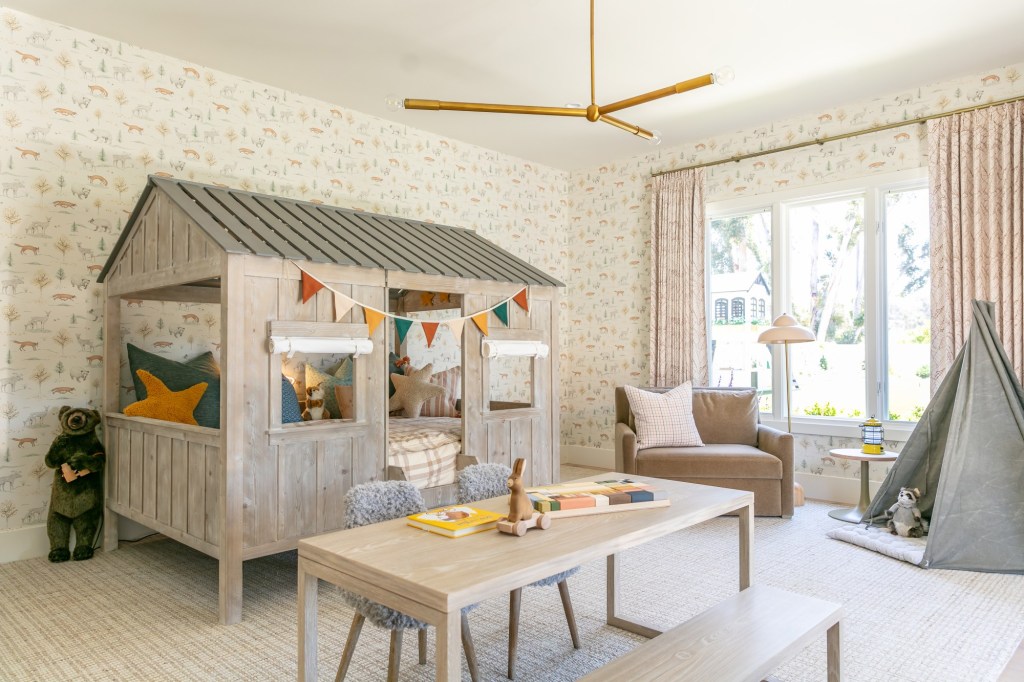
A playroom Wadstrom worked on for a couple who are grandparents in the phase of having young grandchildren and babies reflects that approach. A guest bedroom was converted into an evolving playroom with a pastel color scheme foundation expressed through the large area rug, the wallpaper of roaming wild animals and a lightly patterned set of curtains framing a picture window. There’s a comfy arm chair in a corner with a floor lamp, a long light wood table with puffy upholstered chairs and a bench — all kid sized. A tepee — a must for playrooms since kids love to have a place to snuggle in and hide — is near the window.

The cabin’s vibrant bathroom. (Tracy Lynn Studio)

A play kitchen in the cabin playroom. (Tracy Lynn Studio)

Even the wildlife gets into the fun. (Tracy Lynn Studio)
Show Caption
1 of 3
The cabin’s vibrant bathroom. (Tracy Lynn Studio)
But the statement piece is an open cabin — a kind of playhouse in a playroom, although it has a bed inside. Wadstrom filled its interior with colorful pillows and draped the entrance with a string of bright pennants. It’s perfect for snuggling up with grandparents while reading a book or for naps — or sleeping over. To accommodate the increasing ages of the older children, the couple brought in a play kitchen set, even including a basket of child-sized cooking utensils.
Even the ensuite bathroom got the kid touch with brightly colored terrazzo-style wallpaper that looks like confetti. The wall over the toilet has a cute, if helpful, framed poster of the alphabet.
“The closet was all built-in shelving,” Wadstrom added. “The grandmother has dress-up clothes hanging in there and a mirror, as well as a changing table for the babies.”
Wadstrom noted that the furniture is easy to move around for different activities so the grandparents or parents can hang out on the floor to read with the kids or play games.
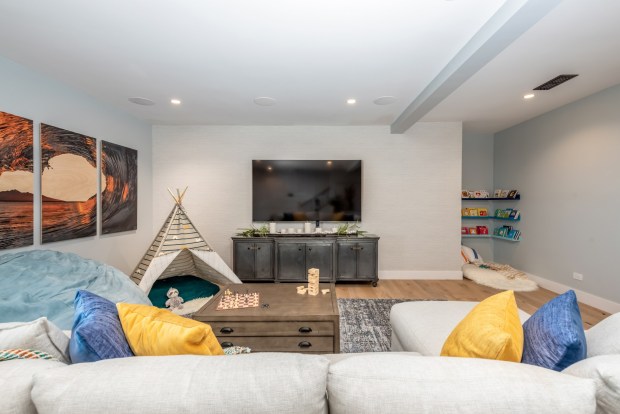 A play area is incorporated into a family room, with a tepee and a reading nook tucked in the corner. (Jackson Design and Remodeling)
Pinto has designed a few playrooms for clients. Like Wadstrom’s designs, hers are also foundationally neutral with pops of color — and tepees. In one there’s a ginormous beanbag chair and full-size sectional for family gatherings, including watching movies. But in the pint-sized alcove near the TV is a cozy reading nook with a large pillow and faux fur rug to lay on while reclining on other pillows. Above, Pinto had three sets of shelves installed to hold what are currently beginning reader books.
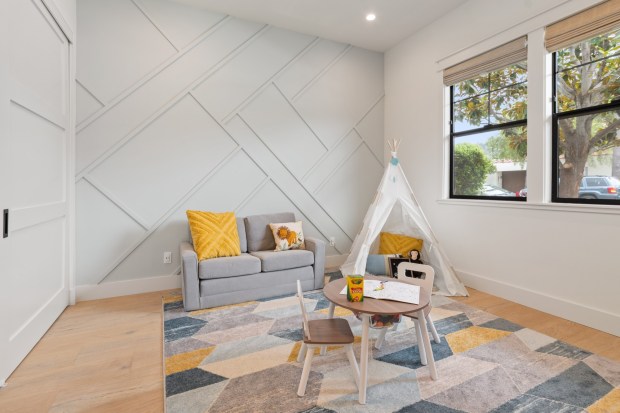 Designer Jen Pinto included a loveseat for story time, a tepee for cozy hideouts and a table for creating art in this playroom. (Jackson Design and Remodeling)
In another playroom, the furniture is scaled to kids with a love seat just big enough for a couple of children to share a book or an adult to hang out. An area rug with geometric patterns holds a little table and chairs, perfect for a coloring session. And, yes, there’s a cute tepee in the corner.
In her own home, Pinto’s daughter plays on a large area rug of pinks, creams and grays. She’s got a polka dotted tepee with comfy fold out seating to sit or lay on. There’s a little kitchen against one wall, with a rack filled with picture books nearby and storage for stuffed animals. On the opposite wall, Pinto created storage with pullout bins and a large polka dot basket. There’s even a little dollhouse. Pinto’s mom has a little area that would otherwise be a dining space defined by an area rug, with pull out storage bins, another toy kitchen and a little table and chairs.
Nicholls brought her client more color than others, with a brilliant pink floral wallpaper pattern and emerald green floor-length curtains. But she still kept a range of neutrals in tall basket storage, a navy couch to curl up on and chest of drawers for storage and a muted area rug. The kids just have to love the green table with matching chairs shaped like giraffes and elephants. They have a large chalkboard and plenty of room to loll around with the stuffed animals.
All these rooms work because so much thought was given to what the kids enjoy and need, as well as the parents and grandparents. No one knows your kids like you so if they’re of an age where they can help make choices, get their input so they’ll want to hang out in the space — whether it’s a dedicated playroom or a designated part of a room. And design it so it can easily evolve with your kids as they grow. In not too many years the playroom of today may evolve into tomorrow’s hangout and homework room.